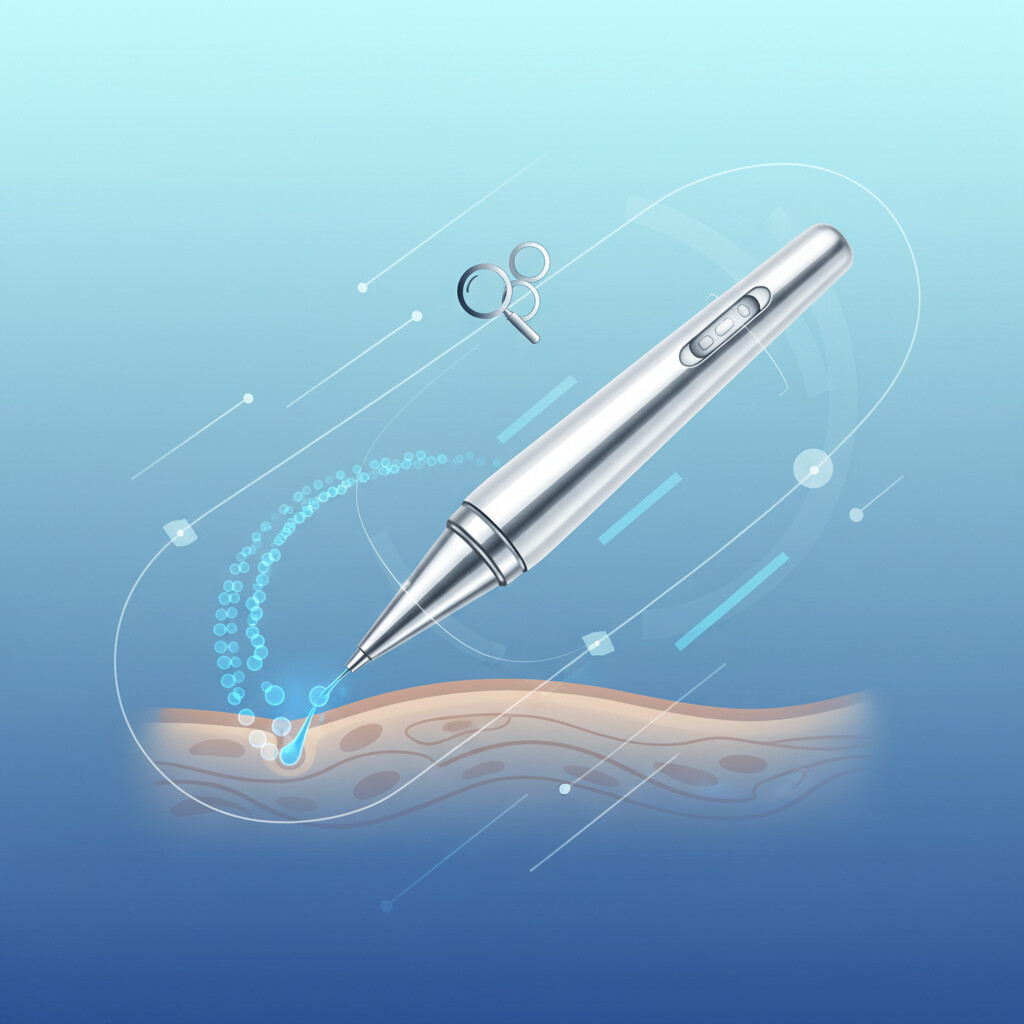
Considering a hair transplant is a significant decision, and understanding the techniques and tools involved is crucial for making an informed choice. One such advancement that has garnered attention is the Choi Implanter Pen, a specialized instrument primarily used in Direct Hair Implantation (DHI). This guide aims to demystify the Choi Implanter Pen, explaining its role, benefits, and how it contributes to the success of DHI hair transplantation.
What is a Hair Transplant? A Brief Overview
Before delving into the specifics of the Choi Implanter Pen, it’s helpful to have a foundational understanding of hair transplantation. In essence, it’s a surgical procedure that involves moving hair follicles from a donor area (typically the back or sides of the head, where hair is genetically resistant to balding) to a bald or thinning area. The goal is to restore a natural-looking hairline and provide a fuller appearance.
There are several techniques for hair transplantation, with Follicular Unit Transplantation (FUT) and Follicular Unit Extraction (FUE) being the most common. DHI is a variation or refinement of FUE, focusing on precision and minimizing trauma to the scalp.
Introducing the Choi Implanter Pen
The Choi Implanter Pen, also known as a DHI implanter or Choi pen, is a state-of-the-art medical device designed specifically for the implantation phase of hair transplantation. Developed in South Korea, it integrates the steps of creating an incision and implanting the hair follicle into a single, precise action. This innovation significantly streamlines the DHI procedure.
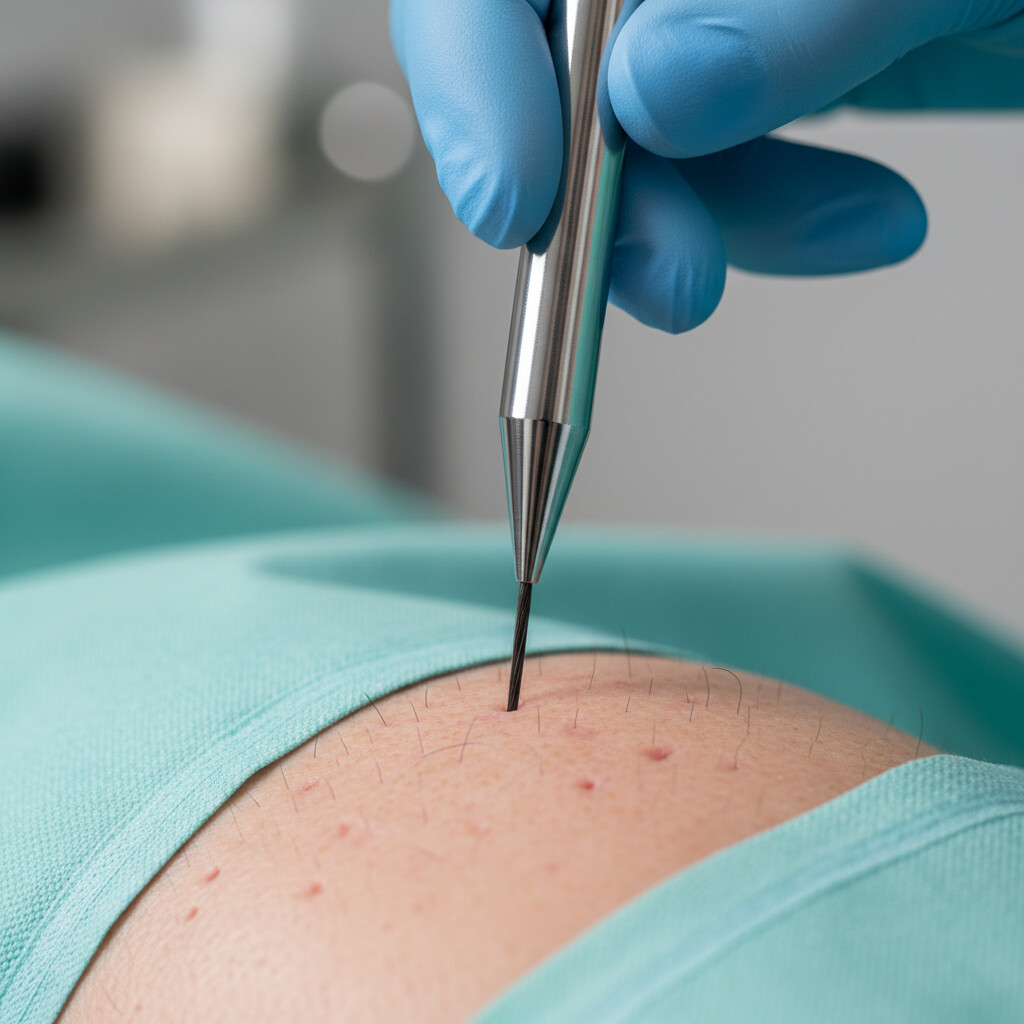
Image Prompt: Close-up, macro shot of a medical professional’s hand holding a Choi Implanter Pen during a hair transplant procedure. The pen is delicately positioned above the scalp, ready to implant a hair follicle. Soft, clinical lighting highlights the intricate detail of the pen and the scalp. No text or branding on the pen. Alt Text: Close-up of a Choi Implanter Pen being used in a hair transplant surgery.
How Does the Choi Implanter Pen Work?
The magic of the Choi Implanter Pen lies in its design. It’s a pen-like instrument with a fine needle at one end, which houses a harvested hair graft. The pen allows the surgeon to control:
- Depth: The exact depth at which the follicle is implanted.
- Angle: The precise angle of implantation, crucial for achieving a natural look.
- Direction: The direction in which the hair will grow, mimicking natural hair patterns.
During the DHI procedure using the Choi pen, the surgeon first harvests healthy hair follicles from the donor area using micro-FUE techniques. These follicles are then loaded into the Choi Implanter Pen. The surgeon then uses the pen to simultaneously create a small recipient site on the scalp and implant the graft into it. This one-step process minimizes the time the grafts spend outside the body, which is vital for their survival and successful growth.
The Benefits of Using the Choi Implanter Pen in DHI
The adoption of the Choi Implanter Pen has brought several advantages to DHI hair transplantation:
- Enhanced Precision and Natural Results: The pen’s design allows for meticulous control over the placement of each graft. This precision leads to a more natural-looking hairline, better density, and aesthetically pleasing results that closely mimic natural hair growth.
- Minimally Invasive Procedure: Because the pen creates the recipient site and implants the follicle in one go, there’s no need for separate incisions or slitting, which are often part of traditional FUE or FUT. This means less trauma to the scalp.
- Reduced Healing Time and Scarring: With minimal trauma, patients typically experience faster healing. The small puncture marks made by the pen heal quickly, leaving minimal to no visible scarring, especially in the recipient area.
- Higher Graft Survival Rate: By reducing the time grafts are outside the body and ensuring they are implanted immediately into a controlled site, the Choi Implanter Pen helps maximize the viability and survival rate of the transplanted follicles.
- Increased Density: The ability to place grafts closer together without compromising their survival allows for greater density in the transplanted areas, which is often a primary goal for patients seeking a fuller head of hair.
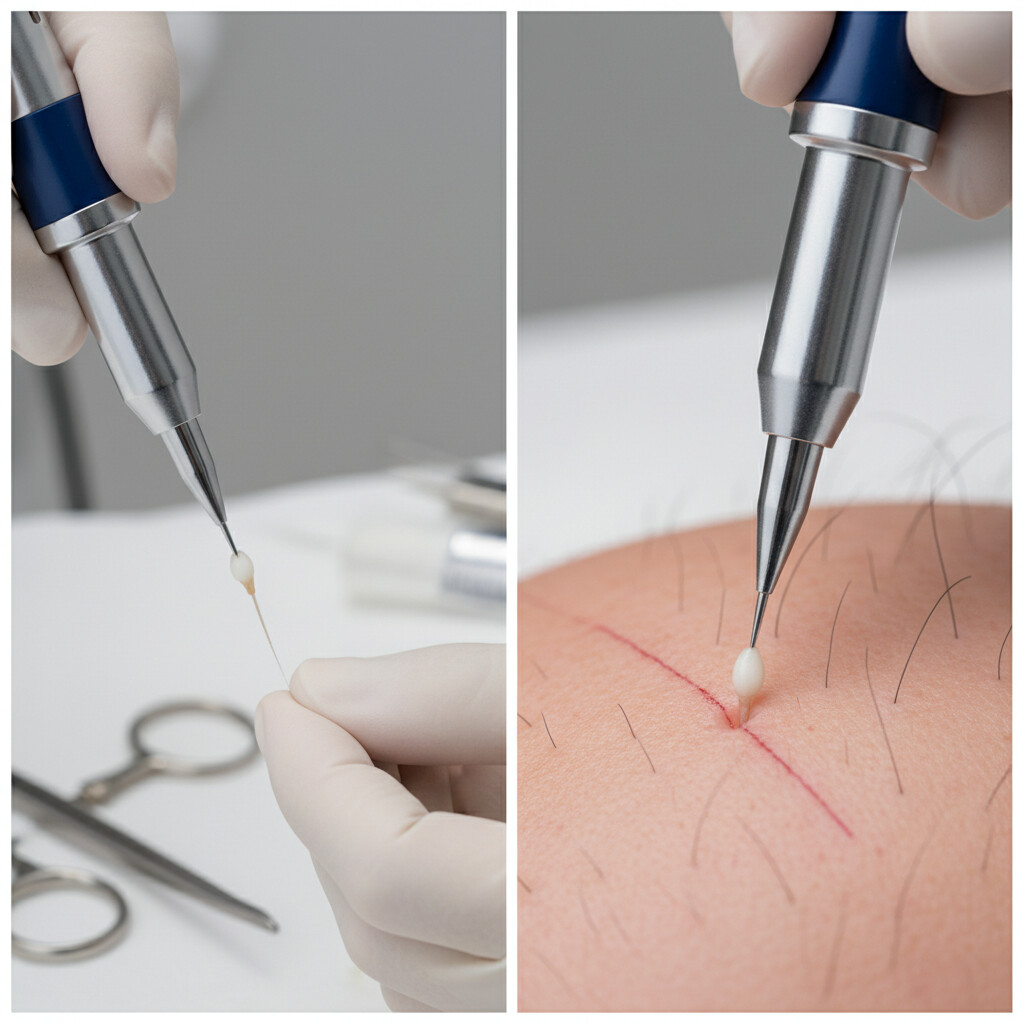
Image Prompt: A split image showing on the left, a harvested hair follicle being loaded into the Choi Implanter Pen, and on the right, a close-up of the pen’s tip implanting a follicle into the scalp. Clean, professional studio lighting. No text. Alt Text: Loading a hair graft into a Choi Implanter Pen and implantation process.
Who is a Good Candidate for DHI with the Choi Implanter Pen?
While the Choi Implanter Pen is a sophisticated tool, it’s suitable for a broad range of patients experiencing hair loss. Ideal candidates typically include:
- Individuals seeking to restore their hairline or add density to thinning areas.
- Those who desire natural-looking results with a focus on hairline aesthetics.
- Patients who prefer a minimally invasive procedure with minimal scarring.
- People concerned about graft survival and a high success rate.
It’s important to note that the suitability for any hair transplant procedure, including DHI with the Choi pen, should be determined through a consultation with a qualified hair transplant surgeon. They will assess your hair loss pattern, donor hair availability, and overall health to recommend the best course of action.
The DHI Procedure Step-by-Step with the Choi Pen
Understanding the process can alleviate anxiety and help you prepare.
- Consultation: Initial assessment by the surgeon to determine eligibility and discuss expectations.
- Donor Area Preparation: The donor area is trimmed, and local anesthesia is administered.
- Follicle Extraction: Using micro-FUE tools, individual hair follicles are extracted from the donor site.
- Graft Preparation: The extracted follicles are carefully prepared and loaded into the Choi Implanter Pen by trained technicians or the surgeon.
- Implantation: The surgeon uses the Choi Implanter Pen to precisely implant each follicle into the recipient areas of the scalp, creating the recipient site and inserting the graft simultaneously. The surgeon meticulously plans the angle, depth, and direction for each implanted follicle.
- Post-Operative Care: After the procedure, specific instructions are given for scalp care to ensure optimal healing and graft survival.
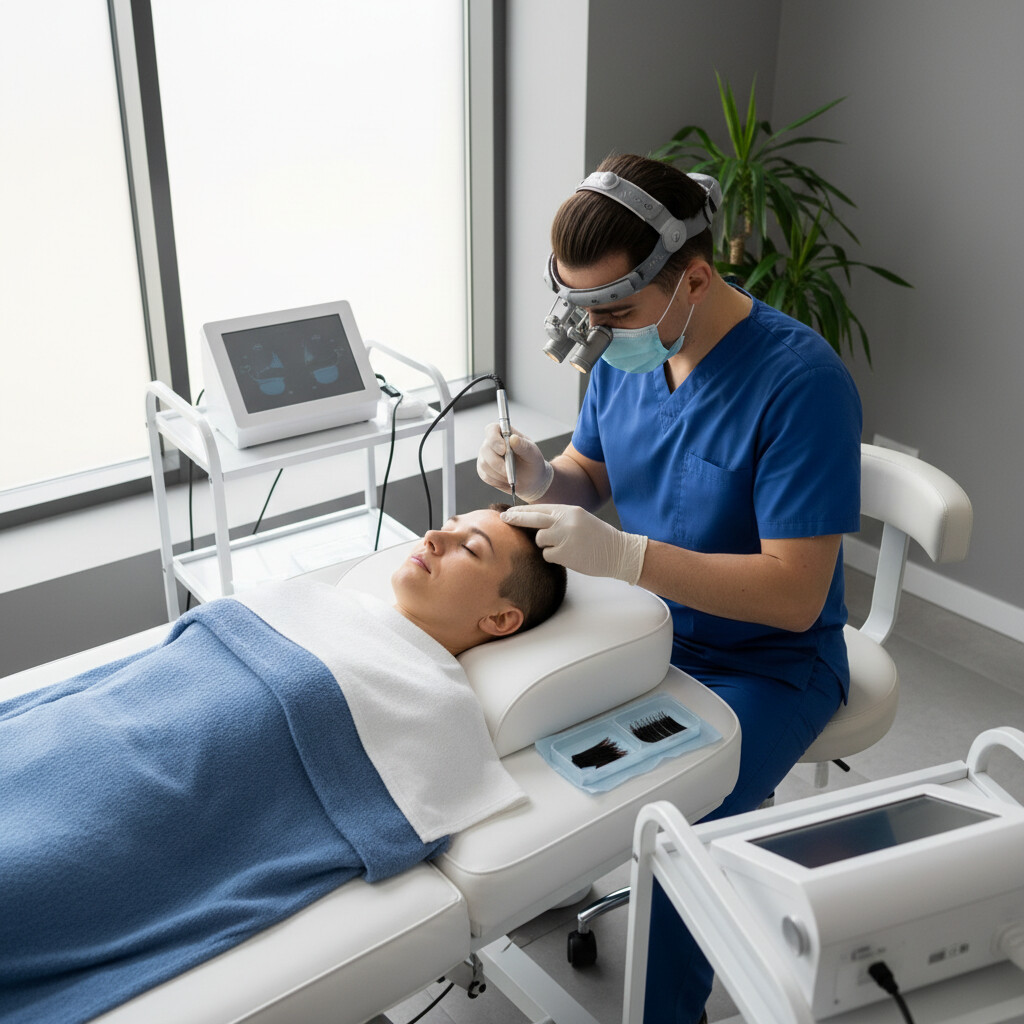
Image Prompt: A serene, overhead view of a patient lying comfortably on a treatment bed during a hair transplant. A medical professional is seen from the side, gently working on the patient’s scalp with a Choi Implanter Pen. The atmosphere is calm and professional. Soft, natural light. No text. Alt Text: Patient undergoing DHI hair transplant with Choi Implanter Pen.
Potential Side Effects and Recovery
Like any surgical procedure, DHI with the Choi Implanter Pen has potential side effects, though they are generally minor and temporary:
- Swelling: Mild swelling in the recipient and donor areas is common and usually subsides within a few days.
- Redness: The scalp may appear red post-procedure, which also resolves quickly.
- Minor Discomfort: Some patients may experience slight discomfort or tenderness, manageable with prescribed medication.
- Scabbing: Small scabs may form at the implantation sites, which should not be picked and will fall off naturally.
Recovery is typically swift. Most patients can return to light daily activities within 24-48 hours, though strenuous activities should be avoided for a week or two. The transplanted hairs will shed within the first few weeks, followed by new growth that becomes visible after 3-4 months, with significant results appearing within 9-12 months.
Choosing the Right Clinic and Surgeon
The success of a hair transplant, regardless of the technique or tool used, heavily relies on the skill and experience of the surgical team. When considering DHI with the Choi Implanter Pen:
- Look for specialized DHI clinics: Clinics that focus on or have extensive experience with DHI are more likely to have proficient practitioners using the Choi pen.
- Review surgeon credentials: Ensure the surgeon is board-certified and has a proven track record in hair transplantation.
- Examine before-and-after photos: Look for natural-looking results, well-placed hairlines, and high density.
- Read patient testimonials: Authentic reviews can provide valuable insights into patient experiences.
Conclusion
The Choi Implanter Pen represents a significant technological leap in hair transplantation, particularly within the DHI technique. Its ability to precisely implant hair follicles with controlled depth, angle, and direction offers patients a less invasive procedure, faster recovery, and more natural-looking results. By understanding the role of this specialized tool, individuals considering a hair transplant can approach their decision with greater confidence and clarity. Remember, a thorough consultation with an experienced surgeon is the first step towards achieving your desired hair restoration goals.