
By ForumHairTransplant Editorial Team · Prepared with AI assistance · Sources checked: 19 October 2026
The technique name, whether FUE, FUT, DHI or sapphire FUE, has less effect on long-term density than most marketing suggests. What decides how full your result looks in 5-10 years is how many grafts survive, how many hairs they carry, whether they came from the permanent part of the donor area, and how much of your native hair you keep. Technique matters mainly through how well it is performed and how it affects your donor supply over a lifetime.
Key takeaways
- No technique has been shown to give reliably denser long-term results on its own. The skill and care of the team using it matter more.
- Long-term density depends on graft survival, hairs per graft, hair calibre and the number of grafts placed, and on how much native hair you keep.
- Grafts taken from outside the permanent “safe” donor zone may thin with time, whatever the technique.
- FUE and FUT use the donor area differently. Planning your lifetime donor supply matters more than which method you start with.
- Ongoing hair loss behind or around the transplant is the most common reason a result looks thinner years later.
What “density” actually means
Surgeons talk about density in follicular units (grafts) per square centimetre. Patients usually mean how full the hair looks. The two are related but not the same. Perceived density also depends on:
- Hairs per graft. A graft of three hairs adds more coverage than a single-hair graft.
- Hair calibre. Thick hair covers more scalp than fine hair.
- Curl and wave. Wavy or curly hair covers better than straight hair.
- Colour contrast. Dark hair on pale skin shows the scalp more than when hair and skin tones are closer.
Transplanted areas are usually less dense than your original hair, and they can still look full because of these factors. Our guides on hair transplant density and hairs per graft explain this in more detail.
Where technique does make a difference
Graft survival
Every technique can produce good or poor graft survival. What matters is how grafts are extracted, how much they are damaged in the process, how long they spend outside the body, and how gently they are placed. A careful team using a basic method will often get better results than a rushed team using the newest tool. Most of what decides survival happens on the day of surgery and in the first days after it. Grafts that grow well generally keep growing.
Where the grafts come from
This is the most important long-term technique question.
- The permanent donor zone at the back and sides of the scalp is usually resistant to pattern hair loss. Grafts from here tend to keep growing for life. See why back-of-head hair resists DHT.
- FUT removes a strip, usually from the middle of this safe zone.
- FUE removes grafts one by one and can spread extraction over a wider area. That is useful, but if extraction goes too high, too low or too far to the sides, some grafts may come from hair that is not permanent. Those grafts can thin later, reducing density years after the procedure.
So the question to ask is not only “FUE or FUT?” but “where exactly will my grafts come from?”
Donor supply over a lifetime
Every procedure uses part of a limited donor supply. FUT and FUE use it in different ways, and some surgeons combine both over several procedures to maximise the total available. Taking too many grafts too aggressively can leave the donor area visibly thin and limit what can be done later. Our guide to overharvesting covers the risks.
Placement
Angle, direction and how closely grafts are placed affect how dense the result looks. Implanter pens (DHI) and different blades are tools for this step. They can suit particular situations, but they do not add hair or make grafts more likely to be permanent.
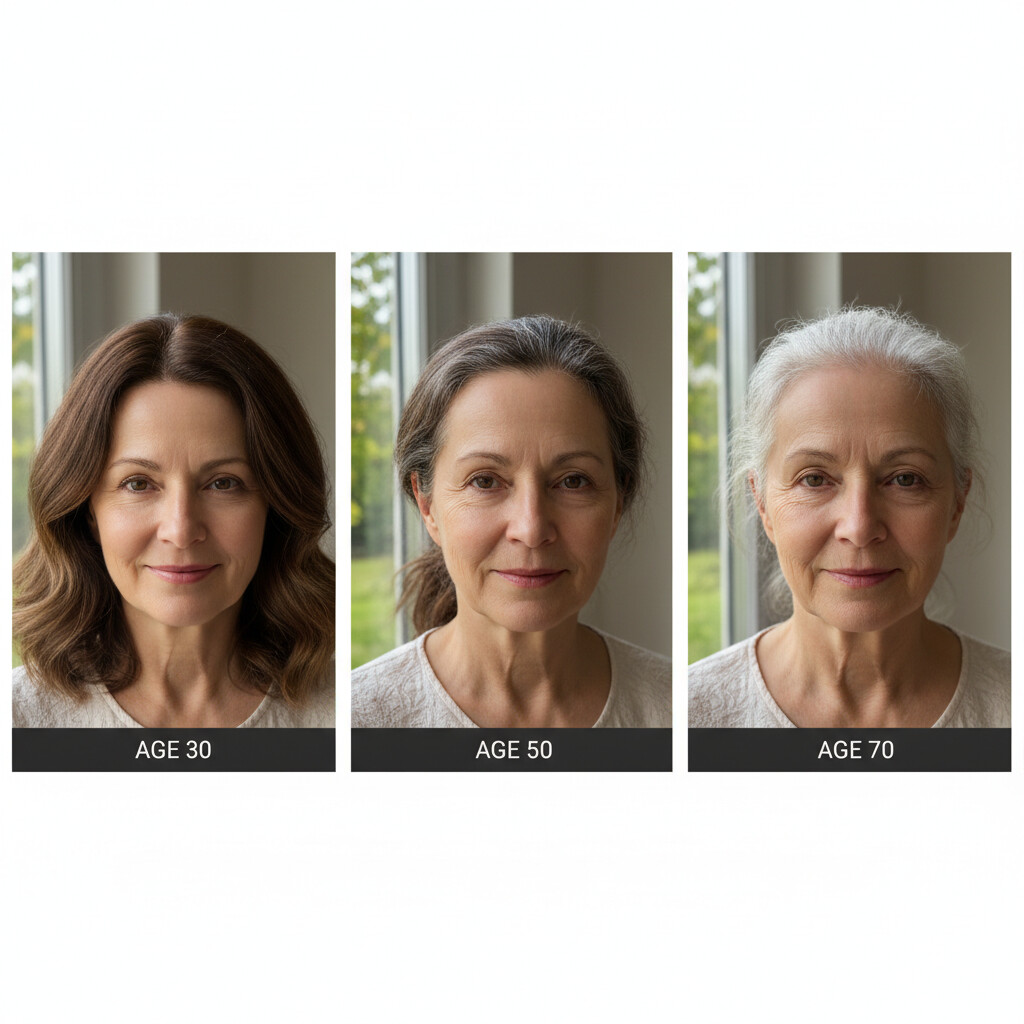
Why results can look thinner over time
When patients say their transplant “thinned out” after several years, the transplanted hair is often not the main problem. Common reasons include:
- Loss of native hair. Hair behind or between the transplanted grafts continues to thin, so the area loses the mixture of native and transplanted hair it relied on. This is the most common cause.
- Grafts from outside the safe zone. As described above, these can miniaturise over time.
- Age-related changes. Hair calibre can reduce slightly with age, and hair may turn grey, which can reduce contrast and make hair look thinner or, in some cases, fuller.
- Low original density. A result that was placed thinly to cover a large area may have looked acceptable at one year but show more scalp once the surrounding hair thins.
Our guide on long-term hair loss progression after a transplant looks at how to plan for this.
Big sessions and density
A very large single session may look like the fastest route to density. In practice, the number of grafts that can be safely taken and placed at once is limited by your donor area, and packing too many grafts too closely can affect survival. Many surgeons prefer a reasonable first session with a second session later if needed. See why mega sessions may not be right for everyone.
What protects density in the long term
- A conservative plan with a hairline and coverage that will still suit you as your hair loss progresses.
- Extraction from the safe donor zone, and a clear estimate of how many grafts your donor area can give over a lifetime.
- Medical treatment for native hair, if appropriate. Options such as finasteride or minoxidil can slow loss in the hair around the transplant. Discuss benefits and side effects with a doctor.
- Realistic timelines. Transplanted hairs usually shed between weeks 2 and 8, start regrowing around months 3-4, and reach their final look at 12-18 months. Density can’t be judged early.

Questions to ask a clinic
- Where exactly will my grafts be taken from, and how do you stay within the permanent donor zone?
- How many grafts do you think my donor area can give over my lifetime, and how many will this procedure use?
- What density do you plan in each area, and why?
- What do you expect my native hair to do over the next 10 years, and how does the plan allow for that?
- Why are you recommending this technique for me specifically?
A clinic that answers these clearly is thinking about how your result will look in the long run, not just at 12 months.
Common questions
Does DHI give denser results than FUE?
Not by itself. DHI is a way of placing grafts, not a different source of hair. The number of surviving grafts and their hairs decide density. Results vary much more between teams than between methods.
Is FUT better for long-term density?
FUT takes grafts from the most reliable part of the donor area and can yield many grafts, but it leaves a linear scar. FUE avoids that scar but needs careful extraction within the safe zone. Either can give lasting density when well planned.
Can density be added later?
Often yes, if enough donor hair remains. That is one reason many surgeons avoid using too much of the donor supply in a first procedure.
Discussion
If your transplant is several years old, has the density held up? Share which technique you had and whether any thinning came from the transplanted hair or from your native hair around it.
Sources
- Hair loss: Diagnosis and treatment, Mayo Clinic
- Hair replacement surgery, hair transplants, DermNet
- Followup hair restoration procedures, ISHRS
- Top 5 Things to Know About Hair Transplantation, ISHRS, 2019
Related guides
- How Many Grafts Can Be Transplanted in One Session?
- Hair Grafts Explained: Hairs per Graft, Count and Density
- Hair Transplant Density: How Dense Should It Be?
- Donor Area Overharvesting: Signs, Risks and How to Avoid It
- Is a Hair Transplant Permanent? Understanding Long-Term Results
About this guide: ForumHairTransplant.com is an independent patient community. We are not affiliated with any clinic or surgeon, and we don’t accept payment for rankings, reviews or recommendations. This article is general information, not medical advice. Talk to a qualified doctor about your own situation.