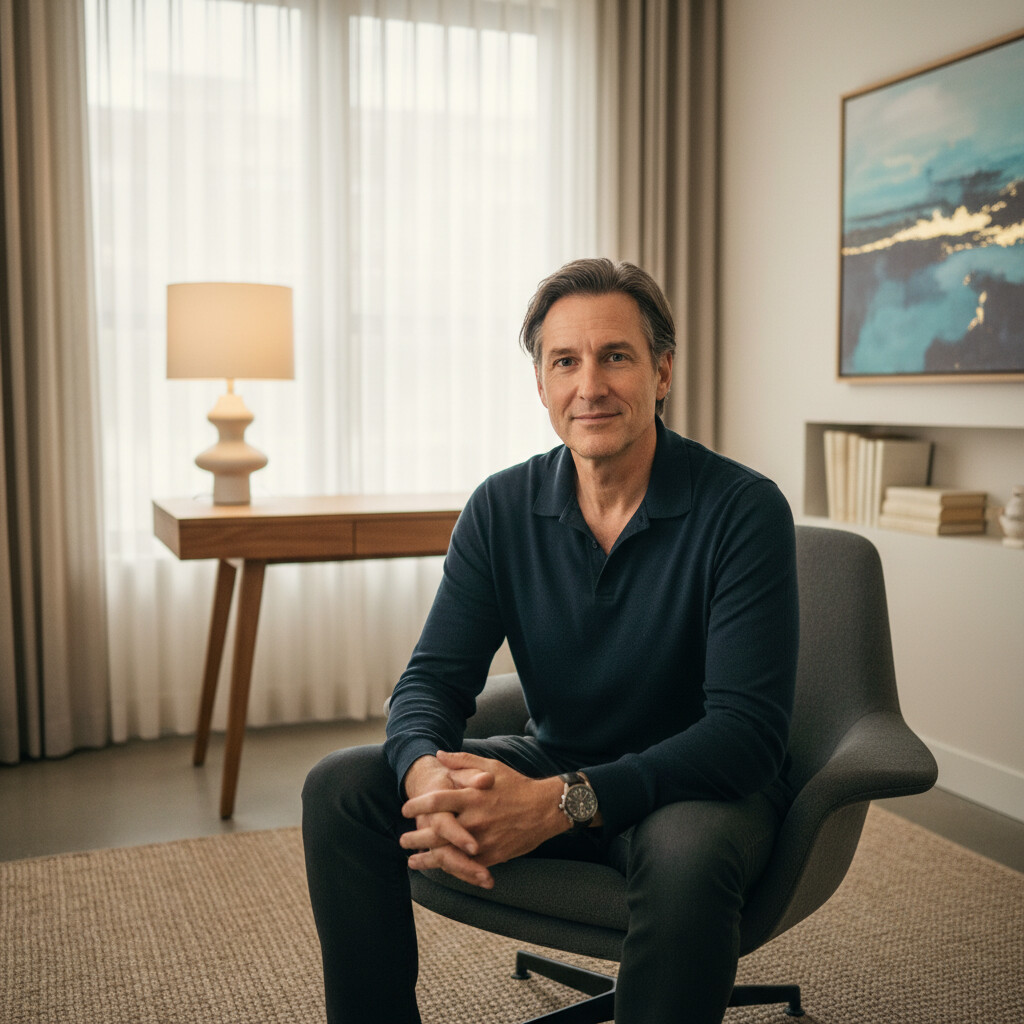
Navigating the journey of hair restoration often brings practical questions, especially concerning how the results will appear in everyday life and, importantly, in photographs. For many considering or undergoing a hair transplant, a common concern is whether the newly placed hair will look noticeably different in pictures compared to their natural hair.
This guide is designed for adults aged 35 and above who are seeking clear, factual information about hair transplantation. We aim to address the visual aspects of the results, focusing on how transplanted hair integrates with your existing hair and what you can realistically expect in various settings, including photography. Our goal is to provide you with a calm, informed perspective, helping you understand the nuances of achieving natural-looking outcomes.
What this guide will explain
- The factors influencing the visual appearance of transplanted hair.
- How transplanted hair integrates with your natural growth cycle.
- The role of technique and skill in achieving natural density and appearance.
- Realistic expectations for how transplanted hair looks in photos.
- Practical considerations for maintaining and viewing your results over time.
Understanding Hair Transplant Integration
At its core, a successful hair transplant is about seamlessly blending newly placed hair follicles with your existing hair. The goal is not simply to add more hair, but to do so in a way that respects your natural growth patterns, density, and hairline. Modern hair restoration techniques focus on:
- Natural Angulation and Direction: Each graft is placed to mimic the angle and direction of your surrounding hair. This meticulous approach is key to creating a believable and natural flow.
- Density and Distribution: The placement is carefully planned to achieve a natural density that complements your existing hair, avoiding an artificial or overly uniform look.
- Recipient Site Preparation: The process involves creating small sites for each graft. The skill lies in making these sites discreet and ensuring the transplanted hairs emerge at the correct depth and orientation.
When these elements are expertly managed, the transplanted hair grows, cycles, and looks fundamentally the same as your original hair. The visual integration is designed to be so complete that, under normal viewing conditions, it is indistinguishable from natural growth.
Factors Influencing Visual Appearance
Several factors contribute to how natural transplanted hair appears, both in person and in photographs:
Skill of the Surgeon and Technique
The expertise of the hair restoration physician is paramount. A skilled surgeon understands the intricacies of hair growth, hairline design, and the precise placement required to achieve undetectable results. Techniques like Follicular Unit Transplantation (FUT) and Follicular Unit Extraction (FUE) are the standard, but the artistry lies in their execution.
Hair Characteristics
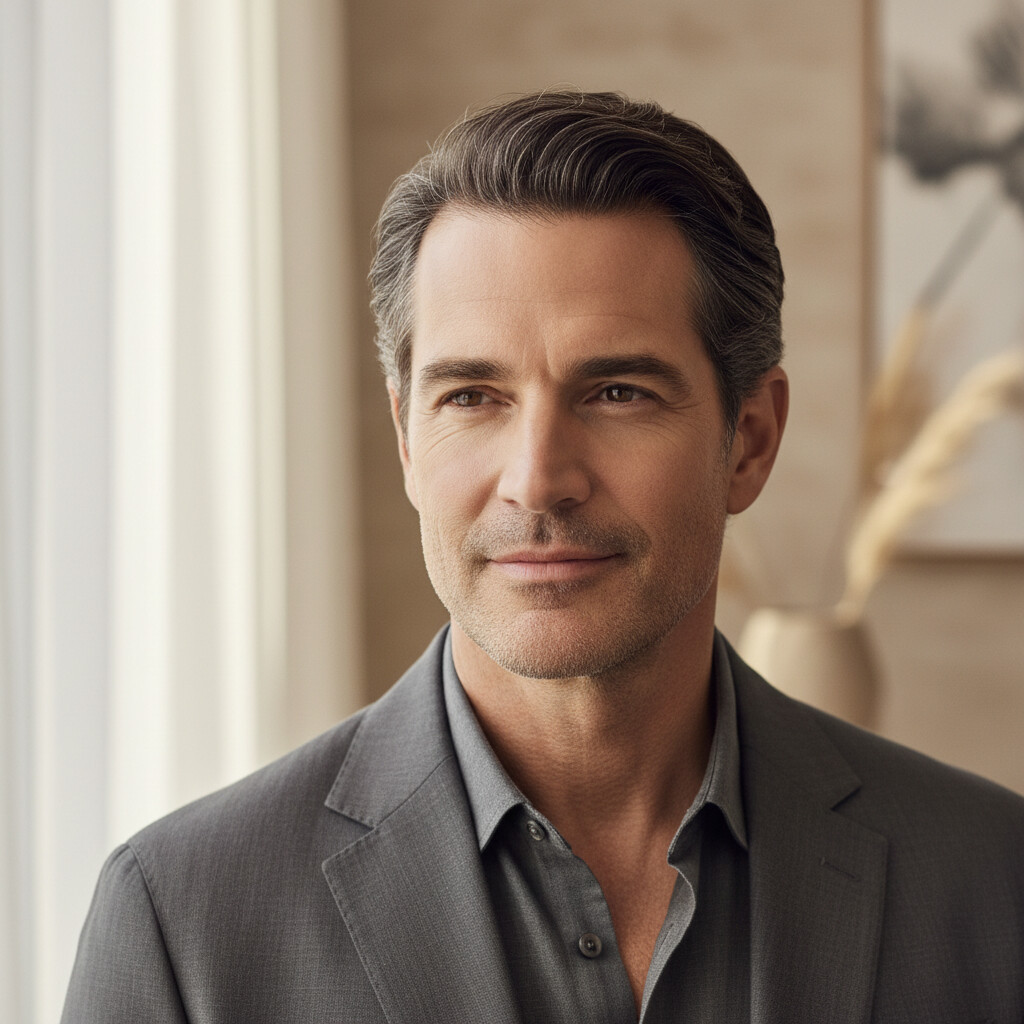
Your natural hair characteristics – such as color, texture, and curl – play a role. When transplanted hairs match the characteristics of the surrounding hair, the integration is more seamless. For instance, wavy or curly hair can offer more visual coverage and camouflage compared to very straight hair, making the overall appearance more robust.
Post-Treatment Care and Growth Cycle
Following the hair transplant procedure, there is a natural shedding phase, followed by gradual regrowth. This regrowth typically begins several months after the procedure and continues over time. Understanding this growth cycle is crucial for managing expectations. The transplanted hairs will eventually mature and blend in, looking and behaving just like your original hair.
Lighting and Photography
How hair appears can be influenced by lighting conditions. Harsh lighting, especially from above, can sometimes highlight scalp visibility. However, well-integrated transplanted hair, particularly when combined with natural density, generally holds up well under various lighting scenarios. Professional photographers often use soft lighting that is flattering to hair and skin, further aiding in a natural appearance.
Realistic Expectations in Photos
When discussing hair transplants and photos, it’s important to maintain realistic expectations. The objective of a high-quality hair transplant is for the results to look natural in all aspects of life, including in photographs.
What to Expect:
- Indistinguishable Growth: In most cases, once the transplanted hair has fully grown (typically 12-18 months post-procedure), it should be virtually indistinguishable from your original hair in photos. It will have the same texture, color, and growth cycle.
- Natural Density: The perceived density in photos will depend on the number of grafts transplanted and how well they blend with your existing hair. A well-executed procedure aims for a natural density that looks full without appearing artificial.
- Subtle Hairline: A carefully designed hairline will look natural in photos, complementing your facial features rather than appearing sharp or unnatural.
What Might Be Noticeable (and is normal):
- Early Stages: Immediately after the procedure, or during the initial shedding and regrowth phases, the appearance will obviously be different. This is temporary.
- Extreme Close-ups or Specific Angles: While the goal is seamless integration, extremely close-up shots or unusual angles might reveal the hairline’s structure, as is true for any individual’s natural hairline. However, this is rarely apparent in standard photographs.
- Lighting Effects: As mentioned, challenging lighting can sometimes affect how any hair appears, but well-integrated grafts should still look natural.
Ultimately, the success of a hair transplant is measured by its ability to restore a natural appearance that holds up in real-world situations, including being photographed.
Long-Term, Natural-Looking Outcomes
The ultimate aim of a hair transplant is to provide a long-lasting, natural-looking solution to hair loss. This means that the transplanted hair, once established, should integrate so completely that it requires no special consideration in photos or daily life.
- Durability: Transplanted hair follicles are typically taken from areas resistant to the effects of DHT (dihydrotestosterone), the hormone often responsible for male pattern baldness. This means the transplanted hair is usually permanent and continues to grow throughout your life.
- Maintenance: Once healed and growing, transplanted hair requires the same care as your natural hair – washing, styling, and cutting. There are no special maintenance requirements to make it look good in photos.
- Artistry: The ‘natural look’ is achieved through a combination of scientific principles and artistic skill. This includes understanding facial aesthetics, creating a balanced hairline, and placing grafts with precision.
When these principles are followed, the distinction between transplanted and original hair becomes nonexistent in everyday viewing and photography.
Common Questions
Q1: Will transplanted hair grow back the same color and texture?
Yes, the transplanted hair follicles retain the characteristics of the donor area from which they were harvested. This means they will grow back with the same color, texture, and curl pattern as your original hair in that region. The aim is to match these characteristics as closely as possible to your thinning or lost areas for seamless integration.
Q2: How long does it take for transplanted hair to look natural in photos?
It takes time for transplanted hair to establish and grow. You will typically see initial growth around 3-4 months post-procedure. Significant visual changes occur between 6-12 months, with the most natural and final results usually apparent around 12-18 months after the transplant. By this time, the hair should look and behave like your original hair in all situations, including photos.
Q3: Can lighting make transplanted hair look obvious in photos?
While extreme or very specific lighting conditions can sometimes accentuate scalp visibility for anyone, a well-performed hair transplant should integrate naturally. The goal is to create density and a hairline that looks natural under typical lighting. Professional photography often uses softer lighting that is forgiving and enhances natural hair appearance, further minimizing any potential issues.
Q4: Is there anything I need to do differently when taking photos after a hair transplant?
Once your transplanted hair has fully grown and integrated, there is generally nothing you need to do differently for photos. The transplanted hair should look and feel like your natural hair. The focus during the healing process is on following your surgeon’s instructions for optimal recovery and growth. After that, you can resume all normal activities, including posing for photographs, without concern.
Discussion Section
For those who have undergone hair transplantation, how has your experience been with how your results appear in various types of photography – from casual snapshots to more formal portraits?
What specific aspects of your hair restoration journey, if any, do you feel contribute most to its natural appearance in everyday life and images?
For individuals considering a transplant, what are your primary visual concerns regarding how future results might be perceived in photos, and what reassurances are you seeking?
Medical Disclaimer
This content is for informational purposes only and does not constitute medical advice. Hair transplantation is a medical procedure, and individual results can vary significantly. A thorough consultation with a qualified and experienced hair restoration surgeon is essential to assess your specific situation, discuss realistic expectations, and determine the most appropriate treatment plan for you. Always consult with a healthcare professional for any health concerns or before making any decisions related to your health or treatment.