
Female hair loss is a common concern, affecting millions of women worldwide. Unlike male pattern baldness, which often presents with a receding hairline and distinct bald patches, female hair loss typically manifests as diffuse thinning across the scalp, particularly at the crown. Understanding the patterns and causes of this hair loss is crucial for effective treatment. This guide will delve into female hair loss, introduce the Ludwig Scale for classification, and explain diffuse thinning.
Key Points to Consider:
- Understanding Female Hair Loss Patterns: Differentiating female hair loss from male pattern baldness.
- The Ludwig Scale Explained: How dermatologists classify the severity of female hair loss.
- Diffuse Thinning: The Hallmark of Female Hair Loss: Exploring the characteristics and common causes.
- Causes of Diffuse Thinning: Identifying genetic, hormonal, and lifestyle factors.
- Treatment Options for Diffuse Thinning: Exploring medical, surgical, and lifestyle interventions.
- When to Consider a Hair Transplant: Evaluating suitability for surgical solutions.
Differentiating Female Hair Loss from Male Pattern Baldness
While both men and women can experience hair loss due to genetics, the presentation is often quite different. Male pattern baldness, also known as androgenetic alopecia in men, follows a predictable pattern: a receding hairline forming an ‘M’ shape and thinning at the crown, eventually leading to complete baldness in susceptible areas.
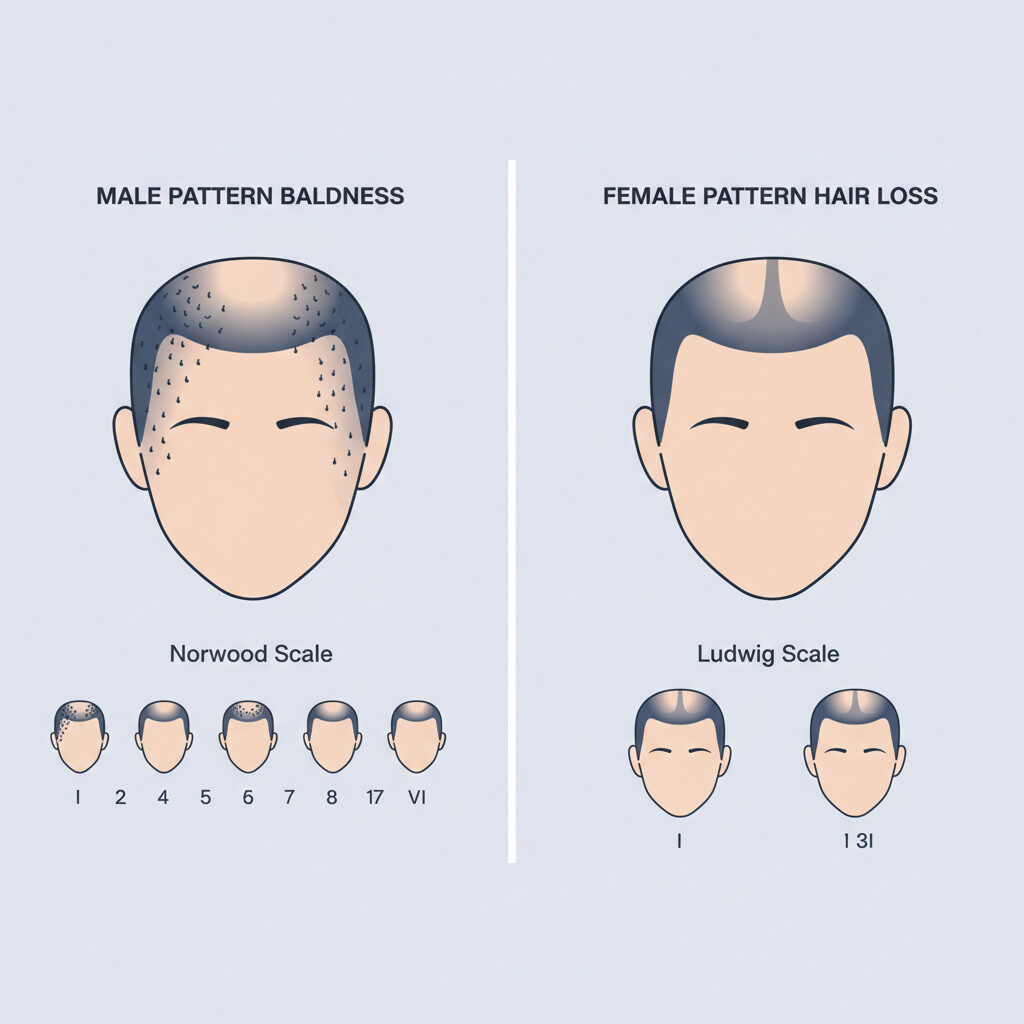
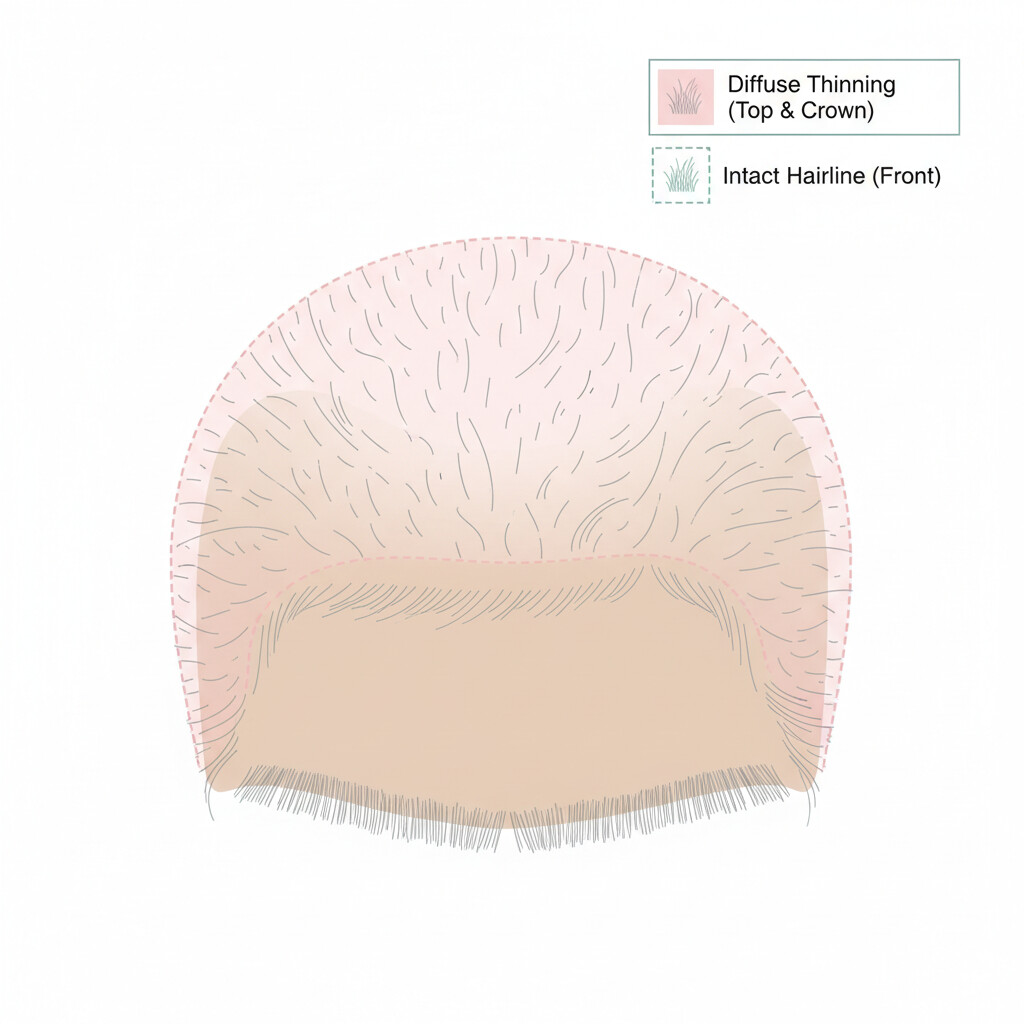
In contrast, female pattern hair loss (FPHL), also referred to as androgenetic alopecia in women, is characterized by a more generalized thinning of hair over the entire scalp. The frontal hairline is usually preserved, which is a key distinguishing feature. The thinning is most noticeable on the top and crown of the head, often revealing more of the scalp. This diffuse thinning can be distressing, impacting self-esteem and confidence.
The Ludwig Scale: Classifying Female Hair Loss Severity
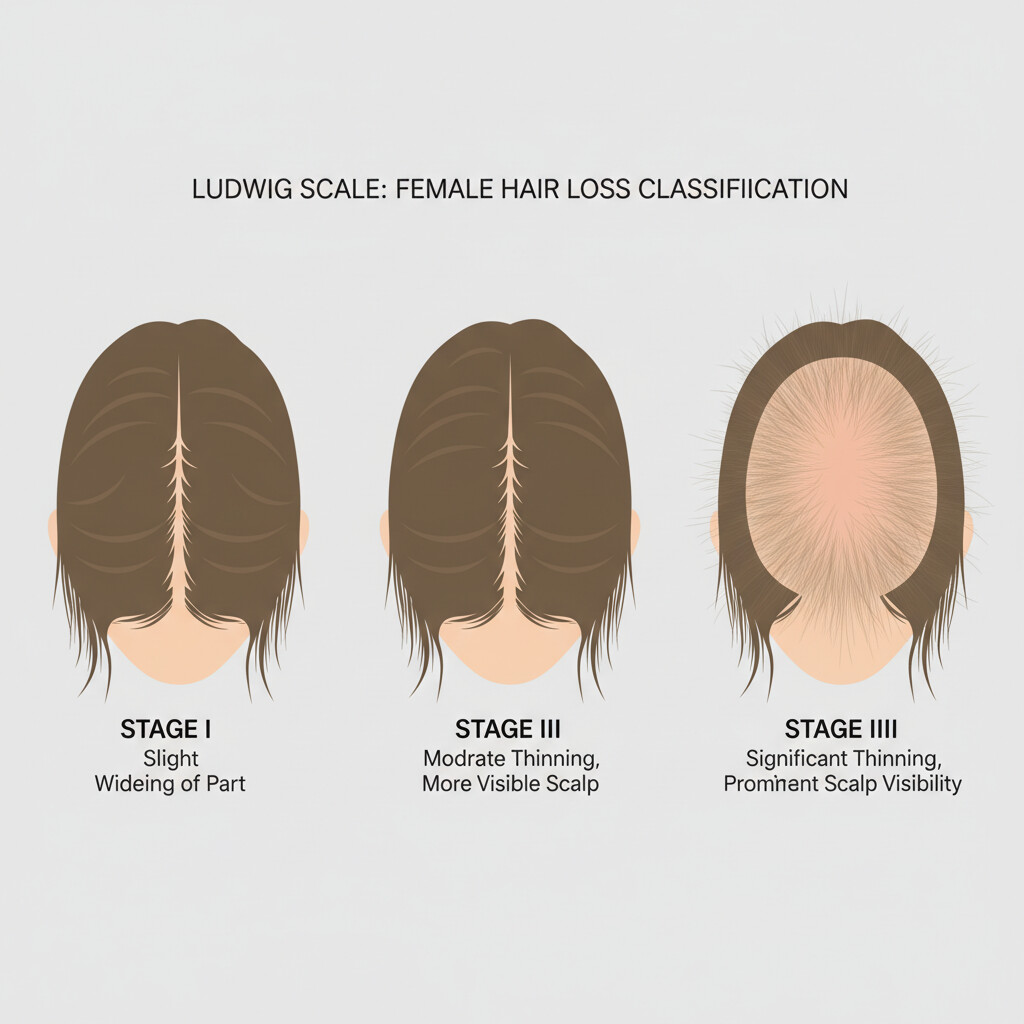
Dermatologists and trichologists use the Ludwig Scale to categorize the extent of female hair loss. Developed by Dr. O.E. Ludwig in 1977, this scale provides a standardized method for assessing severity and tracking progression. It divides female hair loss into three main stages:
- Stage I: Minimal thinning, which may not be immediately noticeable. The part line may appear slightly wider, and increased shedding might be observed. Most of the scalp remains covered.
- Stage II: Moderate thinning. The hair becomes noticeably less dense, and the scalp becomes more visible, especially when the hair is parted. The widening of the part line is more pronounced.
- Stage III: Severe thinning. The scalp is clearly visible through the thinning hair over a significant area, typically the crown and top of the head. In some cases, it may resemble complete baldness in these areas, though the frontal hairline is usually maintained.
Understanding which stage a woman falls into is essential for determining the most appropriate treatment plan.
Diffuse Thinning: The Hallmark of Female Hair Loss
Diffuse thinning is the most common type of hair loss experienced by women. It means that the hair follicles across the scalp are miniaturizing, producing finer, shorter, and less pigmented hairs over time, rather than experiencing complete loss in specific areas. This gradual reduction in hair density can make the hair appear less voluminous and thinner overall.
Several factors can contribute to diffuse thinning, and it’s often a combination of these that leads to noticeable hair loss. Identifying the underlying cause is the first step towards effective management.
Common Causes of Diffuse Thinning
-
Genetics (Androgenetic Alopecia): Just like men, women can inherit a genetic predisposition to hair loss. In women, this is typically androgenetic alopecia, where hair follicles become sensitive to androgens (male hormones), even if hormone levels are within the normal range. This sensitivity leads to the gradual miniaturization of hair follicles.
-
Hormonal Changes: Fluctuations in hormones play a significant role. This is often seen during:
- Pregnancy and Childbirth: Postpartum hair loss (telogen effluvium) is common as hormone levels shift dramatically after delivery. The extra hair grown during pregnancy is shed.
- Menopause: Declining estrogen levels during menopause can lead to increased hair thinning and loss.
- Polycystic Ovary Syndrome (PCOS): This condition can cause hormonal imbalances, including increased androgen levels, contributing to hair loss.
-
Nutritional Deficiencies: The body needs essential vitamins and minerals for healthy hair growth. Deficiencies in iron, Vitamin D, zinc, biotin, and protein can all lead to diffuse thinning.
-
Thyroid Disorders: Both an overactive (hyperthyroidism) and underactive (hypothyroidism) thyroid can disrupt the hair growth cycle, leading to shedding and thinning.
-
Stress (Telogen Effluvium): Significant physical or emotional stress, such as surgery, illness, major life events, or extreme dieting, can push a large number of hair follicles into the resting (telogen) phase prematurely. This results in increased shedding a few months later, known as telogen effluvium.
-
Medications: Certain medications, including those for blood pressure, heart conditions, arthritis, depression, and cancer treatments (chemotherapy), can cause hair loss as a side effect.
-
Autoimmune Diseases: Conditions like alopecia areata, lupus, or scalp infections can cause hair loss, though alopecia areata typically presents with patchy loss rather than diffuse thinning.
Treatment Options for Diffuse Thinning
The best treatment approach depends on the underlying cause. It often involves a multi-faceted strategy.
-
Medical Treatments:
- Minoxidil (Rogaine): This over-the-counter topical solution is FDA-approved for both men and women. It works by prolonging the growth phase of hair follicles and can help stimulate regrowth, particularly effective for androgenetic alopecia and telogen effluvium.
- Prescription Medications: For certain causes like hormonal imbalances (e.g., PCOS), medications such as anti-androgens or birth control pills may be prescribed. Spironolactone is a common example.
- Nutritional Supplements: If a deficiency is identified (e.g., iron, Vitamin D), supplements can help restore levels and improve hair health.
-
Low-Level Laser Therapy (LLLT): Devices like laser combs or helmets emit light energy that may stimulate hair follicles and promote growth. It’s often used in conjunction with other treatments.
-
Platelet-Rich Plasma (PRP) Therapy: This involves drawing the patient’s blood, processing it to concentrate platelets, and then injecting the PRP into the scalp. The growth factors in platelets are believed to stimulate hair follicles.
-
Lifestyle and Hair Care:
- Diet: Ensuring a balanced diet rich in protein, vitamins, and minerals is crucial.
- Stress Management: Techniques like yoga, meditation, or mindfulness can help manage stress.
- Gentle Hair Care: Avoiding harsh chemical treatments, excessive heat styling, and tight hairstyles can prevent further breakage and damage.
When to Consider a Hair Transplant for Female Hair Loss
Hair transplantation can be a highly effective solution for certain types of hair loss in women, but it’s not suitable for everyone. For diffuse thinning, the success of a hair transplant depends heavily on the density of the remaining hair in the donor area (typically the back and sides of the head).
Ideal Candidates for Hair Transplantation:
- Women with a stable, strong donor area with sufficient hair density.
- Women whose hair loss is primarily concentrated in specific areas, even if it stems from a diffuse thinning cause (e.g., a widened part line that is cosmetically bothersome).
- Women who have tried and exhausted other medical treatments with limited success.
Considerations for Diffuse Thinning and Hair Transplants:
- Donor Area Limitation: If the thinning is very widespread and the donor area is also affected, there might not be enough healthy hair to transplant effectively.
- Surgical Techniques:
- FUT (Follicular Unit Transplantation): Involves removing a strip of scalp from the donor area and dissecting out individual follicular units. This method can yield a high number of grafts but leaves a linear scar.
- FUE (Follicular Unit Extraction): Involves extracting individual follicular units directly from the donor area using a micro-punch tool. This method offers minimal scarring but can be more time-consuming and may yield fewer grafts per session if the donor area is limited.
- Scalp Micropigmentation (SMP): For women with very diffuse thinning or insufficient donor hair, SMP can be a fantastic alternative. It’s a non-surgical procedure that creates the illusion of a shaved head or denser hair by tattooing tiny dots onto the scalp.
Consulting with a qualified hair loss specialist or a board-certified dermatologist is paramount. They can accurately diagnose the cause of your hair loss, assess its progression using tools like the Ludwig Scale, and recommend the most appropriate treatment plan, whether it’s medical management, surgical intervention like a hair transplant, or a combination of approaches.