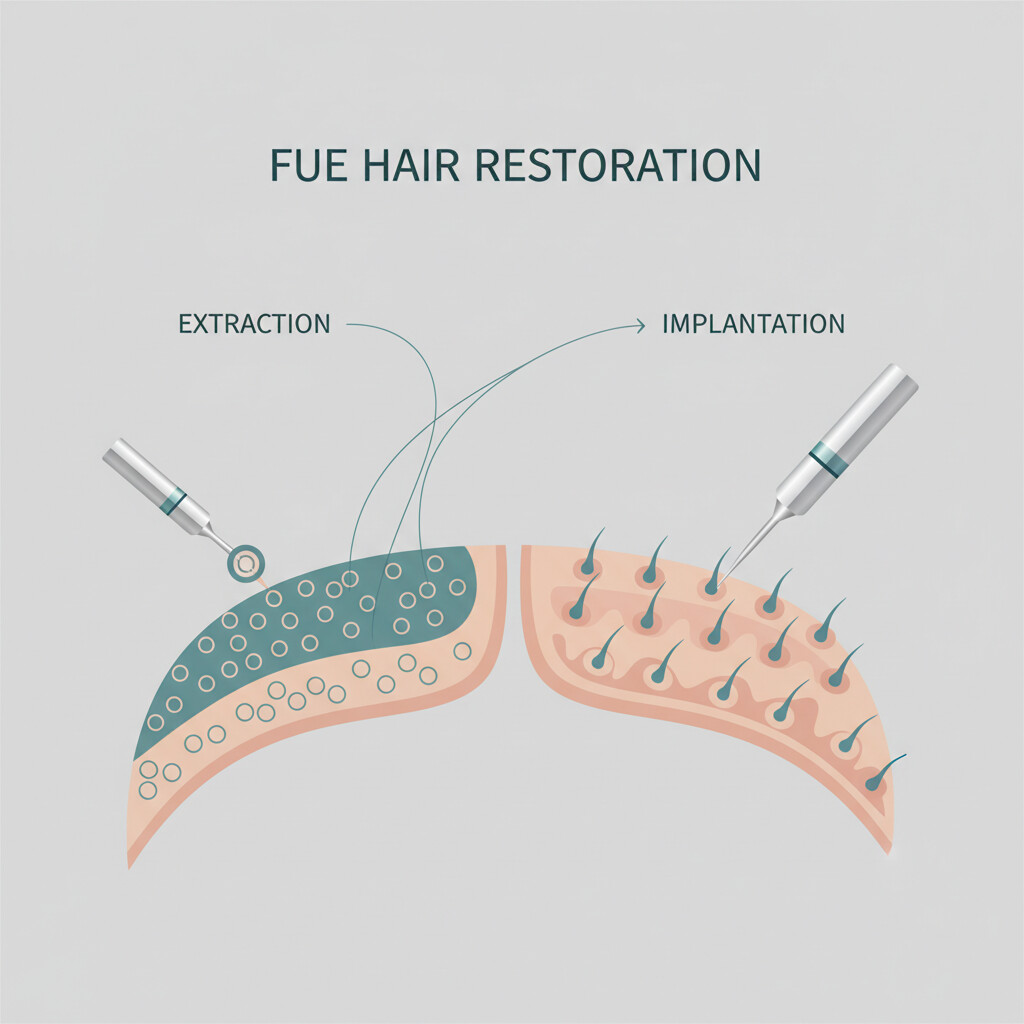
Considering a hair transplant is a significant decision, and understanding the available methods is crucial for making an informed choice. Among the most popular and effective techniques today is the Follicular Unit Extraction (FUE) method. This guide aims to demystify FUE, covering everything you need to know from the procedure itself to recovery and expected outcomes.
What to Expect from this Guide:
- Understanding the FUE procedure and how it works.
- Identifying who is a good candidate for FUE.
- Exploring the benefits and potential risks of FUE.
- Learning about the recovery process and aftercare.
- Setting realistic expectations for results.
What is the FUE Hair Transplant Method?
The Follicular Unit Extraction (FUE) method is a sophisticated surgical technique used for hair restoration. Unlike older methods that involved removing a strip of scalp, FUE involves extracting individual hair follicles directly from a donor area, typically the back or sides of the head, and transplanting them to the thinning or bald areas. The donor area from which these follicles are harvested is often referred to as the ‘donor site,’ and the area receiving the transplanted follicles is the ‘recipient site.’
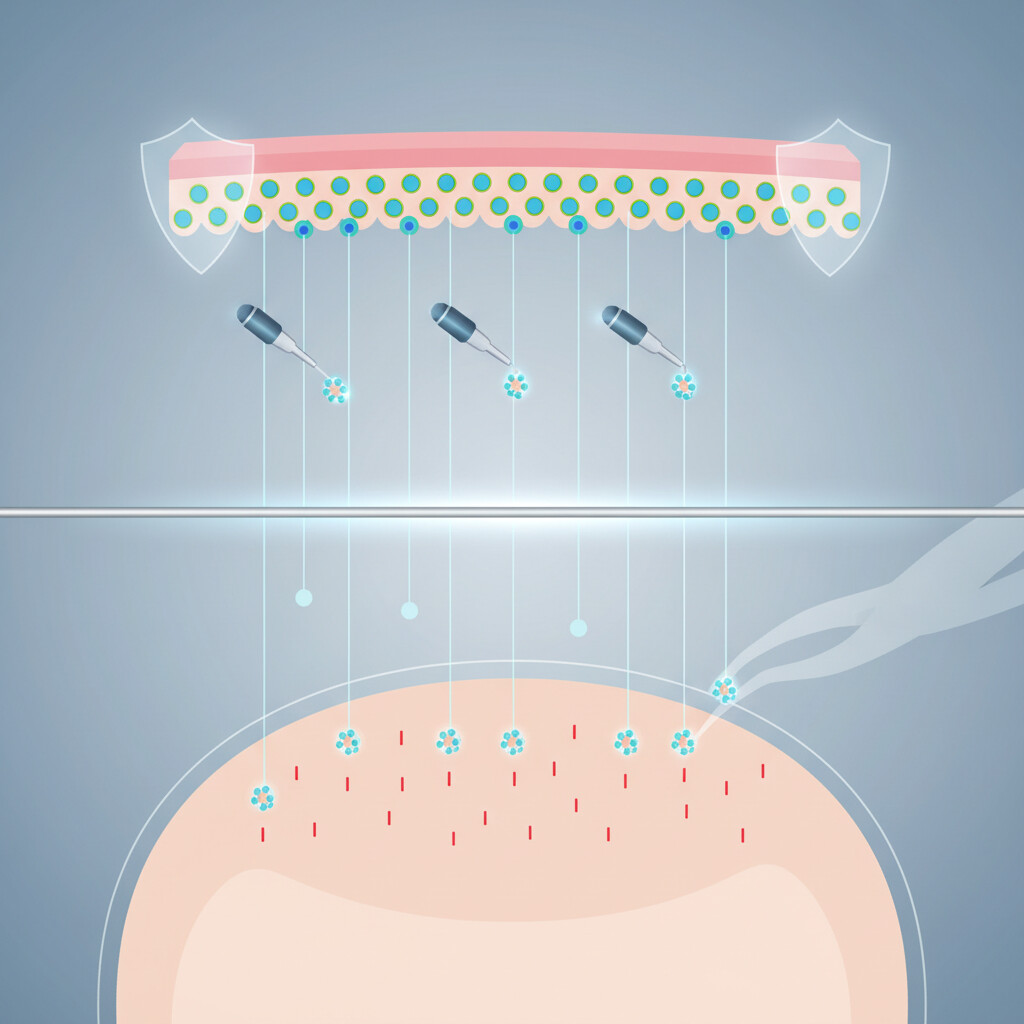
An illustration showing the FUE hair transplantation process, highlighting individual follicle extraction and implantation.
The extraction process is performed using specialized micro-instruments, each capable of harvesting a single follicular unit, which contains one to four hairs. This meticulous approach ensures minimal scarring and allows for a more natural-looking result. The extracted follicles are then carefully prepared and implanted into the recipient area, strategically placed to mimic the natural direction and density of existing hair growth.
Who is a Good Candidate for FUE?
While FUE is a widely applicable procedure, not everyone is an ideal candidate. Generally, good candidates for FUE include:
- Individuals with Androgenetic Alopecia (Pattern Baldness): This is the most common cause of hair loss in men and women, and FUE is highly effective in addressing it.
- Those Seeking a Natural Look: The ability to transplant individual follicular units allows for a highly customized and natural-looking hairline.
- Patients Who Prefer Shorter Hair: Because the extraction sites are small and scattered, FUE often results in less noticeable scarring, making it suitable for individuals who like to keep their hair short.
- Individuals with Good Donor Hair Density: A sufficient amount of healthy, dense hair in the donor area is essential for a successful FUE procedure.
- People Who Have Had Previous Hair Transplants: FUE can sometimes be used to address issues from older transplant methods or to augment previous procedures.
However, individuals with certain medical conditions, unrealistic expectations, or insufficient donor hair may not be suitable candidates. A thorough consultation with a qualified hair transplant surgeon is essential to determine individual suitability.
The FUE Procedure: Step-by-Step
The FUE procedure is typically performed under local anesthesia, meaning you will be awake but will not feel any pain during the extraction and implantation. The process can be broken down into the following key stages:
- Consultation and Planning: The surgeon assesses your hair loss pattern, donor density, and discusses your desired outcome. They will then create a personalized hair transplant plan, including the design of the new hairline.
- Donor Area Preparation: The donor area (usually the back of the head) is shaved to allow for easier access to the individual follicles. The area is then sterilized, and local anesthetic is administered.
- Follicle Extraction: Using a specialized micro-punch tool (typically 0.8mm to 1.0mm in diameter), the surgeon carefully extracts individual follicular units one by one. These extracted units are immediately placed in a special holding solution to keep them viable.
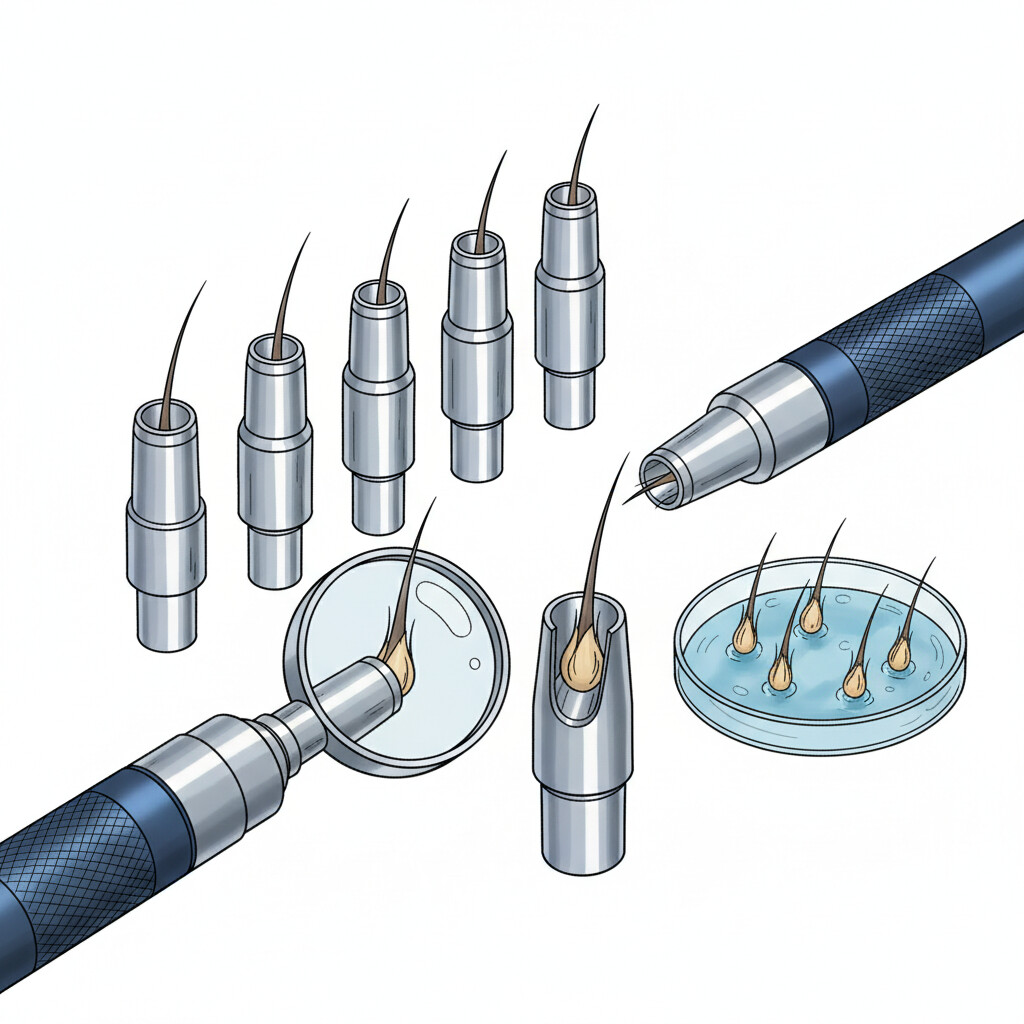
Close-up view of micro-punches used for extracting follicular units in FUE hair transplantation.
- Recipient Site Creation: Tiny incisions, known as recipient sites, are made in the balding or thinning areas using fine needles or blades. The size and angle of these incisions are critical for achieving a natural hairline and hair direction.
- Follicle Implantation: The extracted follicular units are carefully inserted into the pre-made recipient sites. The surgeon meticulously places each graft to ensure optimal density, angle, and distribution, mimicking natural hair growth patterns.
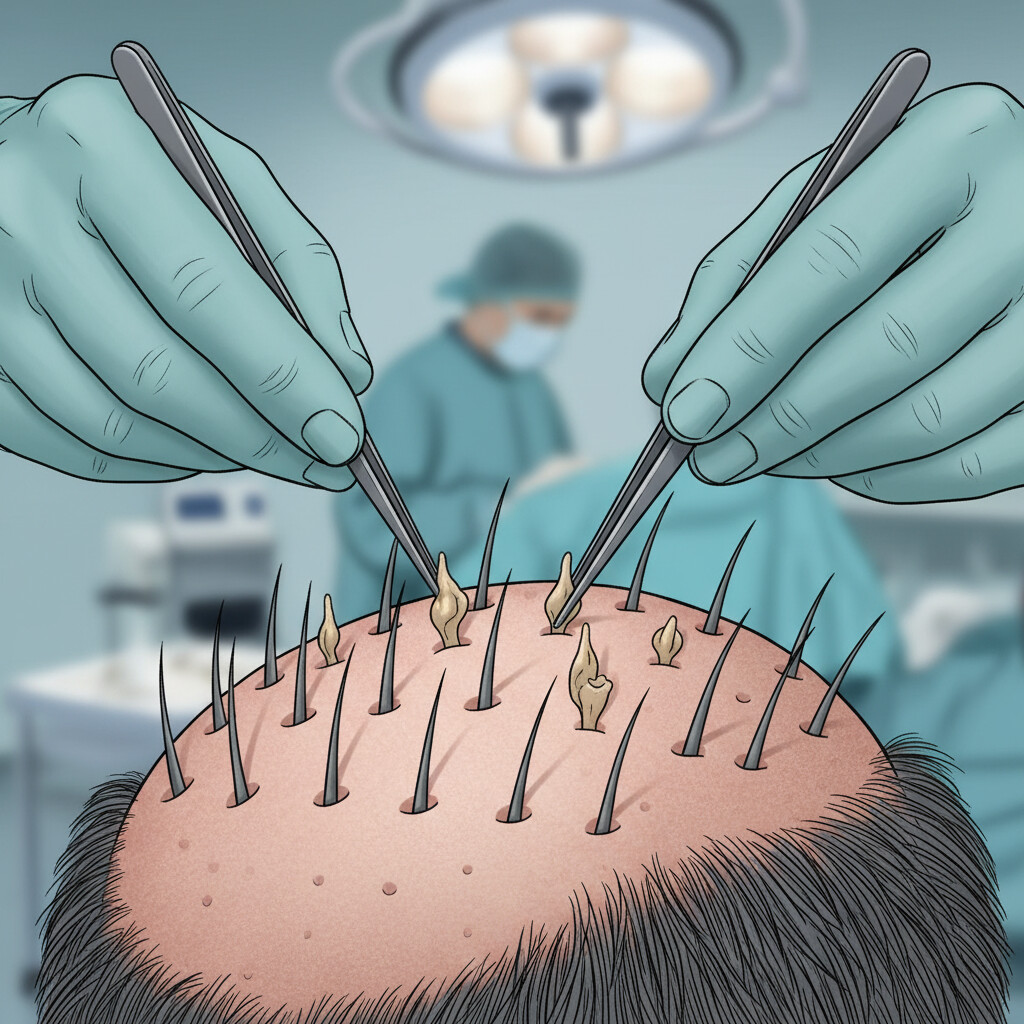
Surgeon carefully implanting extracted follicular units into the recipient area during an FUE procedure.
- Completion: Once all grafts are transplanted, the donor and recipient areas are cleaned, and a light dressing may be applied. The entire procedure can take several hours, depending on the number of grafts being transplanted.
Benefits of the FUE Method
FUE has gained immense popularity due to several key advantages:
- Minimally Invasive: Compared to older strip methods, FUE is less invasive, resulting in less discomfort and a quicker recovery.
- Natural Results: The ability to transplant individual follicular units allows for precise placement, creating a dense and natural-looking hairline.
- Minimal Scarring: The extraction process leaves tiny, dot-like scars that are virtually undetectable, especially when hair is worn at a normal length.
- Faster Recovery: Most patients can return to their normal activities within a few days to a week.
- Versatility: It can be used for various types of hair loss and can also be used to restore eyebrows, beards, and moustaches.
Recovery and Aftercare
The recovery period following FUE is generally straightforward. You can expect some redness, swelling, and minor discomfort in both the donor and recipient areas for the first few days. The small extraction sites in the donor area will typically heal within a week to ten days. The transplanted hairs will initially shed within a few weeks, which is a normal part of the process. New hair growth usually begins to appear around three to four months post-procedure, with significant results visible within 9-12 months.
Post-Procedure Care Instructions:
- Avoid Strenuous Activity: Refrain from heavy lifting and intense exercise for at least one week.
- Gentle Washing: Follow your surgeon’s instructions for washing your scalp, typically starting a day or two after the procedure.
- Sleep Position: Try to sleep with your head elevated for the first few nights.
- Avoid Touching: Refrain from touching or scratching the transplanted areas.
- Medication: Take any prescribed pain relievers or antibiotics as directed.
Potential Risks and Complications
Like any surgical procedure, FUE carries some potential risks, although they are generally rare and minor when performed by a skilled surgeon. These can include:
- Infection: Though uncommon, there is a risk of infection at the extraction or implantation sites.
- Swelling and Bruising: Some temporary swelling and bruising are normal but can be managed.
- Numbness: Temporary numbness in the donor or recipient areas can occur.
- Unnatural Results: Poorly placed grafts can lead to an unnatural appearance, highlighting the importance of choosing an experienced surgeon.
- Donor Area Issues: In rare cases, excessive harvesting can lead to thinning in the donor area.
Setting Realistic Expectations
It’s essential to have realistic expectations about the outcome of your FUE hair transplant. While FUE can significantly restore hair density and create a fuller appearance, it is not a magic cure for baldness. The success of the procedure depends on factors such as the number of grafts transplanted, the quality of your donor hair, and your individual healing process. Patience is key, as it takes several months to see the final results. Your surgeon will discuss what can be realistically achieved during your consultation.
Conclusion
The FUE hair transplant method represents a significant advancement in hair restoration, offering a less invasive and more natural-looking solution for hair loss. By understanding the procedure, candidacy, recovery, and potential outcomes, individuals can make a confident decision about whether FUE is the right choice for them. A thorough consultation with a reputable hair transplant clinic is the most crucial first step in embarking on your journey to regain a fuller head of hair.