By ForumHairTransplant Editorial Team · Prepared with AI assistance · Sources checked: 19 October 2026
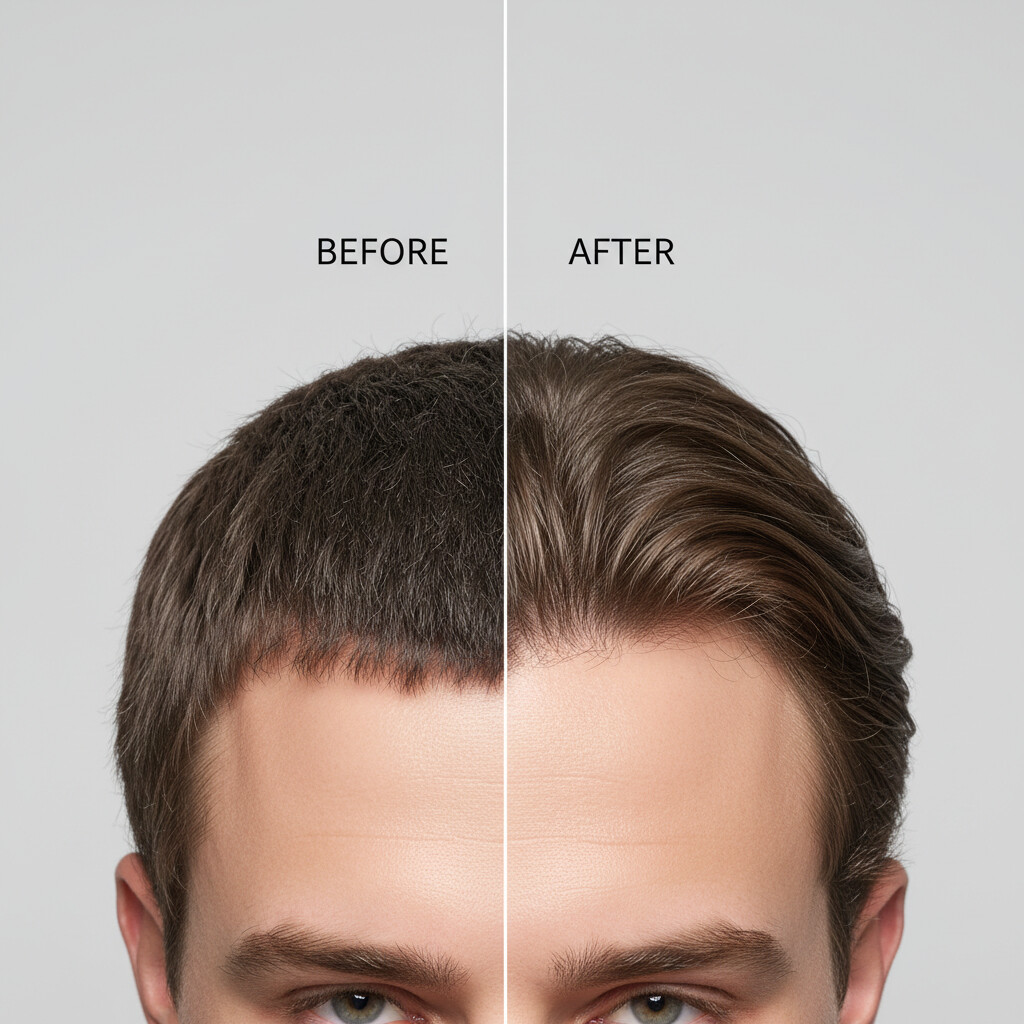
Many poor hair transplant results can be improved, but few can be completely undone. A correction (also called a revision or repair) usually means adding grafts to soften or thicken an area, removing or moving grafts that are badly placed, and treating visible donor scars. How much can be fixed depends mostly on how much donor hair you have left, how much scarring the first surgery caused, and whether enough time has passed to judge the original result.
Key takeaways
- Wait until the first result is mature before deciding on a correction. That is usually at least 12 months, and often longer for the crown.
- The most common problems are an unnatural hairline, low or patchy density, wrong hair direction, visible donor scars and an over-harvested donor area.
- Corrections use the same tools as a first transplant (adding grafts, removing grafts, scar treatment), often combined with non-surgical options such as scalp micropigmentation.
- A limited or damaged donor area is the biggest constraint. Some patients can be improved a lot; others only partly.
- Repair work is usually harder and less predictable than a first procedure, so choose a doctor who does it regularly and plan conservatively.
Is it a real problem, or is it too early?
Before looking at repair, make sure the result is finished. Transplanted hairs normally shed between weeks 2 and 8, and new growth usually starts around months 3-4. At 6 months many results still look thin or uneven. The final result is usually judged at 12-18 months, and the crown often takes longer.
Some early changes are also temporary:
- Normal shedding of the transplanted hairs in the first weeks is expected.
- Shock loss is temporary loss of your own native hairs near the operated areas. It usually grows back over several months, although hairs that were already weak may not.
If you are unhappy at the 6-month mark, the guide on dissatisfaction at 6 months explains what is still likely to change. A few problems are clear straight away, though. A hairline placed far too low or an obviously wrong shape will not improve with time, and it is reasonable to get an early opinion on those.
Common reasons a transplant needs correction
- Unnatural hairline. Too low for your age, too straight, too wide, or made of thick multi-hair grafts at the very front. A natural hairline has an irregular edge with fine single-hair grafts, as described in how a natural hairline is designed.
- Low or patchy density. Too few grafts for the area covered, or grafts that did not grow well. Causes can include graft handling, very dense packing, or healing problems. The guide on causes of transplant failure covers these in more detail.
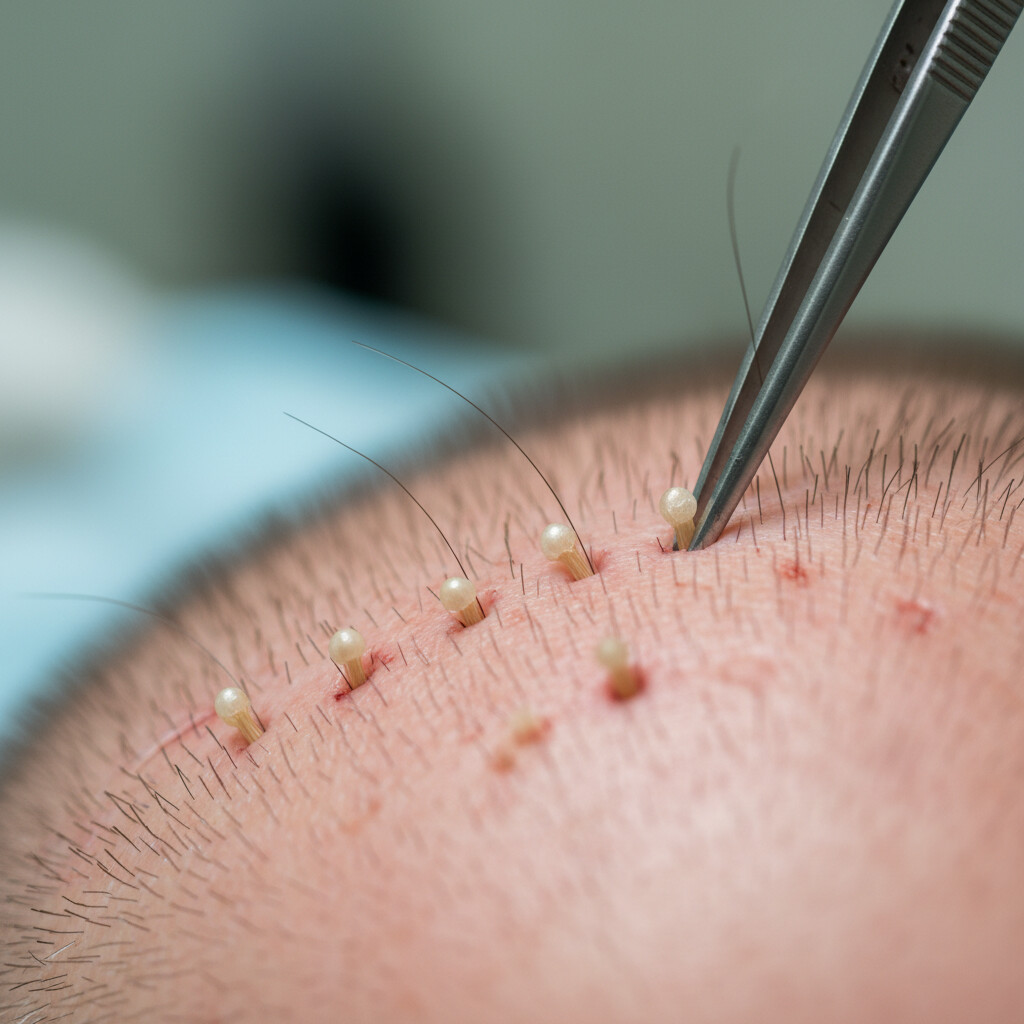
- Wrong angle or direction. Hairs that stick straight out or grow against the natural direction are hard to style and look obvious. See unnatural hair direction after a transplant.
- Old “plug” results. Large grafts from older techniques can give a doll’s-hair or row-like look.
- Donor area problems. A wide strip scar from FUT, or a see-through, moth-eaten look after too many grafts were taken with FUE (over-harvesting).
- Ongoing hair loss. The transplant may have been fine at the time, but native hair behind or around it kept thinning, leaving an isolated patch of transplanted hair.
How corrections are done
A repair plan is built around the specific problem. It often combines several of these approaches, sometimes over more than one session.
Adding grafts
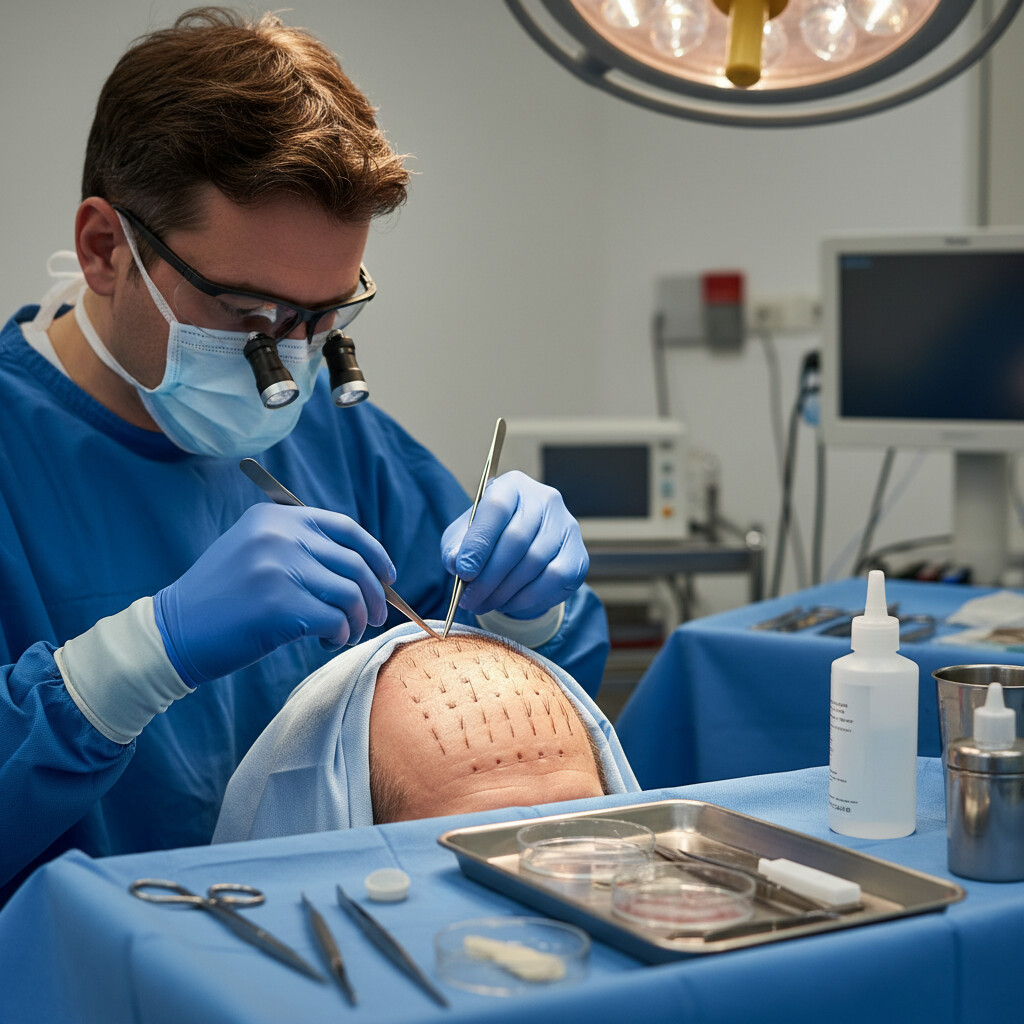
The most common correction. Fine single-hair grafts can be placed in front of and between a harsh hairline to soften it, and extra grafts can raise density in thin or patchy areas. This works best when the donor area still has a reasonable supply and the recipient skin is healthy.
Removing or moving grafts
Grafts that are too low, badly angled or too large can be removed, usually with an FUE-style punch. Where possible they are split or re-implanted in a better place. Removal is slow, precise work. It can leave small marks, and not every removed graft will regrow. For a hairline that is far too low, this is often the only way to raise it, and it may take more than one session. Some doctors also use laser hair removal for unwanted hairs in specific cases; practice varies.
Treating donor scars
Options for a visible donor area include:
- FUE into a strip scar. Grafts can be placed into scar tissue to break up the line, although growth in scar tissue is often less reliable than in normal skin.
- Scar excision. A wide scar can sometimes be surgically narrowed. The result depends on skin laxity and healing, and a new scar remains.
- Scalp micropigmentation (SMP). Tiny pigment deposits can make a scar or a thin donor area less visible, especially with short hair. It fades over time and needs touch-ups. See our SMP guide.
The hair transplant scars guide explains what normal FUE and FUT scarring looks like.
Managing ongoing hair loss
If the problem is native hair loss around the transplant, more surgery alone may not be the answer. Medical treatment to slow further loss is often part of the discussion. Speak to a doctor about whether options such as finasteride or minoxidil are suitable for you.
Limits of a correction
Be realistic before you commit:
- Donor supply is finite. If the first surgery took a large number of grafts, or harvested outside the safe zone, there may be little left. Body or beard hair is sometimes used, but it has a different texture and less predictable growth.
- Scar tissue can reduce growth. Skin that has been operated on before may have a poorer blood supply, so graft survival can be lower than in a first procedure.
- Some changes are permanent. Removed grafts leave small marks, and a scar can be improved but not erased.
- It can take several steps. Complex repairs are often done in stages.
The consultation
Bring as much information as you can: the date of surgery, the technique, the number of grafts, and photos from before surgery and from each stage of growth. A good repair consultation should include:
- A close look at the donor area, with an honest estimate of how many grafts remain.
- A clear explanation of what can and cannot be improved.
- A written plan: which areas, roughly how many grafts, whether any grafts will be removed, and how many sessions are expected.
- A discussion of risks and complications, including the chance that growth is lower than expected.
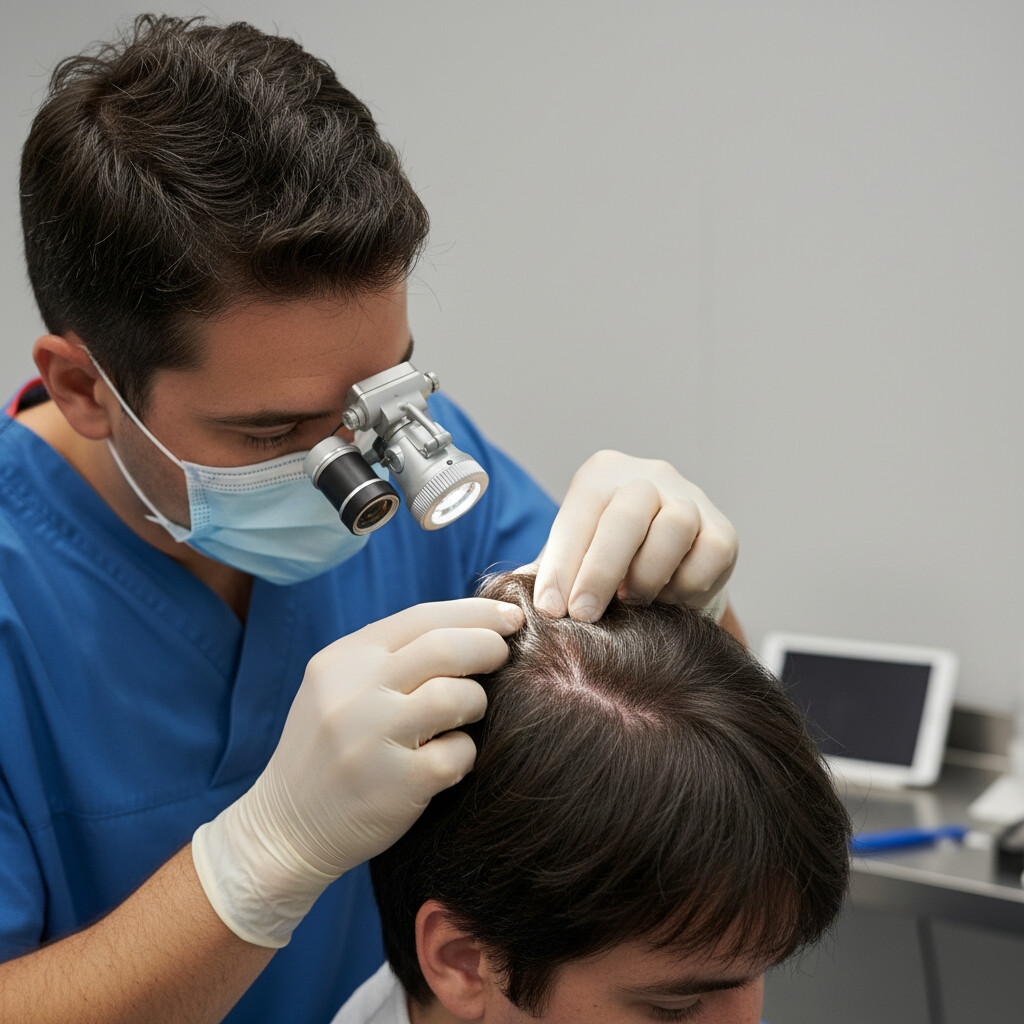
When choosing a doctor for repair work, ask how often they do corrections and ask to see repair cases similar to yours at 12 months or later. Be cautious of anyone who promises to fully restore the look you had before, or who suggests a large graft number without assessing your donor area carefully.
Recovery and results
Recovery is similar to a first transplant: redness, scabbing and some swelling for one to two weeks, then the same shedding and growth timeline, with the result judged at 12-18 months. Sites where grafts were removed usually heal within a few weeks.
When to contact your surgeon
After any procedure, contact your surgeon or a local doctor promptly if you notice:
- Increasing pain, swelling or redness after the first few days.
- Pus, a bad smell, or spreading warmth, which may suggest infection.
- Fever or feeling generally unwell.
- Dark or blackened skin in the recipient area.
- Bleeding that does not stop with gentle pressure.
Common questions
How long should I wait before getting a correction?
Usually at least 12 months after the first surgery, so the result is mature. Some surgeons prefer to wait longer, especially for the crown. Clear design problems, such as a hairline far too low, can be assessed earlier.
Can a hairline that is too low be raised?
Often yes, by removing grafts from the front, sometimes over several sessions. It leaves small marks and may use up grafts that cannot all be re-used, so it is one of the harder corrections.
Discussion
Have you had a correction or repair procedure? Share what the original problem was, what was done, and how the result looked at 12 months. If you are considering one, post your photos and timeline so members can compare with their own experience.
Sources
- Revision and Repair of Bad Hair Transplants, ISHRS
- Hair transplant, MedlinePlus Medical Encyclopedia (NIH)
- Hair replacement surgery, hair transplants, DermNet
- Complications in Hair Transplantation (Kerure and Patwardhan), Journal of Cutaneous and Aesthetic Surgery
Related guides
- Hair Transplant Risks and Complications: What Can Go Wrong?
- Why Do Hair Transplants Fail? Causes and How to Prevent Them
- Understanding and Addressing Unnatural Hair Direction Post-Transplant
- Hair Transplant Scars: Understanding FUE and Natural Results
- Donor Area Overharvesting: Signs, Risks and How to Avoid It
- Risks and Side Effects That May Occur in Hair Transplant
About this guide: ForumHairTransplant.com is an independent patient community. We are not affiliated with any clinic or surgeon, and we don’t accept payment for rankings, reviews or recommendations. This article is general information, not medical advice. Talk to a qualified doctor about your own situation.