
Most hair transplant operations take somewhere between 4 and 8 hours, and you should plan to spend most of the day at the clinic. A small session to fill in a hairline or temples can be shorter, while a large FUE session can run to 8-10 hours or be split over two days. The number of grafts is the biggest factor, followed by the technique, your donor hair and how the clinic organises the team.
Key takeaways
- Plan for a full day. Arrival, consultation, hairline marking and anaesthesia come before the first graft is taken, and breaks are built in.
- Graft number matters most. Roughly speaking, more grafts means more extraction and implantation time.
- FUE extracts each graft one by one, so the extraction phase takes longer than removing a strip in FUT.
- Very long sessions are tiring for you and the team, which is one reason some doctors split large cases over two days.
- The operation is one day, but the whole process, including the first wash and follow-up, usually needs a few more days.
What happens on the day
Clinics differ, but a typical day looks something like this. The guide to hair transplant stages covers the before and after in more detail.
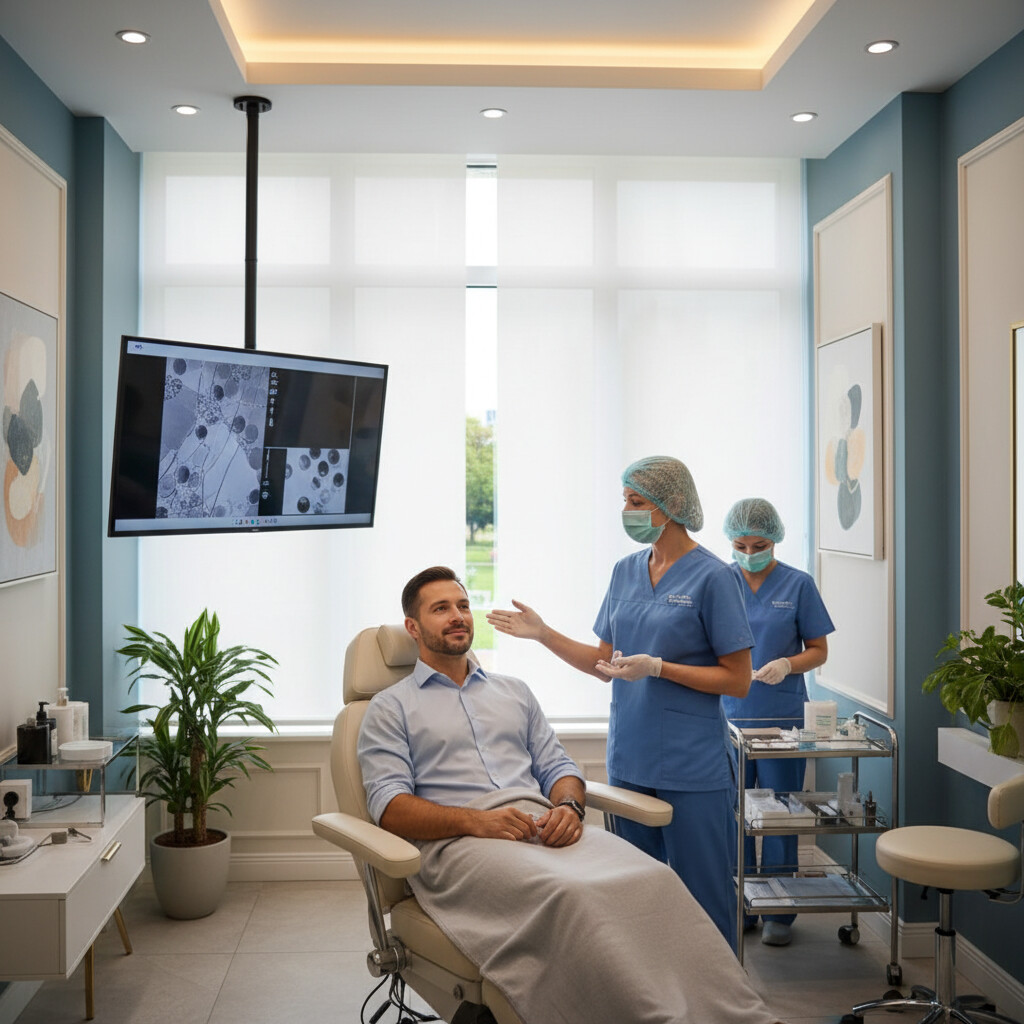
- Arrival and checks (about 1 hour). Paperwork, consent forms, photos and a review of your medical history. Many clinics abroad take blood tests on the morning of surgery.
- Consultation and hairline design. The doctor confirms the plan and marks the hairline and areas to be treated. Do not rush this step. Ask questions and look in the mirror before you agree.
- Preparation and anaesthesia. The donor area is trimmed or shaved, the scalp is cleaned, and local anaesthetic is injected. The injections are usually the most uncomfortable part. See anaesthesia and sedation for how this is managed.
- Graft extraction. Grafts are taken from the back and sides of the head. You usually lie face down for this part.
- Break. Most clinics stop for lunch and a rest. Grafts are kept in a storage solution while you eat.
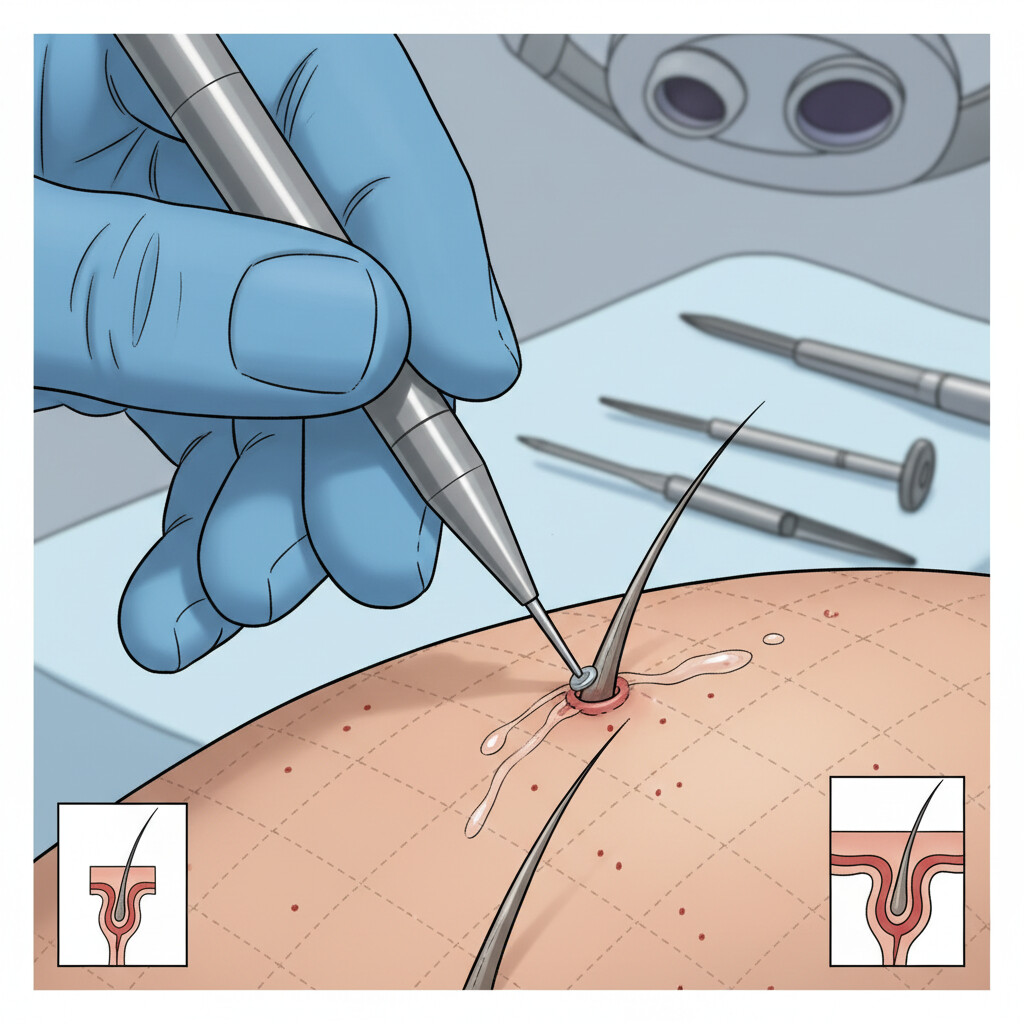
- Recipient site creation. Small incisions are made in the thinning area. This step sets the angle, direction and density of the new hair.
- Implantation. Grafts are placed into the incisions one by one. For large sessions this can take several hours.
- Final check and aftercare instructions. The donor area is dressed, you are given medication and instructions, and you go back to your hotel or home.
What decides how long it takes
Number of grafts
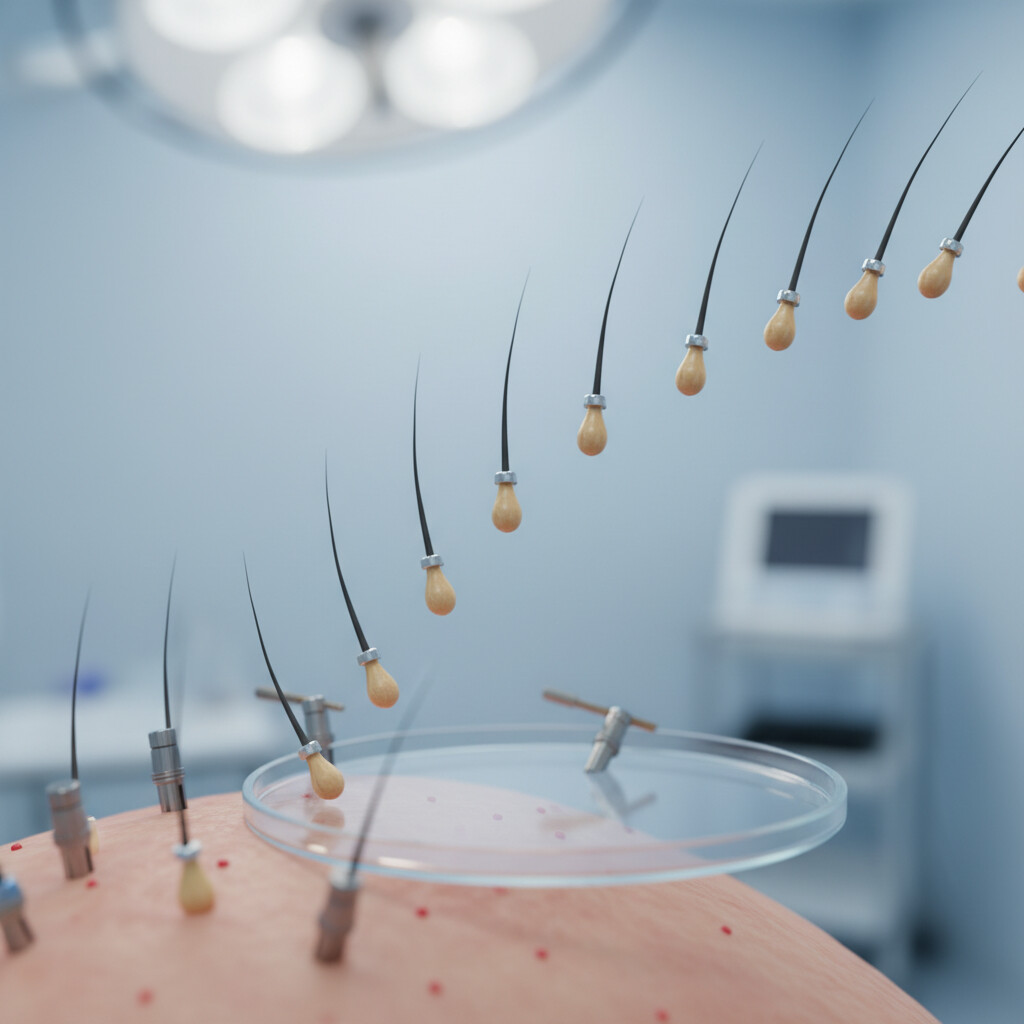
This is the main driver. A graft is a small unit containing one to several hairs. A few hundred grafts for the temples can take only a few hours. A session of several thousand grafts will usually take most of the day. The guide on how many grafts can be transplanted in one session explains why bigger is not always better.
Technique
- FUE (follicular unit extraction): each graft is removed individually with a small punch, either by hand or with a motorised device. Extraction is the slowest part of an FUE day.
- FUT (strip method): a thin strip of skin is removed from the back of the head and the wound is closed. Removing the strip is quick, but the strip then has to be divided into individual grafts under magnification. In many clinics technicians do this while the doctor starts on the recipient area, so the total time can be similar or a little shorter than FUE.
- DHI / implanter pens: grafts are loaded into a pen and implanted directly. Whether this is faster or slower depends on the team and how many pens are used.
The team
Hair transplants are team procedures. How many people are working, how experienced they are, and which steps the doctor does personally all affect the time. A faster day is not necessarily a better one. Careful graft handling and precise incisions matter more than speed.
Your hair and scalp
Very curly or Afro-textured hair, fine hair, firm or thick skin, and a lower donor density can all make extraction slower. So can a repair case with scar tissue from a previous procedure. Your doctor should be able to tell you in advance whether your case is likely to take longer.
Areas treated
A hairline only is quicker than hairline, mid-scalp and crown together. Beard or body hair extraction, if used, adds time.
Rough time ranges
These are general ranges, not promises. Your clinic should give you its own estimate.
| Session | Typical time in surgery |
|---|---|
| Small session (temples or a small hairline area) | About 3-5 hours |
| Medium session (hairline and front) | About 5-7 hours |
| Large session (front, mid-scalp and/or crown) | About 7-10 hours, sometimes split over two days |
Are very long sessions a problem?
Long days are tiring for you and for the team, and grafts spend more time outside the body in large sessions. Good clinics manage this with organised teams and careful storage, but many doctors prefer to keep sessions to a size they can do well in one day, or to split them. If a clinic plans a very large number of grafts in one day, ask how the day is organised, who does each step and how long grafts will be stored.
How to prepare for a long day
- Sleep well the night before and eat a normal breakfast unless you are told otherwise.
- Wear a loose shirt that buttons or zips at the front, so you do not pull anything over your head afterwards. See what to wear on the day.
- Bring headphones, a phone charger and something to listen to. You usually cannot read during extraction because you are face down.
- Follow your clinic’s advice on stopping alcohol, smoking and certain medicines beforehand.
- Arrange for someone to take you back to your hotel or home if you are given sedation.
How much time to plan in total
The operation takes one day, but most patients need a few more days around it. Travelling abroad, many people plan two to four days in total: arrival, the operation, and a check or first wash the next day before flying home. The guide to the hair transplant journey in Turkey walks through a typical trip, and returning home after a transplant abroad covers the days that follow.
After that, swelling and scabs usually settle within one to two weeks. Transplanted hairs normally shed between weeks 2 and 8, new growth usually starts around months 3-4, and the final result is judged at 12-18 months. The growth timeline explains each stage.
Common questions
Will I be awake the whole time?
Usually yes. Most hair transplants are done under local anaesthetic, sometimes with mild sedation. You can talk, rest and take breaks.
Can I eat and go to the toilet during the operation?
Yes. Clinics normally include a lunch break and short breaks between stages.
Is a longer operation a sign of a better result?
Not in itself. Length mostly reflects the size of the session and how the team works. What matters is careful planning, graft handling and placement.
Discussion
How long did your operation take, how many grafts did you have, and which technique was used? Did the day run as the clinic described? Your timings will help others plan their own day.
Related guides
- What Is a Hair Transplant? How It Works, Results and Limits
- Hair Transplant Stages: Before, During and After Surgery
- Hair Transplant in Turkey: What to Expect Day by Day
- Returning Home After a Hair Transplant Abroad: What to Expect
- How Many Grafts Can Be Transplanted in One Session?
About this guide: ForumHairTransplant.com is an independent patient community. We are not affiliated with any clinic or surgeon, and we don’t accept payment for rankings, reviews or recommendations. This article is general information, not medical advice. Talk to a qualified doctor about your own situation.