
Understanding Hairline Aesthetics: Mature vs. Youthful
As men and women progress through adulthood, changes in their hairline are a natural part of aging. While a receding hairline is often associated with hair loss, the concept of a “mature” hairline is distinct. It refers to a hairline that has naturally shifted slightly upwards and perhaps sideways from its adolescent position, creating a more angular or broader forehead. This is different from significant hair thinning or baldness. Understanding the difference is crucial for those considering hair restoration, as the goal is often to achieve results that align with natural maturation rather than an unrealistic attempt to revert to an adolescent look.
This guide is designed for individuals aged 35 and above who are exploring their options for hair restoration or are curious about natural hairline aesthetics. We aim to provide a clear, calm, and informative overview of mature and youthful hairlines, helping you make informed decisions based on realistic expectations and a deep understanding of what constitutes natural-looking results. We will explore the characteristics of each, why they occur, and how these concepts influence hair restoration planning.
What this guide will explain:
- The natural process of hairline maturation.
- Key differences between a youthful and a mature hairline.
- Why a mature hairline is considered natural and not necessarily a sign of hair loss.
- How hairline aesthetics are considered in hair restoration.
- Realistic expectations for achieving natural-looking results.
The Youthful Hairline: An Adolescent Starting Point
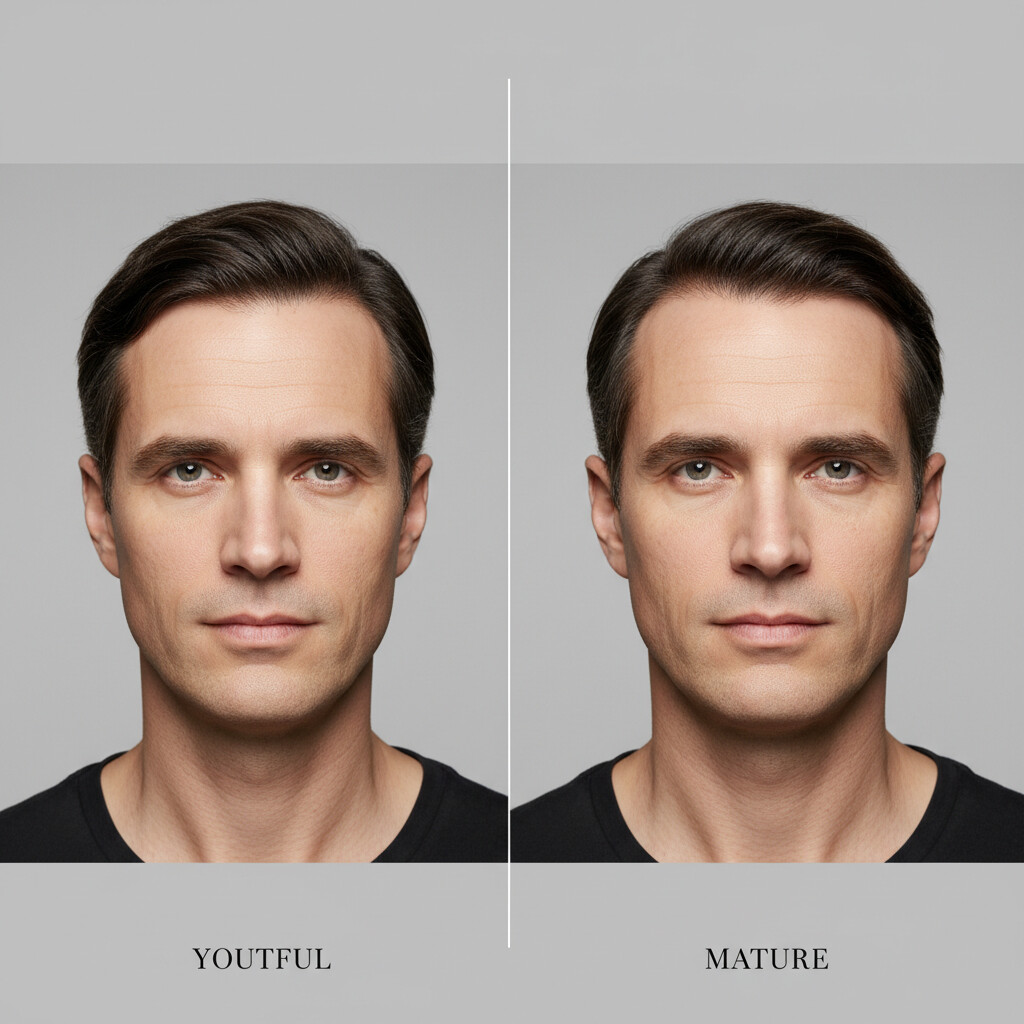
The hairline most men and women have in their late teens and early twenties is typically characterized by its position and shape. It sits quite low on the forehead, often forming a distinct “M” shape with two rounded corners above the temples and a slight peak in the center. This youthful hairline is a genetic blueprint, setting the stage for how the face appears in early adulthood. It’s symmetrical, well-defined, and frames the face in a way that is often associated with youth.
It’s important to note that this youthful hairline is not the only aesthetically pleasing or natural-looking hairline. It is simply the starting point for many individuals before the natural process of maturation begins. For some, this low, defined hairline persists well into adulthood, while for others, it evolves over time.
The Mature Hairline: Natural Evolution with Age
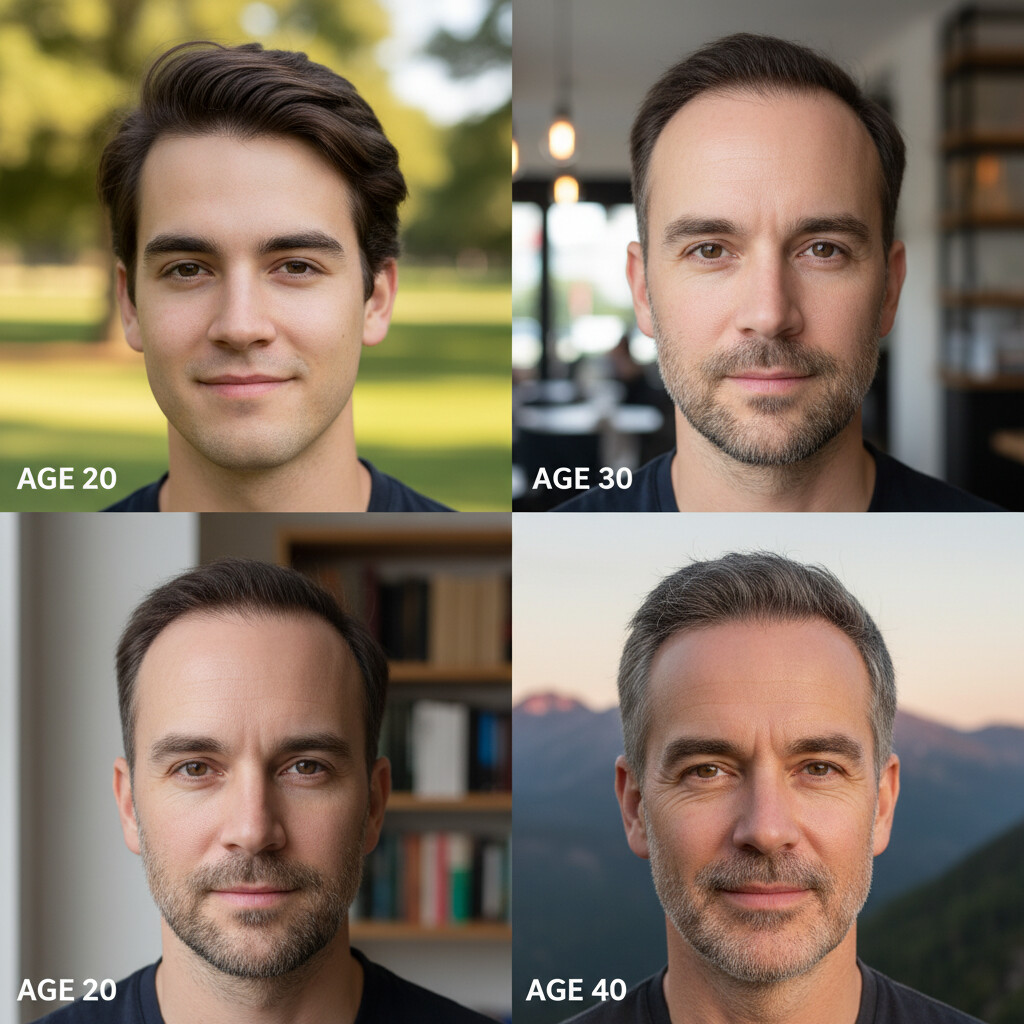
As individuals move from adolescence into adulthood and beyond, a natural phenomenon occurs called hairline maturation. This is not the same as hair loss or balding. Instead, it’s a gradual, subtle upward and outward movement of the hairline, typically settling into a position that is 1-2 cm higher than the adolescent hairline. This shift often results in a slightly broader forehead and a less sharply defined, more angular shape, sometimes referred to as a “widow’s peak” becoming less pronounced or a more squared-off appearance at the temples.
This mature hairline is a normal, expected part of aging for a significant portion of the population, particularly men. It occurs due to genetic factors and hormonal changes that influence the growth cycle of the hair follicles in the frontal region. Embracing a mature hairline is often about recognizing its natural occurrence and understanding that it does not necessarily indicate a problem requiring intervention. For many, it simply represents a natural transition in their appearance.
Distinguishing Between Maturation and Hair Loss
It is vital to differentiate between a naturally maturing hairline and one that is receding due to androgenetic alopecia (male or female pattern hair loss). A mature hairline involves a gentle shift upwards and outwards, maintaining density and a relatively stable position after the settling period. The frontal scalp remains largely covered, and the shape becomes more angular or broader.
In contrast, hair loss typically involves a progressive thinning and loss of hair density, often starting at the temples and/or the crown. This can lead to a significantly higher hairline, visible scalp through thinning hair, and a more irregular or patchy appearance. If you are experiencing noticeable thinning or a rapidly advancing hairline, it is advisable to consult with a hair restoration specialist to determine the cause and appropriate treatment options.
The Role of Hairline Aesthetics in Restoration
When considering hair restoration, understanding hairline aesthetics is paramount to achieving natural and pleasing results. The goal is rarely to replicate a youthful, adolescent hairline, as this can often look unnatural on an adult face and may not align with the individual’s age and overall appearance. Instead, experienced hair restoration professionals aim to design a hairline that complements the patient’s facial structure and appears age-appropriate.
This involves several considerations:
- Natural Angulation: Creating a hairline that has subtle curves and angles, avoiding overly straight or artificial lines.
- Symmetry: Ensuring a balanced appearance between both sides of the forehead.
- Density: Placing grafts in a way that mimics natural hair density patterns, which are often slightly less dense at the very front edge.
- Age Appropriateness: Designing a hairline that looks suitable for the individual’s age, often leaning towards a mature, yet well-defined, aesthetic.
The focus is on restoration, not artificial reconstruction. The aim is to give the appearance of a healthy, naturally positioned hairline that has aged gracefully with the individual.
Practical Considerations for Hair Restoration Planning
For individuals aged 35 and above contemplating hair restoration, approaching the process with realistic expectations and a clear understanding of the goals is essential. The journey involves careful planning, a focus on natural aesthetics, and patience.
Treatment Planning: The initial step involves a thorough consultation with a qualified hair restoration specialist. During this consultation, your specific pattern of hair loss, facial structure, age, and aesthetic goals will be assessed. The specialist will discuss whether a mature or a slightly more defined hairline is most suitable for you, taking into account your natural hair characteristics and desired outcome. The plan will focus on creating a hairline that looks harmonious with your overall appearance.
Typical Timelines: Hair restoration is a process that unfolds over time. Following the procedure, initial healing occurs, followed by a period where transplanted hairs shed. New growth typically begins to emerge several months post-treatment, with significant results becoming apparent within 9-12 months, and final results often seen around 18 months. Patience is key to appreciating the full outcome.
Comfort and Expectations: Modern hair restoration techniques are designed with patient comfort in mind. While some temporary post-treatment sensations are normal, the focus is on a smooth recovery. Realistic expectations are crucial; the aim is to achieve a natural-looking result that restores density and frames the face appropriately, not to achieve an unrealistic, overly youthful appearance. Understanding that a mature, well-designed hairline is often the most aesthetically pleasing and sustainable outcome is important.
Long-Term, Natural-Looking Outcomes: The ultimate goal of hair restoration is to provide a permanent, natural-looking result that enhances your appearance for years to come. By focusing on the principles of natural hairline design, experienced practitioners can create hairlines that blend seamlessly with your existing hair and age gracefully. The emphasis is always on subtlety, natural variation, and creating an appearance that looks entirely your own.
Common Questions About Hairlines
Q1: Is a mature hairline a sign of significant hair loss?
A mature hairline is a natural evolutionary change that occurs with age, typically in the late teens to mid-twenties. It involves a slight upward and outward shift from the adolescent position, often resulting in a broader forehead. While it changes the appearance of the hairline, it is not necessarily indicative of pathological hair loss like male or female pattern baldness. A mature hairline generally maintains good density at the front.
Q2: Can a youthful hairline be restored if it has matured?
Hair restoration techniques can be used to lower a mature hairline to a more youthful position if desired. However, the decision should be carefully considered. Recreating an adolescent hairline on an adult face may not always look natural or age-appropriate. Specialists often recommend designing a mature, yet aesthetically pleasing, hairline that complements the individual’s current facial structure and age. The goal is natural harmony, not necessarily a return to a past appearance.
Q3: What is the difference between a mature hairline and a receding hairline?
A mature hairline is a natural upward and outward shift from the adolescent hairline, usually settling by the mid-twenties. It maintains good density and results in a slightly broader forehead. A receding hairline, on the other hand, is typically associated with hair loss (androgenetic alopecia). It is characterized by progressive thinning and loss of hair density, often at the temples and/or crown, leading to a higher, more irregular, or patchy appearance.
Q4: How do I know if my hairline is maturing naturally or if I’m experiencing hair loss?
Observing the pattern of change is key. A natural maturation involves a gradual, symmetrical shift upwards and outwards, usually stabilizing within a few years. The hairline will retain good density. If you notice significant thinning, loss of density, a more rapid advancement, or a patchy appearance, it is more likely to be hair loss. Consulting a hair restoration specialist can provide a definitive assessment and guidance.

Discussion: Sharing Perspectives on Natural Hairlines
As we’ve explored, the concept of a “mature” hairline is a natural part of aging for many. It’s distinct from hair loss and often forms the basis for natural-looking hair restoration results.
We invite you to share your thoughts and experiences:
- For those who have undergone hair restoration, how did the concept of a mature vs. youthful hairline influence your treatment goals and discussions with your specialist?
- How important is it for you that a restored hairline appears age-appropriate, rather than trying to recapture a look from many years ago?
- What factors do you consider most important when evaluating the naturalness of a hairline, whether your own or in others?
Medical Disclaimer
This content is for informational purposes only and does not constitute medical advice. Hairline aesthetics and hair restoration are highly individualized. The information provided here should not be used as a substitute for professional medical advice, diagnosis, or treatment. Always seek the advice of a qualified healthcare provider or hair restoration specialist with any questions you may have regarding a medical condition or treatment options. Individual results may vary, and no guarantees can be made regarding specific outcomes.