
Most surgeons advise waiting roughly 2-4 weeks before swimming in a clean pool or the sea after a hair transplant, and longer for hot tubs, lakes and rivers. The usual minimum is that all crusts have come off, the skin in both the donor and recipient areas has closed, and any stitches have been removed. Practice varies between clinics, so treat these as typical ranges and follow your own surgeon’s advice. Diving, jumping in and rough water sports usually wait longer, because a blow to the head is the bigger risk once the skin has healed.
Key takeaways
- Grafts are usually considered secure after about 7-10 days, but the skin needs longer to be fully closed and ready for water that is not clean tap water.
- A typical range is 2-4 weeks for pools and the sea. Hot tubs, saunas, lakes and rivers usually need longer.
- The main risks of swimming too early are infection and irritation of healing skin, plus dislodging grafts in the first week or two.
- Once you are healed, chlorine and salt water do not damage transplanted follicles. Rinsing afterwards is still a good habit.
- Sun exposure at the pool or beach is a separate risk. Protect the recipient area for several months.
Why you have to wait
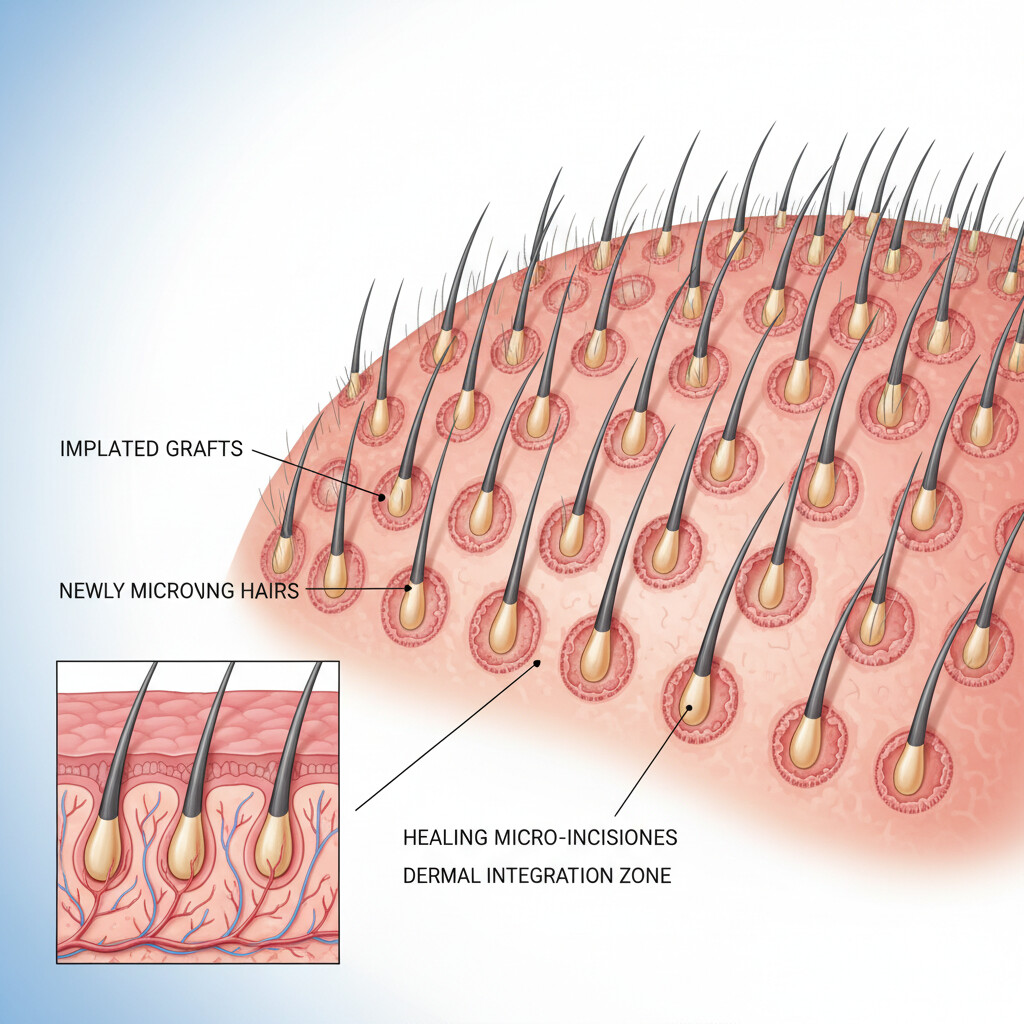
After a transplant, the scalp has hundreds or thousands of tiny wounds: the openings where grafts were placed and the extraction sites in the donor area. Until they close, water that is not clean can carry bacteria into them. The grafts themselves are fragile in the first days and become firmly anchored over roughly the first week to ten days. See How Long Until Hair Grafts Are Secure?
Swimming too soon exposes you to three main risks:
- Infection. Public pools, hot tubs and natural water contain microorganisms. A healthy, closed scalp handles them well; open wounds do not. Infection can cause pain, pus and, in rare cases, damage to grafts or scarring.
- Irritation. Chlorine and salt can sting and dry out healing skin, causing redness and itching.
- Physical trauma. Pushing off walls, water jets, waves, diving and rubbing with a towel can dislodge grafts in the first week or two, and bumps can injure healing skin later.
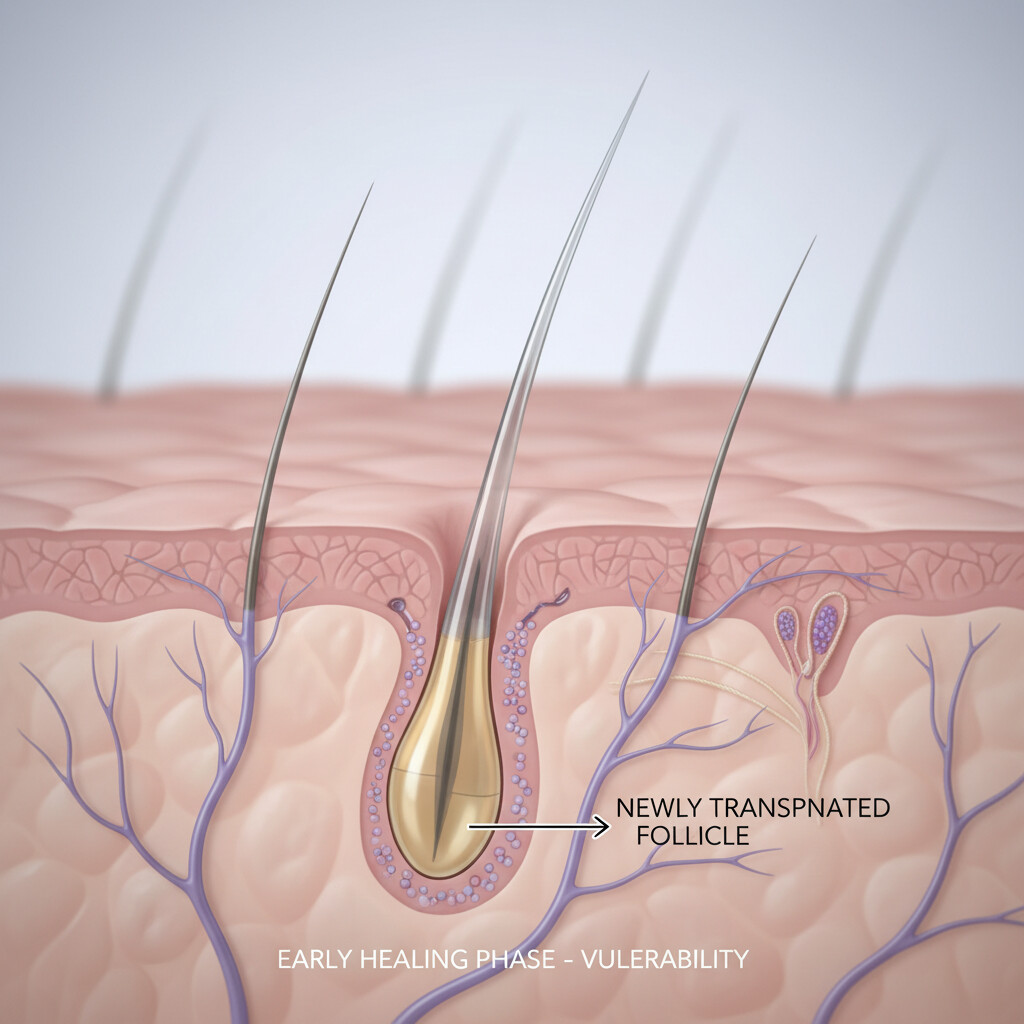
The healing timeline and what it means for water
These stages are typical for FUE. Healing varies from person to person.
- Days 1-7: Grafts are fragile and crusts form. Only the gentle washing routine your clinic gives you. No swimming, soaking, or direct shower spray on the recipient area.
- Days 7-14: Crusts come off with washing, usually by the end of the second week. See Scabs After Hair Transplant. Grafts are generally secure, but small wounds may still be closing. Normal showers are usually allowed; swimming usually still is not.
- Weeks 2-4: The skin has usually closed. Many surgeons allow gentle swimming in a clean pool or the sea somewhere in this window, once there are no crusts, open spots or stitches left.
- After 4 weeks: Most people are back to normal swimming. Some surgeons prefer to wait a little longer for hot tubs, natural water and diving.
If you had FUT (strip) surgery, the donor wound needs to heal before swimming. Stitches or staples are usually removed around 10-14 days, and many surgeons want the scar fully closed before it goes underwater.
When can you swim? Typical guidance by type of water

| Type of water | Typical waiting time | Why |
|---|---|---|
| Clean, chlorinated pool | About 2-4 weeks | Chlorine can irritate healing skin; public pools carry some bacteria |
| Sea | About 2-4 weeks | Salt can sting; natural water is not sterile; waves can hit your head |
| Lakes, rivers, ponds | Often 4 weeks or more | Higher and more variable bacterial load |
| Hot tubs and jacuzzis | Often 4 weeks or more | Warm water encourages bacterial growth; heat can increase swelling early on |
| Saunas and steam rooms | Often 4 weeks or more | Heat and heavy sweating on healing skin |
These are common ranges, not rules. Your surgeon may give you a shorter or longer timeline depending on how you are healing.
Swim caps, goggles and diving
- Swim caps. A tight cap puts pressure on the scalp, and pulling it on and off creates friction. Avoid caps until your surgeon says the grafts are secure and the skin is healed. After that, a cap is fine, though it does not make earlier swimming safe.
- Goggles. The strap sits on the back of the head and can rub the donor area. Wait until it has healed and adjust the strap so it is not tight.
- Diving and jumping in. The impact and water pressure on the scalp are best avoided for at least the first month. Many people also stop swimming underwater until then.
- Competitive or training swimming. Long, intense sessions add sweating, repeated friction and rubbing on lane ropes. Build up gradually, as you would with other exercise. See Exercising After Hair Transplant.
Sun protection at the pool and beach
Swimming outdoors usually means hours in the sun. Healing skin burns easily, and sunburn on the recipient area causes pain, redness and peeling, and may leave longer-lasting redness or pigmentation. Many surgeons advise protecting the treated area for several months.
- In the first weeks, shade and a loose hat work better than sunscreen. Ask your clinic when you can start using sunscreen on the scalp. See Can I Wear a Hat After Hair Transplant?
- Once allowed, use a high-SPF sunscreen and reapply after swimming.
- Avoid the strongest midday sun.
More detail is in Understanding Sun Exposure After Hair Transplant.
Planning a holiday around your transplant
Many people plan a transplant just before a summer holiday and then find they cannot swim or sit in the sun. If you know you want a beach or pool holiday, it is usually easier to have the procedure at least a month before, or to plan the holiday for later. Also remember that most transplanted hairs shed between weeks 2 and 8, and new growth usually starts around months 3-4, so the treated area may look thin for a few months whatever you do.
Tips for your first swims
- Get the go-ahead first. Send a clear photo of your scalp to your clinic if you are unsure whether you are ready.
- Start with short, easy sessions in a clean pool.
- Ease in. Walk in rather than jump or dive.
- Rinse afterwards with clean water and wash with the mild shampoo your clinic recommends.
- Pat dry. Do not rub hard with a towel.
- Watch for reactions. Mild dryness is common. Increasing redness, pain, spots or discharge are not.
When to contact your surgeon
Contact your clinic or a local doctor if, after swimming or at any point during healing, you notice:
- Redness that spreads or gets worse over a day or two.
- Pus-filled spots, crusting that returns, or discharge.
- Pain, warmth or swelling that increases instead of settling.
- A fever or feeling unwell.
Small pimple-like bumps in the recipient area are common in the months when new hairs grow through, but a sudden crop of painful spots after swimming should be checked.
Common questions
I swam too early by mistake. What should I do?
Rinse your scalp gently with clean water and follow your usual washing routine. Watch for signs of infection over the next few days and contact your clinic if you notice any. One early swim does not usually ruin a result.
Will chlorine damage my transplanted hair?
Not once the skin is healed. Transplanted hair behaves like your other hair: chlorine can dry the hair shaft but does not affect the follicles.
Can I shower normally before I can swim?
Usually, yes. Most clinics allow normal showers well before swimming, once the early washing routine is over. Avoid a strong spray directly on the recipient area until your clinic says otherwise.
Discussion
How long did your surgeon ask you to wait before swimming, and did the advice differ for the pool and the sea? If you have been swimming since your transplant, share how the first few sessions went and anything you would do differently.
Related guides
- Hair Transplant Aftercare: What to Do From Day 1 to Month 12
- When Can I Go Back to Work After a Hair Transplant?
- The Best Weather for Hair Transplant: Cold vs. Warm Season
- Hair Washing Protocol: Mastering the First Wash After Your Hair Transplant
- Hair Transplant Growth Timeline: Month-by-Month Progress
About this guide: ForumHairTransplant.com is an independent patient community. We are not affiliated with any clinic or surgeon, and we don’t accept payment for rankings, reviews or recommendations. This article is general information, not medical advice. Talk to a qualified doctor about your own situation.