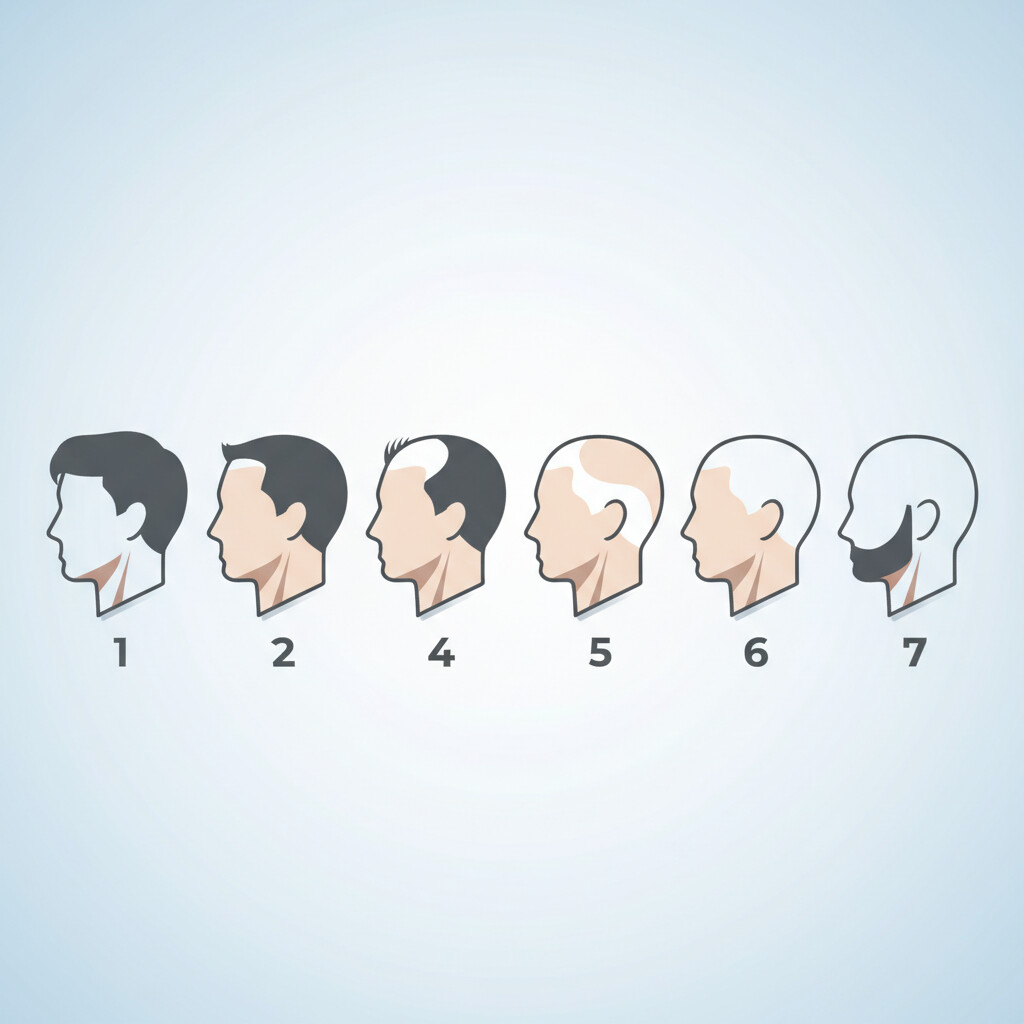
Considering a hair transplant is a significant decision, and understanding the extent of your hair loss is crucial for both you and your surgeon. The Norwood Scale, also known as the Hamilton-Norwood Scale, is the most widely recognized system for classifying the progression of male pattern baldness (androgenetic alopecia). This scale provides a standardized way to categorize hair loss, helping to assess the severity, predict future progression, and plan the most effective hair restoration treatment.
Key Points to Understand About the Norwood Scale:
- What is the Norwood Scale? It’s a visual classification system that maps out the stages of male hair loss.
- Why is it Important for Hair Transplants? It helps surgeons assess donor hair availability and plan the surgical approach.
- The Different Stages: Understanding each stage, from early thinning to complete baldness.
- Predicting Progression: How the scale helps anticipate future hair loss patterns.
- Treatment Implications: How your Norwood stage influences treatment options and outcomes.
What is the Norwood Scale?
The Norwood Scale is a visual guide that illustrates the typical patterns and stages of hair loss in men. Developed by Dr. O’tar Norwood in the 1970s, it has since become the gold standard for assessing androgenetic alopecia, the most common form of hair loss in men. The scale consists of seven distinct stages, each characterized by specific patterns of receding hairlines and thinning on the crown.
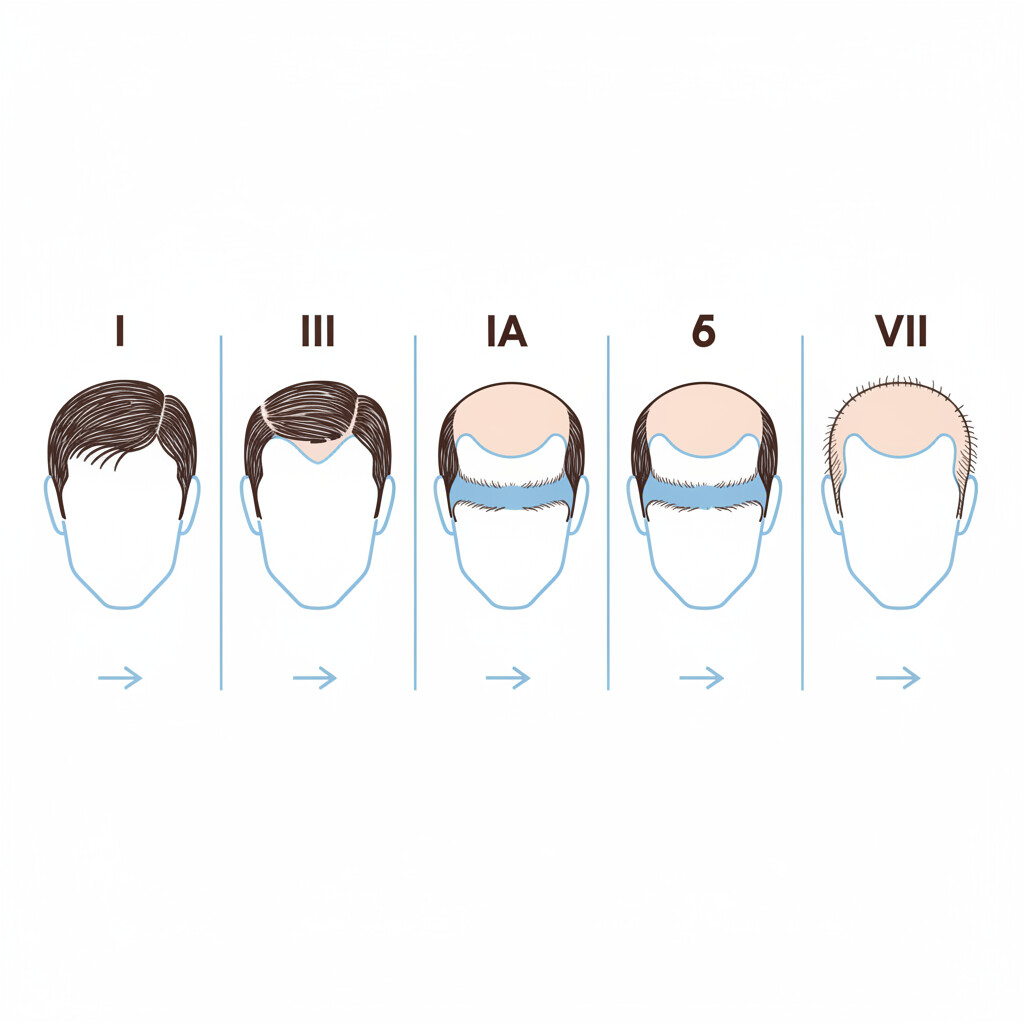
Image Prompt: A clear, illustrative diagram of the Norwood Scale, showing stages 1 through 7 with distinct patterns of male hair loss. The diagram should be clean and easy to understand, with no text within the image itself.
Why is the Norwood Scale Crucial for Hair Transplants?
For individuals considering a hair transplant, understanding their position on the Norwood Scale is vital for several reasons:
- Assessment of Severity: The scale provides a universal language to describe the degree of hair loss. A surgeon can quickly understand the extent of the problem by referencing a patient’s Norwood stage.
- Treatment Planning: Knowing the current stage and potential future progression helps surgeons determine the appropriate number of grafts needed and the best techniques (like FUT or FUE) to use. For instance, someone in Norwood stage 3 might require a different approach than someone in stage 6.
- Donor Area Evaluation: The scale indirectly informs the assessment of the donor area. While the scale primarily focuses on the recipient area (where hair is lost), understanding the overall pattern helps surgeons estimate the density and coverage achievable without compromising the donor site’s appearance.
- Realistic Expectations: By understanding the Norwood Scale, patients can gain a more realistic understanding of what a hair transplant can achieve. A hair transplant aims to restore lost hair, but it cannot create new hair follicles. Therefore, the goal is to create a natural-looking result that is sustainable given the available donor hair and the likely progression of future hair loss.
- Predicting Future Needs: Male pattern baldness is often progressive. The Norwood Scale helps surgeons anticipate how the hair loss might evolve over time, allowing them to plan a transplant that accounts for future thinning, potentially preventing the need for multiple procedures down the line.
The Seven Stages of the Norwood Scale:
Each stage represents a distinct phase in the progression of male pattern baldness:
-
Stage 1: No significant hair loss. This is the baseline, representing a full head of hair with no signs of recession.
-
Stage 2: Mild recession. A slight V-shape or U-shape may begin to form at the temples. The hairline may appear slightly higher than in youth, but there is no significant thinning on the crown.

Image Prompt: A close-up, natural-looking image of a man’s head showing very early signs of hair thinning at the temples, consistent with Norwood Stage 2. Focus on realistic hair density and a slightly receding hairline.
-
Stage 3: The first stage with noticeable hair loss. This is often considered the point where men start seeking treatment. It’s characterized by more significant recession of the hairline at the temples and/or thinning of the hair on the crown (vertex). A person can be in Stage 3 vertex (crown thinning) or Stage 3 hairline (receding temples).
-
Stage 4: Advanced recession and possible crown thinning. The hairline continues to recede, and the bald areas on the scalp become more pronounced. The bald spot on the crown may also become more apparent. There is usually a distinct band of hair separating the receding hairline from the thinning crown.
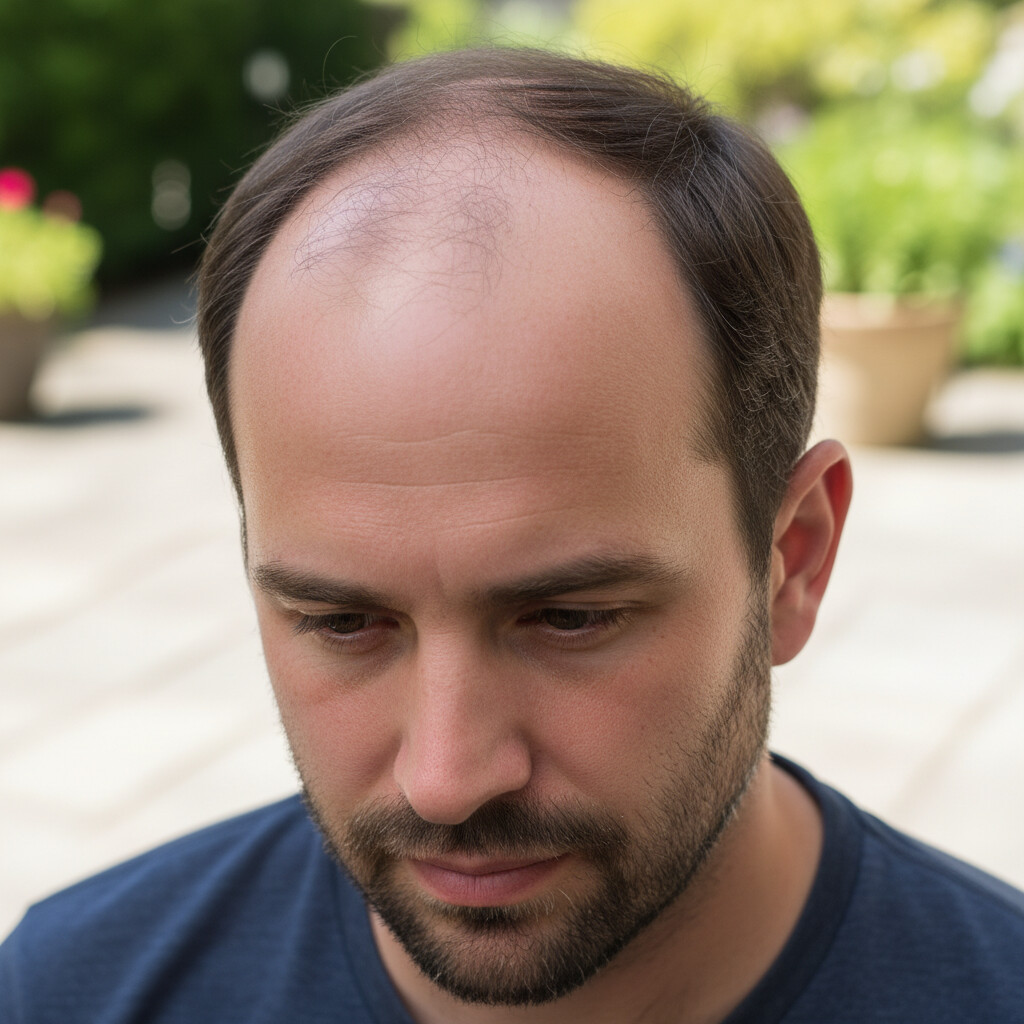
Image Prompt: A photograph of a man’s head displaying moderate hair loss, with a clearly receding hairline and thinning on the crown, representative of Norwood Stage 4. The image should be natural and depict typical hair loss patterns.
-
Stage 5: Large bald areas. The hairline continues to recede, and the bald spot on the crown enlarges. These two bald areas begin to merge, separated only by a narrow strip of thinning hair.
-
Stage 6: Bald areas merge. The receding hairline and the bald spot on the crown have joined, creating a larger bald area on the top of the head. Only the sides and back of the head retain significant hair.
-
Stage 7: The most severe stage. This is characterized by extensive hair loss, with only a thin band of hair remaining on the sides and back of the scalp. The hair on the sides is often sparse and may not have the same thickness or density as the original hair.
Variations and Further Classifications
While the seven main stages are the most commonly referenced, Dr. Norwood also identified variations:
-
Type A: Characterized by a continuous loss of hair from the front to the back, without the distinct bald spot on the crown seen in the typical progression. The hair loss progresses as a widening baldness along the sides.
-
Early Stages: Sometimes, subtle changes in the early stages (like a slightly higher hairline) are referred to as Stage 2A or 2V, indicating receding temples or a general thinning without significant recession.
Predicting Progression and Treatment Implications
One of the most challenging aspects of male pattern baldness is its progressive nature. The Norwood Scale, while descriptive of current states, also serves as a predictor. A younger man presenting with Stage 3 hair loss might logically progress to Stage 4 or 5 over the next decade. This foresight is critical for hair transplant planning.
A surgeon will assess not just the current loss but also the patient’s age, family history of baldness, and the density of the donor area to estimate future progression. The goal is often to “future-proof” the transplant. This might involve:
- Strategic Graft Placement: Placing grafts in the hairline and mid-scalp to create a natural appearance now, while preserving grafts for potential future coverage of the crown if needed.
- Lowering the Hairline Conservatively: Avoiding an overly aggressive hairline lowering in younger patients to ensure enough donor hair is available for later procedures.
- Considering Medical Treatments: Recommending or discussing medications like Minoxidil or Finasteride to slow down progression and complement surgical results.
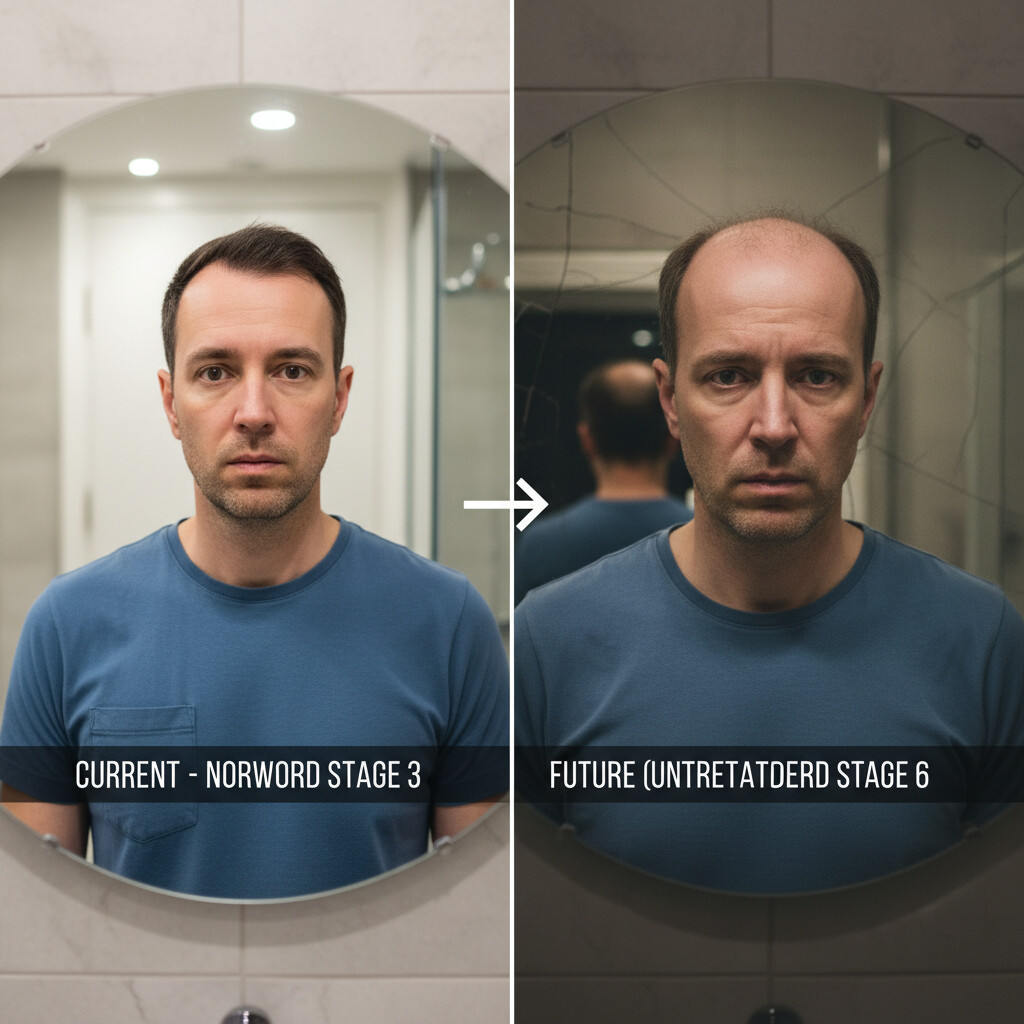
Image Prompt: A split image showing the same individual in two different scenarios: one representing their current Norwood stage hair loss and the other depicting a potential future stage of hair loss if left untreated. The focus should be on illustrating progression.
Conclusion
The Norwood Scale is an indispensable tool for anyone contemplating a hair transplant. It provides a clear, standardized framework for understanding male pattern baldness, enabling effective communication between patients and surgeons, guiding treatment strategies, and setting realistic expectations. By understanding your Norwood stage and discussing its implications with a qualified hair restoration specialist, you can make informed decisions and work towards achieving your desired aesthetic goals.