
What this guide will explain
- What overharvesting means in the context of hair restoration.
- Why it’s a critical factor for natural and long-term results.
- How to identify potential signs of overharvesting.
- The importance of a conservative approach in treatment planning.
- Questions to ask your hair restoration specialist.
Introduction
As individuals aged 35 and above contemplate hair restoration, understanding the nuances of the process is paramount. Among the most significant, yet sometimes overlooked, considerations is the concept of “overharvesting.” This doesn’t refer to the donor area being completely depleted, but rather a situation where too many grafts are removed from a specific region, compromising the long-term density and appearance of the donor site. For those seeking to restore their hair, an awareness of overharvesting is key to ensuring a natural look and sustainable results.
This guide is designed for discerning individuals who are researching their hair restoration options. It aims to provide a clear, calm, and factual understanding of overharvesting, its implications, and how to approach treatment decisions with confidence. Our goal is to equip you with the knowledge to engage in informed discussions with specialists and to make choices that prioritize your long-term satisfaction and the health of your hair.
Understanding Donor Area Dynamics
The success of any hair restoration procedure hinges significantly on the donor area, typically located at the back and sides of the scalp. This area possesses hair follicles that are genetically resistant to the balding process affecting the front and top of the head. The principle of hair restoration is to relocate these resilient follicles to the thinning or bald areas.
However, this donor supply is finite. A skilled hair restoration specialist understands the importance of preserving the long-term integrity of this area. The goal is not simply to extract as many grafts as possible, but to remove a calculated number that ensures the donor site maintains a natural, undetectable density even after the procedure. This thoughtful approach is central to achieving sustainable and aesthetically pleasing results over time.
What is Overharvesting?
Overharvesting occurs when an excessive number of follicular units (grafts) are removed from the donor area, particularly from a concentrated zone, without adequate consideration for the remaining density. While a single session might yield a seemingly good number of grafts, aggressive harvesting can lead to a noticeable thinning or patchiness in the donor region that becomes apparent over time or when the hair is styled in certain ways.
This is a critical issue because the donor area is expected to provide hair for potentially multiple future sessions if needed. If the donor supply is compromised early on, it limits future treatment options and can result in an unnatural appearance that detracts from the overall goal of hair restoration. It is essential to recognize that a conservative harvesting strategy is fundamental to achieving permanent and natural-looking results.
Why Donor Area Density Matters
The aesthetic integrity of the donor area is crucial for maintaining a natural appearance. When hair is transplanted, the goal is to blend the restored area seamlessly with the existing hair. Similarly, the donor area itself must continue to look natural. If too much hair is removed from a specific section, the reduced density can become apparent, especially in certain lighting conditions or when the hair is cut short.
Think of the donor area like a bank account for hair. You can make withdrawals, but you must ensure there are sufficient reserves left for the future. A prudent approach involves taking only what is needed and can be sustainably replenished or, more accurately, what can be removed without creating a visible deficit. Specialists evaluate the overall density, laxity, and characteristics of the donor scalp to determine a safe and effective extraction plan.
Signs and Implications of Overharvesting
Recognizing the potential signs of overharvesting is important for patients considering or undergoing hair restoration. While a qualified clinic will meticulously plan to avoid this, understanding the implications can empower patients.
Potential Signs:
- Noticeable Thinning: The donor area appears significantly less dense than surrounding non-harvested areas, particularly after the initial healing phase.
- Patchiness or Irregularity: Some areas within the donor zone may look sparse or unevenly covered, making it difficult to style the hair naturally.
- Difficulty Concealing: The reduced density makes it challenging to hide the donor area, especially with shorter hairstyles.
Implications:
- Limited Future Options: A compromised donor area reduces the number of grafts available for subsequent procedures, if needed.
- Unnatural Appearance: The donor site may look unnatural, drawing attention away from the positive results of the restoration.
- Patient Dissatisfaction: Ultimately, overharvesting can lead to disappointment and a failure to achieve the desired aesthetic outcome.
It is vital to choose a clinic and a medical team that prioritize the long-term health and aesthetic of the donor area as much as the transplanted area.
The Importance of a Conservative Approach
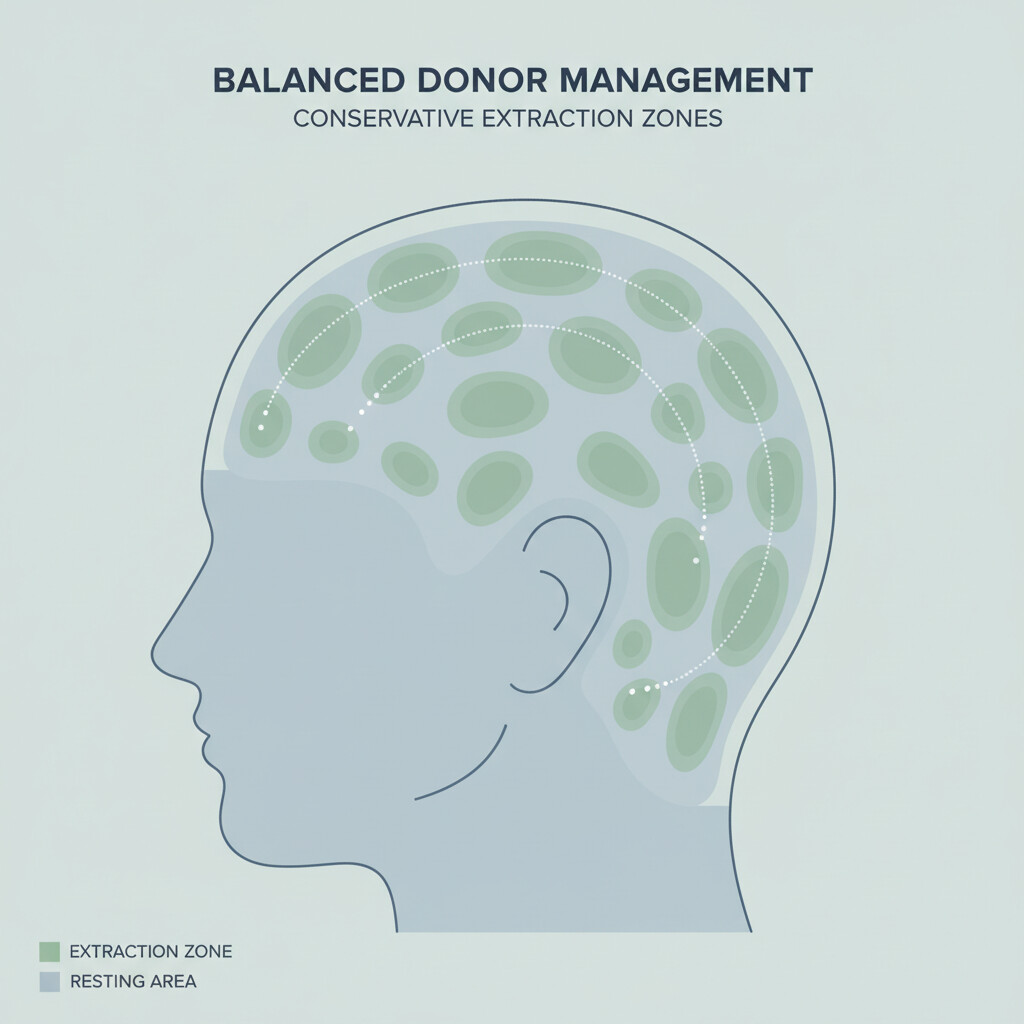
A conservative approach to donor hair extraction is the cornerstone of successful and sustainable hair restoration. This means that specialists aim to remove only the necessary number of grafts from a well-planned distribution within the donor zone. The goal is to maintain excellent density and a natural appearance in the donor area, ensuring it remains undetectable.
This involves:
- Careful Evaluation: Thoroughly assessing the donor area’s density, size, and hair characteristics.
- Strategic Extraction: Removing grafts from a wider area rather than concentrating on a small region.
- Prioritizing Future Needs: Always considering the potential need for future procedures and preserving adequate donor supply.
A conservative strategy not only safeguards the donor area’s appearance but also maximizes the potential for achieving natural-looking results that last a lifetime. It reflects a commitment to the patient’s overall, long-term well-being.
Choosing the Right Specialist
Selecting a qualified and experienced hair restoration specialist is perhaps the most critical step in the hair restoration journey. A reputable specialist will not only focus on the technical aspects of graft placement but will also demonstrate a deep understanding of donor area management and preservation.
When consulting with potential specialists, consider asking questions that delve into their approach to donor management. This demonstrates your engagement and helps you gauge their commitment to conservative practices. A specialist who prioritizes donor area health is more likely to provide results that are both aesthetically pleasing and sustainable.
Practical Considerations
Planning and Decision-Making:
Making the decision for hair restoration involves careful planning. This includes understanding the extent of hair loss, discussing realistic expectations with your specialist, and ensuring you are comfortable with the proposed treatment plan. A key part of this planning involves the specialist detailing how they intend to manage your donor area to ensure optimal density and a natural look, both immediately and in the long term.
Typical Timelines:
Following a hair restoration procedure, the donor area typically heals within a couple of weeks. During this time, any initial thinning or slight appearance changes are usually temporary. The donor hair begins to regrow, and by several months post-procedure, the donor area should look largely as it did before, assuming a conservative harvesting technique was employed. Patience is key, as the final appearance of both the transplanted and donor areas develops over time.
Comfort and Expectations:
Modern hair restoration techniques are designed with patient comfort in mind. While the procedure involves extraction and placement of grafts, the focus is on a smooth experience. Realistic expectations are crucial. Understanding that hair restoration is a process, not an instant fix, helps manage anxiety. Discussing potential outcomes, including the appearance of the donor area, with your specialist ensures you are well-informed.
Long-Term, Natural-Looking Outcomes:
The ultimate goal of hair restoration is to achieve results that look natural and are sustainable for a lifetime. This means not only achieving good density in the transplanted areas but also ensuring the donor area remains robust and undetectable. A specialist who practices conservative harvesting is essential for achieving this balance. By preserving the donor supply, specialists ensure that patients can maintain a natural appearance for years to come, with the possibility of future adjustments if necessary.

Common Questions
Q1: How much donor hair is typically removed in a procedure?
The amount of donor hair removed varies significantly based on individual donor density, the extent of hair loss being addressed, and the specialist’s conservative approach. A skilled specialist will determine a safe limit, often measured in the number of grafts, ensuring sufficient density remains in the donor area. It’s about quality and sustainability, not just quantity.
Q2: Can overharvesting be reversed?
Directly reversing the removal of hair follicles is not possible. However, if overharvesting has occurred, subsequent treatments like scalp micropigmentation (SMP) can help create an illusion of density in the affected donor areas. Some specialists may also explore less invasive methods if future procedures are considered, but the primary focus remains on prevention through careful initial planning.
Q3: How can I tell if my donor area is being managed well during consultation?
During a consultation, a good specialist will thoroughly examine your donor area, discuss its characteristics, and explain their harvesting strategy in detail. They should be able to show you typical donor area results and explain why their approach preserves long-term density. If a specialist seems rushed, avoids discussing donor management, or focuses solely on the number of grafts, it may be a reason for concern.
Q4: Will I be able to wear my hair short after a procedure if I had significant grafts removed?
With a conservative and well-executed harvesting strategy, most patients can still wear their hair at various lengths, including shorter styles, without revealing noticeable thinning in the donor area. The goal of proper management is to ensure the donor site blends seamlessly with the rest of your hair, regardless of hairstyle. The ability to wear hair short depends heavily on the initial donor density and the skill with which grafts were extracted.
Discussion Section
We encourage you to share your experiences and insights regarding donor area management in hair restoration. Your perspectives can be invaluable to others navigating this journey.
- What factors did you consider most important when evaluating a specialist’s approach to donor area preservation?
- For those who have undergone procedures, how important has the long-term appearance of your donor area been to your overall satisfaction?
- What questions have you found most helpful in understanding a clinic’s harvesting philosophy during consultations?
Medical Disclaimer
This information is intended for educational purposes only and does not constitute medical advice. The results and experiences described may vary from person to person. It is essential to consult with a qualified and licensed medical professional specializing in hair restoration for a personalized assessment, diagnosis, and treatment plan. They can evaluate your specific condition, discuss risks and benefits, and recommend the most appropriate course of action for your individual needs.