
Hair transplantation has emerged as a revolutionary and highly effective solution for individuals experiencing hair loss or baldness. Unlike temporary fixes or cosmetic cover-ups, hair transplantation is a surgical procedure that permanently redistributes hair follicles from areas of the scalp that are dense with hair to areas that are thinning or balding. This guide aims to provide comprehensive information about what hair transplantation entails, its benefits, the procedures involved, and what to expect throughout the journey.
Key aspects we will cover:
- Understanding the root cause of hair loss and who is a good candidate.
- Exploring the different types of hair transplant procedures.
- Detailing the step-by-step process of a hair transplant surgery.
- Discussing the recovery period and expected outcomes.
- Addressing the crucial factors for choosing a reputable clinic and surgeon.
Understanding Hair Loss and Candidacy
Hair loss, medically known as alopecia, can be caused by a variety of factors, including genetics (androgenetic alopecia, or male/female pattern baldness), hormonal changes, medical conditions, certain medications, stress, and poor nutrition. Androgenetic alopecia is the most common cause of hair loss, affecting millions worldwide. It’s characterized by a receding hairline and thinning of the crown in men, and a general thinning of hair on the scalp in women.
A good candidate for hair transplantation typically possesses the following characteristics:
- Suffers from male or female pattern baldness: This is the most common reason for seeking hair transplantation.
- Has sufficient donor hair: Hair transplantation relies on harvesting healthy hair follicles from a donor area (usually the back or sides of the head) and transplanting them to the balding area. The density and quality of this donor hair are crucial for a successful outcome.
- Is in good general health: As with any surgical procedure, good overall health is essential for successful surgery and recovery.
- Has realistic expectations: Understanding the potential results and limitations of hair transplantation is vital. While it offers a permanent solution, it cannot create a full head of hair if the donor supply is insufficient or if the desired density is extremely high.
Individuals with temporary hair loss due to medical treatments like chemotherapy or temporary medical conditions may not be ideal candidates until their hair growth has stabilized.
Types of Hair Transplant Procedures
There are two primary surgical techniques used in hair transplantation:
-
Follicular Unit Transplantation (FUT): Also known as the strip method, FUT involves surgically removing a thin strip of scalp tissue from the donor area. This strip is then dissected under high-powered microscopes into individual follicular units (groups of 1-4 hairs). These follicular units are then carefully implanted into the recipient areas of the scalp. The main advantage of FUT is that it can yield a large number of grafts in a single session. However, it leaves a linear scar in the donor area, which may be noticeable if the patient prefers very short hairstyles.
$
-
Follicular Unit Extraction (FUE): In FUE, individual follicular units are extracted directly from the donor area using a tiny surgical punch (typically 0.8mm to 1.0mm in diameter). These extracted units are then immediately implanted into the recipient sites. FUE offers several advantages, including minimal scarring (small, dot-like scars that are virtually undetectable), a faster recovery time, and the ability to wear hair at any length. It is also ideal for patients who want to have their head shaved or wear very short hairstyles.
$
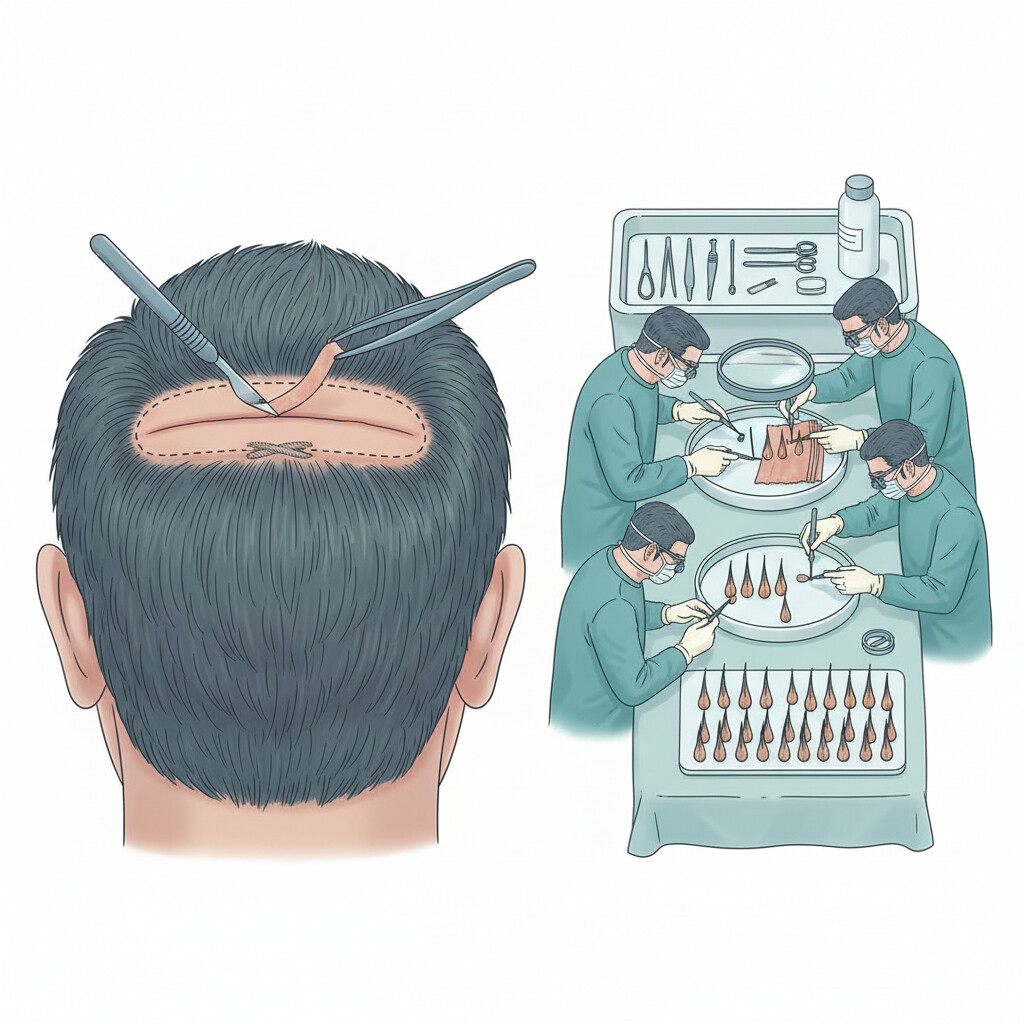
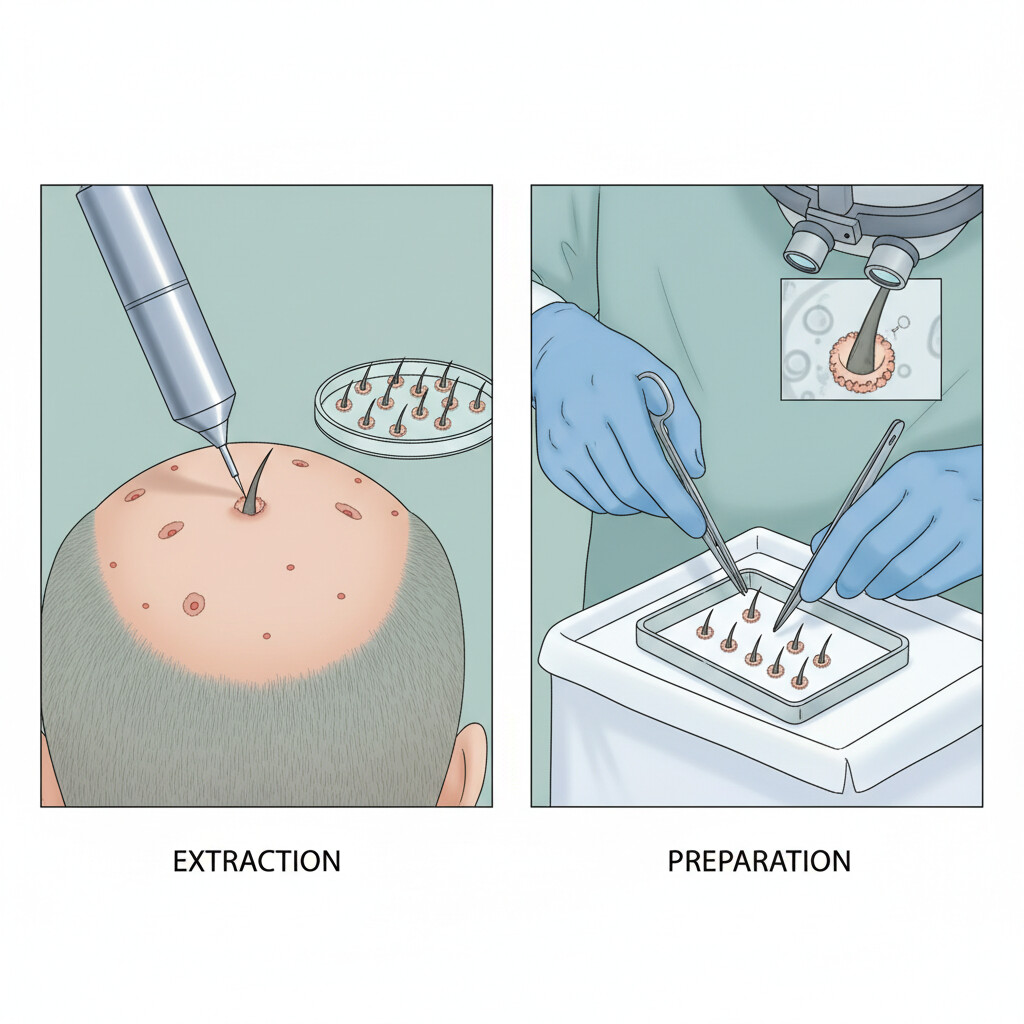
Comparison of FUT and FUE:
| Feature | FUT (Strip Method) | FUE (Follicular Unit Extraction) |
|---|---|---|
| Method | Strip excision, dissection, implantation | Direct extraction of follicular units, implantation |
| Scarring | Linear scar (can be hidden by longer hair) | Small, dot-like scars (virtually undetectable) |
| Recovery | Longer recovery period, more discomfort initially | Faster recovery, less discomfort, quicker return to activity |
| Hair Length | Donor area requires longer hair to hide the scar | Can be performed with short hair or shaved head |
| Graft yield | High graft yield per session possible | Graft yield depends on donor area density and technique |
| Best for | Large-scale restoration, those not concerned with short hair | Those who prefer short hair, faster recovery, minimal scarring |
The Hair Transplant Procedure Step-by-Step
The hair transplantation process, whether FUT or FUE, generally follows these stages:
-
Consultation: The initial consultation is crucial. During this meeting, the surgeon will assess your hair loss pattern, determine the density and quality of your donor hair, discuss your expectations, and recommend the most suitable procedure (FUT or FUE). They will also explain the risks and benefits, and outline the expected outcome.
$
-
Preparation: On the day of the procedure, the donor area will be trimmed short (especially for FUE) and then numbed with a local anesthetic. This ensures the procedure is virtually pain-free.
-
Graft Harvesting:
- FUT: The surgeon will make an incision to remove the donor strip. The wound is then closed with sutures or staples.
- FUE: Using the specialized punch tool, the surgeon will meticulously extract individual follicular units one by one.
-
Graft Preparation: The harvested follicular units are carefully sorted and prepared under microscopes by a skilled team to ensure their viability.
-
Recipient Site Creation: Using fine needles or blades, the surgeon creates tiny incisions (recipient sites) in the balding areas. The angle, direction, and depth of these incisions are critical for achieving a natural-looking result.
-
Graft Implantation: The prepared follicular units are delicately placed into the created recipient sites. The surgeon’s skill in placing these grafts ensures a natural hairline and uniform density.
-
Post-Procedure Care: After the procedure, the scalp will be gently cleaned, and a dressing may be applied. The patient will receive detailed post-operative instructions regarding medication, wound care, and activities to avoid.

Recovery and Expected Outcomes
The recovery period varies depending on the technique used. For FUE, most patients can return to light activities within 1-3 days, while FUT may require a longer recovery. Some initial discomfort, swelling, and minor pain are normal and can be managed with prescribed medication.
Immediately after the procedure, the transplanted hair follicles will be fragile. Patients are advised to avoid touching or disturbing the transplanted area. The transplanted hairs will typically shed within the first 2-6 weeks. This is a normal part of the process, and it allows the new hair to grow from the dormant follicles.
New hair growth usually begins to appear within 3-4 months after the procedure. The results become increasingly noticeable over the next 12-18 months, with the final outcome appearing as dense, natural-looking hair.
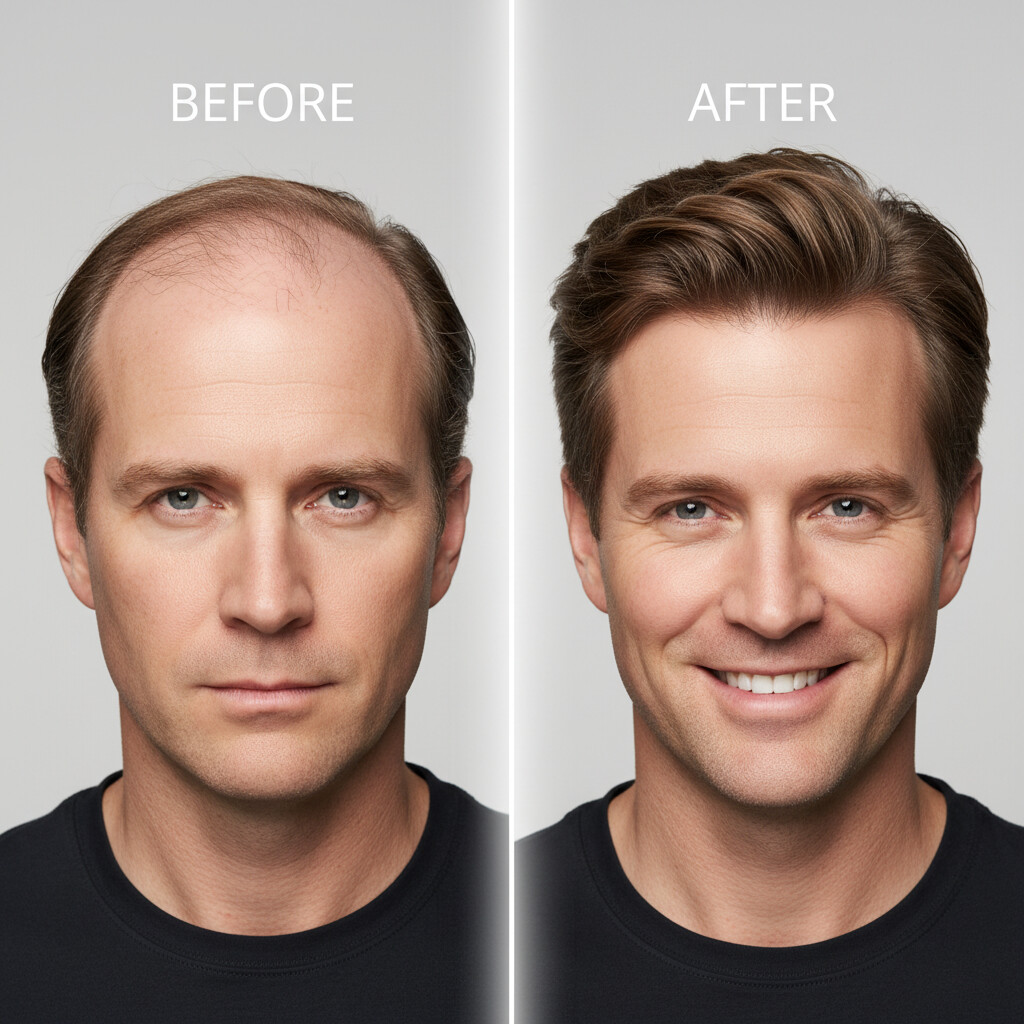
Key points to remember during recovery:
- Follow all post-operative instructions meticulously.
- Avoid strenuous physical activity for the first few weeks.
- Refrain from smoking and excessive alcohol consumption.
- Use prescribed medications as directed.
- Be gentle when washing your hair.
Choosing a Clinic and Surgeon
Selecting the right clinic and surgeon is paramount to achieving successful and natural-looking results. Here are some crucial factors to consider:
-
Experience and Specialization: Look for surgeons who specialize in hair transplantation and have years of experience performing both FUT and FUE procedures.
-
Reputation and Reviews: Research the clinic’s reputation, read patient testimonials, and check for before-and-after photos of previous patients.
$
-
Qualifications and Certifications: Ensure the surgeon is board-certified and a member of reputable professional organizations.
-
Technology and Techniques: A good clinic will utilize advanced technologies and techniques to ensure optimal results and patient comfort.
-
Consultation Process: A thorough and honest consultation is a good indicator of a reputable clinic. They should provide realistic expectations and address all your concerns.
-
Cost: While cost is a factor, it should not be the primary determinant. Focus on quality, safety, and expected results.

In conclusion, hair transplantation is a sophisticated and permanent solution for baldness, offering a significant boost in confidence and self-esteem. By understanding the procedures, recovery process, and by choosing a qualified and experienced surgeon, individuals can embark on a journey towards restoring their hair and regaining a youthful appearance.