
By ForumHairTransplant Editorial Team · Prepared with AI assistance · Sources checked: 19 October 2026
Yes, it is common for transplanted hair to grow in with a different texture at first. In the early months, new hairs are often thin, wiry, frizzy, curlier or kinkier than your original hair. In most people this settles gradually as the hairs thicken and mature, usually over 12-18 months, and sometimes longer. Some subtle differences can remain, particularly if your donor hair naturally differs from the hair you lost, or if body or beard hair was used.
Key takeaways
- Wiry, frizzy or unusually curly early growth is common and is usually not a sign that the transplant has failed.
- Texture usually improves as the hairs mature. Judge it at 12-18 months, not at 4-6 months. The crown often takes longer.
- Donor hair from the back of the head can naturally be coarser, wavier or a slightly different colour from the hair that used to grow on top.
- Beard or body hair used as grafts keeps its own texture, which is often noticeably different from scalp hair.
- See your surgeon if texture still bothers you after 18 months, or if you have painful spots, pus or ongoing redness.
What texture changes look like
Patients describe early regrowth in several ways:
- Thin and fine: new hairs start out thinner than mature hairs and thicken over the following months.
- Wiry or coarse: hairs that feel stiff or rough, stick out or do not lie flat.
- Frizzy or kinky: a crinkled or zig-zag pattern, even in people with straight hair.
- Curlier or wavier than before.
- Different direction: hairs that seem to grow at a slightly different angle until they are long enough to lie down.
These changes are often most noticeable in the first months after regrowth starts and can vary from area to area. The guide on uneven hair growth after a transplant explains why different parts of the scalp can look very different at the same stage.
Why texture changes happen
The follicles are recovering
During surgery, each graft is removed, kept outside the body and then implanted in a new site. This interrupts its blood supply. Most transplanted follicles respond by releasing their hair shaft in the first weeks, usually between weeks 2 and 8. This is normal shedding of the transplanted hairs, not shock loss (shock loss is temporary loss of your own native hairs near the operated area). The guide on shock loss vs shedding explains the difference.

When the follicles start producing hair again, usually around months 3-4, the first hairs are often weaker and less regular than mature hairs. As new blood vessels grow and the follicles settle, the hairs they produce generally become thicker and more uniform.
The healing scalp
The recipient area goes through a healing process in the months after surgery. The skin and tissue around each graft can influence how the new hair exits the skin. As healing completes, hair usually grows more evenly. Areas with previous scarring, for example after an earlier transplant or a repair, can produce less predictable texture.
Your donor hair is different from the hair you lost
Hair on the back and sides of the head is not always identical to the hair that used to grow on top. It can be coarser, wavier or slightly different in colour. After transplantation, the hair generally keeps the characteristics of the area it came from. So some difference may be permanent, although it usually blends well once hair is longer and styled.
Body or beard hair
When scalp donor hair is limited, some clinics use beard or body hair. These hairs keep their own texture, growth length and cycle, so they usually look and feel different from scalp hair. They are often used to add density behind scalp hair rather than at the hairline. See can beard or body hair be used for a hair transplant?
Changes in your native hair
Sometimes it is the surrounding native hair that has changed. Pattern hair loss makes native hairs gradually finer, so the contrast between thick transplanted hair and thinning native hair can grow over time. Temporary shedding across the whole scalp (telogen effluvium) after the stress of surgery can also change how the area looks for a few months.
Typical timeline
These are typical ranges. Everyone grows at a different pace.
| Time after surgery | What is common |
|---|---|
| Weeks 2-8 | Most transplanted hairs shed. The scalp may look like it did before surgery. |
| Months 3-5 | New hairs appear. Often thin, wiry, frizzy or curly. |
| Months 6-9 | More hairs grow in and many start to thicken. Texture begins to even out. |
| Months 12-18 | Most hairs have matured. Texture is usually close to its final state. The crown can take longer. |
The month-by-month growth timeline explains each stage in more detail.
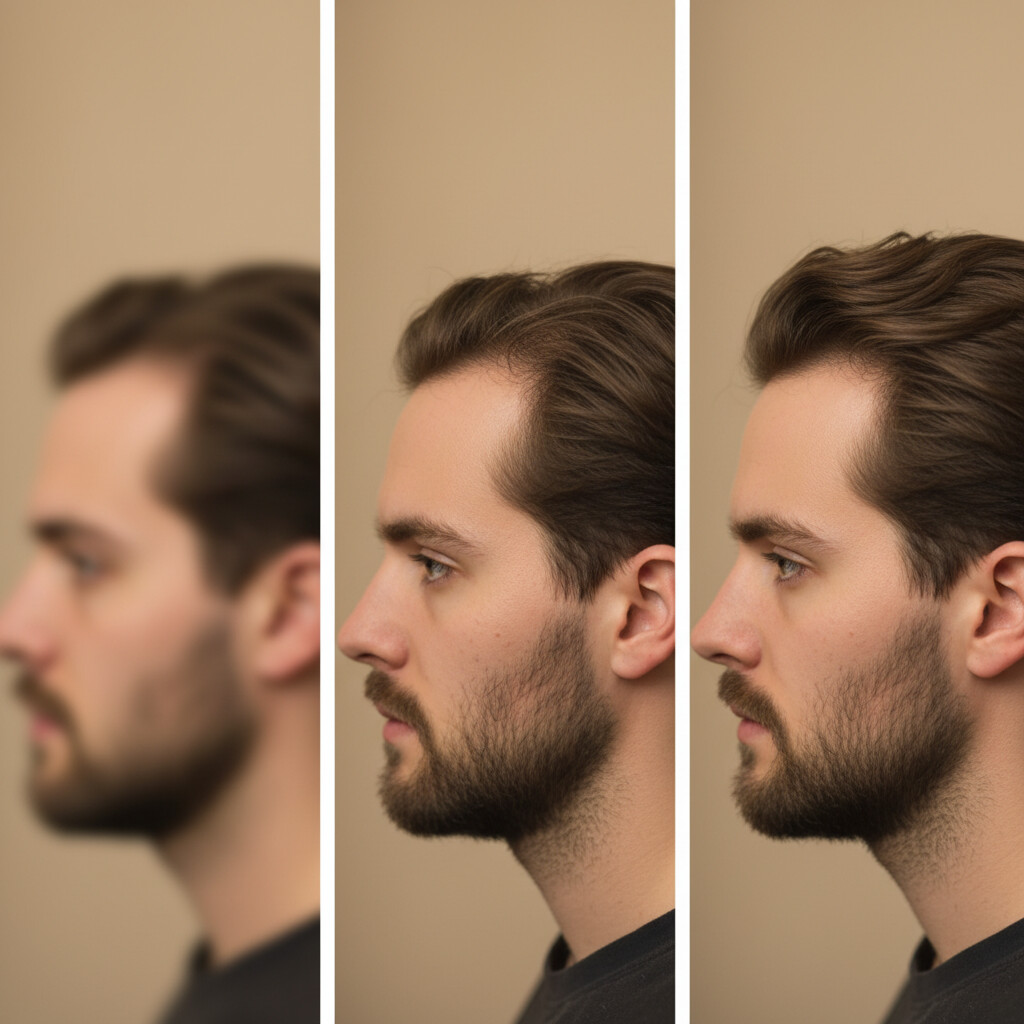
Will it get better?
For most people, yes. Texture tends to keep improving through the first year, and some people see changes well into the second. The guide on results beyond the first 12 months covers what can still change after month 12.
Some differences can remain, especially where donor or body hair is naturally different, where there is scar tissue, or when hairs are very short. In many cases these become much less noticeable once the hair is long enough to lie down and blend with the surrounding hair.
Managing wiry or frizzy hair while you wait
- Let it grow. Longer hair lies flatter and blends more easily. Very short cuts make texture differences more visible.
- Use a gentle conditioner once your surgeon allows normal hair care. It can make wiry hair easier to manage.
- Try light styling products such as a cream or a light paste, rather than heavy gels, once cleared by your surgeon. See styling tips for transplanted hair.
- Avoid harsh treatments early on, such as chemical straightening, perms or strong dyes, until your surgeon says the scalp has healed. Ask them about timing.
- Take monthly photos in the same light. Texture changes are easier to judge month to month than in the mirror every day.

When to contact your surgeon
Texture changes on their own are rarely a medical problem. Contact your surgeon or a doctor if:
- You have painful red bumps, pus or spreading redness. Ingrown hairs and small inflamed spots (folliculitis) are fairly common as new hairs break through, but they should be checked if they persist or worsen.
- The scalp is persistently itchy, scaly or sore.
- Growth is very sparse or absent after 6-9 months. See slow hair growth after a transplant.
- Texture still clearly bothers you after 18 months. Your surgeon can look at whether it is related to the donor hair, scarring or something else.
Common questions
Is wiry hair a sign that my transplant failed?
No. Wiry or frizzy early growth is common and usually shows that the follicles are producing hair again. It tends to improve as the hairs mature.
Will my transplanted hair always feel different?
Often it becomes very close to your native hair over 12-18 months. Some subtle differences can remain, especially if your donor hair naturally differs from the hair you lost.
Can anything change the texture faster?
Not really. Time is the main factor. Good general hair care and letting the hair grow longer make it easier to manage while it matures.
Discussion
Did your transplanted hair grow in wiry, curly or frizzy? When did it start to feel normal, and did anything help you manage it in the meantime? Please share the month and how it changed, as this helps others compare with their own progress.
Sources
- Complications in Hair Transplantation (Kerure and Patwardhan), Journal of Cutaneous and Aesthetic Surgery
- Complications of Hair Transplant Procedures: Causes and Management (Garg and Garg), Indian Journal of Plastic Surgery, 2021
- Hair transplant, NHS
- Hair transplant, American Academy of Dermatology
We did not find an authoritative source that documents hair texture changes after a transplant, so that part of the guide reflects patient experience rather than clinical evidence.
Related guides
- Hair Transplant Growth Timeline: Month-by-Month Progress
- Hair Transplant Results After 12 Months: What Changes Next?
- Uneven Hair Growth After a Hair Transplant: Is It Normal?
- Shock Loss vs. Shedding After a Hair Transplant: What’s Normal?
- Slow Hair Growth After a Hair Transplant: When to Worry?
About this guide: ForumHairTransplant.com is an independent patient community. We are not affiliated with any clinic or surgeon, and we don’t accept payment for rankings, reviews or recommendations. This article is general information, not medical advice. Talk to a qualified doctor about your own situation.