
Uneven growth in the first year after a hair transplant is common and usually normal. Transplanted follicles don’t all start growing at the same time, so some areas fill in faster than others, and patches can look thin for months before they catch up. In most cases the result evens out as the hairs mature, and it can only be judged properly from around 12 months, often later for the crown.
Key takeaways
- Each follicle restarts growth on its own schedule. Some start around month 3, others many months later.
- Patchy, fine and uneven growth between months 3 and 8 is typical and does not mean grafts have failed.
- The crown usually grows more slowly than the hairline, and areas planned at lower density will always look lighter.
- Temporary shock loss of native hair near the grafts can make some areas look thinner for a while.
- If a whole zone still shows little or no growth by around 8-9 months while other areas have filled in, send photos to your surgeon.
Why growth is uneven at first
In the weeks after surgery, most transplanted hairs shed. This normal shedding of transplanted hairs usually happens between weeks 2 and 8. The follicles stay in the skin, rest for a while, and then start producing new hairs.
They don’t all restart together. Visible growth usually begins around months 3-4, but some follicles start earlier and some much later. This staggered start is the main reason growth looks patchy in the first months. An area where many follicles woke up early looks fuller than a neighbouring area where they are still resting.
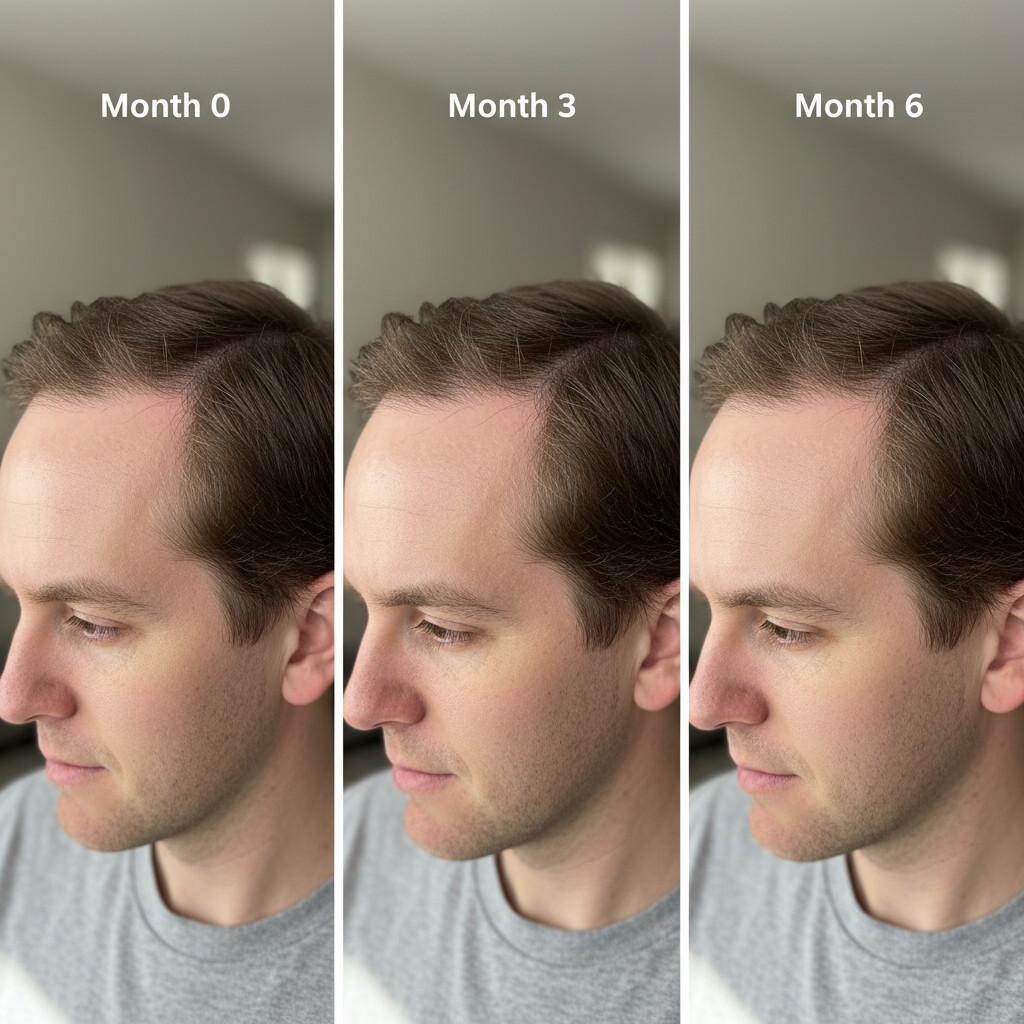
Early hairs are also fine, short and often wavy or wiry. Even where a follicle has started, the hair it produces takes months to thicken and lengthen. A zone can look thin at month 5 and full at month 12 without anything changing except time.
Other reasons some areas look thinner
- Crown vs. hairline. The crown often grows more slowly, and because hair there points in a swirl, it shows the scalp more easily. Many people see the hairline fill in months before the crown.
- Planned density. Surgeons often place grafts more densely in the front and more lightly behind it or in the crown to make the donor supply last. Areas planned lighter will look lighter even when every graft grows.
- Shock loss of native hair. Some people lose native hairs (the hairs they already had) between or next to the grafts in the first weeks. This is temporary in most cases and usually recovers within a few months. It is different from the expected shedding of the transplanted hairs. Our guide to shedding vs. shock loss explains the difference.
- Ongoing hair loss. Native hair around the transplant can keep thinning over the years, which can make transplanted zones look patchy compared with their surroundings.
- Hair texture. Early hairs are sometimes finer, curlier or coarser than your native hair, which affects how full an area looks.
- Lighting and angles. Overhead light, wet hair and phone cameras can make patchiness look much worse than it is.
Normal variation vs. a possible problem
Usually normal:
- Small differences in density between neighbouring areas in months 3-8.
- The hairline filling in faster than the mid-scalp or crown.
- A mix of thick and very fine hairs in the same area.
- Temporary thinning of native hair near the grafts that slowly recovers.
Worth discussing with your surgeon:
- A whole zone with little or no growth by around 8-9 months while the rest has clearly grown.
- Growth that stops improving between 12 and 18 months and leaves clear gaps.
- Hairs growing at clearly wrong angles or directions.
- Native hair loss near the grafts that shows no sign of recovering after about 6 months.
A final judgement is usually made at 12-18 months. If growth is slower than you expected but still improving, the most useful thing is usually to wait and compare photos.

A typical timeline
Everyone is different, but a common pattern is:
- Weeks 2-8: most transplanted hairs shed. Shock loss of native hair, if it happens, often appears in this period.
- Months 2-4: the area may look thinner than before surgery.
- Months 3-6: the first fine hairs appear, often in patches.
- Months 6-12: most growth happens; hairs thicken and patches fill in.
- 12-18 months: the result matures. The crown and larger sessions can take longer.
How to track your progress
- Take photos every month in the same place, same light, same angles and with dry hair. Compare month to month, not day to day.
- Don’t judge from the mirror under strong overhead light. It exaggerates any gaps. Our guide to lighting and hair transplant results explains why.
- Keep to your aftercare and any medication your surgeon recommended. If you were advised to use a treatment to protect native hair, don’t stop it without talking to your doctor.
- Send photos to your surgeon at the check-in points they suggest. Many surgeons ask for photos at set points, such as 6 and 12 months.

When to contact your surgeon
Contact your surgeon or a doctor if:
- A whole transplanted area shows little or no growth by around 8-9 months.
- You notice redness, swelling, pain, pus or many painful spots in the recipient area.
- Native hair near the grafts or in the donor area keeps thinning instead of recovering after a few months.
- You notice round bald patches or shedding all over your scalp, which may have a different cause.
Common questions
Is it normal for transplanted hairs to fall out after surgery?
Yes. Most transplanted hairs shed between weeks 2 and 8. This is the normal shedding of transplanted hairs, not shock loss. Shock loss means temporary loss of your native hairs near the operated area. In both cases the hair usually grows back. Once new hairs have grown, individual hairs can still shed and regrow occasionally as part of the normal hair cycle.
How can I tell if my uneven growth is normal?
If different areas are at different stages but all are slowly improving, that is normal. A whole zone with little or no growth by 8-9 months, or gaps that remain after 12-18 months, is worth discussing with your surgeon.
Will the transplanted hair grow at the same speed as my own hair?
Once established, transplanted hair usually grows at a similar speed to your other hair. The difference is the start: it takes months to restart after surgery and more months to thicken.
Can uneven results be corrected?
If gaps remain after 12-18 months, a touch-up session is sometimes possible, depending on your donor supply. Your surgeon should wait until growth has finished before deciding.
Discussion
Which area grew first for you and which took the longest? At what month did your growth start to look even? Share your timeline and photos below. It really helps people who are in the patchy phase right now.
Related guides
- Hair Transplant Growth Timeline: Month-by-Month Progress
- Understanding Slow Hair Growth After a Transplant
- Hair Transplant Results: Beyond the First 12 Months
- Hair Texture Changes After a Hair Transplant
- Shock Loss vs. Shedding After a Hair Transplant
About this guide: ForumHairTransplant.com is an independent patient community. We are not affiliated with any clinic or surgeon, and we don’t accept payment for rankings, reviews or recommendations. This article is general information, not medical advice. Talk to a qualified doctor about your own situation.