
Good aftercare protects your grafts while they anchor, keeps the scalp clean while it heals, and helps you get through the slow months before new hair appears. The most intensive care is in the first 10-14 days. After that, the work is mostly patience: shedding, a quiet phase, then gradual growth up to 12-18 months. This page gives a short overview of each stage and links to our detailed guide for every topic.
By ForumHairTransplant Editorial Team · Prepared with AI assistance · Sources checked: 19 October 2026
Key takeaways
- The first 10-14 days matter most. Avoid touching, bumping or rubbing the grafts, sleep with your head raised, and wash exactly as your clinic shows you.
- Most transplanted hairs fall out between roughly weeks 2 and 8. This is normal shedding, not shock loss, and not a sign of failure.
- New growth usually starts around months 3-4. Most of the result is visible at about 12 months, and the crown often takes longer.
- Clinic instructions differ. When this guide and your surgeon disagree, follow your surgeon.
Days 0-3: protect the grafts
Right after surgery the grafts sit loosely in tiny incisions and are easy to dislodge. Most patients go back to their hotel or home the same day. Our guide to the first 48 hours after a hair transplant covers this period in detail. The basics:
- Don’t touch the recipient area. No scratching, rubbing or pressing, and keep hats, hoods and pillows off the grafts unless your clinic allows it.
- Sleep semi-upright on your back for the first few nights, usually at around 30-45 degrees. A travel neck pillow stops your head from rolling. See our sleep guide.
- Expect some swelling. It often starts on day 2-3 and can move down to the forehead and around the eyes before settling within about a week.
- Take only the medication your clinic prescribes or approves. Some common painkillers can increase bleeding, so ask before taking anything else.
- Avoid alcohol, smoking, bending over and heavy lifting. All of these can increase swelling or bleeding, or reduce blood flow to the healing skin.
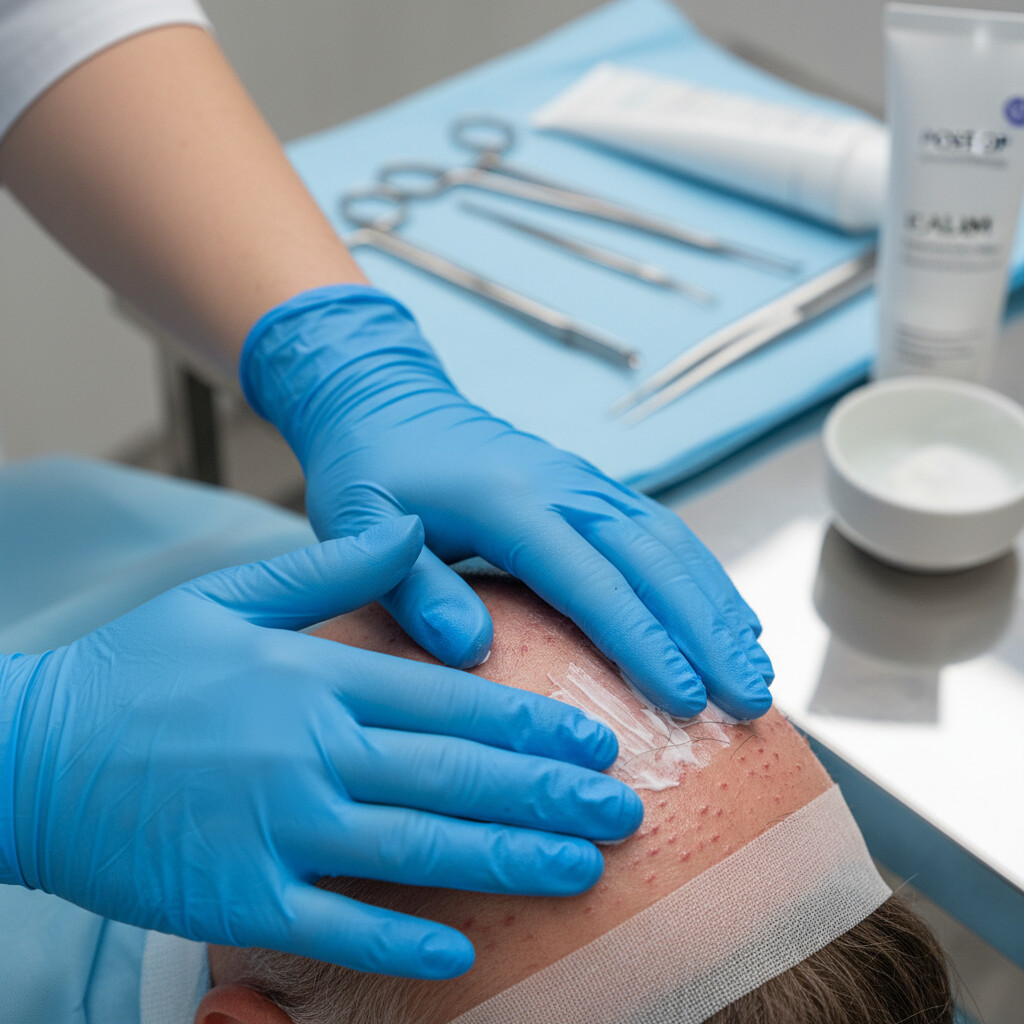
Days 3-14: washing, scabs and getting back to normal
Grafts become more secure each day. Many surgeons consider them fairly stable after the first few days and firmly anchored by around day 10-14. Our article on how long it takes for grafts to become secure explains this timeline.
- Washing. The first wash is often done at the clinic or on day 1-3, followed by a daily gentle routine: lotion or foam, a soft patting motion and low water pressure. The first-wash guide walks you through it step by step.
- Scabs and crusts. Small crusts form around each graft and usually come off with washing by about day 10-14. Don’t pick them.
- Work. Many people return to desk work within 2-7 days, depending on how visible the redness and scabs are and how they feel about it.
- Exercise. Light walking is usually fine early on. Most clinics ask you to avoid sweating and strenuous exercise for at least 1-2 weeks and heavy or contact sports for longer.
- Travel. Many international patients fly home 1-3 days after surgery with a few precautions.
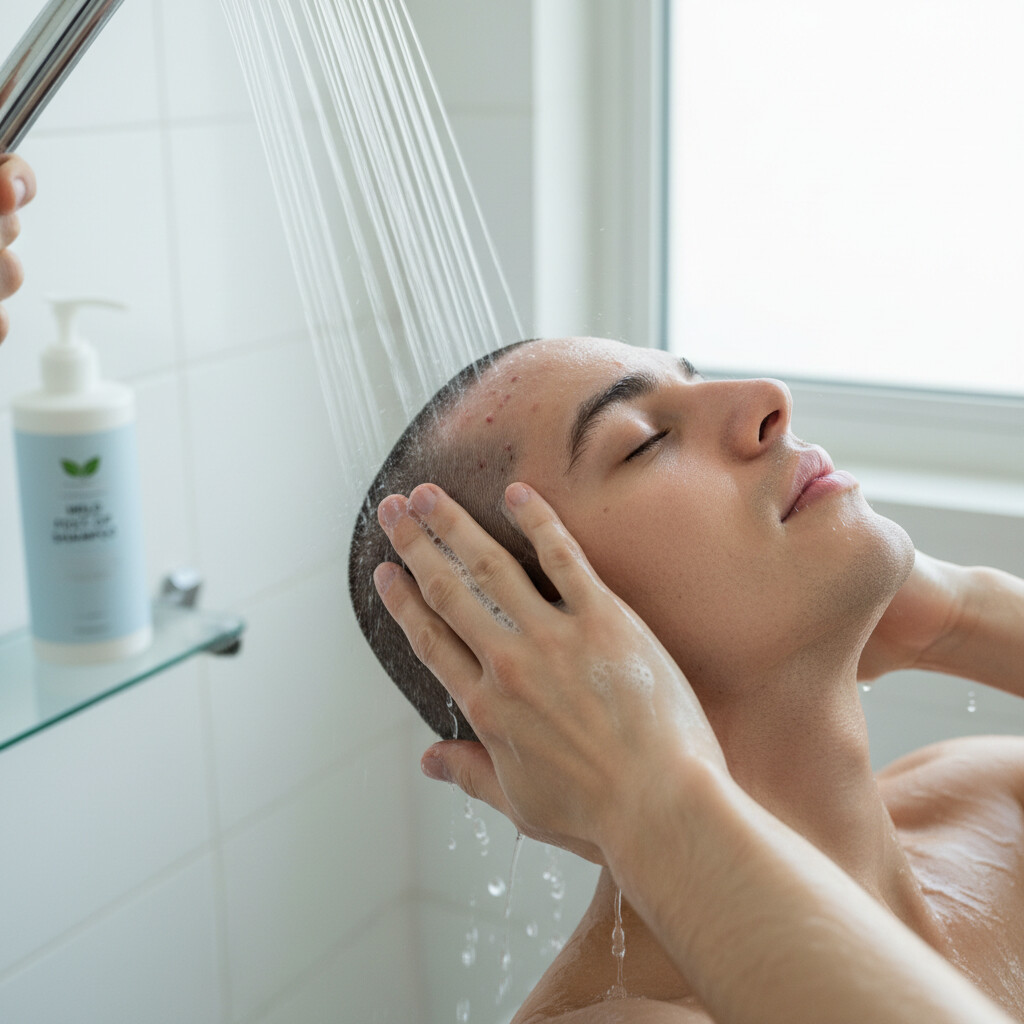
Weeks 2-8: shedding and the “ugly duckling” phase
Between roughly weeks 2 and 8, most transplanted hairs fall out. This is normal shedding of transplanted hairs. The hair shaft falls out, but the follicle stays under the skin and goes into a resting phase before it starts to grow again. It is expected and does not mean the grafts have failed.
Keep it separate from two other things:
- Shock loss is temporary loss of your own existing (native) hairs near the operated areas, caused by the stress of surgery. It usually grows back within a few months, although hair that was already very thin before surgery may not all return.
- Telogen effluvium is more widespread shedding triggered by stress, illness or other factors. It is not specific to the transplant.
Our guide to shedding and shock loss after a transplant explains the difference in more detail. During this phase, redness usually fades gradually (faster on darker skin, slower on fair skin), and numbness and itching are common while nerves recover.
Months 1-3: steady routine, little to see
The scalp now looks close to how it did before surgery, sometimes thinner if there was shock loss. Most restrictions lift during this period, but timings vary by clinic:
- Haircuts: scissor cuts are often allowed after a few weeks. Clippers on the grafted area usually need longer.
- Hair dye and other chemical treatments: many surgeons ask you to wait at least 4-6 weeks and until the scalp has fully healed.
- Swimming: pools, the sea and hot tubs are usually off-limits for around 2-4 weeks, often longer.
- Sun: avoid strong direct sun on the scalp in the early weeks and use a loose hat or shade.
- Medication for native hair: if you use or plan to use treatments such as minoxidil or finasteride, ask your surgeon when to start or resume them.
Small pimples or ingrown hairs can appear as new hairs push through the skin. They are common and usually settle without treatment.
Months 3-12: growth
New hairs usually start to appear around months 3-4. They are often thin, wavy or uneven at first and thicken over time. Around six months many people see a clear change, but growth is still in progress. Most of the result is usually visible at around 12 months. The crown and larger sessions often keep improving until 12-18 months. Our month-by-month growth timeline shows what is typical at each stage.
Uneven growth, where one area comes in faster than another, is common in the middle months. Judge the result at 12 months or later, not at 4 or 6.
Long-term care
Once the scalp has healed, transplanted hair can be washed, cut, styled and coloured like the rest of your hair. A few habits help protect the overall result:
- Look after your native hair. A transplant does not stop ongoing hair loss in the untreated areas. Talk to a doctor about whether medical treatment makes sense for you.
- Protect the scalp from sunburn, especially where hair is still thin.
- Don’t smoke. Smoking reduces blood flow to the skin and is linked to slower healing.
- Eat a balanced diet. Supplements are only useful if you have a real deficiency.
- Go to follow-up checks, even remotely with photos, so your surgeon can see how growth is progressing.
When to contact your surgeon
Some swelling, redness, soreness, itching and numbness are normal. Contact your surgeon, or get local medical help if you can’t reach them, if you notice:
- spreading redness, warmth, pus, a bad smell, or a fever,
- bleeding that does not stop after 10-15 minutes of gentle pressure with clean gauze,
- pain that gets worse instead of better after the first few days,
- dark, crusted or blackened patches of skin that are not ordinary scabs,
- swelling that affects your vision or keeps increasing after day 4-5,
- very little visible growth at 12 months or later.
Common questions
Is it normal to lose the transplanted hairs after a few weeks?
Yes. Most transplanted hairs shed between roughly weeks 2 and 8. The follicles stay in place and usually start producing new hair around months 3-4.
When are the grafts safe from being dislodged?
They become more secure each day. Many surgeons consider them firmly anchored by around day 10-14, but follow your own clinic’s timeline.
When will I see the final result?
Most of the result is usually visible at around 12 months. The crown and larger sessions can take 12-18 months or more.
Discussion
Which part of the aftercare did you find hardest: sleeping, washing, or waiting through the shedding months? And was there anything your clinic’s instructions didn’t cover? Share your experience below to help people who are just starting their recovery.
Sources
- Hair transplant, NHS
- Hair Transplant: How Does It Work, Success Rates, Cleveland Clinic
- Recovery (Hair Transplantation and Restoration), American Society of Plastic Surgeons
- Complications in Hair Transplantation (Kerure and Patwardhan), Journal of Cutaneous and Aesthetic Surgery
These sources cover the general topic. They do not answer every detail in this guide, so follow your surgeon’s written instructions.
Related guides
- Hair Transplant Stages: Before, During and After Surgery
- Uneven Hair Growth After a Hair Transplant: Is It Normal?
- Why Do Hair Transplants Fail? Causes and How to Prevent Them
- Hair Transplant Maintenance: How to Protect Your Results Long-Term
Guides in this series
- The First 48 Hours After a Hair Transplant: What to Do and Avoid
- How Long Until Hair Grafts Are Secure After a Transplant?
- How to Sleep After a Hair Transplant
- Swelling After a Hair Transplant: How Long It Lasts
- Pain After a Hair Transplant: What to Expect and How to Manage It
- Temporary Numbness After Hair Transplant: When Will it Go Away?
- First Hair Wash After a Hair Transplant: When and How
- The Best Shampoo to Use After Hair Transplant Surgery
- When Can I Go Back to Work After a Hair Transplant?
- Exercising After Hair Transplant: When Can You Safely Hit the Gym?
- Swimming After Hair Transplant: When Can You Dive Back In?
- Sun Exposure After a Hair Transplant: When Is It Safe?
- Can You Wear a Hat After a Hair Transplant?
- When Can I Cut or Shave My Transplanted Hair?
- When Can I Dye My Hair After a Hair Transplant?
- Can You Fly After a Hair Transplant? Timing and Travel Tips
- Redness and Itching After a Hair Transplant: What’s Normal?
- What to Eat After a Hair Transplant: 6 Key Nutrients
- What Happens If You Accidentally Touch Your Hair Grafts?
- Scabs After Hair Transplant: When Do They Fall Off?
- Dry Scalp After a Hair Transplant: Causes and What Helps
- Hair Transplant Growth Timeline: Month-by-Month Progress
- Shock Loss vs. Shedding After a Hair Transplant: What’s Normal?
About this guide: ForumHairTransplant.com is an independent patient community. We are not affiliated with any clinic or surgeon, and we don’t accept payment for rankings, reviews or recommendations. This article is general information, not medical advice. Talk to a qualified doctor about your own situation.