
By ForumHairTransplant Editorial Team · Prepared with AI assistance · Sources checked: 19 October 2026
A hair transplant happens in three stages. Before surgery you have a consultation, medical checks and a few weeks of preparation. On the day, the procedure usually takes most of a working day under local anaesthetic. After surgery comes a recovery of about two weeks, followed by a growth phase that typically takes 12-18 months to reach the final result. This guide walks through what happens at each stage and what you need to do.
Key takeaways
- Preparation starts weeks before surgery: medical history, a plan for medications, and cutting down on smoking and alcohol.
- Most procedures are done under local anaesthetic and typically last several hours, depending on graft numbers and technique.
- The first 10-14 days are the most delicate: protect the grafts, follow the washing routine and let scabs come off naturally.
- Most transplanted hairs shed in the first weeks. This is expected and is not the same as shock loss.
- New growth usually starts around months 3-4. Final results are judged at 12-18 months, often later for the crown.
Stage 1: Before the transplant
Consultation and planning
Everything starts with an assessment of your hair loss. The doctor should confirm the cause, check your donor area (the back and sides of the scalp), estimate how many grafts you need, and discuss how your hair loss may progress. This is also when FUE or FUT is recommended and a hairline is sketched out. Our overview of what a hair transplant can and cannot do is useful reading before this conversation.
Use the consultation to ask who will perform each part of the surgery, what aftercare is included, and how follow-up works if you are travelling.
Medical history and tests
Give a full medical history, including every medication and supplement you take. Many clinics ask for blood tests before surgery, for example a blood count, clotting tests and screening for infections such as hepatitis and HIV. Tell the doctor about conditions such as diabetes, high blood pressure, heart problems, skin conditions or a history of keloid scarring.
Medications, smoking and alcohol
Your surgeon will tell you what to pause and when. Common instructions include:
- Painkillers and anti-inflammatories: aspirin and ibuprofen-type drugs are often paused for a period before surgery because they can increase bleeding.
- Supplements: some, such as high-dose vitamin E, fish oil or ginkgo, may also be paused.
- Prescribed blood thinners: never stop these yourself. Any change must be agreed with the doctor who prescribed them.
- Smoking: it reduces blood flow to the scalp and can slow healing. Stopping for as long as possible before and after surgery helps.
- Alcohol: usually avoided for several days before and after surgery.
The pre-operation checklist covers the practical side, from what to pack to how to wash your hair on the morning of surgery.
Travel and practical arrangements
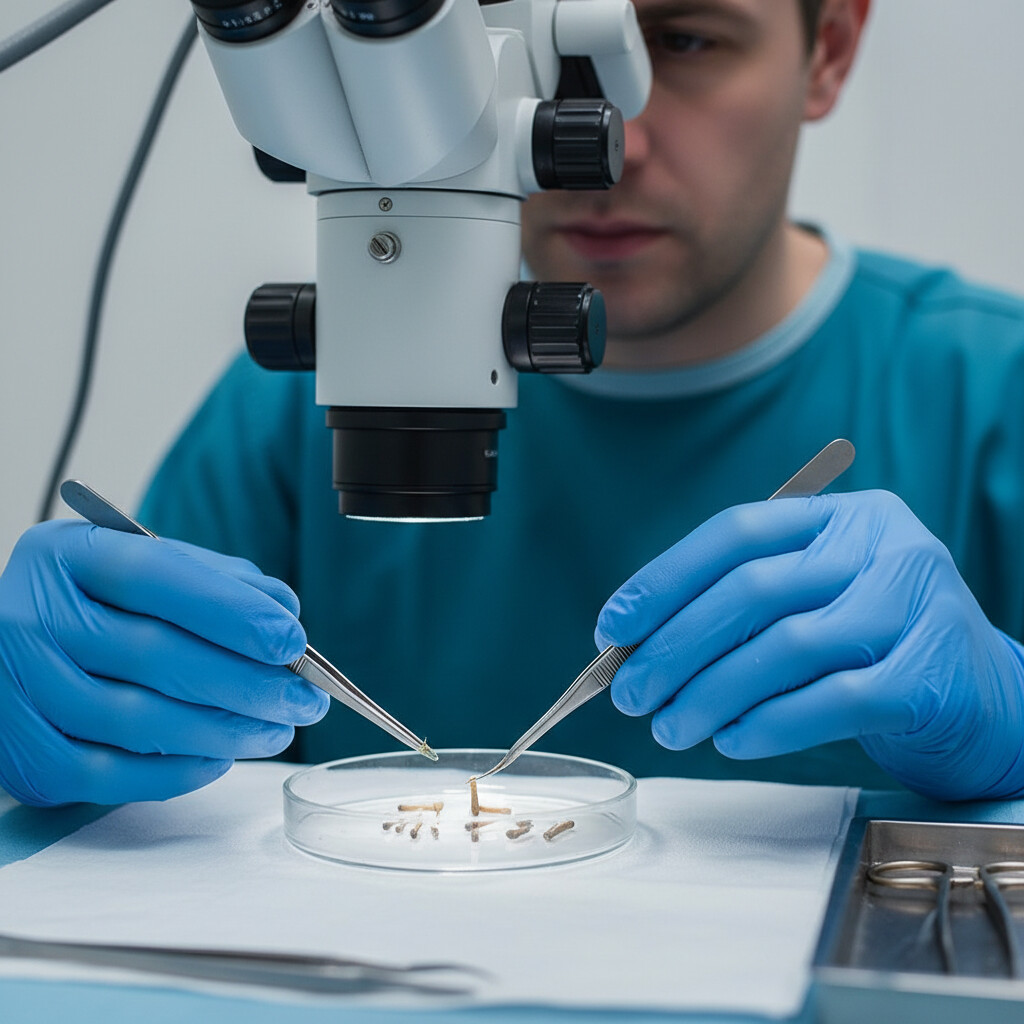
If you are travelling abroad, plan to stay near the clinic for the first few days so you can attend the first check and the first wash. Our guide to the hair transplant journey in Turkey explains how a typical trip is organised. If you will receive sedation, arrange for someone to take you back to your hotel or home.
Stage 2: The day of surgery
Final design and preparation
The day usually starts with a final check of the plan, photographs and the marking of the hairline and treatment areas. For FUE the donor area is shaved short. Some clinics offer unshaven options for smaller cases.
Anaesthesia
Local anaesthetic is injected into the donor and recipient areas. The injections sting for a short time, then the areas go numb. Most patients stay awake. Some clinics offer mild oral or intravenous sedation to help you relax.
Taking the grafts
- FUE: individual follicular units are removed one by one with a small punch, usually under about 1 mm wide. This leaves many tiny dot scars that are normally hidden by short to medium-length hair.
- FUT: a thin strip of skin is taken from the back of the head and the wound is closed with stitches. The strip is divided into grafts under microscopes. This leaves a fine linear scar.
Grafts are kept in a cooled storage solution until they are placed.
Creating sites and placing grafts
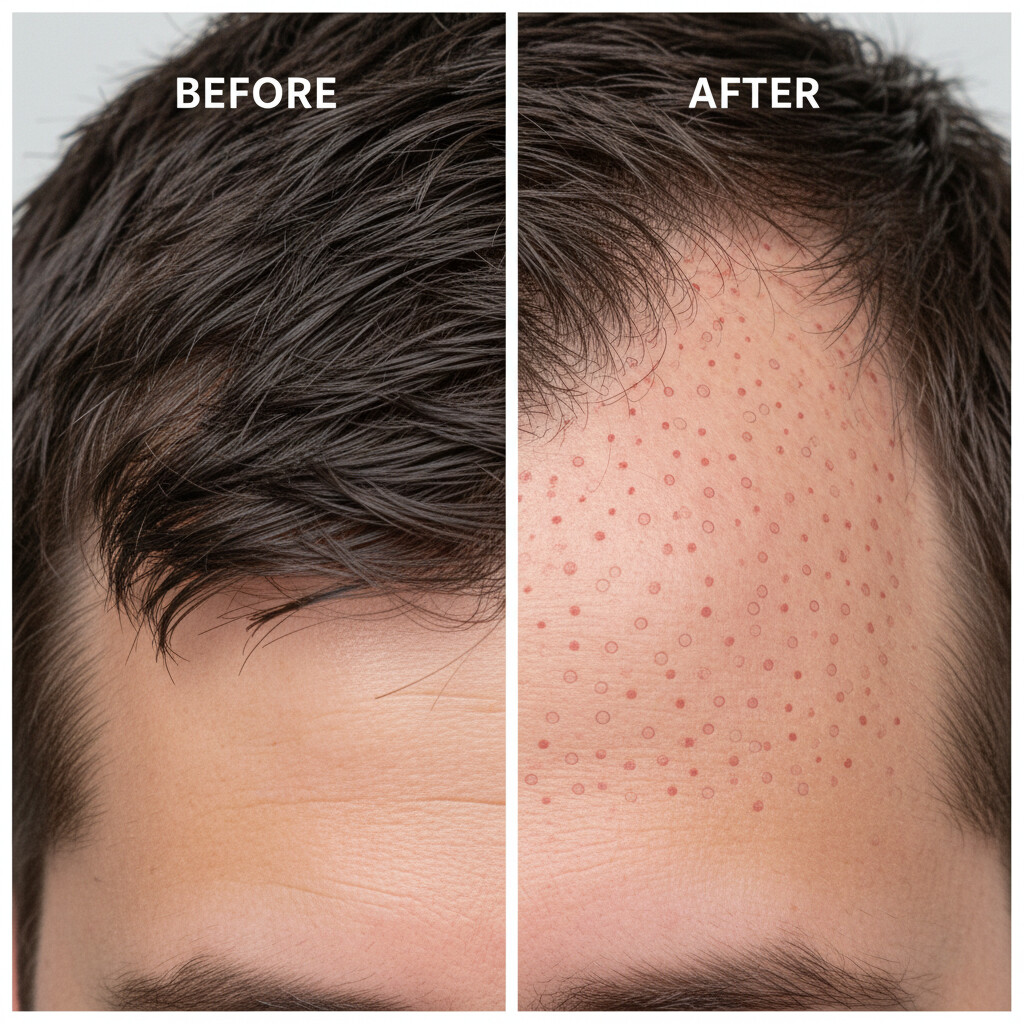
Tiny recipient sites are made at angles and directions that match natural hair growth. Grafts are then placed into these sites with forceps or an implanter pen. The design of these sites largely decides how natural the result looks.
How long it takes
A typical session takes several hours, often around 6-8 hours, with breaks for food and rest. Larger sessions can take longer. See how long a hair transplant operation takes for the factors that affect this.
Stage 3: Recovery and growth
The first days
You will usually go home or to your hotel the same day with written instructions, and often with medicines for pain and swelling. Expect:
- Mild to moderate discomfort, often worst on the first night and in the donor area.
- Swelling of the forehead, which may reach the eyes around days 2-4 before settling.
- Sleeping with your head raised for the first few nights, and avoiding pressure on the grafts.
Many clinics see you the next day for a check and the first wash. For a full day-by-day routine, follow our aftercare guide from day 1 to month 12, and always put your own surgeon’s instructions first.
Weeks 1-2: scabs and healing
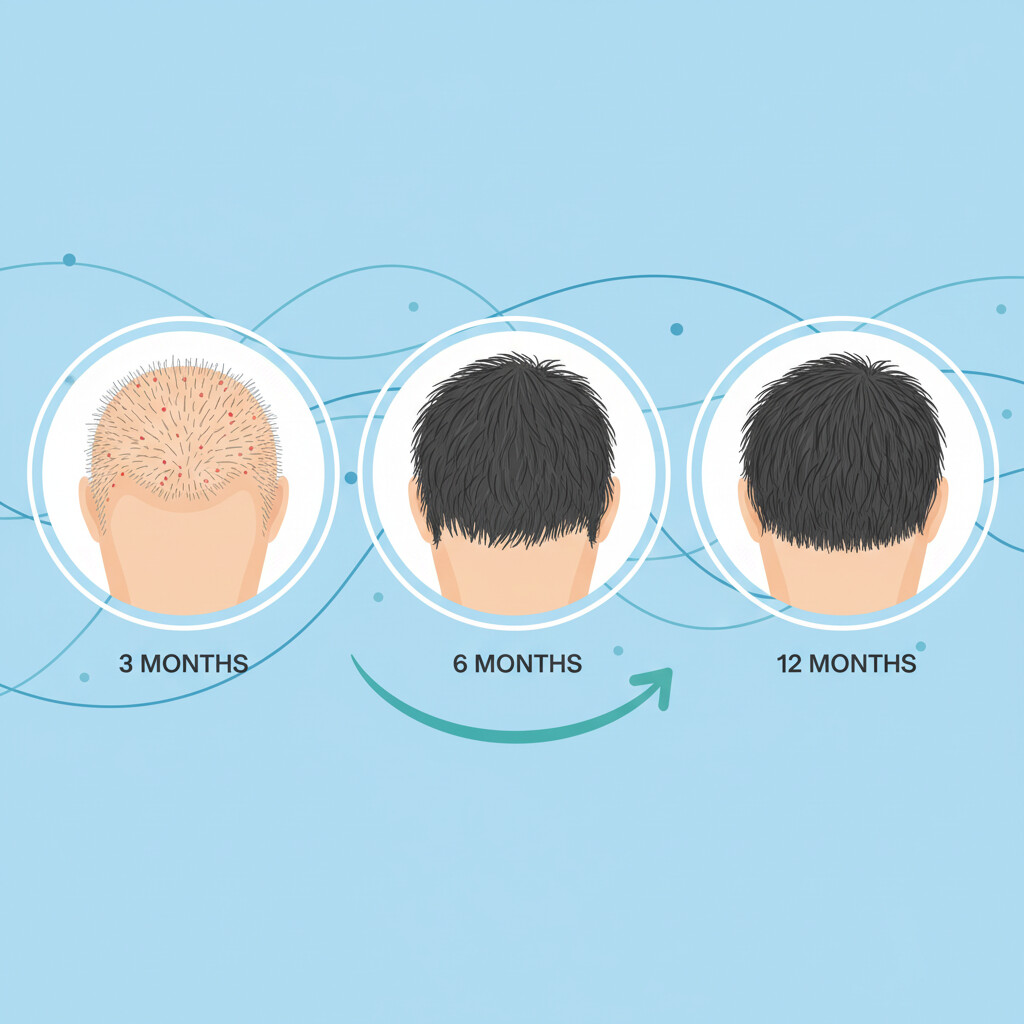
Small crusts form around each graft. Gentle washing as instructed helps them soften, and most come off within about 10-14 days. Do not pick or scratch them. Avoid heavy exercise, swimming, saunas and direct sun on the scalp for as long as your surgeon advises.
Weeks 2-8: shedding
Most of the transplanted hairs fall out during this period. This is normal shedding. The follicle stays under the skin and will grow a new hair later. Some people also notice shock loss, which is temporary loss of their own native hair near the operated areas. It usually recovers over the following months. Neither is a sign that the transplant has failed.
Months 3-12: growth
New hairs usually start to appear around months 3-4. They are often fine and uneven at first, and some may look like small spots as they come through the skin. Most visible change happens between months 5 and 9, with hair thickening afterwards.
Months 12-18: the final result
Most people can judge the result at 12-18 months. The crown and larger sessions often take longer.
Long term
Transplanted hair usually keeps growing for life, but your native hair can keep thinning. Ask your doctor whether medical treatment such as finasteride or minoxidil is suitable for you to help protect it.
When to contact your surgeon
Call your clinic or a doctor promptly if you notice:
- Increasing pain, redness or warmth after the first few days.
- Pus, a bad smell or spreading redness, which may be signs of infection.
- Fever or feeling unwell.
- Bleeding that doesn’t stop with gentle, steady pressure.
- Swelling that gets worse instead of better after the first week, or any swelling with difficulty breathing.
Common questions
Is a hair transplant painful?
The anaesthetic injections sting briefly. After that most people feel pressure but not pain during surgery. Discomfort in the first few days is usually managed with ordinary painkillers.
When can I go back to work?
Many people with desk jobs return after about a week, depending on how much visible redness and scabbing they are comfortable with.
When will I see the final result?
Typically at 12-18 months, and sometimes later for the crown.
Discussion
Which stage did you find hardest: the preparation, the day itself or the waiting during the growth phase? Share what surprised you and what you would tell someone who is about to start.
Sources
- Hair transplant, American Academy of Dermatology
- Hair replacement surgery, hair transplants, DermNet
- Anesthesia: Maximizing Patient Comfort in Surgical Hair Restoration, ISHRS
- Hair transplant, NHS
Related guides
- What Is a Hair Transplant? How It Works, Results and Limits
- Pre-Operation Checklist: Essential Tips Before Your Hair Transplant
- How Long Does a Hair Transplant Operation Take?
- Hair Transplant Growth Timeline: Month-by-Month Progress
- Hair Transplant in Turkey: What to Expect Day by Day
- The Stages of a Hair Transplantation Procedure: A Comprehensive Guide
About this guide: ForumHairTransplant.com is an independent patient community. We are not affiliated with any clinic or surgeon, and we don’t accept payment for rankings, reviews or recommendations. This article is general information, not medical advice. Talk to a qualified doctor about your own situation.