
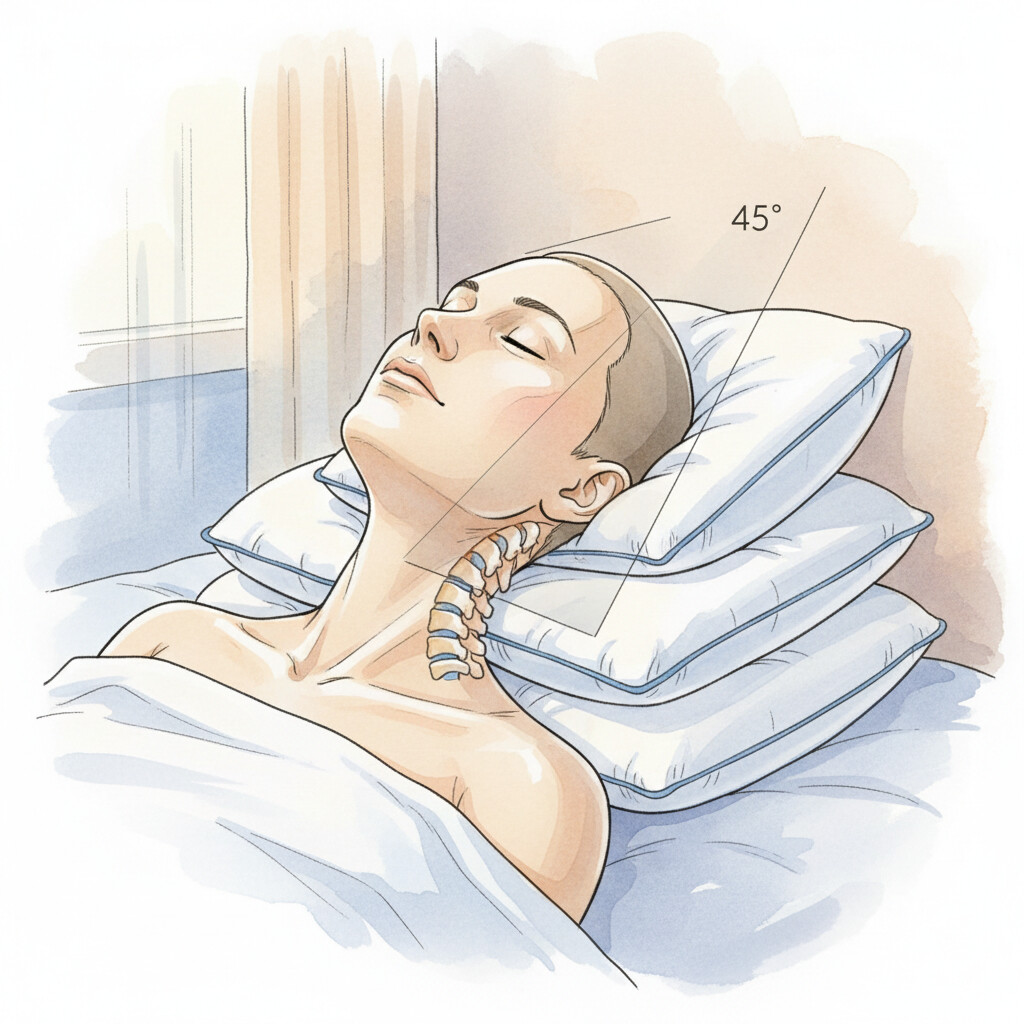
After a hair transplant, most surgeons ask you to sleep on your back with your head raised at roughly 30-45 degrees for the first few nights, usually around 3 to 7, and to keep the transplanted area from touching the pillow for about 7-10 days. Raising your head helps limit swelling, and avoiding contact protects the new grafts while they settle. Instructions differ between surgeons, so treat this as a general guide and follow your own surgeon’s plan.
Key takeaways
- Sleep on your back, head raised with pillows, a wedge or a recliner, for the first few nights. This mainly helps reduce swelling.
- The transplanted area must not rub or press against anything while the grafts settle, typically the first 7-10 days.
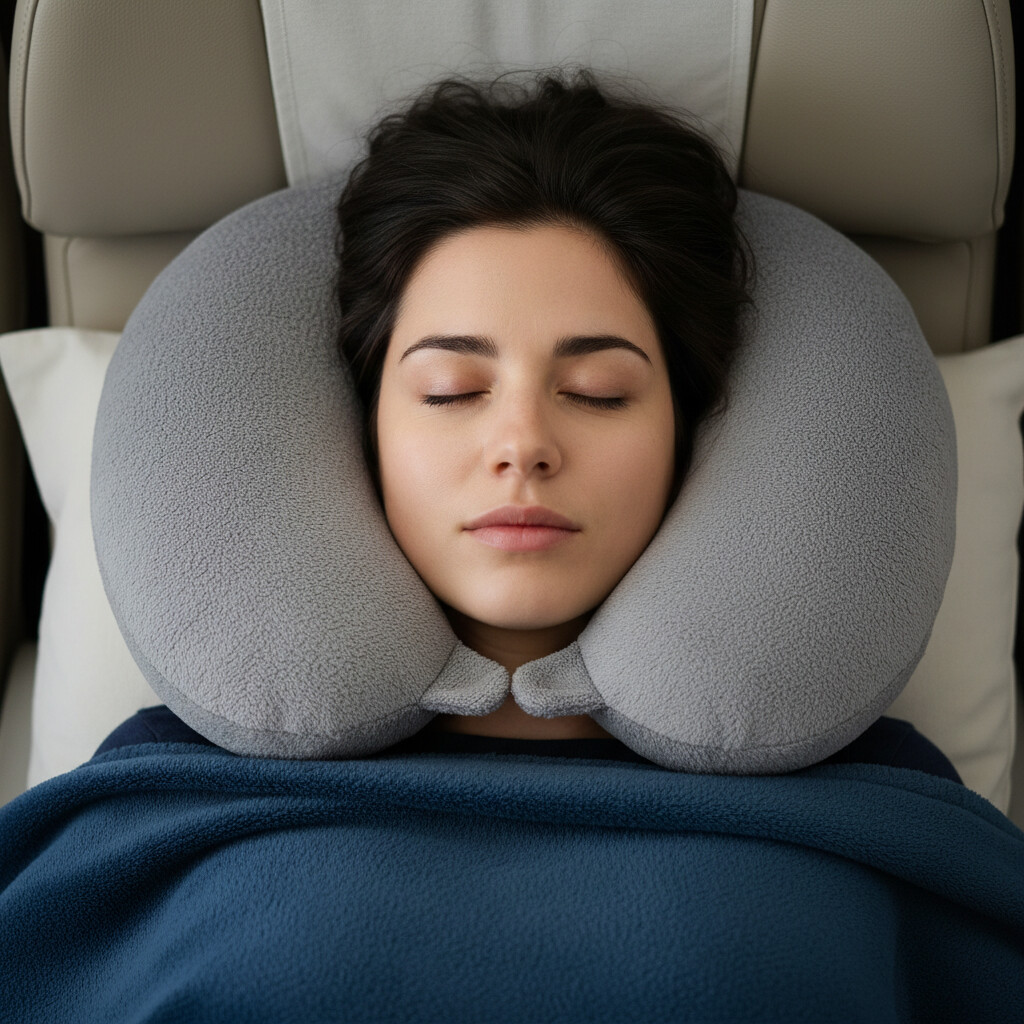
- A travel (U-shaped) neck pillow helps keep your head still and your recipient area off the pillow.
- Expect some oozing from the donor area on the first night or two. Put an old towel or disposable pad over your pillow.
- Most people can go back to normal sleeping positions after around 10-14 days, once the scabs are gone and the surgeon agrees.
Why sleep position matters
Two things are happening in the first days after surgery.
The grafts are settling. Each graft sits in a tiny incision and is held at first only by a fibrin clot. Over the next few days it becomes anchored as the skin heals around it. During this time, rubbing or pressure can pull grafts out or damage them. The guides on the first 48 hours and how long until grafts are secure explain this in more detail.
Swelling builds up. The fluid used for local anaesthesia, plus normal inflammation, causes swelling that usually peaks around days 2-4. Gravity can pull it down to the forehead and around the eyes. Keeping your head above the level of your heart helps it drain. See Swelling (Edema) After Hair Transplant for more on managing it.
Swelling is usually harmless and goes down within a week, but it can be uncomfortable and can make your eyes puffy for a day or two.
How to set up your bed
Head elevation
Aim for a semi-upright position, roughly 30-45 degrees. Options that patients commonly use:
- Two or three firm pillows stacked under your upper back and head.
- A foam wedge pillow, which is more stable than stacked pillows and less likely to slide during the night.
- A recliner chair or sofa, which some people find easiest for the first two nights.
- An adjustable bed, if you have one.
The goal is to raise your head and upper body together, not just bend your neck forward. A sharply bent neck is uncomfortable and can push your head against the headboard.
Neck support
A U-shaped travel pillow worn around the neck is one of the most useful things you can bring. It supports your neck, stops your head from rolling to the side, and keeps the back of your head slightly lifted.
Protecting the donor area and bedding
The donor area at the back of the head usually rests on the pillow when you sleep on your back. That is normally fine, as it is more robust than the recipient area, but it can be tender and may ooze a little blood or fluid on the first night or two.
- Cover your pillow with an old towel or a disposable absorbent pad.
- Use a clean pillowcase and change it every day or two during the first week.
- Do not panic about small stains. Some oozing from the donor area is expected early on.
If your surgeon has applied a bandage to the donor area, follow their instructions on when to remove it.
Positions to avoid, and for how long
| Position | General guidance |
|---|---|
| On your back, head raised | Recommended for the first nights |
| On your side | Usually avoided for the first 7-10 days, especially if the temples or sides were treated |
| On your stomach | Avoided for longer, as the face and hairline would press into the pillow |
| Flat on your back | Usually avoided for the first few nights because of swelling |
These are common patterns, not fixed rules. Some surgeons allow side sleeping earlier if only the front was treated and you keep that area off the pillow. Ask what applies to your procedure.
If you move in your sleep
Many people worry about rolling over. A few ideas that help:
- Place a pillow on each side of your body to make rolling harder.
- Sleep in a recliner for the first night or two if you know you move a lot.
- Wear the travel pillow; it makes turning your head sideways less comfortable, which is the point.
If you do wake up on your side, do not panic. Check the area gently in a mirror without touching it. A brief, light contact after the first few days rarely causes damage. If you see fresh bleeding from recipient sites or grafts that look missing, contact your clinic. What Happens If You Accidentally Touch Your Hair Grafts? covers this in more detail.
Crown procedures
If your crown was treated, back-sleeping needs extra care, because the crown can touch the pillow. A U-shaped travel pillow that keeps the back of your head lifted, or sleeping in a recliner, helps keep the crown clear. Ask your surgeon specifically how they want you to sleep if the crown was part of your procedure.
Managing discomfort at night
Most people describe the first night as uncomfortable rather than painful. Tightness, tenderness and some throbbing in the donor area are common. Managing Pain and Discomfort After Hair Transplant Surgery covers pain relief in detail.
- Painkillers: take only what your surgeon prescribes or approves. Some surgeons prefer patients avoid certain anti-inflammatory painkillers such as ibuprofen or aspirin in the first days because of bleeding risk.
- Sleep aids: do not take sleeping pills, antihistamines or other sedating medicines unless your surgeon agrees.
- Alcohol: avoid it. It can increase bleeding and swelling and disturb sleep.
- Cold packs: some surgeons suggest a cold pack on the forehead (never directly on the grafts) to help with swelling. Only do this if your surgeon recommends it.
- Itching: it is common as healing progresses. Do not scratch. Your clinic may suggest a saline spray.

Timeline: when can you sleep normally?
A typical pattern looks like this. Your own surgeon’s instructions come first.
- Nights 1-3: back only, head raised, travel pillow on. Expect some oozing and swelling.
- Nights 4-7: continue elevation if swelling is still present. Keep the recipient area off the pillow.
- Days 7-10: grafts are generally considered secure by this point, and scabs start to loosen with washing. Many surgeons allow gradual return to side sleeping around here.
- Days 10-14 onwards: most people are back to their usual positions, including side and stomach sleeping, once the scabs have gone.
The small crusts around the grafts are normal. Let them come off through the washing routine your clinic gives you rather than rubbing them against a pillow. The post-transplant care guide covers the full routine.
Special situations
Sleeping on a flight home. Many patients fly home within a few days. Wear your travel pillow, keep the seat reclined if possible, and avoid resting your head against the window or the seat in front.
CPAP or sleep apnoea masks. Tell your surgeon before the procedure. Straps can touch the scalp, and your surgeon may suggest how to position them or a different mask type for the first days.
Sharing a bed. Some people sleep alone for the first few nights so a partner’s movement or a pet does not bump their head.
Hats and caps at night. Do not wear a hat, headband or sleep mask with a strap over the grafts unless your clinic has given you a specific loose cap to use.
When to contact your surgeon
Contact your surgeon or clinic promptly if you notice:
- bleeding that does not stop after 10-15 minutes of gentle pressure with clean gauze on the donor area (do not press on grafts),
- swelling that keeps getting worse after day 4 or 5, or swelling with severe pain,
- increasing redness, heat, pus or a bad smell from the scalp,
- fever or feeling generally unwell,
- several grafts that seem to have come out with bleeding at the sites,
- pain that is not controlled by the medication you were given.
Common questions
How long do I have to sleep elevated?
Most surgeons recommend it for about 3-7 nights, mainly to limit swelling. If your swelling has settled early, your surgeon may say you can lower your head sooner.
Is it a problem if my donor area is on the pillow?
Usually not. The donor area is more robust than the recipient area. It may be sore and may ooze a little early on, which is why a towel or pad over the pillow helps.
I found hairs on my pillow after two weeks. Did I damage the grafts?
Probably not. Transplanted hairs usually shed in the weeks after surgery, often starting around weeks 2-4. This is expected, and the follicle stays in place to regrow the hair later. Some people also get shock loss, a temporary shedding of native hairs near the operated area. Losing a graft through pressure is most likely in the first few days, and it usually causes a small spot of bleeding.
Discussion
What was your sleep setup after your transplant? Share which pillows, wedges or recliners worked for you, how many nights you slept elevated, and anything you wish you had prepared before the first night.
Related guides
- Hair Transplant Aftercare: What to Do From Day 1 to Month 12
- The First 48 Hours After a Hair Transplant: What to Do and Avoid
- How Long Until Hair Grafts Are Secure After a Transplant?
- Swelling After Hair Transplant: How Long It Lasts and What Helps
- Can You Fly After a Hair Transplant? Timing and Travel Tips
About this guide: ForumHairTransplant.com is an independent patient community. We are not affiliated with any clinic or surgeon, and we don’t accept payment for rankings, reviews or recommendations. This article is general information, not medical advice. Talk to a qualified doctor about your own situation.