
By ForumHairTransplant Editorial Team · Prepared with AI assistance · Sources checked: 19 October 2026
On the day of your hair transplant, wear a loose shirt that buttons or zips all the way down the front, comfortable trousers, and clothes you don’t mind getting stained. The one thing to avoid is anything you have to pull over your head: after surgery you should not drag fabric across the newly implanted grafts. Everything else is about staying comfortable during a procedure that can last most of the day.
Key takeaways
- Choose a front-opening top: a button-up shirt or a full zip-up hoodie or jacket.
- Wear old or dark clothes. Blood and cleaning solutions can leave marks on collars and shoulders.
- Loose, soft layers help, because clinic rooms are often cool and you will sit or lie still for many hours.
- Leave jewellery, hair products and make-up at home, and ask your clinic about headwear before you bring your own.
Why a front-opening top matters
After the procedure, the recipient area is covered in thousands of fresh grafts and the donor area is sore and may be bandaged. In the first days the grafts are not yet anchored, so rubbing or snagging them can dislodge them. Pulling a T-shirt or jumper over your head is exactly the kind of friction to avoid. Our guide on what happens if you touch your grafts explains why the first days are the most delicate.
A shirt that opens fully at the front lets you take it off and put it on without anything touching your head. Good options are:
- A button-up shirt (flannel, cotton or linen).
- A zip-up hoodie or fleece that opens completely.
- A cardigan or light jacket with a full-length zip or buttons.
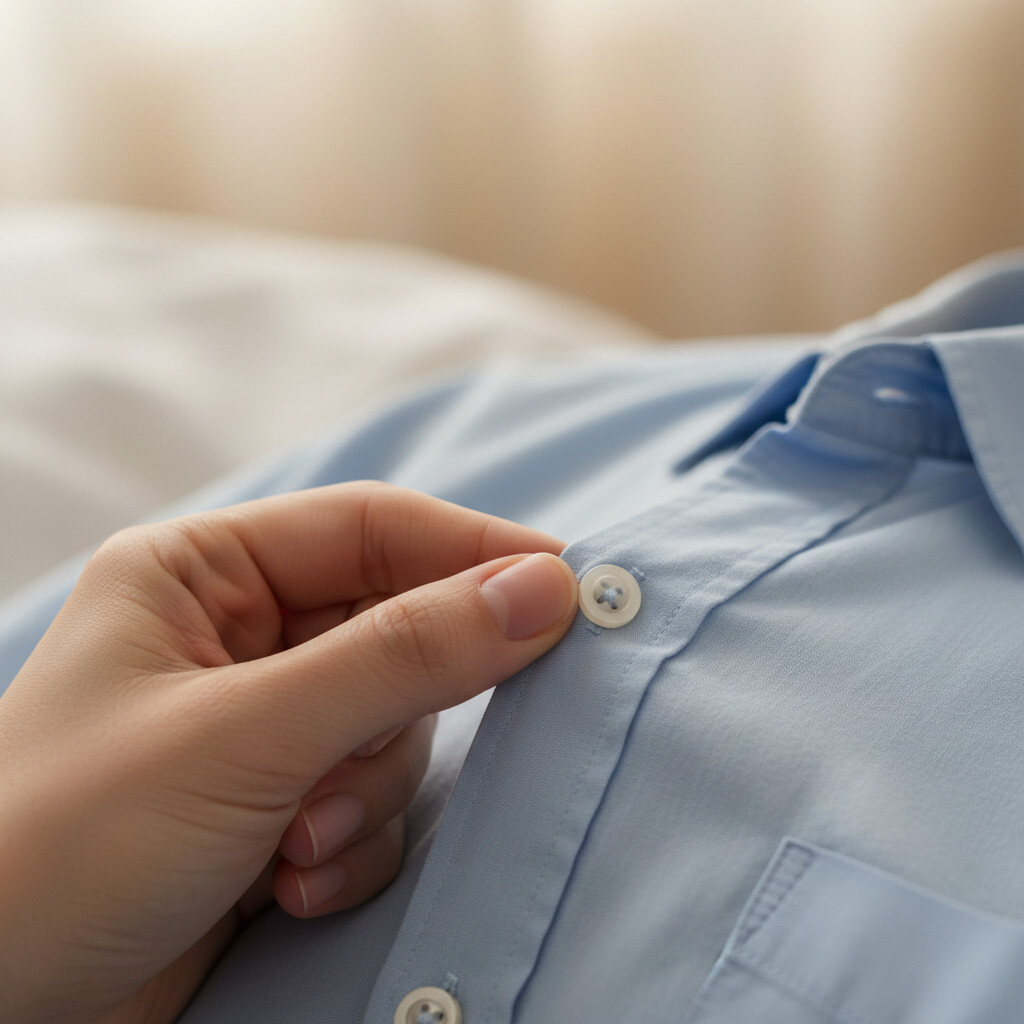
Plan for the next few days too, not just the operation day. Many people pack three or four front-opening tops so they can change without pulling anything over their head until their surgeon says it is safe. A polo shirt only opens partway, so it still has to go over your head; it is best left for later.
Comfort for a long day
A hair transplant usually takes several hours, and larger procedures can take most of the day. You will sit or lie in one position for long stretches, sometimes face down while the donor area is harvested. Comfort matters more than appearance.
- Loose trousers: tracksuit bottoms or relaxed-fit trousers with an elastic or drawstring waist. Stiff jeans and tight belts become uncomfortable after a few hours.
- Soft fabrics: cotton and other breathable materials are more comfortable than tight synthetic weaves, especially if you get warm.
- Layers: a T-shirt under a button-up shirt, or a zip-up top you can open, lets you adjust to the room. Clinic rooms are often kept cool, and local anaesthetic and lying still can make you feel colder than usual.
- Warm socks: a small thing that many patients say they were glad to have.
- Slip-on shoes: you may not want to bend down to tie laces after surgery, especially with a sore donor area or if you had sedation.

Some clinics give you a gown or disposable top to wear during the procedure. Others let you stay in your own clothes. Either way, you will change back into your own clothes to leave, so make sure the top you arrive in is front-opening.
Clothes you don’t mind staining
During and after surgery there is some bleeding from the donor and recipient areas, and the scalp is cleaned with solutions that can mark fabric. In the first night, small amounts of fluid or blood can also leak onto collars and pillows. Dark, older clothes are the practical choice. Avoid white shirts and anything you would be upset to ruin.
What to leave at home
- Jewellery and piercings: remove earrings, necklaces and anything around the head and neck. They can get in the way and are easy to lose.
- Hair products: arrive with clean, product-free hair. Don’t use gel, wax, spray or oils on the day unless your clinic says otherwise. Your pre-operation checklist covers washing and other preparation.
- Tight collars and scarves: anything that presses on the back of the neck will rub against the donor area.
- Contact lenses: some people prefer glasses on a long day when they may doze off. Check with your clinic if you are unsure.
Headwear after the procedure
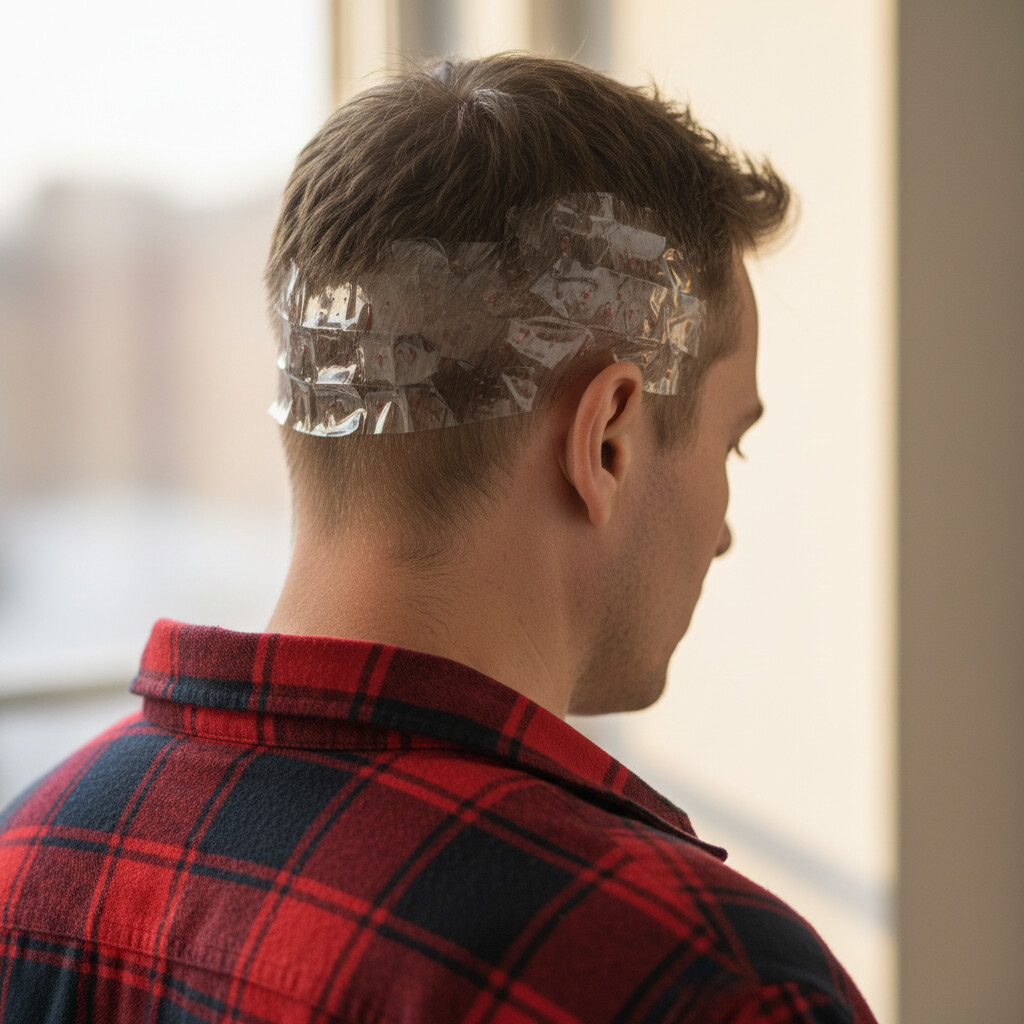
Many patients want to cover their head when they leave the clinic. This is an area where clinics give different advice. Some provide a loose surgical cap or bandana, and some allow a loose, adjustable hat that does not touch the grafts. A tight beanie or a fitted baseball cap can press on and rub the recipient area, so don’t wear one unless your surgeon has said it is fine.
Ask your clinic before the day what they recommend and whether they supply something. Our guide on wearing a hat after a hair transplant covers the usual timelines.
Getting home and the days after
Think about the journey back to your hotel or home:
- Outerwear: a jacket or coat that zips or buttons up the front. In cold weather, choose something warm but not bulky, with a collar that won’t rub the back of your head. If you are planning around the season, see the best weather for a hair transplant.
- A companion: if someone can come with you, they can help with buttons, zips and bags, especially if you had sedation.
- Travel pillow: a U-shaped neck pillow can help if you have to sit upright in a car or on a flight, and many people use one for sleeping in the first nights.
If you are travelling abroad for surgery, pack enough front-opening tops and loose clothes for the whole stay. Most people wear them for at least the first week.
A simple packing list
- 2-4 front-opening shirts or zip-up tops, dark or old
- Loose trousers with an elastic or drawstring waist
- Warm socks and slip-on shoes
- A front-opening jacket suited to the weather
- A neck pillow for the journey and the first nights
- Glasses if you normally wear contact lenses
- Phone charger and headphones for the long day
Common questions
Can I wear a hoodie?
Only if it zips open completely and you don’t put the hood up over the grafts. A standard pullover hoodie has to go over your head, so leave it at home.
Should I wear a hat to the clinic?
You can wear one on the way there, since the grafts are not placed yet. For the trip back, follow your clinic’s advice on headwear.
Does it matter what I wear on my lower half?
Only for comfort. You will be sitting or lying down for hours, so soft, loose trousers are much easier than stiff jeans.
Discussion
What did you wear on your operation day, and is there anything you wish you had packed? Tips from people who have been through it are often the most practical advice someone can get.
Sources
We did not find an authoritative source that addresses this question directly. This guide reflects general practice and patient experience, so follow your surgeon’s written instructions.
Related guides
- Pre-Operation Checklist: Essential Tips Before Your Hair Transplant
- Should I Shave My Head Before Traveling to Turkey for a Hair Transplant?
- Alcohol Before a Hair Transplant: How Long Must I Abstain?
- Hepatitis and HIV Tests Before a Hair Transplant: Why They Matter
- The First 12 Hours After a Hair Transplant: What to Expect
About this guide: ForumHairTransplant.com is an independent patient community. We are not affiliated with any clinic or surgeon, and we don’t accept payment for rankings, reviews or recommendations. This article is general information, not medical advice. Talk to a qualified doctor about your own situation.