By ForumHairTransplant Editorial Team · Prepared with AI assistance · Sources checked: 19 October 2026
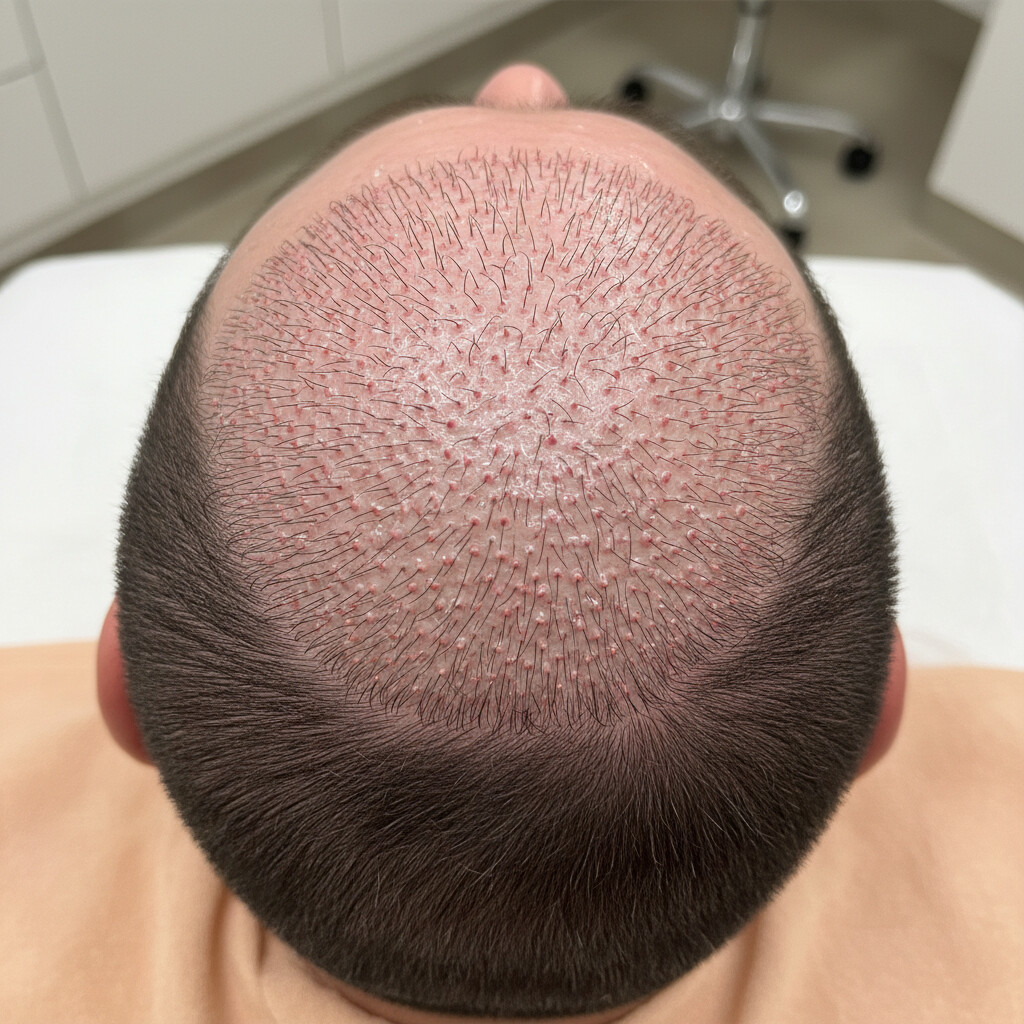
In the first 48 hours after a hair transplant, the grafts are held in place mostly by a thin layer of clotted blood and fluid, so the goal is simple: do not rub, bump, scratch or press on them, and follow your clinic’s instructions for sleeping, spraying and washing. Mild pain, some oozing, tightness and early swelling are normal in this period. Grafts become gradually more secure over the following days and are usually considered firmly anchored after about 7-10 days, but the first two days are when they are easiest to dislodge.
Key takeaways
- Avoid any friction or pressure on the recipient area: no touching, scratching, tight hats or rubbing on pillows.
- Sleep on your back with your head raised for the first few nights, as your clinic advises.
- Follow your clinic’s routine for saline spray and the first wash exactly. Practice varies between clinics.
- Rest, avoid bending and heavy lifting, and avoid alcohol and smoking.
- Some oozing and tenderness are expected. Heavy bleeding, worsening pain or signs of infection are not.
Why the first 48 hours matter
During a transplant, each graft is placed into a small opening in the scalp. For the first day or two, it is held there mainly by a thin layer of clotted blood and fluid while the skin starts to close around it. New small blood vessels begin to connect over the following days.
This is why direct trauma matters most now. A firm rub, a scratch or catching the scalp on a door frame can pull a graft out. A light brush of a finger is much less likely to do harm, but it is still best avoided. Our guide What Happens If You Accidentally Touch Your Hair Grafts? explains how to tell whether anything was lost. For how security builds up over the first week, see How Long Until Hair Grafts Are Secure?
What is normal in the first two days
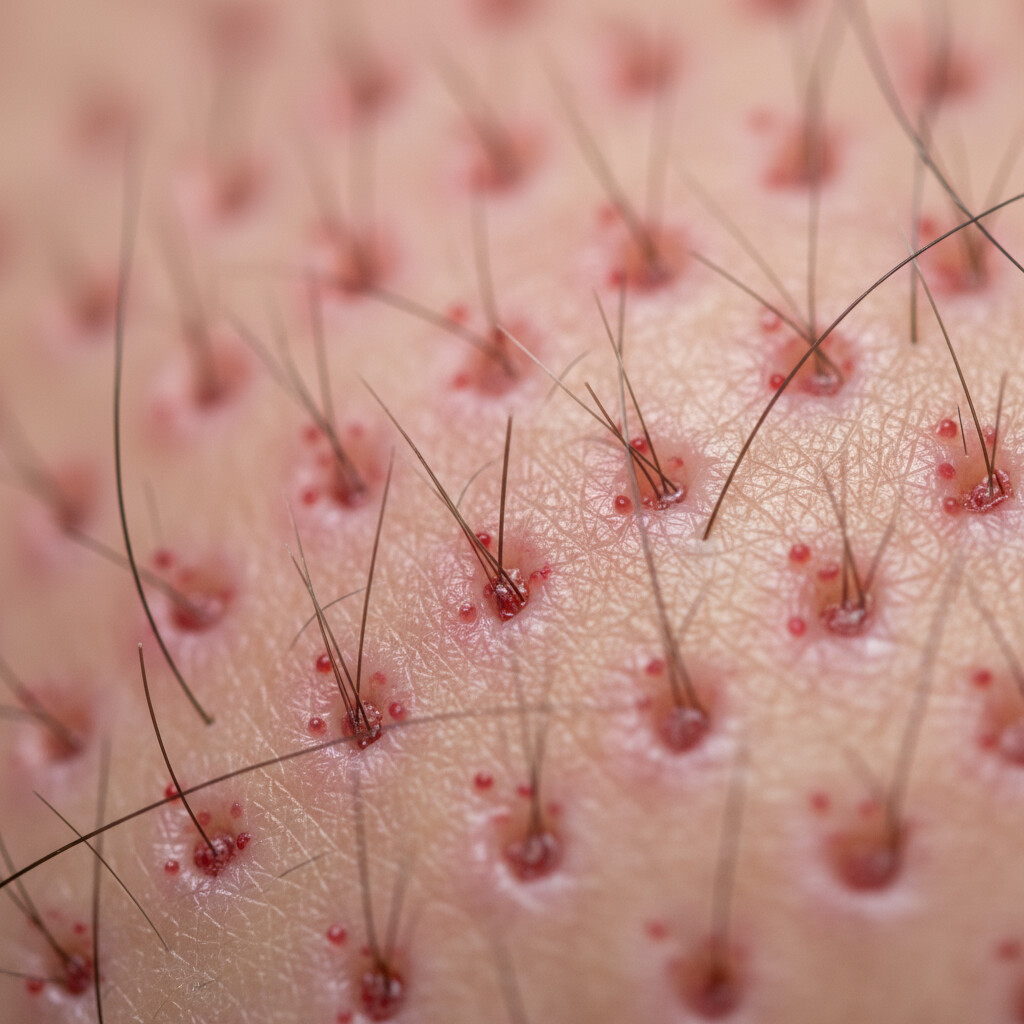
- Tenderness and tightness, especially in the donor area. Most people manage it with the painkillers prescribed or recommended by the clinic.
- Some oozing or spotting of blood from the donor and recipient areas, particularly on the first night. Many clinics provide gauze or an absorbent pillow cover.
- Redness and small crusts forming around each graft.
- Numbness in parts of the scalp from the local anaesthetic and the procedure itself. This usually improves over weeks to months.
- The start of swelling. Swelling of the forehead often appears on day 2-3 and can peak around day 3-4, sometimes reaching the eyelids. It usually settles within a week. See Swelling After Hair Transplant.
What to avoid
Direct contact and pressure
- Do not touch, rub or scratch the recipient area. If it itches, ask your clinic what it allows, such as a saline spray.
- Avoid tight headwear. Only wear a loose covering if the clinic provides or approves it. Pulling a tight hat on or off can dislodge grafts.
- Watch your head. Take care getting into cars, through doorways and in low spaces. Avoid crowded situations where your head could be knocked.
- Do not pick at crusts. They come off with gentle washing over the next one to two weeks.
Bending, lifting and exertion
Bending over, heavy lifting and exercise raise blood pressure in the scalp. This can increase bleeding and swelling. Keep your activity to gentle walking around the house or hotel. Most clinics advise avoiding the gym and sport for at least one to two weeks, and longer for contact sports and swimming.
Alcohol and smoking
Alcohol can increase bleeding and swelling and may interact with your medication. Smoking narrows blood vessels and can impair healing. Most clinics ask you to avoid both before and after surgery; follow the timeframe your clinic gives you.
Sun, heat and sweat
Stay out of direct sun and avoid hot, steamy environments such as saunas. Heavy sweating is best avoided while the skin is healing.
Sleeping in the first nights
Most clinics recommend sleeping on your back with your head raised, often at around 45 degrees, for the first few nights. This helps limit swelling and keeps the recipient area off the pillow. A travel neck pillow helps stop you rolling onto your side or front. Put an old towel or the clinic’s pillow cover under your head in case of oozing. More tips are in Mastering Sleep Post-Hair Transplant.
Spraying and the first wash
Clinics differ a lot here, so your own instructions come first. Common approaches include:
- Saline or clinic-supplied spray on the recipient area at regular intervals to keep the grafts moist.
- Donor bandage removal on the first or second day.
- The first wash at the clinic or at home, usually within the first 1-3 days. It uses a gentle lotion or foam and a mild shampoo, applied by patting or pouring, with no rubbing.
- No direct shower spray on the recipient area. Water is poured gently from a cup or a low-pressure shower.
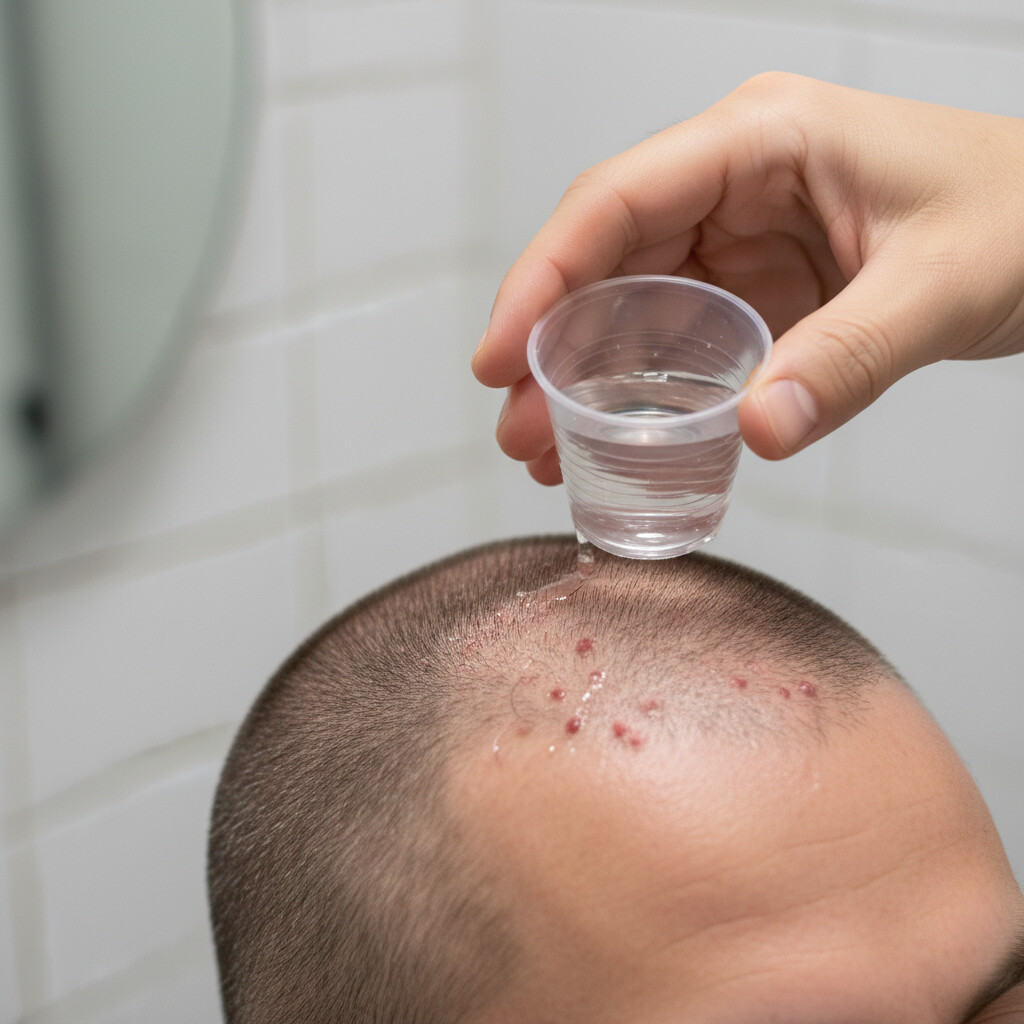
The step-by-step routine is covered in Hair Washing Protocol: Mastering the First Wash.
Medication
Take medication exactly as prescribed. This may include painkillers, and sometimes antibiotics or a medicine to reduce swelling, depending on the clinic. Do not add over-the-counter painkillers, blood-thinning medicines or herbal supplements without checking first, as some can increase bleeding. If you normally take regular medication for another condition, confirm with your surgeon when to restart it.
Reducing swelling
- Keep your head raised when resting and sleeping.
- If your clinic allows it, apply a cold pack wrapped in a cloth to your forehead, not on the grafts.
- Avoid bending forward and lying flat.
- Drink water and eat normally unless told otherwise.
Travelling in the first 48 hours
Many international patients fly home one to three days after surgery. This is usually fine if you protect the recipient area. Wear a loose hat or hood only if your clinic approves it, avoid overhead lockers that you might hit, and keep your saline spray in your hand luggage. Check any rules about liquids with your airline.
When to contact your surgeon
Contact your clinic or seek medical help promptly if you notice:
- Bleeding that does not stop after 10-15 minutes of gentle pressure with clean gauze.
- Pain that keeps getting worse, or is not controlled by the medication you were given.
- Swelling that closes your eyes or keeps increasing after day 4.
- Spreading redness, warmth, pus or a fever.
- A graft that has clearly come out with fresh bleeding at the site.
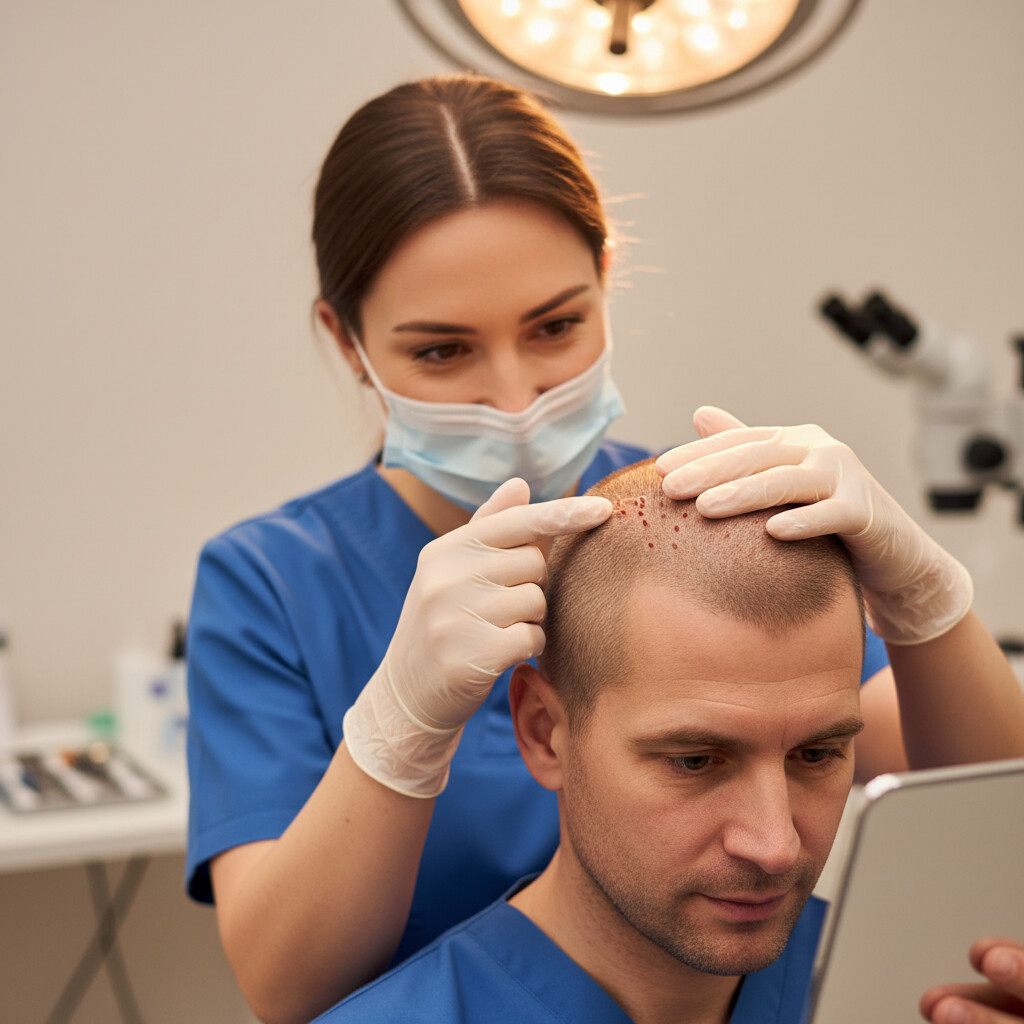
First 48 hours checklist
- No touching, scratching or rubbing of the recipient area.
- Sleep on your back with your head raised.
- Spray and wash only as your clinic instructs.
- Rest; no bending, lifting or exercise.
- No alcohol or smoking.
- Avoid sun, heat and tight headwear.
- Take medication exactly as prescribed.
For the rest of your recovery, see our Post-Hair Transplant Care Guide.
Common questions
I bumped my head lightly. Did I lose grafts?
Probably not. If a graft comes out, you usually see a small spot of fresh bleeding at that site. If you are unsure, send a clear photo to your clinic.
How painful are the first two days?
Most people describe tenderness and tightness rather than severe pain, with the donor area often more sore than the recipient area. It usually improves each day.
Can I go back to work after 48 hours?
Some people with desk jobs return within a few days, but swelling and crusts are often visible for about a week. Plan your time off with that in mind.
Discussion
What helped you most in the first two nights: a particular pillow, a sleeping setup or a routine for spraying? Share what your clinic told you about the first wash, and how it compared with what others here were told.
Sources
- Hair transplant, NHS
- Hair Transplant: How Does It Work, Success Rates, Cleveland Clinic
- Recovery (Hair Transplantation and Restoration), American Society of Plastic Surgeons
- Complications in Hair Transplantation (Kerure and Patwardhan), Journal of Cutaneous and Aesthetic Surgery
These sources cover the general topic. They do not answer every detail in this guide, so follow your surgeon’s written instructions.
Related guides
- The First 12 Hours After a Hair Transplant: What to Expect
- How Long Until Hair Grafts Are Secure After a Transplant?
- Pain After a Hair Transplant: What to Expect and How to Manage It
- Can You Fly After a Hair Transplant? Timing and Travel Tips
- Scabs After Hair Transplant: When Do They Fall Off?
- Bleeding After a Hair Transplant: What Is Normal and When to Worry
About this guide: ForumHairTransplant.com is an independent patient community. We are not affiliated with any clinic or surgeon, and we don’t accept payment for rankings, reviews or recommendations. This article is general information, not medical advice. Talk to a qualified doctor about your own situation.