
Transplanted grafts are most fragile in the first 48-72 hours, when they are held in place mainly by clotting in the tiny incisions. They become more secure every day after that. Many surgeons consider them reasonably stable after about 5-7 days and firmly anchored by around day 10-14, once the scabs have come off. The exact timeline varies with healing and technique, so always follow your own clinic’s instructions.
Key takeaways
- Days 0-3 carry the highest risk: avoid touching, bumping, scratching or rubbing the grafts, and sleep with your head raised.
- By about day 5-7 grafts are much harder to dislodge with normal care, but they are not yet fully anchored.
- By around day 10-14 most grafts are firmly set, and normal gentle washing and light activity are usually allowed.
- Hairs shedding in weeks 2-8 is normal shedding of the transplanted hair shafts. The follicle stays in the skin.
- A secure graft is not yet a growing hair. Visible growth usually starts at around 3-4 months.
What “secure” actually means
When a graft is placed into a small incision, it has no blood supply of its own. In the first day or two it survives by absorbing oxygen and nutrients from the fluid and tissue around it. At the same time, clotting fibrin forms around the graft and acts like a natural glue.
Over the following days, tiny new blood vessels grow into the graft and the skin around each incision heals. Once this happens, the graft is anchored in the skin and very hard to pull out with normal activity.
So “secure” means anchored, not guaranteed to grow. Graft survival also depends on how the grafts were handled during surgery and on your overall health.
Typical timeline of graft security
This is a general guide. Your clinic may give slightly different timings.
Days 0-3: most fragile
Grafts sit in their incisions, held mainly by fibrin. A firm knock, rubbing with a towel, scratching or pressing the head against a pillow or car headrest can pop grafts out. Some oozing and small crusts are normal. See the critical first 48 hours after a hair transplant for a detailed guide to this period.
Many clinics do the first wash on day 1-3. It is done very gently, with no rubbing, following a specific protocol. Our first wash guide walks through it.
Days 4-7: settling in
Grafts become noticeably more stable. Gentle washing as instructed will not dislodge them, and small scabs around each graft start to loosen with washing. Accidental light contact is less likely to cause harm, but hard bumps, scratching and picking still can. Swelling on the forehead often peaks around day 2-4 and then settles; see swelling after a hair transplant.
Days 7-14: anchoring
The recipient sites have largely healed and most scabs come away with washing by around day 10-14. Many surgeons now allow slightly firmer washing to remove remaining crusts. If a hair comes out with a scab at this stage, it is usually just the hair shaft, not the graft. Grafts are generally considered firmly anchored by the end of this period.
Weeks 2-4 and beyond
The grafts are secure, and most everyday activities are back to normal. Caution now is more about the healing skin (sun, heavy sweating, contact sports) than about pulling grafts out. The next phase is shedding and, later, growth.
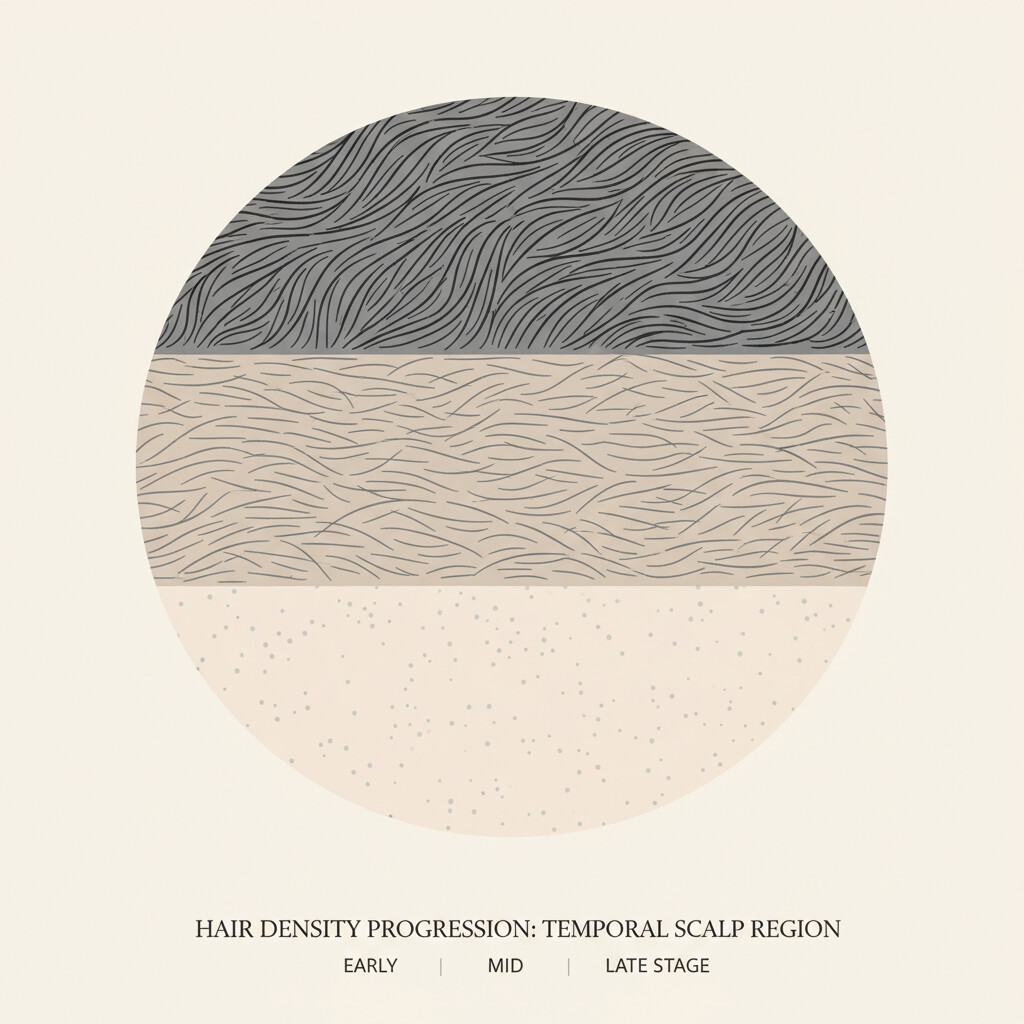
What affects how quickly grafts secure
- Surgical handling. Grafts that are kept moist, not crushed and placed at the right depth heal in faster and survive better.
- Incision size and placement density. Very tightly packed grafts can make blood supply slower to re-establish.
- Your health. Smoking, poorly controlled diabetes and some medications can slow healing.
- Swelling and bleeding. Excessive bleeding or swelling in the first days can push grafts up (called “popping”), especially during surgery or soon after.
- Aftercare. Protecting the area from pressure and friction in the first week is the part you control.
How to protect your grafts in the first 10-14 days
- Do not touch, scratch or pick the recipient area. If it itches, ask your clinic what you may use. Our guide on what happens if you accidentally touch your grafts explains when to worry.
- Sleep with your head raised, on your back, for the period your clinic recommends (often around the first week). A travel pillow can stop you rolling onto the grafts. See our sleep guide.
- Wash exactly as instructed. Pour or dab; do not rub. Pat dry or air dry.
- Avoid knocks. Take care getting into cars, through doorways and under cupboards.
- Avoid tight hats and helmets. If your clinic allows a hat, wear a loose one that does not press on or rub the grafts.
- Avoid heavy exercise, bending and straining for as long as your surgeon advises. Raised blood pressure can cause bleeding from the recipient sites in the first days.
- Avoid smoking and alcohol in the early healing period, as your clinic advises.
- Take medications as prescribed, and do not start new ones (including blood thinners or supplements) without checking.
Shedding is not graft loss
Between about weeks 2 and 8, most transplanted hairs fall out. This is normal shedding of the transplanted hair shafts; the follicle remains in the skin and later grows a new hair. It is different from shock loss, which is temporary loss of your own native hairs near the operated areas, and from a dislodged graft, which happens in the first days and includes the tissue at the root.
How to tell the difference in the early days:
- A dislodged graft usually comes out in the first few days, often with fresh bleeding from that spot. You may see a tiny piece of tissue at the base of the hair.
- A shed hair comes out after the first week or so, often with a crust, without bleeding. The root end looks like a normal hair or a small white bulb.
Losing a graft or two by accident is not unusual and rarely affects the overall result.
When to contact your surgeon
Contact your clinic, or a local doctor if you cannot reach them, if you notice:
- bleeding from the recipient area that does not stop after 10-15 minutes of gentle, steady pressure with clean gauze,
- several grafts coming out after a knock, fall or accident,
- increasing pain, spreading redness, warmth, pus or a bad smell, or a fever,
- swelling that affects your eyes badly or keeps getting worse after day 4-5,
- crusts that remain thick and stuck after two weeks despite following the washing routine.
Common questions
Are my grafts safe after 72 hours?
They are much safer than on day one, but not fully anchored. Continue gentle care until your clinic says the grafts are secure, usually around day 10-14.
Can I wash normally after a week?
Usually more firmly than in the first days, but “normal” washing (rubbing and massaging) is often only allowed after about 10-14 days. Follow your clinic’s schedule.
I bumped my head on day 5. Did I lose grafts?
Probably not, unless there was bleeding from several spots or you saw grafts come out. Take photos and send them to your clinic if you are worried.
Can I do anything to make grafts secure faster?
Not really. Protect them, follow the aftercare instructions, avoid smoking and let healing take its course.
Discussion
When did your clinic say your grafts were secure, and was it earlier or later than this guide suggests? Did you ever worry that you had dislodged grafts, and what happened? Share your experience below to help people in their first week.
Related guides
- Hair Transplant Aftercare: What to Do From Day 1 to Month 12
- The First 12 Hours After a Hair Transplant: What to Expect
- Scabs After Hair Transplant: When Do They Fall Off?
- Exercising After Hair Transplant: When Can You Safely Hit the Gym?
About this guide: ForumHairTransplant.com is an independent patient community. We are not affiliated with any clinic or surgeon, and we don’t accept payment for rankings, reviews or recommendations. This article is general information, not medical advice. Talk to a qualified doctor about your own situation.