By ForumHairTransplant Editorial Team · Prepared with AI assistance · Sources checked: 19 October 2026
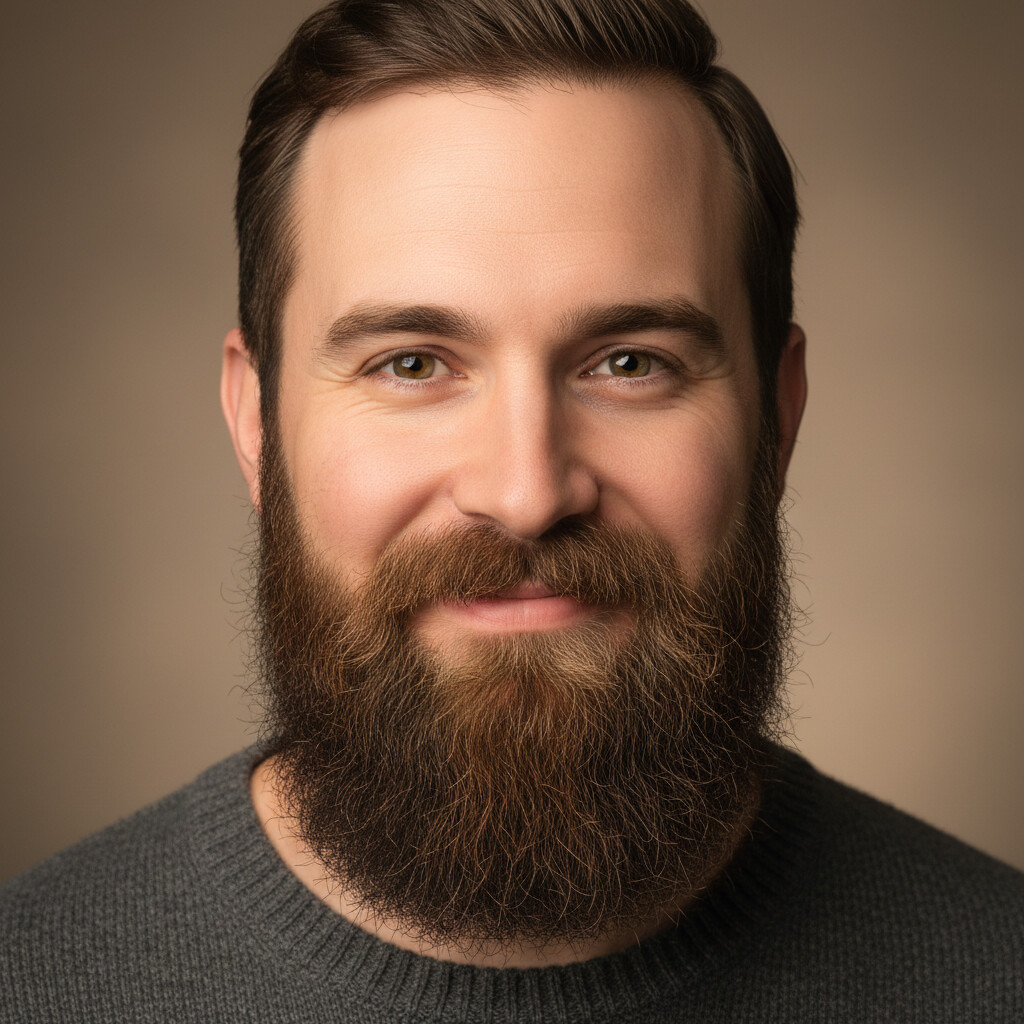
A beard transplant moves hair follicles, usually from the back of the scalp, into areas of the face where beard growth is thin, patchy or missing. It can fill gaps in the cheeks, goatee, mustache or sideburns and cover scars. The transplanted hairs typically shed within the first few weeks and regrow from around month three or four, and the final result is usually visible at 9-12 months. It works best for men with a healthy scalp donor area and realistic expectations. It also uses donor hair that you might one day want for your scalp.
Key takeaways
- Most beard transplants use single-hair grafts taken from the back of the scalp by FUE. Beard hair from under the chin is sometimes used as well.
- Natural results depend on placing each graft at a very flat angle and in the right direction, because facial hair direction changes across the face.
- Expect tiny crusts and redness for about a week or two, shedding of the transplanted hairs in the first weeks, and a final result at around 9-12 months.
- Transplanted scalp hair can look and feel a little different from your own beard hair, and it will need regular trimming.
- If you are also losing scalp hair, think carefully: grafts used for your beard cannot later be used for your head.
Who is a good candidate?
A beard transplant may suit you if:
- your beard has patches, gaps or thin areas that have not filled in with time,
- you have scars in the beard area from acne, injury, surgery or burns,
- you want a denser mustache, goatee, sideburns or a better-defined cheek line,
- you have a strong donor area at the back of the scalp,
- you understand that the result will take about a year and may need a second session for extra density.

It may not be the right choice, or may need to wait, if:
- You are young and your beard is still developing. Facial hair often keeps filling in through the early-to-mid twenties.
- You have alopecia areata affecting the beard. Patchy, smooth, round areas of hair loss can be autoimmune, and transplanting into an active area is generally not recommended. A dermatologist should assess this first.
- You have active skin disease in the beard area, or a tendency to form keloid scars.
- You have ongoing scalp hair loss and a limited donor supply that you may need for your head later.
- You have health conditions that affect healing, such as poorly controlled diabetes. Your surgeon will need your full medical history.
Scar tissue usually has a poorer blood supply than normal skin, so grafts placed in scars may grow less reliably. Some surgeons treat scars in two stages or start with a small test area.
Where the donor hair comes from
The usual donor area is the back of the scalp, where hair is resistant to pattern hair loss. Surgeons generally select single-hair grafts, and often finer hairs from the lower part of the donor area, because they look more like beard hair.
Some clinics also use beard hair from under the chin or neck. It matches facial hair well, but the supply is small. Body hair is used less often because its growth is less predictable. Alternative donor areas: beard and body hair explains the pros and cons.
FUE or FUT?
Most beard transplants today use FUE (follicular unit extraction), in which grafts are removed one by one with a small punch. It leaves tiny dot scars in the donor area, which are usually hidden unless the scalp is shaved very short. FUT (strip surgery) leaves a linear scar but is still used by some surgeons. See FUE vs. FUT for the differences.
How the procedure works
- Design. You and the surgeon agree on the shape of the beard: cheek line, neckline, mustache and goatee. Bring photos of styles you like, but expect the surgeon to adjust them to your face and donor supply.
- Anaesthesia. The donor and recipient areas are numbed with local anaesthetic. Some clinics offer mild sedation as well.
- Extraction. Grafts are taken from the donor area and checked, sorted and kept in a cool storage solution.
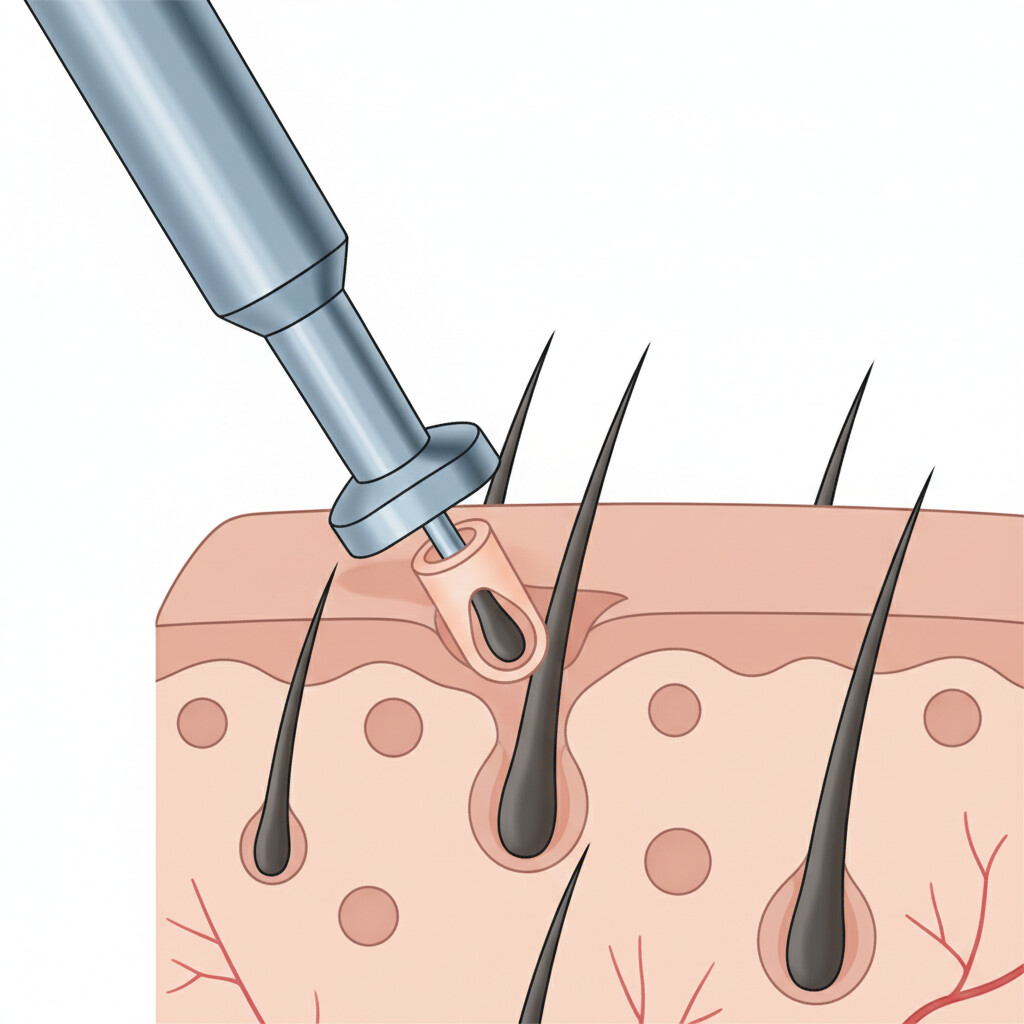
- Recipient sites. Tiny openings are made in the beard area with fine blades or needles. The angle and direction are critical. Beard hair grows almost flat to the skin, and its direction changes between the cheeks, chin, jawline and neck. For more, see recipient site angle, direction and density.
- Implantation. The grafts are placed one by one with forceps or with an implanter pen.
The procedure usually takes several hours and can last most of a day for larger cases. The number of grafts depends on the area and the density you want. A small scar or patch may need a few hundred grafts, while a full beard usually needs a few thousand. Your surgeon should give you your own estimate after examining you.
Recovery and aftercare
Recovery from a beard transplant is visible but usually short. Always follow your own surgeon’s instructions, as timings vary.
- First few days. Expect redness, tiny crusts around each graft, some facial swelling and tenderness in the donor area. Don’t touch, rub or scratch the grafts. Sleep on your back if you can.
- Washing. Most clinics give a gentle washing routine for the face and scalp. Crusts on the face usually fall away within about 7-10 days.
- Shaving and trimming. Most surgeons ask you not to shave or trim the transplanted area for at least the first couple of weeks. Scissors or a trimmer are usually allowed before a razor. Ask your surgeon for exact timings.
- Activity. Heavy exercise, saunas, swimming and strong sun are usually avoided for the first one to two weeks.
- Redness. Pinkness can last a few weeks, especially in fair skin.
- Numbness. Temporary numbness in the donor or recipient areas is common and usually improves over weeks to months. See temporary numbness after a hair transplant.
Growth timeline
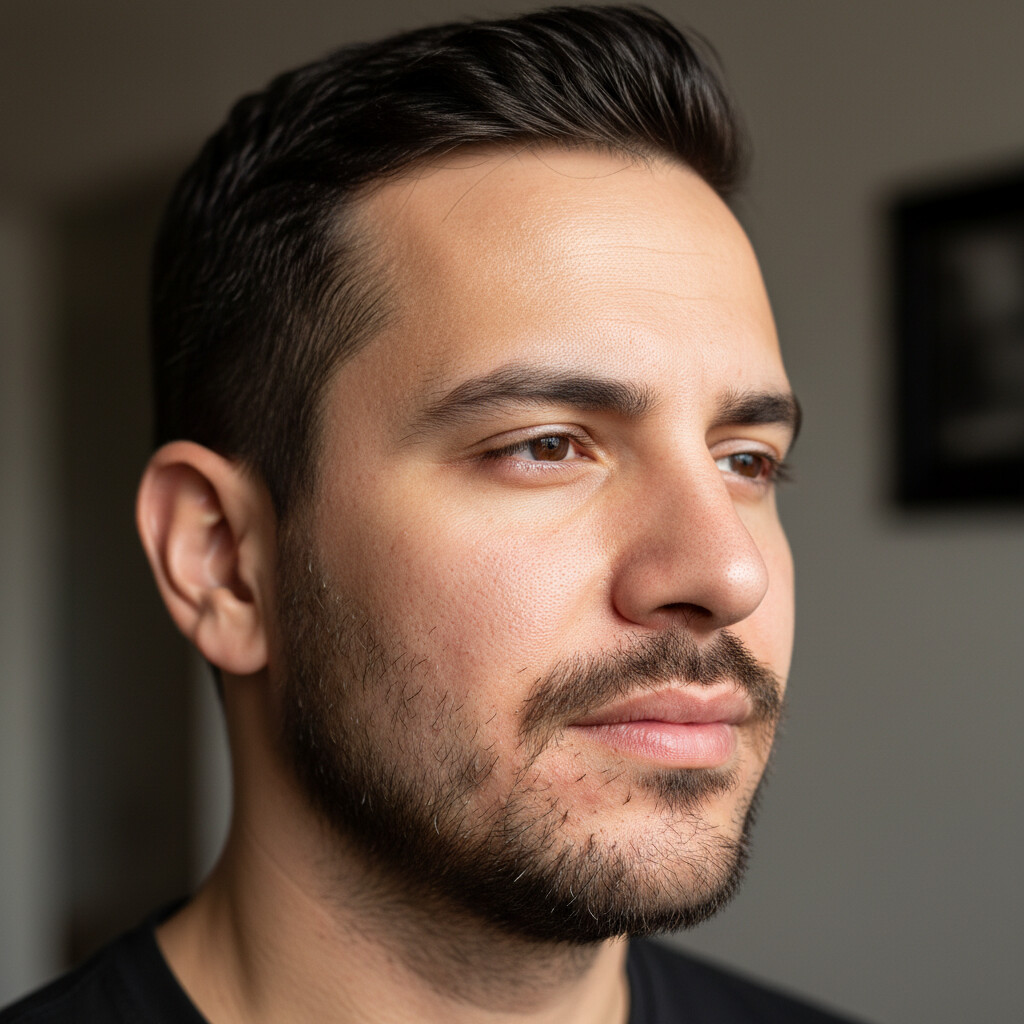
- Weeks 2-8: most of the transplanted hairs fall out. This is normal shedding: the follicles stay in the skin and enter a resting phase before regrowing. It is not the same as shock loss, which is temporary loss of your own existing hairs near the treated area. The difference is explained in shedding vs. shock loss.
- Months 3-4: new hairs start to appear, often fine at first. Small pimples can appear as hairs break through.
- Months 4-8: density and thickness increase steadily.
- Months 9-12: most men can judge the result. Some areas keep improving a little after that.
After the first year, you can wash, trim and style your beard as usual. Some people choose a second session for extra density once the first result has matured.
How natural will it look?
A well-planned beard transplant can look very natural, but there are limits.
- Texture and colour. Transplanted scalp hair keeps its scalp characteristics. It may be softer, straighter or a slightly different colour from your own beard, and it tends to grow longer. At normal beard lengths the difference is often small.
- Density. One session may not match the density of a naturally thick beard.
- Maintenance. Transplanted hair grows like scalp hair, so it needs regular trimming.
Risks and downsides
Serious complications are uncommon, but you should know about them:
- Infection and folliculitis. Pimples or ingrown hairs can appear during regrowth. Most settle, but some need treatment.
- Scarring on the face. Small pinpoint marks are usually not noticeable. Poorly placed or oversized grafts can cause pitting or bumps, sometimes called cobblestoning.
- Unnatural direction or pattern. Grafts placed at the wrong angle or in a hard, artificial line are difficult to correct.
- Poor growth. Poor graft handling, scar tissue or aftercare problems can reduce the yield.
- Donor area impact. Taking too many grafts can thin the back of the scalp and limit future scalp procedures. See overharvesting risks.
Cost varies widely by country, clinic and graft count. Ask exactly what is included and who performs each step of the procedure.
When to contact your surgeon
Contact your surgeon or clinic promptly if you notice:
- spreading redness, warmth, pus or increasing pain after the first few days,
- a fever or feeling generally unwell,
- swelling that worsens after day three or four instead of settling,
- bleeding that doesn’t stop with gentle pressure,
- many painful spots or cysts during regrowth.
Alternatives to consider first
- Time. If you are in your early twenties, your beard may still fill in.
- Medical treatment. Some doctors use minoxidil off-label for patchy beards. Results vary and usually depend on continued use; discuss it with a doctor.
- Grooming. A different beard length or style can hide patches surprisingly well.
- Micropigmentation. Tattooed “stubble” dots can soften patchy areas for men who keep a very short beard. It needs touch-ups over time.
Common questions
Is a beard transplant permanent?
The transplanted hairs usually keep growing for life, because they come from an area resistant to pattern hair loss. Like all hair, they can turn grey with age.
Can I shave my beard after a transplant?
Yes, once healing is complete and your surgeon allows it. Most men can shave or trim normally after the first few weeks. The hair will grow back because the follicles remain in the skin.
Will a beard transplant affect a future scalp transplant?
It can. Grafts used for the beard are no longer available for the scalp. If you are still losing scalp hair, discuss a donor plan for both areas before any surgery.
Discussion
Have you had a beard or mustache transplant? How long did the redness last, when did you start to see growth, and does the transplanted hair look different from your own beard? If you considered it but chose not to go ahead, what changed your mind?
Sources
- Everything You Need to Know About a Beard Transplant, ISHRS
- Body Hair Transplantation, ISHRS
- Body Hair Transplant by Follicular Unit Extraction: My Experience With 122 Patients (Umar), Aesthetic Surgery Journal, 2016
Related guides
- Eyebrow Transplant: How It Works, Recovery and Results
- Can Beard or Body Hair Be Used for a Hair Transplant?
- Hair Transplant Scars: Understanding FUE and Natural Results
- Shock Loss vs. Shedding After a Hair Transplant: What’s Normal?
- Hair Transplant Aftercare: What to Do From Day 1 to Month 12
- Body hair transplant to head
About this guide: ForumHairTransplant.com is an independent patient community. We are not affiliated with any clinic or surgeon, and we don’t accept payment for rankings, reviews or recommendations. This article is general information, not medical advice. Talk to a qualified doctor about your own situation.