By ForumHairTransplant Editorial Team · Prepared with AI assistance · Sources checked: 19 October 2026
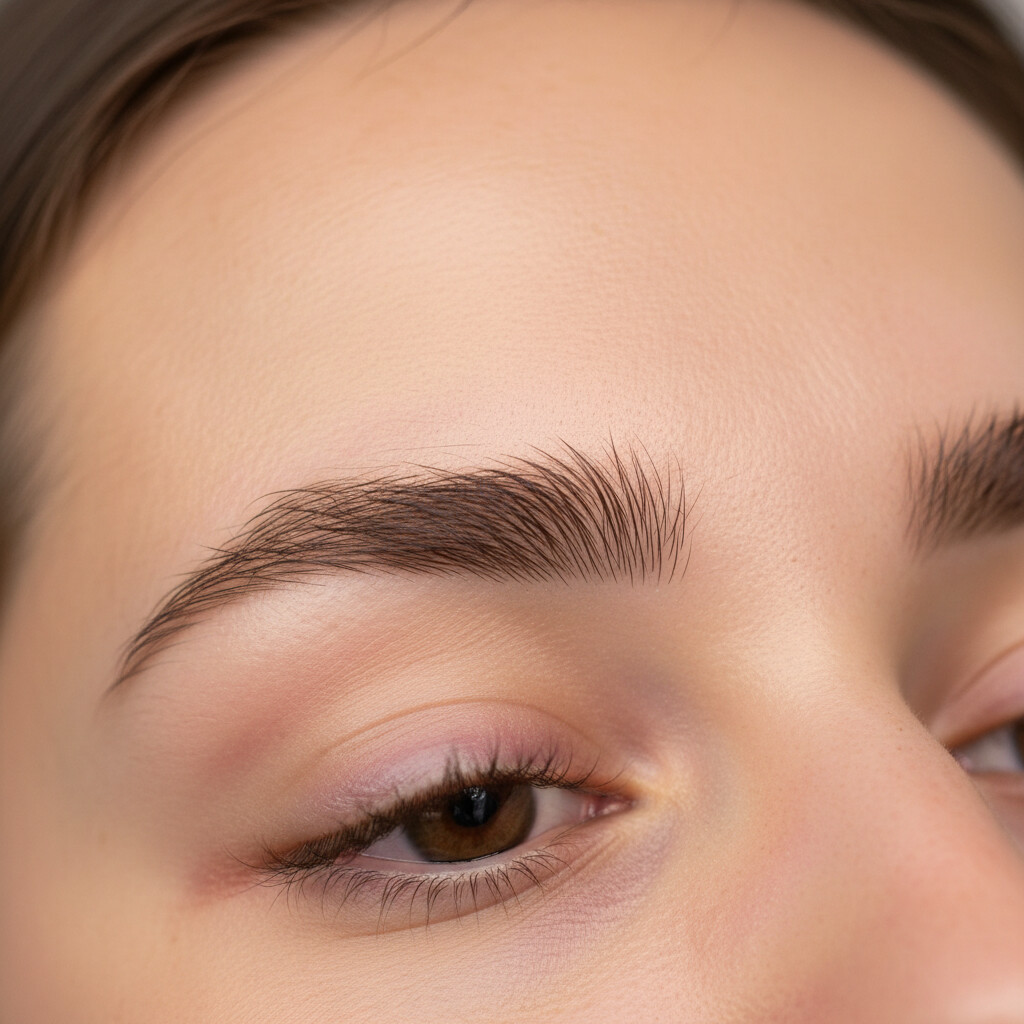
An eyebrow transplant moves individual hair follicles, usually from the back of the scalp, into thin or missing areas of the eyebrows. The transplanted hairs are usually permanent, but they keep behaving like scalp hair: they grow longer than normal brow hair and need regular trimming. Good results depend on very precise angles and a design that suits your face, so the surgeon’s experience with eyebrows matters more than the technique name.
Key takeaways
- Grafts are usually taken with FUE from the back of the scalp, often choosing fine single hairs. A typical eyebrow procedure uses a few hundred grafts per brow, depending on the design.
- Transplanted hairs keep growing like scalp hair, so most people trim them every week or two for life.
- Hairs must be placed almost flat against the skin, following the natural direction of the brow. Wrong angles are the most common cause of an unnatural look.
- Most transplanted hairs shed in the first weeks. This is normal. New growth starts around months 3-4, and the final result is usually visible at around 9-12 months.
- Eyebrow loss from active alopecia areata, scarring conditions or untreated thyroid disease is usually not a good reason for surgery until the cause is diagnosed and stable.
How eyebrow transplantation works
Follicles are taken from a donor area, most often the back of the scalp, and placed one by one into tiny incisions in the brow. Because the brow is made up almost entirely of single hairs, the surgeon uses mainly single-hair grafts and chooses finer hairs where possible. Some surgeons take grafts from the lower back of the scalp or the nape, where hairs tend to be finer. In selected cases, body hair can also be used; see alternative donor areas.
Who is a good candidate?
Eyebrow transplantation can work well for eyebrow loss caused by:
- long-term over-plucking or waxing,
- scars from injury, burns or surgery (graft survival can be lower in scar tissue, and a second session is more often needed),
- naturally thin or sparse brows,
- past trichotillomania (hair pulling), once it has been under control for a long time.
It is usually not a good first step if the cause is still active or not yet known:
- Alopecia areata can make the new hairs fall out too. Our guide to transplants and alopecia areata explains why stability matters.
- Frontal fibrosing alopecia and other scarring alopecias often affect the brows and can destroy transplanted follicles.
- Thyroid problems and some other medical conditions can thin the brows. Treating the cause may bring hair back without surgery.
You also need enough donor hair, good general health and realistic expectations about maintenance.
FUE or FUT for eyebrows?
Both methods can be used for harvesting:
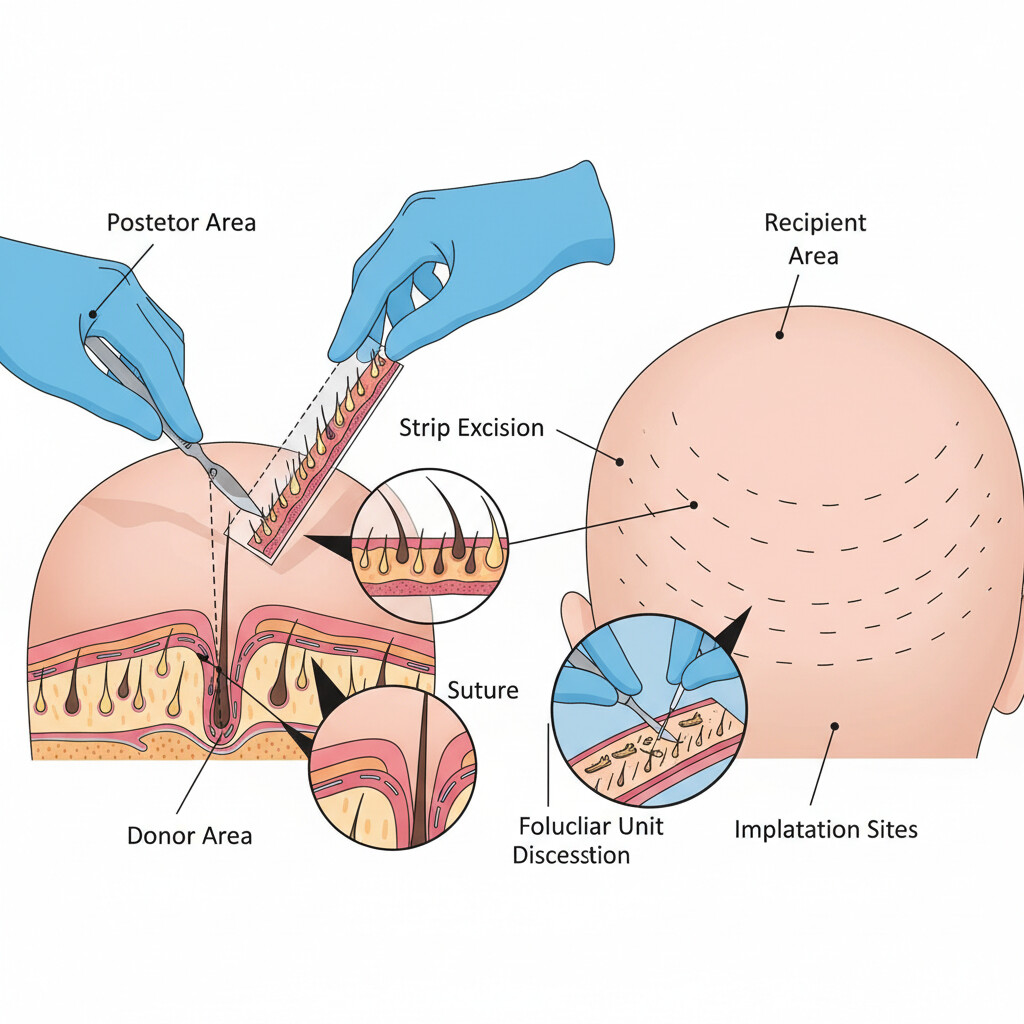
- FUE removes grafts one at a time with a small punch. Only a small area needs trimming, and the tiny dot scars are hidden in the hair. This is the most common choice for eyebrows because few grafts are needed.
- FUT removes a thin strip of scalp that is dissected into grafts under a microscope. It leaves a linear scar and is used less often for eyebrows, though some surgeons prefer it because it gives easy access to fine single hairs.
See FUE vs. FUT for the general comparison.
The procedure step by step
- Design. The surgeon draws the planned brow shape on your face. Take your time here. Check it in the mirror with a neutral expression and while raising your eyebrows.
- Anaesthesia. Local anaesthetic is injected into the donor area and the brows. You stay awake.
- Harvesting. The required number of grafts is removed, usually by FUE.
- Graft preparation. Grafts are checked under magnification and trimmed if needed. Multi-hair grafts are often split into single hairs.
- Implantation. Tiny incisions are made at a very low angle following the natural pattern of the brow. Hairs at the inner end usually point upwards, while those in the body and tail point outwards and slightly downwards. Some surgeons use implanter pens, others forceps. The angle and direction of each site decide how natural the brow looks.
The procedure usually takes a few hours.

Recovery and aftercare
- First few days: tiny crusts form around each hair. Swelling around the eyes, and sometimes bruising, is common. Sleep with your head raised and avoid rubbing your face.
- First 1-2 weeks: clean the brows only as instructed. Avoid makeup on the brows, facials, saunas, swimming and heavy exercise until your surgeon says it is safe. The crusts usually come off within about 7-10 days.
- Weeks 2-8: most of the transplanted hairs shed. This is expected: the follicles stay in the skin and produce new hairs later. It is different from shock loss, which is temporary loss of native hairs near the treated area. Our guide on shedding vs. shock loss explains both.
Results timeline
- Months 3-4: new hairs start to appear, often fine and uneven.
- Months 5-8: the brow fills in and the shape becomes clear.
- Months 9-12: most people see their final result. It can take longer, especially in scar tissue.
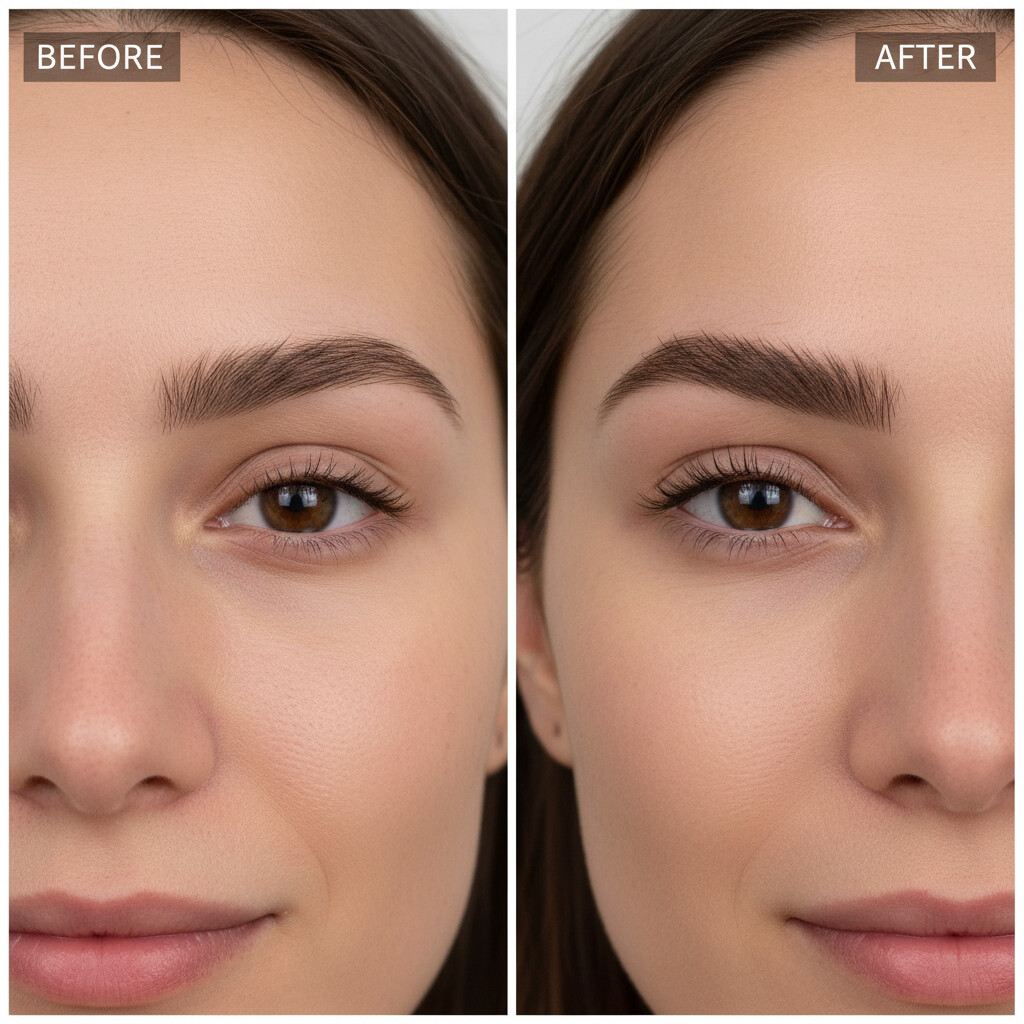
If some areas are still thin after a year, a small touch-up session can add density or refine the shape.
Living with transplanted eyebrows
This is the part many people underestimate:
- Trimming. Scalp hairs have a much longer growth phase than brow hairs, so transplanted brow hairs keep growing. Most people trim them every week or two with small scissors.
- Direction. Some hairs may grow at a slightly wrong angle or curl. A little brow gel helps train them. A few stray hairs can be removed.
- Texture and colour. Scalp hair may be slightly thicker or a different shade than your natural brow hair. Choosing fine donor hairs helps.
- Ageing. Transplanted hairs usually keep growing for life. They can turn grey with age, just as scalp hair does.
Risks
Complications are uncommon, but can include:
- hairs growing at unnatural angles, which is hard to correct,
- brows that look too thick, too dense or too sharply shaped,
- ingrown hairs, small cysts or spots,
- infection,
- visible marks in the brow in people prone to scarring,
- a thin-looking donor area if many grafts are taken, although eyebrow procedures need relatively few.
When to contact your surgeon
Contact your surgeon or a doctor if you notice:
- swelling that keeps increasing after the first few days, or affects your vision,
- spreading redness, warmth, pus or fever,
- pain that gets worse instead of better,
- painful lumps in the brow that do not settle.
Alternatives
If you are not sure about surgery, consider:
- Brow pencils, powders and tinted gels: no commitment, but daily effort.
- Microblading or cosmetic tattooing: semi-permanent, fades over time and needs touch-ups. It creates the look of hair but not real hair.
- Medical treatment: if the cause is a medical condition, a doctor may be able to treat it directly.
Some people combine microblading with a transplant. If you have had microblading, tell your surgeon, as pigment can affect planning.
Common questions
Is an eyebrow transplant permanent?
The transplanted follicles usually are. Because they come from the scalp, they keep growing like scalp hair, which is why trimming is needed.
How many grafts do eyebrows need?
It depends on how much brow you have and the shape you want. Filling gaps may need far fewer grafts than rebuilding a whole brow. Your surgeon will estimate this during the design.
Can a beard or body hair be used instead?
Sometimes, in selected cases. These hairs are finer or grow differently, and results are less predictable. Scalp hair remains the usual donor source.
Discussion
Have you had an eyebrow transplant? Tell us how often you trim, how long it took to see the final shape, and whether you would choose the same design again. If you are still deciding, post your questions below.
Sources
- Everything You Need to Know About a Beard Transplant, ISHRS
- Body Hair Transplantation, ISHRS
- Body Hair Transplant by Follicular Unit Extraction: My Experience With 122 Patients (Umar), Aesthetic Surgery Journal, 2016
Related guides
- Beard Transplant: How It Works, Recovery and Results
- Can Beard or Body Hair Be Used for a Hair Transplant?
- What Is Recipient Site Creation? Angle, Direction and Density
- Can Transplanted Hair Turn Gray? What to Expect as You Age
- Hair Transplant Growth Timeline: Month-by-Month Progress
- Body hair transplant to head
About this guide: ForumHairTransplant.com is an independent patient community. We are not affiliated with any clinic or surgeon, and we don’t accept payment for rankings, reviews or recommendations. This article is general information, not medical advice. Talk to a qualified doctor about your own situation.