
Yes, transplanted hair can turn grey. A transplant moves your own follicles, and they keep the characteristics of the area they came from, including their colour and their tendency to go grey with age. Resistance to pattern baldness and greying are separate processes: donor hair resists DHT, but it does not resist ageing. In practice, transplanted hair usually greys at roughly the same pace as the hair on the back and sides of your head.
Key takeaways
- Greying is driven mainly by genetics and age. A transplant does not speed it up or slow it down.
- Transplanted hairs usually behave like the donor area hair they came from, which may grey on a slightly different timeline from the hair on top.
- Grey and white hair can be transplanted, and it grows just like pigmented hair.
- Grey hair often gives lower contrast against the scalp, which can make thinner areas less obvious.
- Transplanted hair can be dyed once the scalp has healed. Follow your surgeon’s advice on timing.
Why hair turns grey
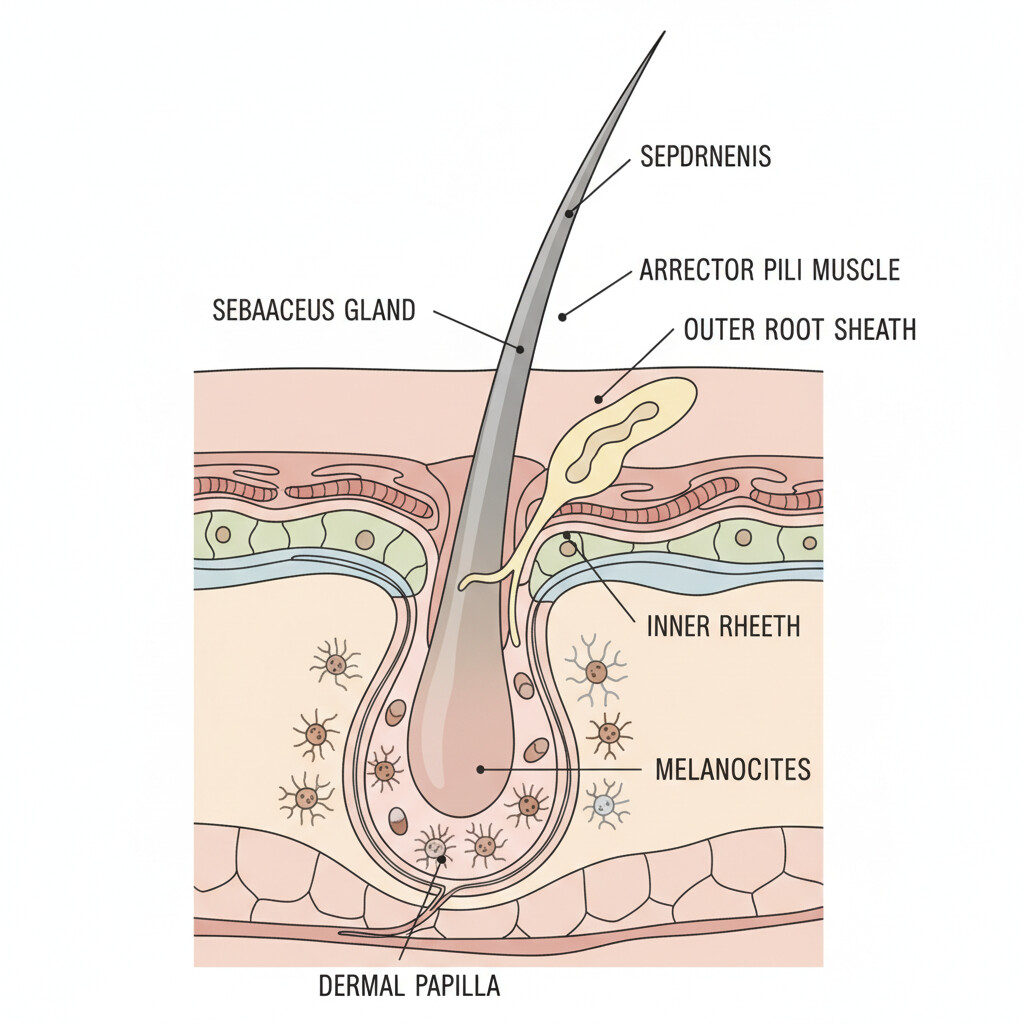
Hair colour comes from melanin, a pigment made by cells called melanocytes inside each follicle. As we age, these cells gradually become less active and eventually stop producing pigment in many follicles. New hairs from those follicles grow without pigment and look grey or white.
When this starts, and how quickly it progresses, is largely inherited. Some people see their first grey hairs in their twenties; others keep most of their colour into their sixties. Lifestyle factors such as smoking have been associated with earlier greying, and some medical conditions can play a role, but genetics and age are the main drivers.
What happens to transplanted hair
In a hair transplant, follicles are taken from the donor area on the back and sides of the head and placed where hair has thinned. The reason this works is that donor follicles keep their own genetic programming after they are moved. This is called donor dominance, and it is explained in our guide to the donor area.
That programming includes more than resistance to hair loss. It also covers colour, texture and the timing of greying. So:
- If the hair on the back of your head is still dark, the transplanted hairs will grow dark.
- If your donor hair is already partly grey, some transplanted hairs will grow grey.
- As the donor area greys over the years, the transplanted hair will usually grey along with it.
Will it match the hair around it?
Usually, closely enough. Greying doesn’t happen evenly across the scalp. In many people, the temples and sides grey earlier than the top, but patterns differ. Because transplanted hair follows the donor area’s timeline, there can be small differences between transplanted hair and native hair nearby at certain stages. In most cases this is subtle, and the mix of colours looks natural because natural greying is uneven anyway.
Transplanted hair can also look slightly different in texture, and new growth in the first year is often finer or wirier before it settles. See Understanding Hair Texture Changes After a Hair Transplant.
Transplanting grey hair
Grey or white hair can be transplanted. The follicles are alive and grow normally; they just produce hair without pigment. There are a few practical points to know:
- Coverage. Grey and white hair usually contrasts less with the scalp than dark hair, especially on fair skin. That can make a given density look fuller.
- Visibility during surgery. White hairs can be harder to see during extraction. Some surgeons ask patients to dye the donor area a few days before surgery to make the hairs easier to work with. Ask your clinic whether they recommend this.
- Hairline design. For people who are already grey, a mature hairline shape usually looks more natural. Our guide to mature vs. youthful hairlines explains the differences.

Planning with greying in mind
Greying is one of several changes that happen with age. A good long-term plan takes them all into account:
- Your future appearance. A hairline and density that suit you at 30 with dark hair should also look right at 55 with grey hair.
- Ongoing hair loss. The transplanted hair tends to last, but native hair can keep thinning. That matters more for the long-term result than colour. See Is a Hair Transplant Permanent?
- The later years. Our guide to results beyond the first 12 months covers how results change over time.
Can you dye transplanted hair?
Yes. Transplanted hair responds to dye in the same way as your other hair. The main concern is the healing scalp, not the hair itself. Many surgeons suggest waiting at least several weeks, until the scalp has fully healed with no scabs, redness or irritation. Some recommend a longer wait. Follow the timing your surgeon gives you, and consider a patch test before your first colour. Read more in When Can I Dye My Hair After a Hair Transplant?
Hair dye does not damage the follicles once the scalp has healed, but harsh chemical treatments such as bleaching can irritate the skin. Mention your transplant to your hairdresser so they can take care around the recipient area.
Is there anything that prevents greying?
No treatment has been shown to reliably prevent or reverse age-related greying. Hair loss treatments such as minoxidil and finasteride are not greying treatments. Be cautious of supplements or products that promise to restore colour.
If you are greying very early, or suddenly, it may be worth seeing a doctor. Some conditions, such as thyroid problems or vitamin B12 deficiency, have been linked to early greying and are worth ruling out.
Common questions
If my donor hair is grey, will the transplanted hair be grey too?
Yes. Hairs taken from grey follicles grow grey after transplanting. If your donor area is a mix of grey and dark hairs, the transplanted area will be a mix as well.
Does a hair transplant cause hair to go grey?
No. The procedure does not trigger greying. It moves follicles that will grey on their own schedule.
Will transplanted hair stay dark if the rest of my hair goes grey?
Unlikely. Transplanted hair follows the donor area, which usually greys over time too. There may be some difference in timing, but long-term they generally blend.
Discussion
Have your transplanted hairs started to grey? Share whether they have kept pace with the rest of your hair, and whether you colour your hair after your transplant. If you had grey hair transplanted, tell us how it looks now.
Related guides
- Is a Hair Transplant Permanent? Understanding Long-Term Results
- Hair Transplant Maintenance: How to Protect Your Results Long-Term
- Can Donor Hair Thin Over Time? Understanding Long-Term Results
- Hair Transplant Results After 12 Months: What Changes Next?
- Hair Transplant After 50: What Changes?
About this guide: ForumHairTransplant.com is an independent patient community. We are not affiliated with any clinic or surgeon, and we don’t accept payment for rankings, reviews or recommendations. This article is general information, not medical advice. Talk to a qualified doctor about your own situation.