
There is no single best age for a hair transplant. What matters more is whether your hair loss has become predictable, whether your donor area is strong enough, and whether you are healthy enough for elective surgery. In practice, many surgeons are cautious before the mid-to-late 20s and find planning easier from the 30s onward, but people in their 40s, 50s and older can still be good candidates.
Key takeaways
- Age matters mainly because it tells a surgeon how much more hair you are likely to lose. Stable, predictable loss is the real green light.
- Surgery in the early 20s carries the highest risk of a result that looks wrong later, because native hair around the grafts can keep receding.
- There is no fixed upper age limit. Health, donor density and realistic goals decide suitability after 40 or 50.
- Medical treatment to slow ongoing loss is often discussed before and after surgery, whatever your age. Talk to a doctor about whether it suits you.
- A good plan is designed for how you will look in 10-20 years, not just next year.
Why age matters at all
A hair transplant moves follicles from the back and sides of the scalp, where hair is usually resistant to pattern baldness, to thinning areas. The transplanted hair tends to stay. Your native hair does not. If you are still losing hair, the area around and behind the grafts can keep thinning after surgery.
That is the core problem with operating too early. Someone who is 22 and has a slightly receding hairline may be a Norwood 3 at 30 and a Norwood 5 or 6 at 45. A hairline that looked right at 22 can end up as an isolated strip of hair in front of a thinning or bald area. Fixing that later needs more grafts, and the donor supply is limited.
Age is therefore a rough guide to predictability, not a rule in itself. A 40-year-old with stable loss, good health and a dense donor area is often a better candidate than a 25-year-old whose hair is falling out fast. For a full checklist beyond age, see Who is a Good Candidate for a Hair Transplant?
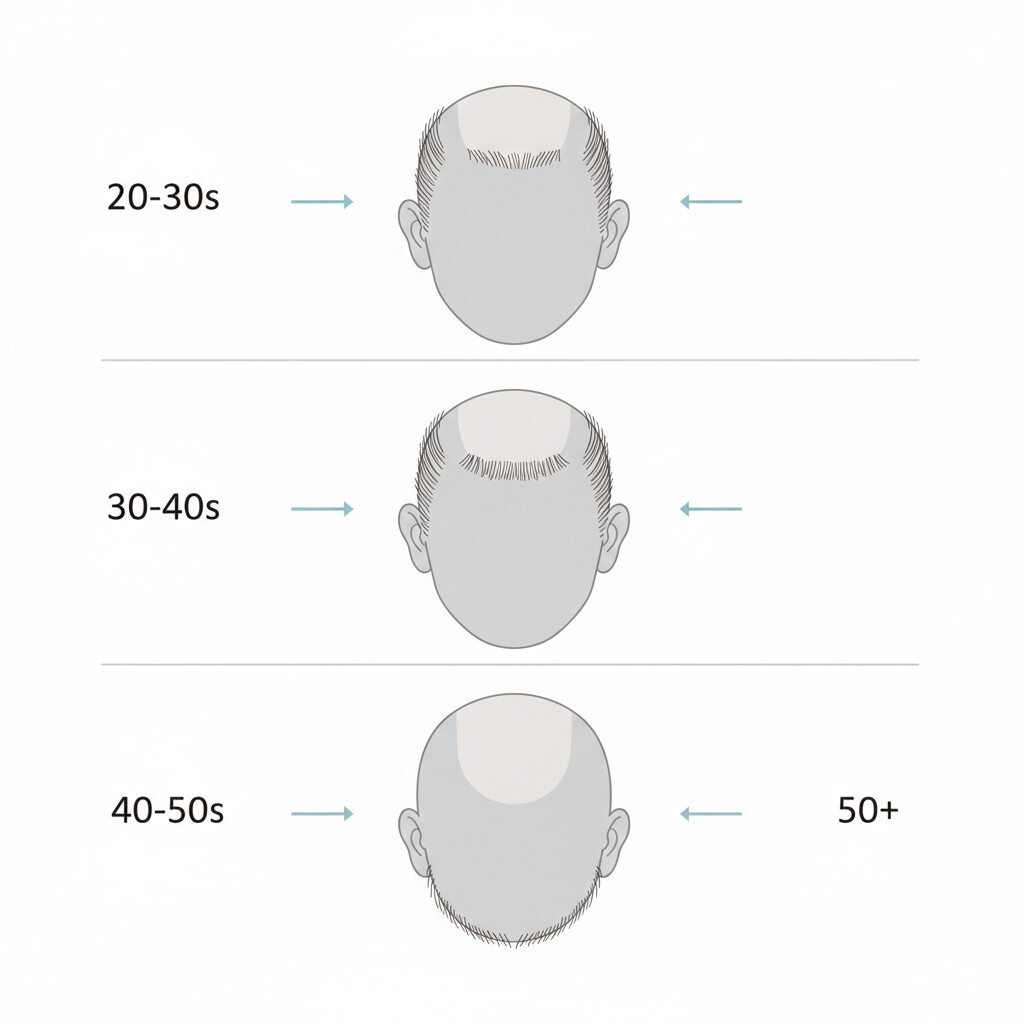
What surgeons look for when judging timing
Instead of asking “how old are you?”, a careful surgeon asks “how stable is your hair loss?”. The main points they assess are:
- Pattern of loss. Does it follow a typical male or female pattern? Have the thinning areas stayed roughly the same over the last few years, or are new areas appearing?
- Rate of loss. Has the loss slowed down, or is it still fast? Comparing photos from a few years apart is one of the simplest ways to judge this.
- Family history. How far did hair loss go in your father, brothers, uncles or grandfathers? It is not a guarantee, but it gives useful clues.
- Donor area quality. Density, hair thickness and how large the safe donor zone is. Some people also show thinning in the donor area itself, which limits what can be done.
- Miniaturisation. Fine, weaker hairs behind the current hairline often signal loss that is still active. A magnified scalp exam (trichoscopy) can show this.
Your Norwood stage (or Ludwig stage for women) helps describe where you are now, but the trend over time is what matters for planning.
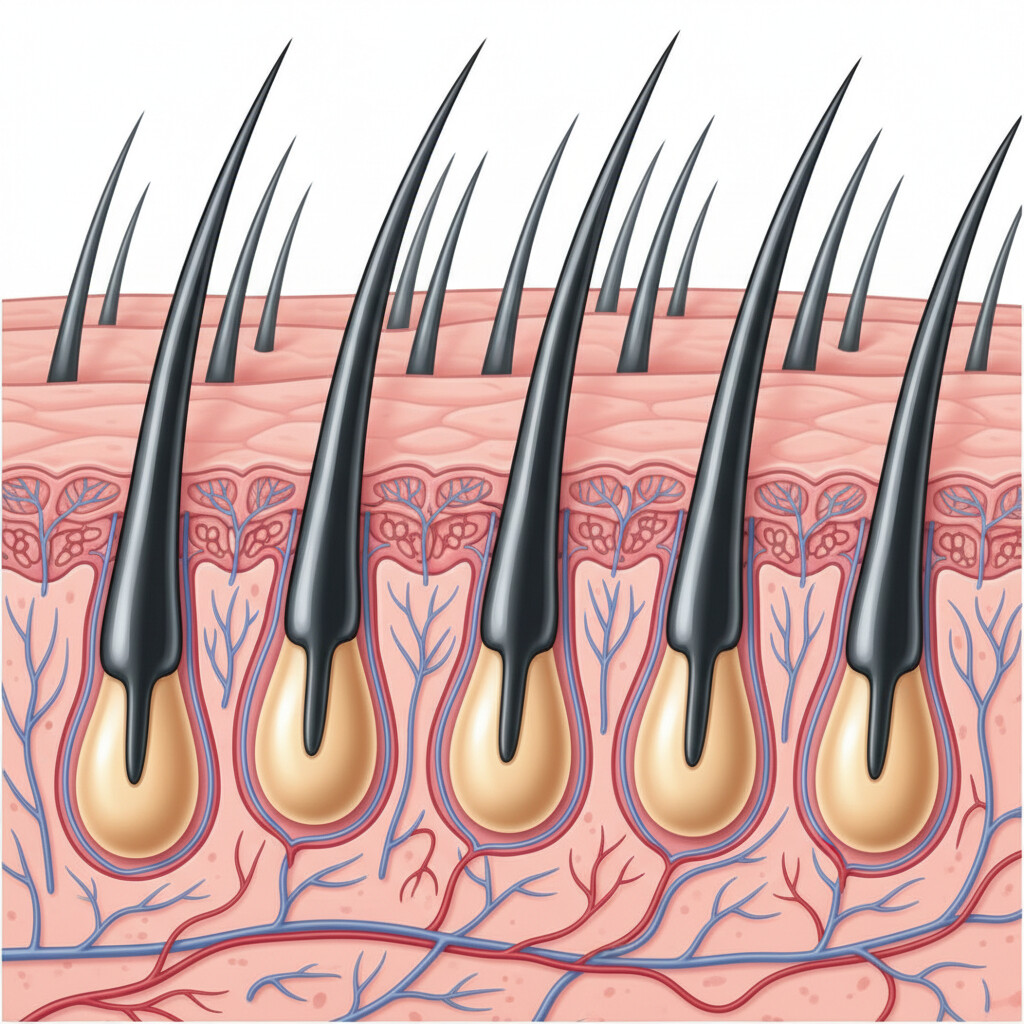
Age by age: what to expect
These are general patterns, not rules. Your own surgeon’s assessment always comes first.
Late teens to early 20s
Hair loss often starts in this period, and its future extent is hard to predict. Most responsible surgeons advise against surgery here, or will only consider a very limited, conservative procedure in exceptional cases. The usual advice is to see a doctor about medical treatment, track your hair with photos, and reassess in a few years. Common pressures at this age, such as wanting a low, straight, teenage hairline, are exactly what tends to cause regret later.
Mid-to-late 20s
By now the pattern is often clearer. Some surgeons will operate if the loss has been stable for a while, the donor area is strong, and the patient accepts a conservative plan: a hairline set at a height that will still suit an older face, a moderate graft count, and a donor reserve kept for the future. Expect to be asked about medical treatment to protect the native hair.
30s
Many surgeons consider this a good window. Hair loss is usually more established and easier to predict, and the patient often has realistic expectations. That said, loss can still progress in the 30s, so long-term planning is still needed.
40s
Hair loss is often closer to its final pattern, which makes planning more reliable. Donor density can be slightly lower than in younger patients, and many people prefer a softer, more mature hairline. For a closer look at this age group, read Is a Hair Transplant Worth It After 40?
50s and beyond
There is no upper age limit as long as you are healthy and have usable donor hair. The focus shifts to general health (heart, blood pressure, diabetes, medications), donor quality, and a natural, age-appropriate design. Grey or white hair can be transplanted; it may look less dense against a light scalp, but the contrast is also softer. See Hair Transplant After 50: What Changes? for details.

Factors that matter as much as age
Donor hair availability
The donor area is a limited resource. A surgeon estimates how many grafts can be taken safely over your lifetime, not just in one session. Younger patients have more years of possible loss ahead, so using too much donor hair early leaves less for later. The article on planning a lifetime hair restoration strategy explains how surgeons budget grafts over time.
General health
A hair transplant is elective surgery under local anaesthesia. Conditions such as uncontrolled diabetes, heart problems, bleeding disorders or certain medications need to be reviewed first. Some may only need extra precautions; others may rule surgery out. Smoking affects healing and is worth stopping well before the procedure.
Type of hair loss
Transplants work best for pattern hair loss with a stable donor area. Diffuse thinning (common in women), unexplained sudden shedding, or scalp conditions should be diagnosed first. In some cases a transplant is not the right answer at any age.
Realistic expectations and motivation
A transplant can restore a natural frame to the face and improve coverage. It will not usually recreate the density of your late teens, and it takes 12-18 months to see the final result. Being psychologically ready for the healing phase, including the temporary shedding of transplanted hairs in the first weeks, matters at every age.
The role of medical treatment
Medication cannot replace lost hair in completely bald areas, but it can slow ongoing loss of native hair in many people. This is why surgeons often discuss it, especially with younger patients:
- It can help stabilise the hair you still have, so the transplant blends better over time.
- Using it for some months before surgery can show how your hair responds and make planning easier.
- It may reduce the need for further sessions later.
Common options include minoxidil and, for men, finasteride. Both have possible side effects and are not suitable for everyone. Discuss them with a doctor before starting or stopping any treatment.
Hairline design and age
The hairline is where timing mistakes show most. A low, flat, straight hairline may look good at 25 but can look unnatural at 50, especially if the hair behind it thins. Most careful surgeons place the hairline slightly higher and softer in younger patients, knowing it will still suit an older face.
If a denser or lower hairline is really wanted later, more grafts can often be added in a second procedure. Moving a hairline back up after it has been placed too low is much harder. For this reason, many patients find it helps to think in terms of phases, as explained in Do I Need More Than One Hair Transplant Session?
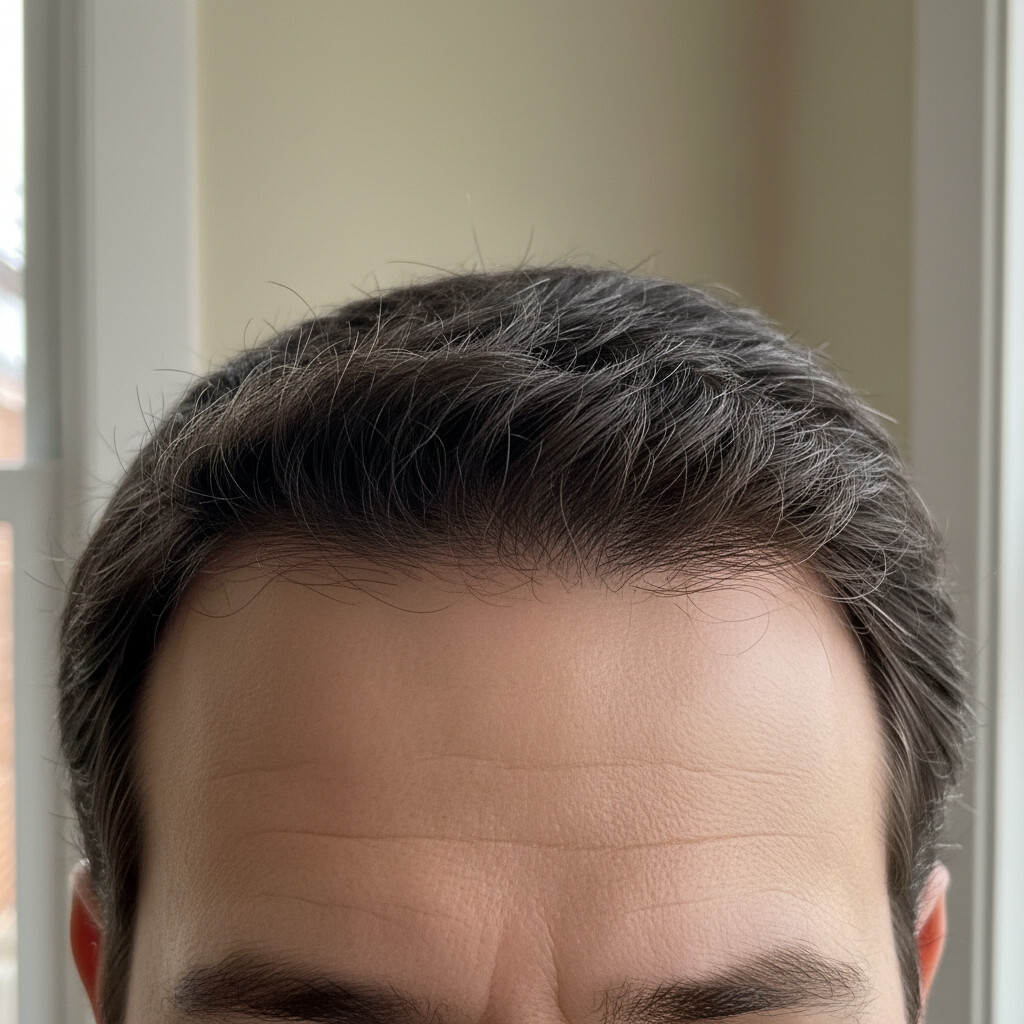
Questions to ask at your consultation
- How stable do you think my hair loss is, and what makes you think so?
- Where do you expect my hair loss to be in 10-15 years, and how does this plan account for that?
- How many grafts can my donor area safely provide over my lifetime, and how many will this procedure use?
- Why have you chosen this hairline height and shape for my age?
- Would you recommend medical treatment first, and for how long?
A surgeon who tells a young patient to wait, or suggests a smaller plan than the patient wanted, is often thinking about the long term. Be wary of anyone who promises a teenage hairline to a 22-year-old without discussing future loss.
Common questions
Is 21 or 22 too young for a hair transplant?
Usually, yes. Most surgeons prefer to wait, because hair loss at this age is hard to predict. Some will consider a very conservative plan in exceptional cases, but seeing a doctor about medical treatment and monitoring your hair is the more common advice.
Is it ever too late for a hair transplant?
Not because of age alone. If you are healthy, have a usable donor area and want a natural, age-appropriate result, surgery can still be an option in your 50s, 60s or later.
Does gray or white hair change anything?
Grey or white hair can be transplanted. The visual effect depends on the contrast between hair and scalp colour, so the result may look slightly less dense, but it can also blend more softly. See Can Transplanted Hair Turn Gray? for how transplanted hair ages.
What if my hair loss continues after the transplant?
The transplanted hair usually stays, but native hair can keep thinning. That is why planning, a donor reserve and medical treatment to protect native hair are often part of the discussion.

Discussion
How old were you when you had your transplant, and looking back, do you think it was the right time? If you were advised to wait, share what the surgeon told you and whether you are glad you listened.
Related guides
- Who is a Good Candidate for a Hair Transplant?
- Is a Hair Transplant Worth It After 40?
- Hair Transplant After 50: What Changes?
- Mature Hairline vs. Youthful Hairline: What Is the Difference?
- Norwood Scale: The 7 Stages of Male Pattern Baldness Explained
About this guide: ForumHairTransplant.com is an independent patient community. We are not affiliated with any clinic or surgeon, and we don’t accept payment for rankings, reviews or recommendations. This article is general information, not medical advice. Talk to a qualified doctor about your own situation.