
By ForumHairTransplant Editorial Team · Prepared with AI assistance · Sources checked: 19 October 2026
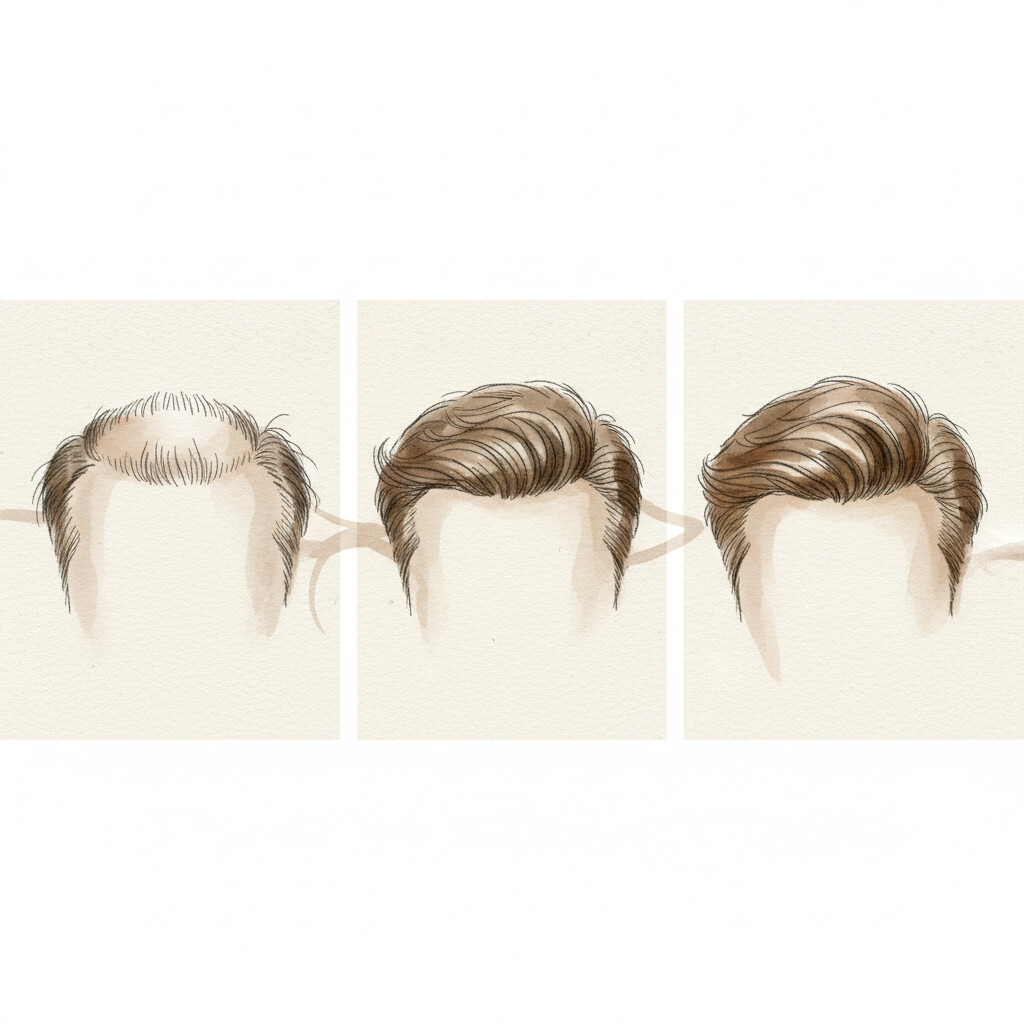
A hair transplant can rebuild a receding hairline by moving hair from the back and sides of the head, which resists pattern baldness, to the front and temples. It is often one of the more rewarding areas to treat, because the hairline frames the face. The main risks are not the surgery itself but the planning: a hairline placed too low or too early can look unnatural later if your hair loss keeps progressing.
Key takeaways
- Not every higher hairline is balding. Many men develop a slightly higher “mature” hairline that stays stable for decades.
- A good candidate usually has stable or slowly progressing loss, a healthy donor area and realistic goals about hairline height and density.
- The new hairline should suit you at 50 or 60, not only today. Conservative placement protects donor hair for the future.
- Transplanted hairs usually shed in the first weeks. New growth starts around months 3-4, and the final result is typically seen at 12-18 months.
- Medical treatment, a second procedure or both may be needed later if native hair keeps thinning.
Receding hairline or mature hairline?
In late teens and twenties, many men’s hairlines move up slightly, most noticeably at the temples. This is a normal “maturing” of the hairline and on the Norwood scale it usually corresponds to stage 2. It does not always mean progressive balding.
A receding hairline linked to male pattern baldness tends to keep moving back over the years, the temples deepen into a clear M or V shape, and the hair behind the hairline often becomes finer. Signs that loss is active include thinning hairs at the front, a family history of baldness, and visible change in photos taken a year or two apart.
The difference matters. Someone with a stable mature hairline may not need surgery at all. Someone with active loss needs a plan that accounts for where that loss is heading. Our guide on mature vs youthful hairlines covers this in more detail.

Who is a good candidate?
You are more likely to be a good candidate if:
- Your hair loss is mainly at the front and temples, and the crown is stable or only mildly thinning.
- Your donor area at the back and sides is dense and healthy.
- You are old enough for your pattern of loss to be reasonably clear. Surgeons are often more cautious with men in their early twenties, because it is hard to predict how far their loss will go.
- You accept a natural, age-appropriate hairline rather than the one you had at 16.
- You are open to medical treatment to protect the hair you still have, if a doctor thinks it is suitable.
You may be a less suitable candidate if you are very young with fast, aggressive loss, if you have diffuse thinning across the whole scalp, or if the donor area is weak. In those cases many surgeons suggest medical treatment first and a reassessment later.
How the hairline is designed
Hairline design is the part of the procedure that matters most for how natural you look. A careful surgeon considers:
- Height: usually set so the forehead stays in proportion to the rest of the face. A hairline that is too low is one of the most common reasons for an unnatural result. See facial proportions and hairline planning.
- Shape: a natural hairline is slightly irregular, not a straight ruler line. Most adult male hairlines have some recession at the temples.
- Transition zone: single-hair grafts are placed at the very front, with multi-hair grafts behind them to build density. This soft edge is what makes a hairline look real.
- Angle and direction: hairs at the front usually grow forwards at a low angle. Matching this is essential; hairs that stand straight up look pluggy. Our guide on recipient site creation explains the details.
- Temples: filling the temples completely can look unnatural on an adult man. Many surgeons soften the temple recession rather than erase it.
Ask to see the hairline drawn on your head before surgery, and don’t be afraid to ask for it higher if you are unsure. It is much easier to lower a hairline later than to raise one.
Planning for future hair loss
A transplant does not stop your native hair from thinning. If loss continues behind a new hairline, you can end up with a band of transplanted hair in front of a thinning area. This is why planning matters as much as technique.
Common ways surgeons reduce this risk:
- Conservative placement of the hairline, so it still looks natural if you lose more hair behind it.
- Keeping donor hair in reserve for a possible second session, for example to treat the mid-scalp or crown later.
- Discussing medical treatment such as finasteride or minoxidil. These can slow loss in many men but are not suitable for everyone and can have side effects, so talk to a doctor.
If you already have some crown thinning, your surgeon should explain how they would prioritise the front and back over time. See crown vs hairline prioritisation.

The procedure and recovery
Most hairline procedures today use FUE, where individual grafts are taken from the donor area, although FUT is still used in some cases. Local anaesthetic is used, and most people feel pressure rather than pain once it has taken effect. A hairline and temple procedure often takes most of a day.
A typical recovery looks like this:
- First 1-2 weeks: redness, small scabs and possible swelling of the forehead. The grafts are most fragile in the first few days. Many people return to desk work after about a week, depending on how visible the area is.
- Weeks 2-8: most transplanted hairs shed. This normal shedding is expected; the follicles stay in the skin. Some men also lose some existing hair near the operated area (shock loss), which usually regrows.
- Months 3-6: new hairs start to appear, often fine at first.
- Months 12-18: the final result is usually visible by this point.
Follow your own surgeon’s aftercare instructions, as protocols vary.
Alternatives and additions
A transplant is not the only option for a receding hairline:
- Medical treatment may stabilise early recession and is often used alongside surgery.
- Hairstyle changes such as a shorter cut or textured fringe can make mild recession much less noticeable.
- Scalp micropigmentation can create the look of a shaved hairline without surgery, though it fades over time and needs touch-ups.
Common questions
How many grafts does a receding hairline need?
It depends on how far the hairline has receded, the size of the temple areas, your hair characteristics and the density you want. Ask each clinic to explain how they arrived at their number, and be cautious of very high estimates for a small area.
Will it look natural?
It can, if the hairline is designed well and the grafts are placed at the right angles. Most unnatural results come from a hairline that is too low, too straight or too dense at the edge.
Can I have a transplant in my twenties?
Sometimes, but many surgeons prefer to wait until the pattern of loss is clearer, or to plan very conservatively. Starting medical treatment first is common.
Discussion
How old were you when you had your hairline done, and how did you and your surgeon decide on its height? If you had your procedure a few years ago, share how the hairline has held up as your hair has changed around it.
Sources
- Recipient Area, Journal of Cutaneous and Aesthetic Surgery, 2017
- Importance of the Recipient Area in Hair Transplantation, ISHRS
- Decoding Facial Esthetics to Recreate an Esthetic Hairline, Journal of Cutaneous and Aesthetic Surgery, 2016
Related guides
- How Is a Natural Hairline Designed for a Hair Transplant?
- Mature Hairline vs. Youthful Hairline: What Is the Difference?
- Crown or Hairline First? How to Prioritize a Hair Transplant
- What Is the Best Age for a Hair Transplant?
- Hair Transplant Growth Timeline: Month-by-Month Progress
About this guide: ForumHairTransplant.com is an independent patient community. We are not affiliated with any clinic or surgeon, and we don’t accept payment for rankings, reviews or recommendations. This article is general information, not medical advice. Talk to a qualified doctor about your own situation.