By ForumHairTransplant Editorial Team · Prepared with AI assistance · Sources checked: 19 October 2026
A natural hairline is designed at the consultation by looking at your face, your age, your current and likely future hair loss, and how many grafts your donor area can supply. The surgeon then draws a hairline that is soft and slightly irregular rather than straight, sits at a height that will still suit you in 20 years, and has a gradual transition from fine single hairs at the front to more density behind. A good consultation is a two-way conversation: you explain what you want, and the surgeon explains what is achievable and why.
Key takeaways
- The hairline should be planned for your future, not just your current appearance. A low, straight “teenage” hairline often looks wrong once more native hair is lost.
- Natural hairlines are irregular, with a soft front zone of single-hair grafts and a gradual increase in density.
- Temple points, the corners and the angle of the hairs matter as much as where the line sits.
- The donor supply decides what is realistic. A hairline plan that uses up most of the donor area can leave nothing for the crown or later loss.
- The doctor responsible for your procedure should draw or approve the hairline with you before surgery starts.
Before the consultation
You will get more out of the consultation if you prepare:
- Photos. Clear, well-lit photos of the front, top, crown, sides and back, with hair dry and not styled. If the first consultation is online, these are all the surgeon has to go on.
- Old photos. Pictures from a few years ago show how fast your hair loss is progressing and where your original hairline was.
- Family history. How far did hair loss go in your father, grandfathers, uncles or brothers?
- Medical history and medication, including any treatment for hair loss such as finasteride or minoxidil.
- What bothers you most. The corners, the front, the crown, or overall thinning. Priorities help shape the plan.
What happens at the consultation
Assessing your hair loss
The surgeon looks at the pattern and stage of your hair loss, often using the Norwood scale for men. They will look for miniaturised (thinning) hairs, which show where loss is likely to continue. This is one reason age matters: a man in his twenties with early recession may lose much more hair over the next decades.
Assessing the donor area
Donor density, hair calibre (thickness), hair colour relative to skin, and curl all affect how much coverage each graft gives. Thick, wavy or salt-and-pepper hair on skin of a similar tone can look fuller with fewer grafts. Fine, dark hair on pale skin shows every gap. The surgeon estimates how many grafts can be taken safely now and over a lifetime.
Understanding your goals
Expect questions about why you want a transplant, what result you have in mind and how you wear your hair. Be honest. If you want a very low or very dense hairline, say so, and ask the surgeon to explain whether it is sensible for you.
Principles of a natural hairline
Height and position
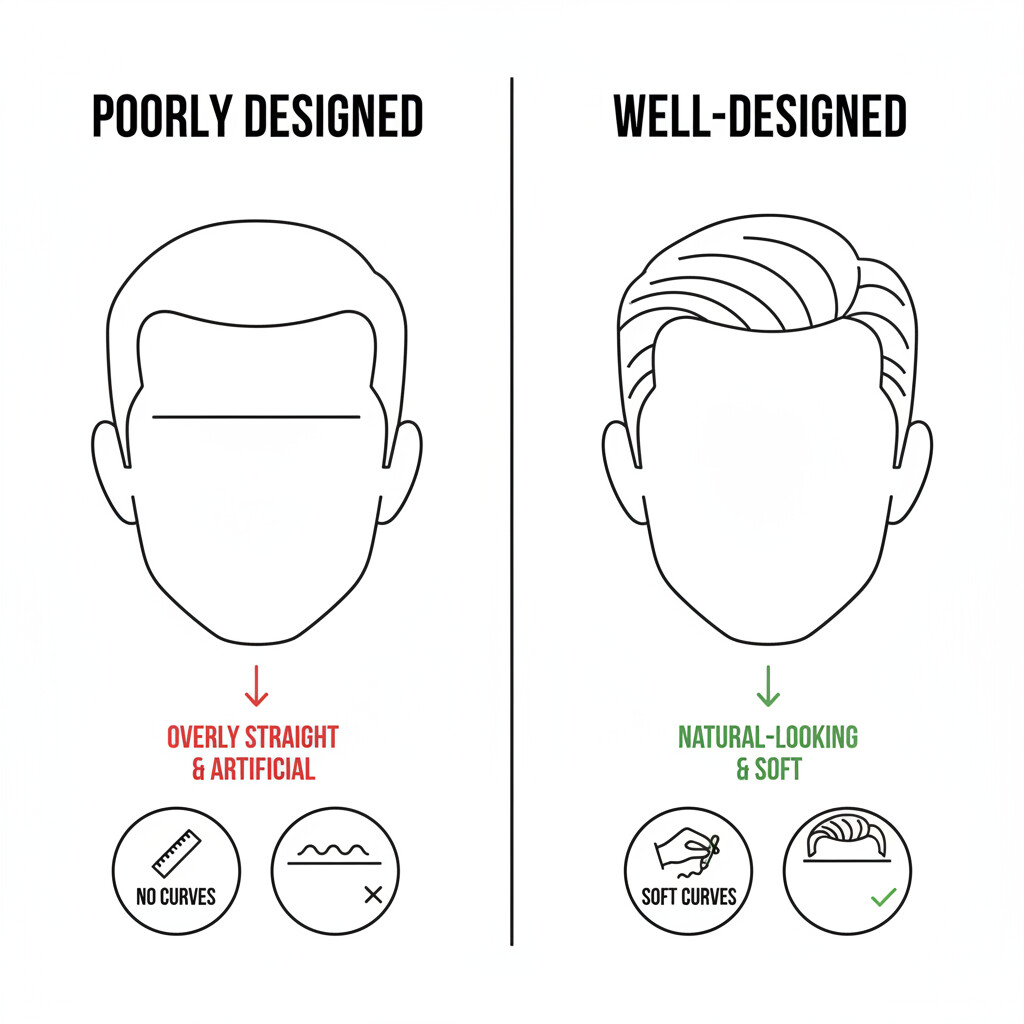
The hairline has to fit the proportions of your face. Surgeons often look at the relationship between the forehead and the rest of the face, the brow shape and the point where the forehead turns from vertical to horizontal. Our guide on facial proportions and hairline planning explains these landmarks. There is no single “correct” height; it depends on your face, age and donor supply.
Mature vs. youthful hairlines
Most adult men’s hairlines move up slightly with age, especially at the corners. A “mature” hairline sits a little higher with gently recessed temples. Many surgeons recommend this kind of design because it still looks natural if further loss happens. Our guide to mature vs. youthful hairlines compares the two.
Shape and irregularity
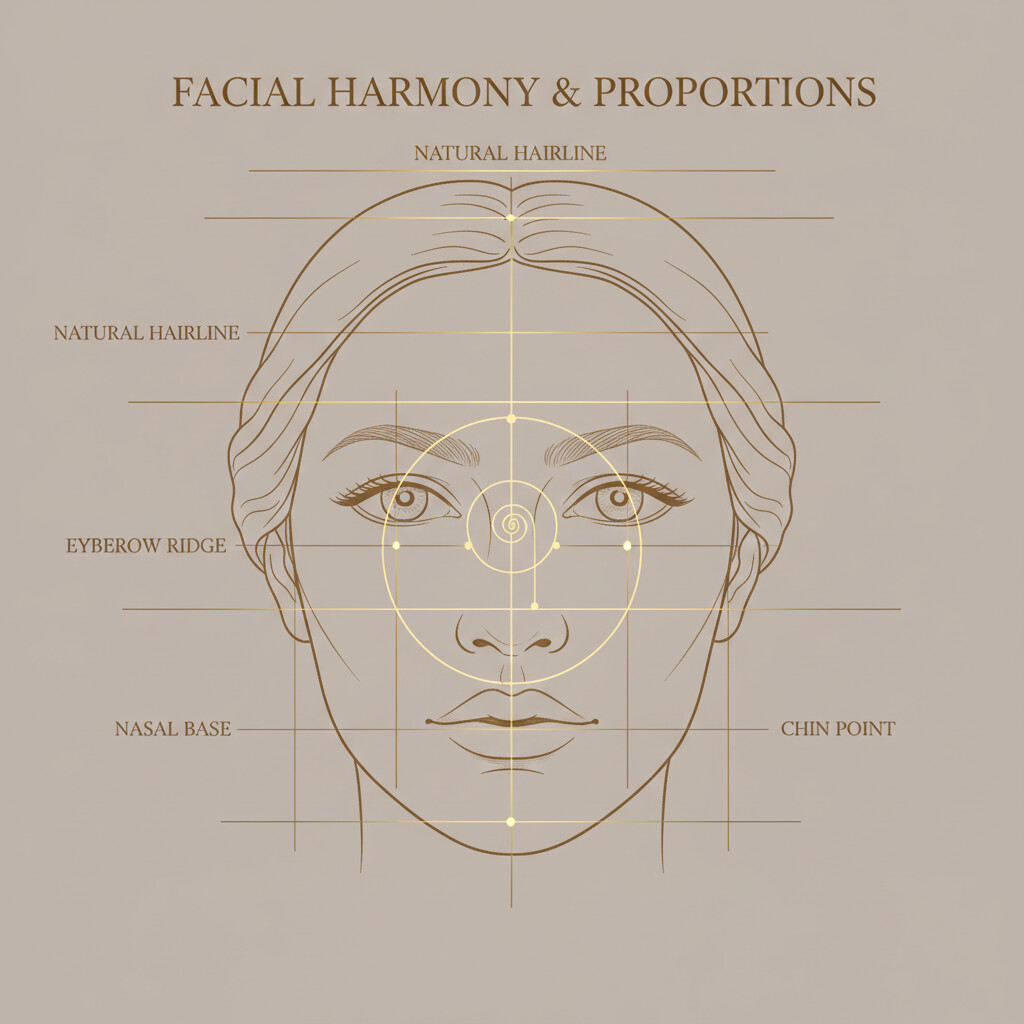
A natural hairline is not a ruler-straight line. It has small irregularities, clusters and gaps, and the front edge is a soft zone rather than a hard border. Many hairlines also have a slight central point or rounded front, and a gentle curve into the corners. Surgeons deliberately recreate this irregularity so the result does not look “planted”.
Temple points and corners
The temple points (the small peaks of hair above the temples) frame the face. Restoring or preserving them can make a big difference, but they are delicate and use grafts. Over-filling the corners in a younger man can create a hairline that looks unnatural later.
Density gradient
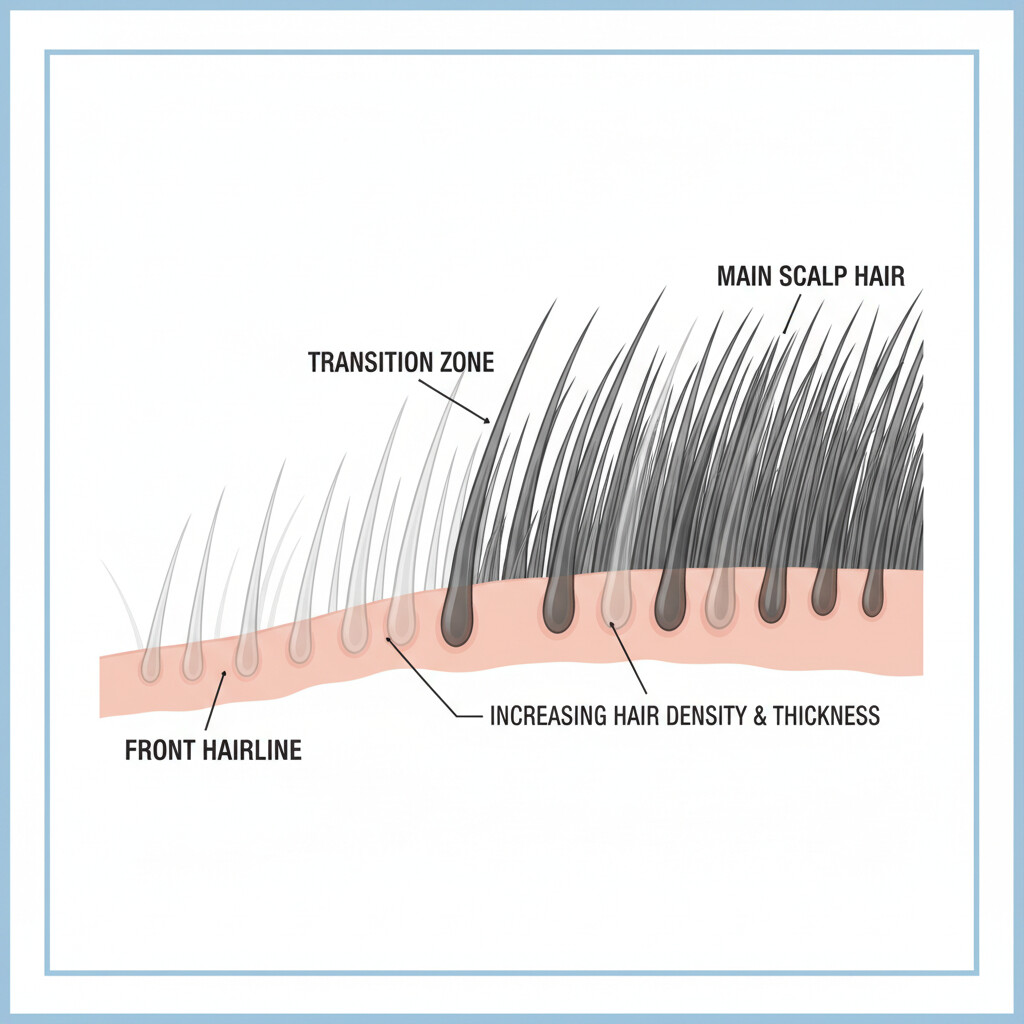
The front edge of the hairline uses single-hair grafts, placed irregularly. Behind that, two- and three-hair grafts build up density. This gradient is what makes the hairline look soft from the front and full from a normal distance.
Angle and direction
At the hairline, hairs grow forward and at a very low angle to the scalp. At the temples they point down and back. If grafts are placed too upright or in the wrong direction, the result can look unnatural even at a good height. Our guide on recipient site creation explains how angle, direction and density are controlled.
Planning beyond the hairline
The hairline is the most visible part of the plan, but it is only one part.
- Future loss. If you are young or your loss is progressing, the plan should allow for more loss behind the new hairline. Medication to protect native hair is often discussed. Talk to a doctor about whether it suits you.
- Crown vs. front. Many surgeons prioritise the front, because it frames the face, and treat the crown only if the donor supply allows. See crown vs. hairline prioritization.
- Number of sessions. Some people need a second session for density or for areas that thin later. Our guide on whether you need more than one session explains the factors.
Questions to ask about your hairline
- Who will draw the hairline, and who will make the incisions at the front?
- Why this height and shape for my face and age?
- How will it look if I keep losing hair behind it over the next 10-20 years?
- How many grafts go to the hairline zone, and how many will be left in reserve?
- How will you recreate the temple points and the soft front edge?
- Can I see photos of similar patients at least 12 months after surgery?
Agreeing the final design on the day
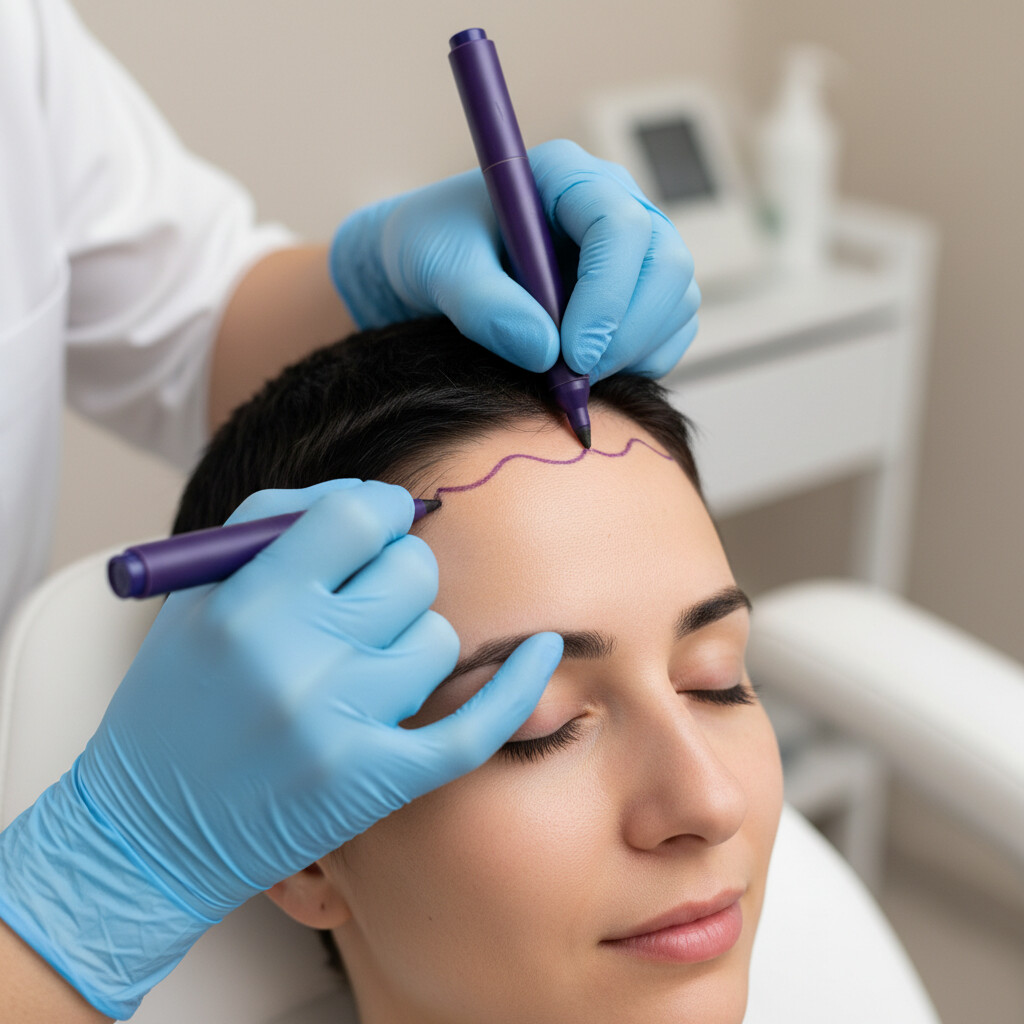
On surgery day, the hairline is usually drawn on your forehead with a marker. Take your time. Look in the mirror from the front and sides, lower and raise your eyebrows, and ask questions. It is normal to adjust it slightly together. Once incisions are made, changes are very hard, so do not feel rushed.
Warning signs
- The hairline is drawn by a salesperson or coordinator, with no doctor involved.
- The clinic agrees to any hairline you ask for without discussing your age or future loss.
- A very low, straight hairline is proposed for a young patient with active hair loss.
- No explanation of how many grafts are needed or how much donor supply remains.
- Pressure to decide on the design quickly.
Common questions
Can I choose my own hairline?
You should have real input, and a good surgeon will listen. But they should also explain when a design is likely to look unnatural or use too many grafts. The best design is one you both agree on.
Can a hairline be lowered later if I want more?
Sometimes, if there are enough donor grafts. It is much easier to lower a conservative hairline than to fix one that was placed too low.
When will I see the final hairline?
The hairline usually starts to show around months 3-4 and looks close to final at around 12 months, though it can keep improving up to about 18 months.
Discussion
How was your hairline designed at your consultation? Did you ask for a lower or higher hairline than the surgeon suggested, and how do you feel about the final result now? Photos of the marked hairline next to your result are especially helpful for others.
Sources
- Recipient Area, Journal of Cutaneous and Aesthetic Surgery, 2017
- Importance of the Recipient Area in Hair Transplantation, ISHRS
- Decoding Facial Esthetics to Recreate an Esthetic Hairline, Journal of Cutaneous and Aesthetic Surgery, 2016
Related guides
- Hair Transplant for a Receding Hairline: What to Know
- Mature Hairline vs. Youthful Hairline: What Is the Difference?
- How Do Facial Proportions Guide Hair Transplant Hairline Design?
- Crown or Hairline First? How to Prioritize a Hair Transplant
- Does Transplanted Hair Look Natural? Achieving Optimal Aesthetics
About this guide: ForumHairTransplant.com is an independent patient community. We are not affiliated with any clinic or surgeon, and we don’t accept payment for rankings, reviews or recommendations. This article is general information, not medical advice. Talk to a qualified doctor about your own situation.