
The most common gap between expectation and reality in hair restoration is time. Many people expect to see a result within weeks. In reality, most transplanted hairs shed first, new growth starts around months 3-4, and the final result usually takes 12-18 months. Patients also often wish they had known that a transplant moves hair rather than creating it, that density is limited by the donor area, and that hair loss in untreated areas can continue.
Key takeaways
- The first months often look worse, not better. Shedding and an “ugly duckling” phase are normal.
- A transplant usually gives good coverage, not the density you had at 18. The donor supply is finite.
- Native hair can keep thinning after surgery. Many people need medical treatment, a second session, or both, over the years.
- Recovery is usually straightforward, but redness, swelling, scabs and numbness can be more visible and last longer than people expect.
- Clinic photos show the best cases. Your result depends on your hair, your donor area and the team that treats you.
A transplant moves hair; it does not make new hair
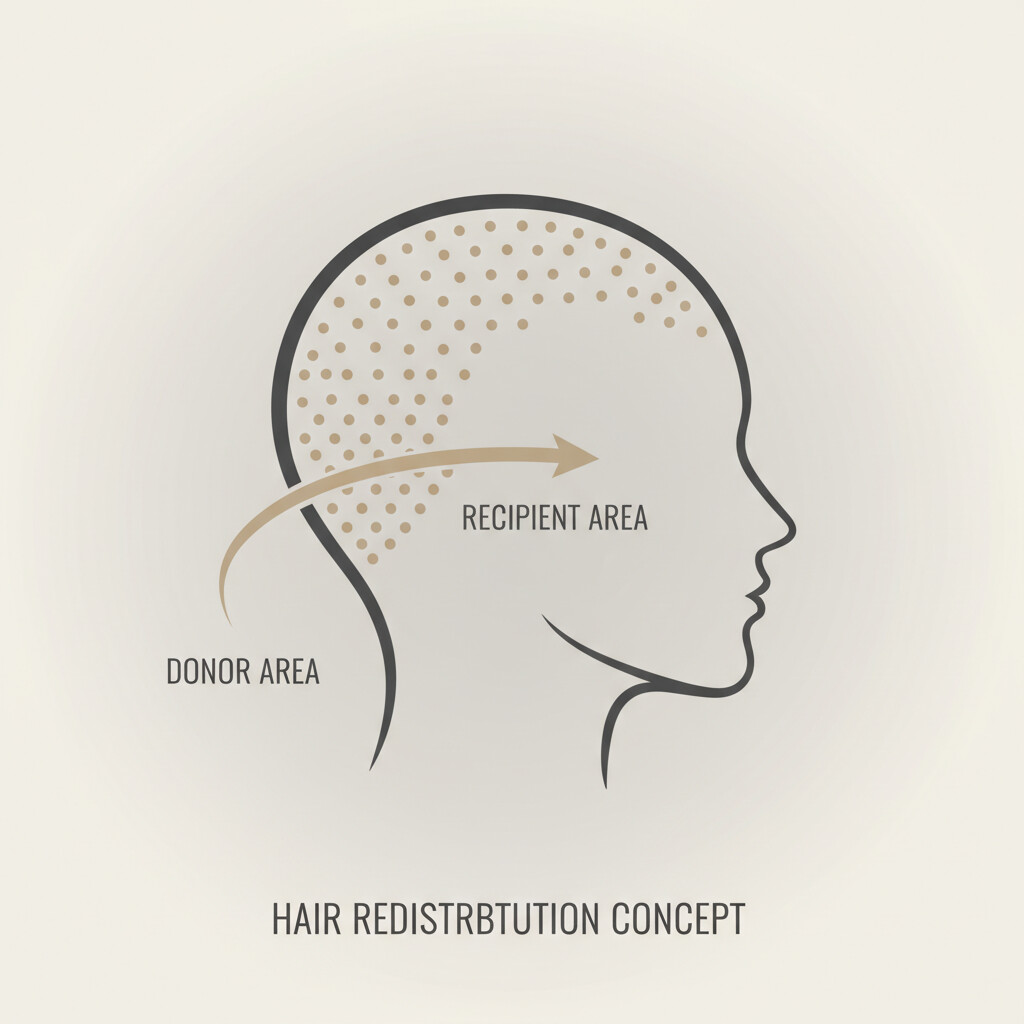
The procedure takes follicles from the back and sides of the head, where they are resistant to pattern baldness, and places them in thinning areas. The total amount of hair on your head does not increase. You are redistributing what you have.
This sets the ceiling on what is possible. Someone with a strong donor area and limited loss can often get a full-looking result. Someone with advanced loss and a weaker donor area will usually get useful coverage in the front and top, with lower density or no work at the crown. A good consultation should make this clear before any price is discussed.
The timeline is longer than most people expect
This is the point patients mention most often. A typical course looks like this:
- Weeks 1-2: redness, small scabs and sometimes swelling of the forehead. The grafts are visible as short stubble.
- Weeks 2-8: most transplanted hairs shed. This normal shedding is expected. The hair shaft falls out, but the follicle stays in the skin and will grow a new hair later.
- Months 2-4: the “ugly duckling” phase. The recipient area can look much like it did before surgery, sometimes with redness or small spots as new hairs push through.
- Months 3-6: new hairs start to appear. They are often fine, wavy or wiry at first.
- Months 6-9: a clear change is visible for most people, but hairs are still thickening.
- Months 12-18: the final result is usually seen by this stage. The crown often takes longer than the front.
The month-by-month growth timeline goes into more detail. Many patients say the hardest part was not the surgery but waiting through months 2-5 without seeing much.
Shock loss can happen too
Separate from the normal shedding of transplanted hairs, some people lose some of their existing (native) hair near the operated areas in the weeks after surgery. This is called shock loss. It is usually temporary and the hair typically regrows over the following months, although hairs that were already weak and miniaturising may not come back. Not everyone gets it, and it is worth asking your surgeon how likely it is in your case.
Density: good coverage, not a teenage hairline
Photos online often show dense results on people with ideal hair characteristics: thick, wavy hair with low contrast against the skin. Your result depends on your hair calibre, colour, curl and skin tone as much as on graft numbers.
Patients who are happiest long term are usually those who aimed for a natural, age-appropriate hairline rather than the lowest, densest hairline possible. A lower hairline uses more grafts, leaves less for the future, and can look odd if loss continues behind it. See how a natural hairline is designed.
Hair loss does not stop after surgery
Transplanted hair is generally permanent, but the rest of your hair is not protected. If you are still losing hair, the native hair around and behind the transplanted area can keep thinning. Over years, this can leave gaps or make the result look thinner than at the one-year mark.
This is why many surgeons discuss medical treatment such as finasteride or minoxidil before and after surgery. These treatments help many people but not everyone, and they can have side effects, so it is a decision to make with a doctor. It is also why many patients eventually have a second procedure. Planning for this from the start is one of the main things that separates a good long-term result from a disappointing one.

Recovery: usually manageable, but visible
Most patients describe the pain as mild to moderate and manageable with the medication their clinic provides. What surprises people more is:
- How visible the first two weeks are. Redness, scabs and a shaved donor area are hard to hide. Some people need 7-10 days before they feel comfortable at work.
- Swelling. Forehead swelling in the first days is common and can reach the eyes.
- Numbness. Parts of the scalp can feel numb or tingly for several months while nerves recover.
- Redness. In people with fair skin, pinkness in the recipient area can last for weeks or longer.
- Travel logistics. If you travel abroad, follow-up care happens at home, often by message or video. Our guide on returning home after a transplant abroad covers what to arrange before you leave.
The emotional side
Many patients are surprised by how much the process affects their mood. Excitement after surgery is often followed by doubt during the shedding and early months. Checking the mirror every day and comparing yourself with other people’s timelines usually makes this worse.
It helps to take photos in the same light once a month, rather than looking every day, and to set expectations before surgery about what success means for you. If you are unsure whether you are ready, read Are You Psychologically Ready for a Hair Transplant? and Understanding Hair Transplant Regret.
Questions worth asking before you book
- What density can I realistically expect in each area, given my donor supply?
- Where do you expect my hair loss to be in 10-15 years, and how does this plan allow for that?
- How many grafts will this use, and how many will be left for the future?
- Who will do each part of the procedure?
- What does follow-up look like after I go home?
Common questions
Will the transplanted hair look like my own hair?
It is your own hair, so colour and general character usually match the donor area. New hairs can grow in finer or with a different texture at first and often settle over the first year.
Will I need more than one procedure?
Some people are happy after one. Others choose a second session for more density or because loss progresses. Ask for a long-term plan rather than assuming one procedure will be enough for life.
Does it hurt?
The local anaesthetic injections at the start are usually the most uncomfortable part. After that, most people feel pressure rather than pain. Soreness in the first days is common and usually manageable.
Discussion
What surprised you most about your hair transplant, compared with what you expected from your research? And at what month did you first feel the result was worth it?
Related guides
- Are You Psychologically Ready for a Hair Transplant?
- Managing Anxiety Before a Hair Transplant
- Can a Hair Transplant Improve Your Confidence?
- When Is a Hair Transplant Not the Right Decision?
- Does Hair Loss Continue After a Hair Transplant?
About this guide: ForumHairTransplant.com is an independent patient community. We are not affiliated with any clinic or surgeon, and we don’t accept payment for rankings, reviews or recommendations. This article is general information, not medical advice. Talk to a qualified doctor about your own situation.