
By ForumHairTransplant Editorial Team · Prepared with AI assistance · Sources checked: 19 October 2026
To choose a hair transplant doctor, confirm they are a licensed physician in the country where they operate, check how much of their work is hair restoration, study real results from patients like you, and find out exactly who will do each step of your surgery. The consultation should feel like a medical assessment, not a sales call. The seven tips below turn that into concrete checks you can make before you book.
Key takeaways
- Start with the basics: a valid medical licence and registration you can verify yourself with the relevant national or regional authority.
- Professional society memberships (such as ISHRS or IAHRS) can be a useful signal, but they are not a licence and not a guarantee of results.
- Ask who performs extraction, incisions and implantation. “Your doctor” and “the team” are not the same answer.
- A good consultation looks at your donor area and future hair loss, not only at the number of grafts.
- Judge a doctor on consistent, honest results over time, not on a few perfect photos or a low price.
1. Check the licence and registration first
Every country regulates who may practise medicine. The first check is simple: is the person who will plan and perform your surgery a licensed medical doctor, and is that licence current?
- Find the official register. Most countries have a public register of doctors run by a medical council, ministry of health or regional medical board. Search for the doctor’s full name and check that their status is active.
- Check the country of practice. A doctor can be qualified in one country and practise in another. What matters is that they are allowed to operate where your surgery will take place.
- Ask for details if you can’t find them. A trustworthy doctor will give you their full name and registration details without hesitation. If a clinic won’t tell you which doctor will operate, treat that as a warning sign.
For clinics abroad, our guide on how to choose a hair transplant clinic covers how to check the facility as well as the doctor.
2. Understand what specialty and memberships mean
Hair restoration is not a separate medical specialty in most countries. Surgeons come from different backgrounds, including dermatology, plastic surgery and general medicine. Background matters less than training and experience in this specific procedure.
Memberships you may see mentioned:
- ISHRS (International Society of Hair Restoration Surgery). A worldwide professional society focused on education. Membership shows involvement in the field. Higher levels, such as fellowship, involve more requirements. It does not certify the result of any single surgery.
- IAHRS (International Alliance of Hair Restoration Surgeons). A patient-facing directory of doctors who apply and are screened on their work. Its criteria are its own, and it is not a regulatory body.
- National or regional certifications and boards. Some countries or associations have their own exams or boards for hair restoration. Ask what the certificate involved and who issued it.
Treat memberships as one piece of evidence among several. Always confirm the medical licence separately.
3. Find out who does what on the day
A hair transplant takes many hours and involves a team. In reputable practices, the doctor plans the treatment, designs the hairline and personally performs the key surgical steps, with trained staff helping. In some high-volume clinics, most of the work is done by technicians while the doctor is barely present.
Ask these questions directly and get the answers in writing:
- Who will design my hairline?
- Who will extract the grafts?
- Who will make the recipient incisions (the tiny openings that set angle and direction)?
- Who will place the grafts?
- Will the doctor be in the building for the whole procedure?
Rules on which steps must be done by a doctor vary by country. Vague answers, or a doctor you never meet until the morning of surgery, are common patterns in low-quality clinics.
4. Study results carefully, not quickly
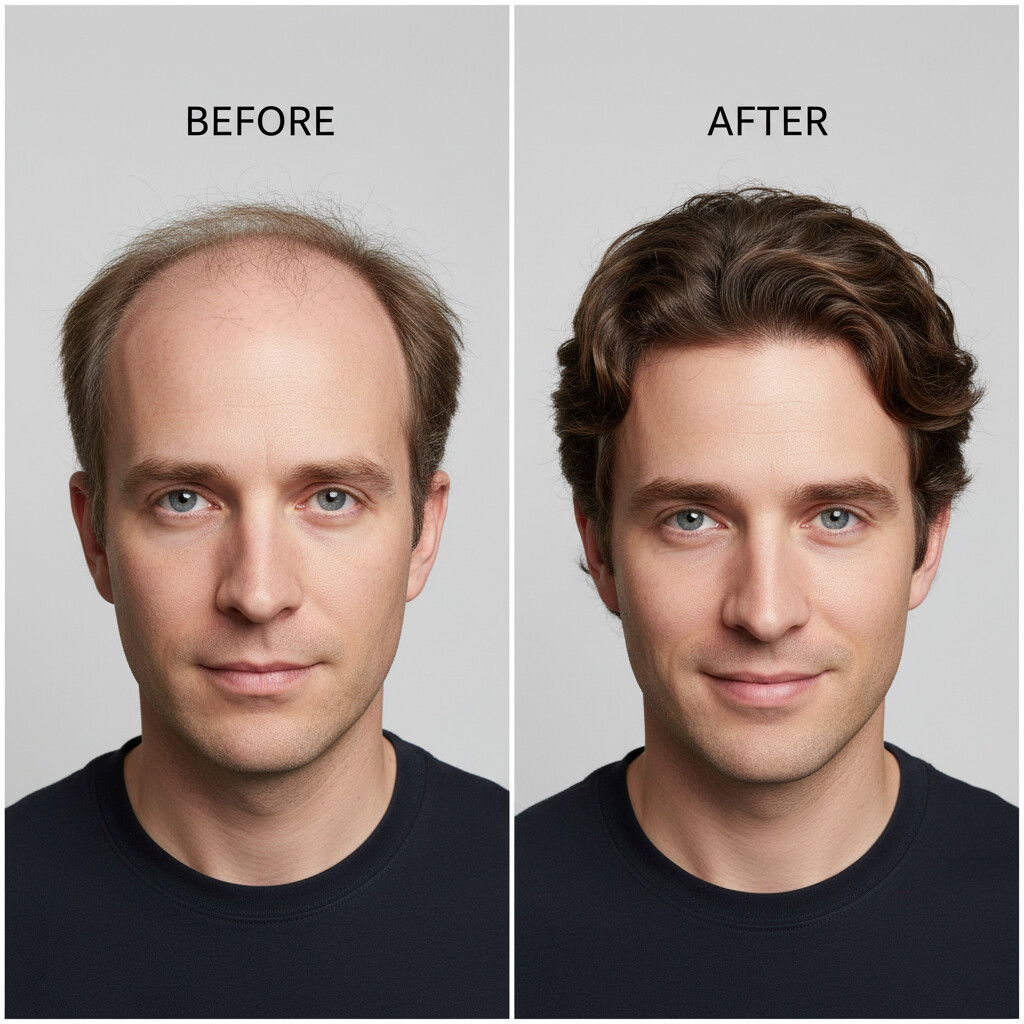
Before-and-after photos are useful, but only if you read them critically:
- Look for patients like you. Similar age, hair loss stage, hair colour and hair type.
- Check the timing. Final results usually take 12-18 months. Photos at three or six months tell you little.
- Compare like with like. Same lighting, angle and hair length in both photos. Wet, combed-forward or heavily styled “after” photos can hide thin areas.
- Look at the hairline up close. It should be soft and slightly irregular, with fine single hairs at the front, not a straight wall of hair.
- Ask to see the donor area. A good result on top with a visibly thinned back of the head is not a good result.
Ask whether the photos show the doctor’s own patients. A steady record of natural, consistent results matters more than a few excellent photos.
5. Read reviews and patient reports with a critical eye

Independent patient reports, especially ones that follow a result month by month to the one-year mark and beyond, are more useful than star ratings. When reading reviews:
- Look for detail about the consultation, the day of surgery, aftercare and how problems were handled.
- Be cautious of many short, vague, glowing reviews posted close together.
- Notice how the clinic responds to complaints. Calm, factual answers are a better sign than defensive ones.
- Remember that most reviews are written in the first weeks, before the result is visible.
If you can, speak with past patients yourself. Forum threads where patients post updates over a year or more are often the most honest source.
6. Make sure they explain techniques honestly

The main methods are FUE (grafts removed one by one) and FUT (a strip of skin removed and divided into grafts). Variants such as DHI or sapphire blades are ways of doing parts of these procedures, not a different kind of surgery. A good doctor can explain the pros and cons of FUE and FUT for your situation, including scarring, donor capacity and recovery.
Be wary of anyone who presents one branded technique as the only option or as a guarantee of better growth. The skill of the team usually matters more than the name of the method.
7. Judge the consultation itself
A proper consultation should include:
- Medical history: your health, medications, and any conditions that affect surgery or healing.
- Diagnosis: confirming the cause of your hair loss. Not all hair loss is suitable for a transplant.
- Donor assessment: how many grafts your donor area can safely supply over a lifetime, not just this session.
- Long-term plan: where your hair loss is likely to go, whether a second session might be needed, and whether medical treatment could help protect your native hair.
- Risks and recovery: swelling, scabbing, the normal shedding of transplanted hairs in the first weeks, possible shock loss of native hair, and the realistic timeline for results.
Warning signs include a quote given only from a couple of photos with no questions, pressure to book with “today only” discounts, guaranteed growth rates, or very large graft numbers promised without looking at your donor area. Choosing mainly on cost is one of the most common routes to regret. Read why prioritising price over quality is risky before you compare quotes.
Common questions
Does ISHRS or IAHRS membership mean a doctor is safe?
It is a useful signal of involvement in the field, but it is not a licence and does not guarantee results. Check the medical licence separately and judge the doctor’s own results.
How many consultations should I have?
Many patients speak with two or three doctors before deciding. Comparing their assessments of your donor area and graft needs is a good way to spot overpromising.
Discussion
How did you choose your surgeon? Which checks turned out to be most useful, and was there anything you wish you had asked before booking? Share your experience so others can learn from it.
Sources
- Ask Your Hair Restoration Surgeon: Questions to Have Confidence Before Surgery, ISHRS
- Finding a Hair Restoration Doctor That’s Right for You, ISHRS
- Choosing who will do your cosmetic procedure, NHS
Related guides
- How to Choose a Hair Transplant Clinic: Questions and Red Flags
- Hair Transplant Clinic Red Flags: How to Spot a Low-Quality Clinic
- What Is a Hair Mill and How Do You Avoid One?
- Why Some Clinics Promise Too Much in Hair Restoration
- Prioritizing Price Over Quality in Hair Restoration: A Risky Approach
- What to Consider Before Getting a Hair Transplant: A Comprehensive Guide
About this guide: ForumHairTransplant.com is an independent patient community. We are not affiliated with any clinic or surgeon, and we don’t accept payment for rankings, reviews or recommendations. This article is general information, not medical advice. Talk to a qualified doctor about your own situation.