By ForumHairTransplant Editorial Team · Prepared with AI assistance · Sources checked: 19 October 2026
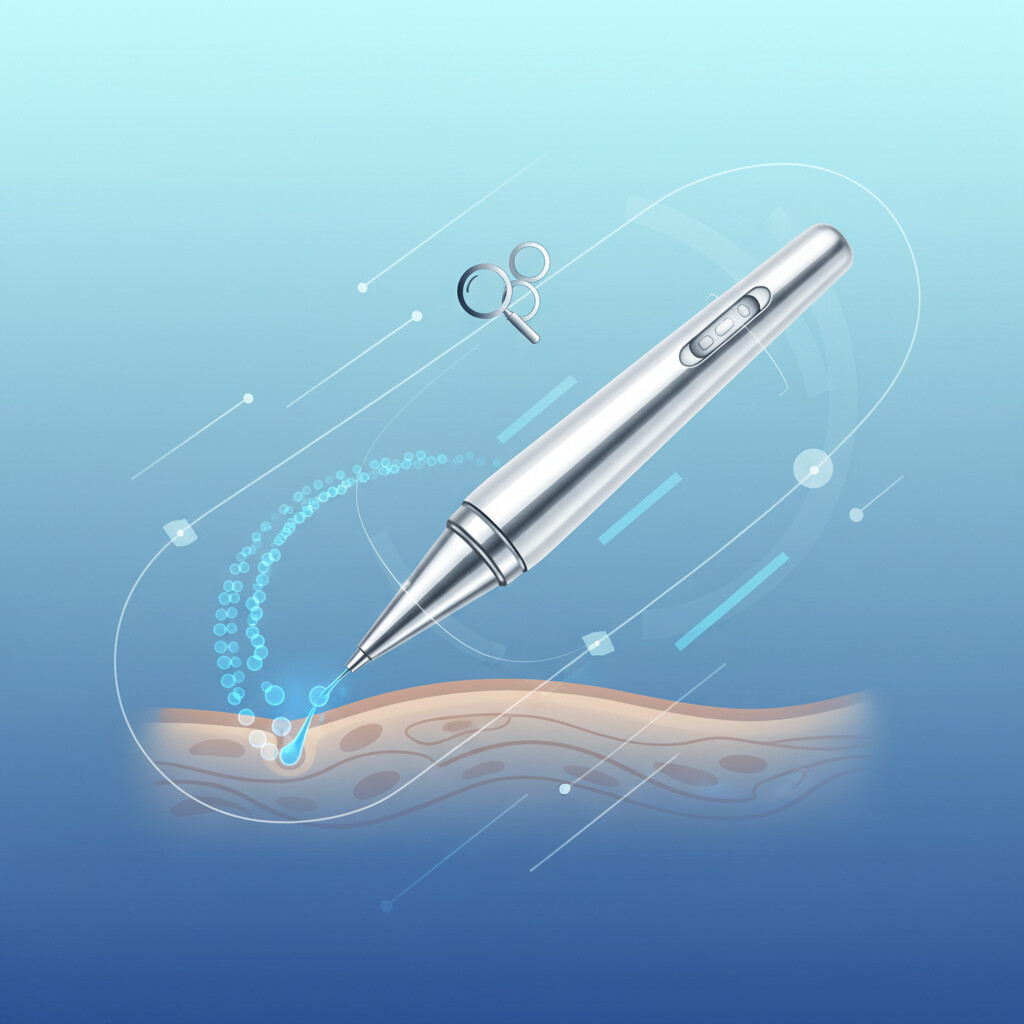
A Choi implanter pen is a hand-held instrument with a hollow needle that is used to place hair grafts into the scalp. It is the tool behind the DHI (direct hair implantation) technique, where the recipient site is created and the graft inserted in one movement. It is a useful tool that gives good control over angle and depth, but it is not a guarantee of better growth or higher density. The skill of the team using it matters much more than the pen itself.
Key takeaways
- The Choi pen is used only in the implantation stage. Grafts are still harvested by FUE first.
- It lets the implanter control angle, direction and depth for each graft, and reduces direct handling of the graft during placement.
- Claims that Choi pens give clearly higher graft survival or density than well-performed FUE with slits are not supported by strong evidence.
- Drawbacks include higher cost, the need for a large trained team, and potentially slower sessions for large graft numbers.
- The choice between pen and slit techniques should depend on your goals and on what your surgeon does best.
What is the Choi implanter pen?
The Choi implanter was developed in South Korea for implanting hair grafts. It looks like a pen with a fine, hollow needle at the tip. A single graft is loaded into the needle, and a plunger pushes it into the skin as the needle is withdrawn.
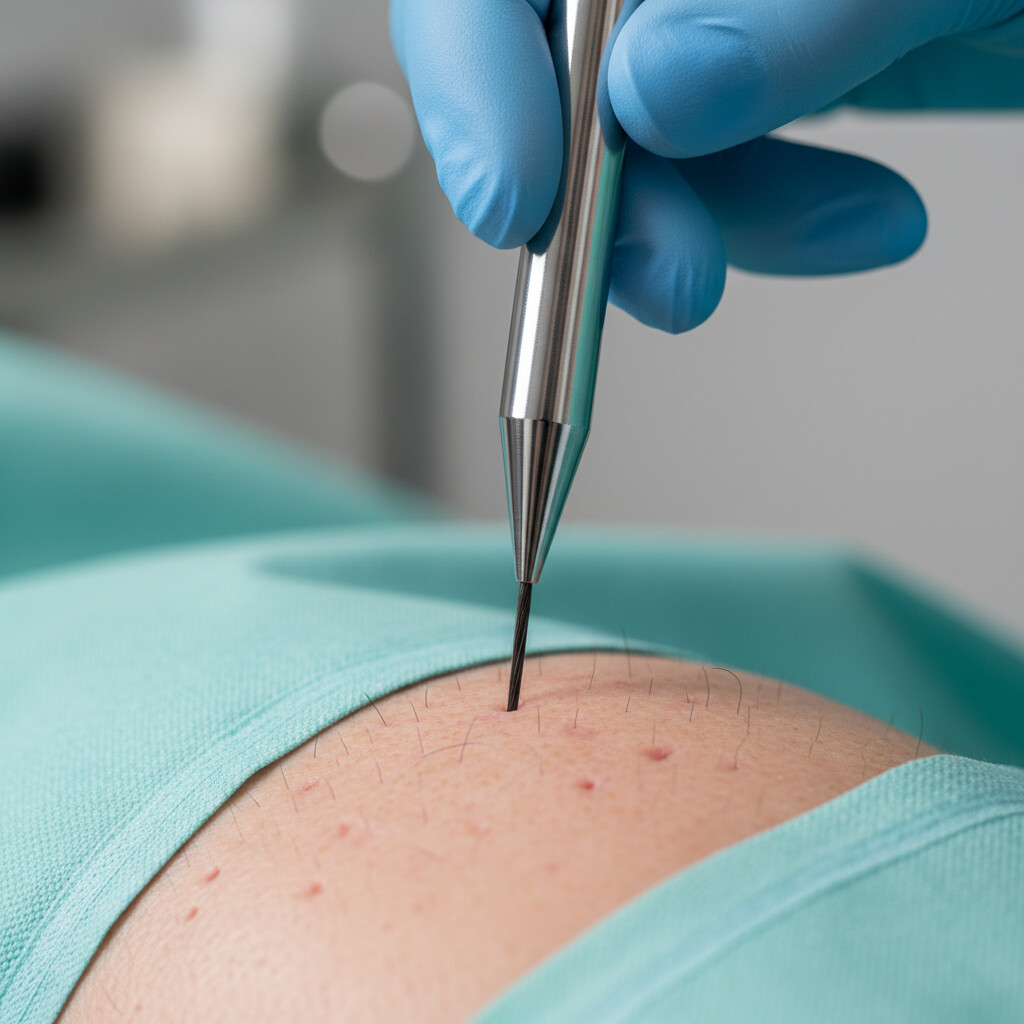
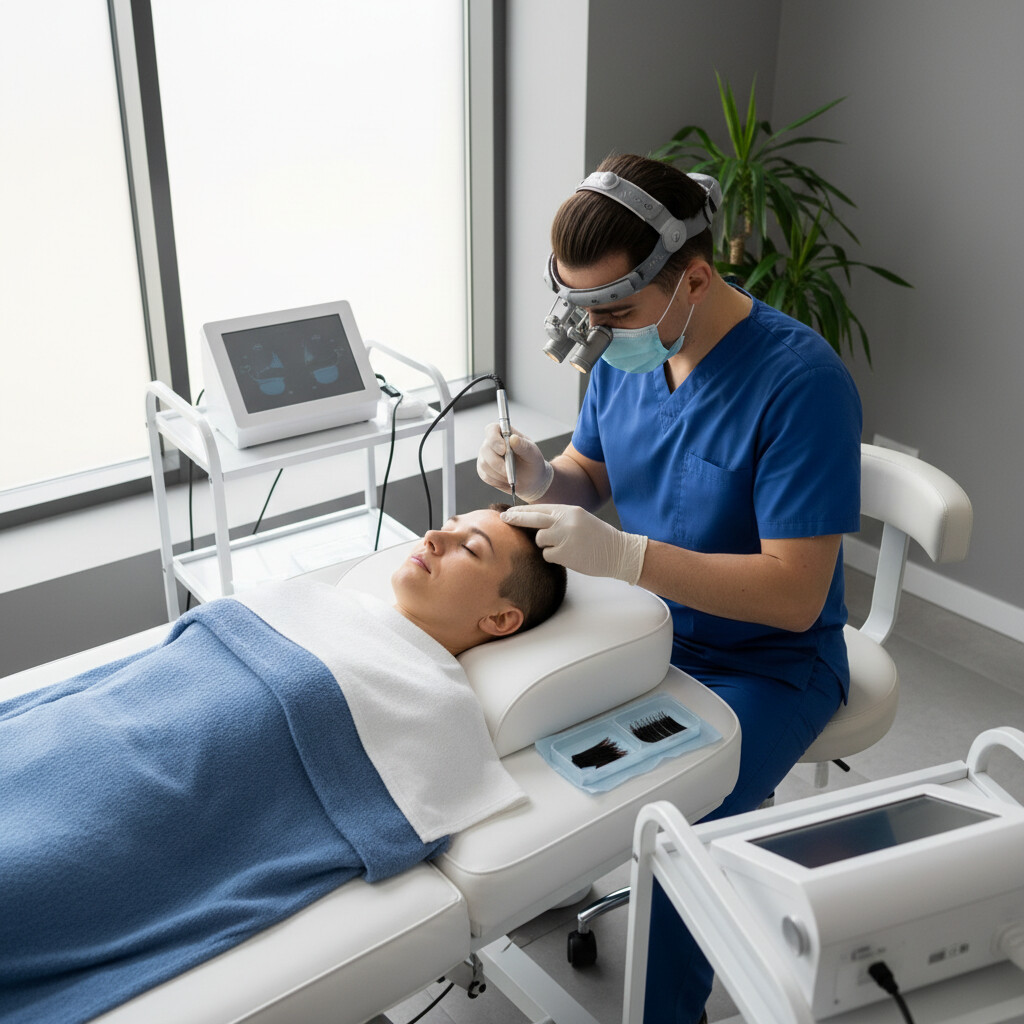
Needles come in different diameters, so the team can match the needle to the size of each graft (single hairs for the hairline, larger units further back). Clinics that use DHI typically work with many pens at once. Technicians load the pens, and the surgeon or an implanter uses them in turn.
DHI is a variation of FUE, not a separate way of harvesting hair. Our full guide to the DHI technique, its pros, cons and recovery explains how it fits into the wider procedure.
How it works during a procedure
- Planning. The surgeon assesses the donor area, agrees the hairline design and estimates the number of grafts.
- Extraction. Grafts are removed one by one from the donor area with a small FUE punch, under local anaesthetic.
- Sorting and loading. Grafts are sorted by the number of hairs and loaded into the pens, usually by technicians. Careful, gentle loading is important because grafts can be damaged if they are squeezed or allowed to dry out.
- Implantation. The pen is inserted into the scalp at the chosen angle and depth. The plunger releases the graft and the needle is withdrawn. Site creation and graft placement happen in one step.
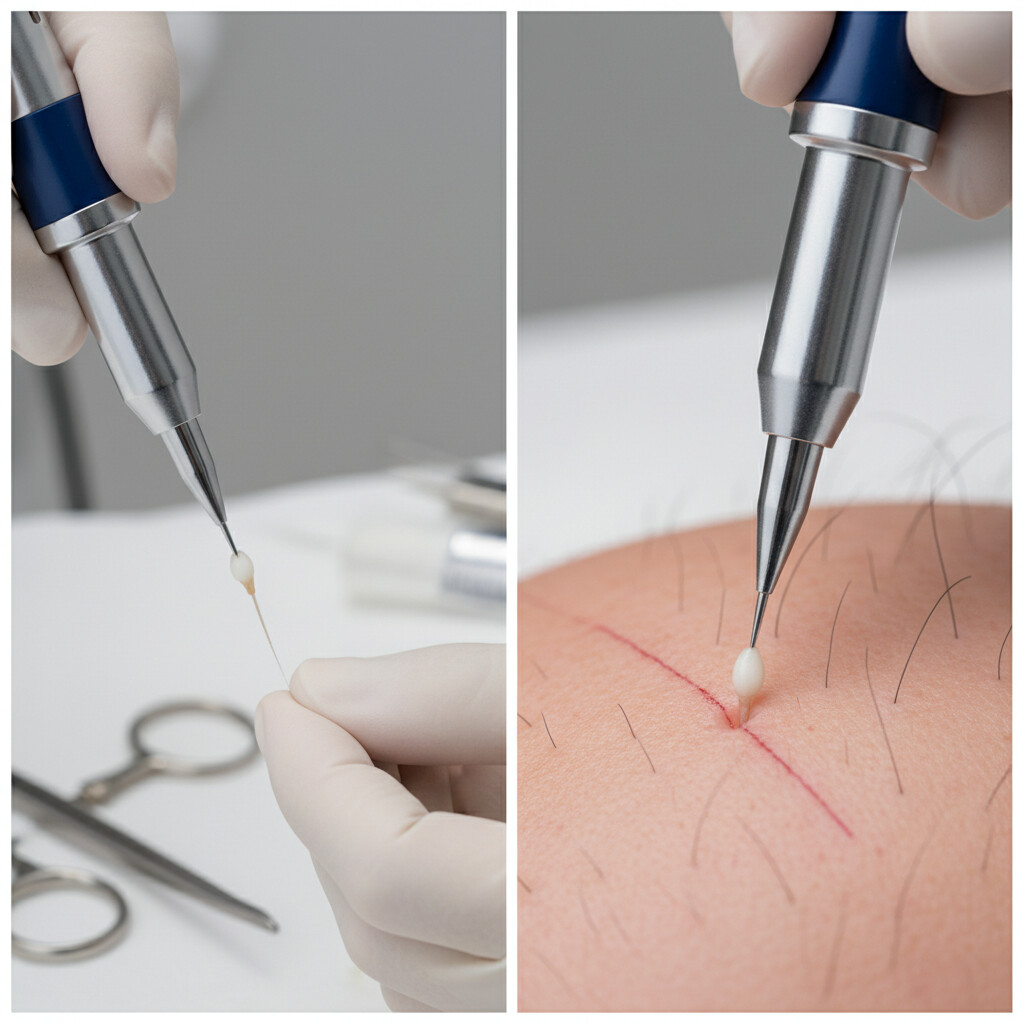
Some clinics use a hybrid approach: they make some or all of the recipient sites in advance with blades and then use implanter pens to place the grafts. Ask which method your clinic actually uses.
Realistic benefits
The Choi pen has genuine strengths when used by an experienced team:
- Control over angle and direction. Each graft is placed with the same tool that creates the site. This can help with natural angles in the hairline and temples.
- Less graft handling at placement. The graft is not gripped with forceps as it goes into the skin, which may reduce crushing of the bulb during this step.
- Useful between existing hair. Because no separate slits are needed, pens can be helpful when placing grafts between native hairs. Many clinics use them for unshaven or partly shaven procedures.
- Less bleeding at the recipient site is reported by some surgeons, though this varies with technique and patient.
What the marketing often overstates
You will often see claims that Choi pens give “higher graft survival”, “maximum density” or “no scarring”. These deserve a closer look:
- Graft survival. Survival depends on graft handling, time out of the body, keeping grafts moist and cool, and the skill of the team. There is no strong evidence that pens consistently outperform well-executed slit-and-forceps placement. In large sessions, loading many pens can actually add handling steps.
- Density. How dense a result looks depends mainly on how many grafts your donor area can safely provide and how they are distributed. Pens can place grafts close together, but so can fine blades. Packing too tightly can reduce growth in any technique.
- Healing and scarring. Recipient sites from pens and from small blades both usually heal without visible scars. The donor area heals the same way as any FUE, with small dot scars.
- Speed of recovery. Recovery after DHI is broadly the same as after FUE with slits. The comparison of Choi pen and sapphire FUE covers the practical differences.
Drawbacks to consider
- Cost. DHI is often priced higher. The pens, needles and extra staff add to the cost.
- Time and team size. Implanting several thousand grafts one pen at a time needs a large, well-coordinated team. Sessions can take longer.
- Dependence on technician skill. Loading and handling are often done by technicians. Their training and supervision matter.
- Not always the best fit for large areas. For very large sessions, some surgeons prefer pre-made slits for speed and consistency. Others use pens throughout. Practice varies.
Who might benefit from DHI with Choi pens?
A Choi pen procedure can be a reasonable option if you:
- Need work mainly on the hairline or temples, where angle control is important.
- Want grafts placed between existing hair, or are considering an unshaven hair transplant.
- Have a surgeon and team who use the pen routinely and can show consistent results with it.
It is not automatically the best choice for everyone. Your donor supply, the size of the area to cover and your surgeon’s experience should decide the method, not the name of the tool.
Recovery after a Choi pen transplant
Recovery is similar to other FUE procedures. Expect redness, small crusts, some tightness and possible forehead swelling in the first days. Crusts usually clear by around days 10-14 with gentle washing.
Most of the transplanted hairs normally shed between roughly weeks 2 and 8. This is expected and does not mean the grafts have failed. Some people also get shock loss, a temporary loss of native hair near the operated area, which usually grows back. New growth typically starts around months 3-4, and the final result is usually judged at 12-18 months. See the month-by-month growth timeline for more detail.
Questions to ask a clinic offering DHI
- Who loads the pens, and who does the implantation?
- Are all sites made with the pen, or are some slits made in advance?
- How are grafts kept moist and cool while they wait to be loaded?
- How many grafts can the team comfortably implant with pens in one day?
- Can you show results for patients with a similar hair type and pattern to mine?
Our guide on choosing a hair transplant surgeon has more questions to use in consultations.
Common questions
Is the Choi pen better than sapphire blades?
Neither is better in general. They are different tools for the implantation stage. Results depend far more on planning, graft handling and the team’s experience.
Does DHI mean the surgeon places every graft?
Not necessarily. In many clinics technicians load and sometimes implant the grafts. Ask exactly who does what.
Is DHI less painful?
Pain control comes from local anaesthetic in both DHI and FUE with slits. Most patients report similar discomfort.
Discussion
Did you have DHI with Choi pens, or choose slits instead? Share what your clinic told you about the difference, who did the implanting, and how your growth compared with what you expected.
Sources
- Why FUE Is So Confusing, ISHRS
- A 2019 Guide to Currently Accepted FUE and Implanter Terminology, ISHRS, 2019
- Use of Implanters in Premade Recipient Sites for Hair Transplantation, Journal of Cutaneous and Aesthetic Surgery, 2018
The ISHRS describes DHI as a name for using implanters, not a separate method. We found no controlled study showing that implanters give better results than other FUE approaches.
Related guides
- DHI Hair Transplant: How It Works, Pros, Cons and Recovery
- Choi Pen vs Sapphire FUE: What Is the Real Difference?
- What Is an FUE Hair Transplant? How the FUE Method Works
- Are New Hair Transplant Techniques Truly Better or Just Marketing?
- Unshaven Hair Transplant: Who Is a Good Candidate?
- DHI Hair Transplantat: Achieve Natural Hair Restoration with Advanced DHI Technique
About this guide: ForumHairTransplant.com is an independent patient community. We are not affiliated with any clinic or surgeon, and we don’t accept payment for rankings, reviews or recommendations. This article is general information, not medical advice. Talk to a qualified doctor about your own situation.