
A hair transplant is not completely painless, but for most people the only genuinely uncomfortable part is the local anesthetic injections at the start. Once the scalp is numb, you should feel pressure and movement but not sharp pain. Some clinics also offer mild sedation for anxious patients. Afterwards, most people describe soreness and tightness for a few days rather than severe pain.
By ForumHairTransplant Editorial Team · Prepared with AI assistance · Sources checked: 19 October 2026
Key takeaways
- Hair transplants are done under local anesthesia. You stay awake, and the scalp is numbed with injections.
- The injections sting for a short time. Techniques such as slow injection, vibration devices and nerve blocks can reduce this.
- Mild oral sedation is common for anxiety. Deeper IV sedation is less common and needs proper monitoring. General anesthesia is rarely used.
- Tell the team straight away if you feel pain during the procedure. Top-up injections are normal on a long day.
- Recovery discomfort is usually mild to moderate for a few days, with the donor area often sorer than the recipient area.
How local anesthesia works
Local anesthetic blocks the nerves in the skin so they cannot send pain signals. The most common agent is lidocaine, sometimes combined with a longer-acting anesthetic so the numbness lasts through the day and into the evening. Adrenaline (epinephrine) is usually added in small amounts. It narrows the blood vessels, which reduces bleeding and helps the anesthetic last longer.
The donor area (usually the back and sides of the head) and the recipient area are numbed separately. On a full-day procedure the surgeon will usually top up the anesthetic before it wears off. Experienced teams also keep track of the total dose given during the day, because local anesthetics have safe upper limits.

What the injections feel like
Most patients describe a series of sharp stings or a burning feeling that lasts a few minutes. The front of the scalp near the hairline is often the most sensitive. Once the first area is numb, later injections in that area are usually barely felt.
Ways clinics reduce injection discomfort include:
- Nerve blocks: injecting near the main nerves first, so a larger area goes numb with fewer painful injections.
- Slow injection with fine needles, and anesthetic that has been buffered to make it less acidic.
- Vibration or cooling devices held against the scalp to distract the nerves.
- Needle-free (pressure) injectors: some clinics use these for the first layer of numbing. They reduce needle sticks for some people, but usually do not replace injections completely.
None of these methods is essential for a good result. They are comfort measures, and marketing sometimes presents them as “painless hair transplants”. A more honest description is “less uncomfortable at the start”.
What you feel during the procedure
With good numbing, extraction and implantation should not hurt. You will feel pressure, tugging, the sound of instruments and the scalp being moved. Many people listen to music, watch a film or doze.
The more common sources of discomfort on the day are not the scalp itself:
- lying face-down or with your head tilted for a long time during extraction;
- a stiff neck or back after several hours;
- headache or tiredness from a long, sometimes stressful day.
Short breaks, a meal and changes of position help. If you feel sharp pain at any point, say so immediately. It usually just means an area needs more anesthetic. How long the day takes is covered in How Long Does a Hair Transplant Operation Take?
Sedation: when and why it is used
Local anesthesia controls pain. Sedation controls anxiety. They do different jobs, and most patients do not need sedation at all.
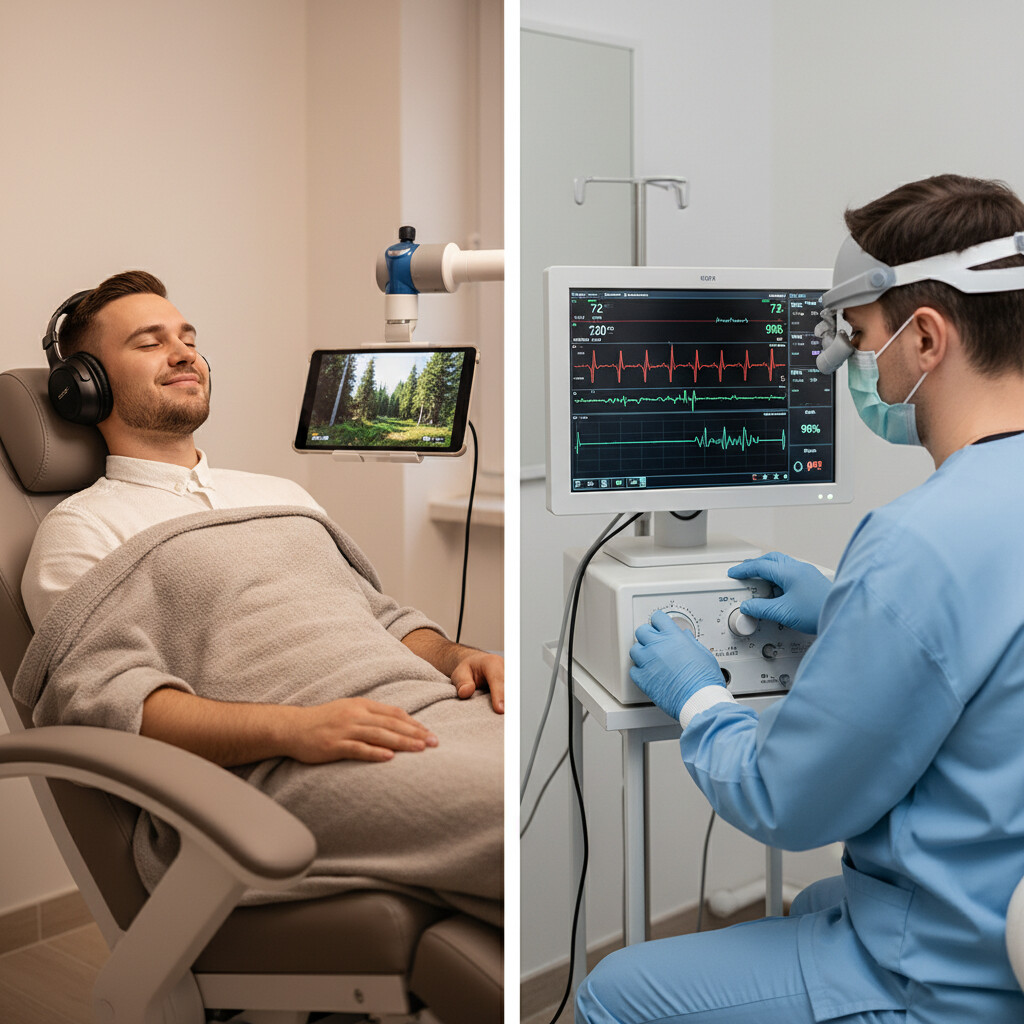
- Minimal (oral) sedation: a tablet such as a benzodiazepine before the procedure. You stay awake and can talk, but feel calmer. This is the most common option.
- Moderate (IV) sedation: medication given through a drip. You are drowsy and may remember little, but still respond to voices. This needs monitoring of breathing, oxygen levels and heart rate by trained staff.
- Deep sedation or general anesthesia: rarely used for hair transplants, because the procedure does not require it and it adds risk.
If you are offered sedation, ask:
- What drug will be used, and who gives it?
- Who monitors me while I am sedated, and with what equipment?
- What happens if I react badly to it?
Sedation also means you cannot drive afterwards and should have someone with you. If anxiety is your main concern, our guide on managing anxiety before a hair transplant has other practical ideas.
Who needs extra planning
Tell the clinic in advance if any of these apply to you:
- a past reaction to a local anesthetic at the dentist or elsewhere (true allergy is rare, but it matters);
- heart rhythm problems, high blood pressure or medication such as beta-blockers, which can interact with adrenaline;
- a strong fear of needles or a history of fainting during injections;
- regular use of sedatives, strong painkillers or alcohol, which can change how you respond to sedation.
Your full medical history and pre-operative blood tests help the team plan safely. See the role of pre-operative lab work.
After the anesthetic wears off
The numbness usually lasts several hours. As it fades, most people feel soreness, tightness or a dull ache, often worse in the donor area. This is usually manageable with the painkillers your clinic provides or recommends, and tends to ease noticeably over the first few days. Our guide to pain after a hair transplant covers this stage in detail.
Some areas can stay numb or tingly for weeks or occasionally months while small nerves recover. This is common and usually temporary. See Temporary Numbness After Hair Transplant.

Questions to ask about pain control before booking
- Is the anesthetic given by the surgeon or by another member of staff?
- Do you use nerve blocks or other methods to reduce injection pain?
- Is sedation available, and who monitors it?
- What painkillers will I go home with?
A clinic that answers these clearly is usually a clinic that takes patient comfort and safety seriously. For wider selection criteria, see how to choose a hair transplant doctor.
When to contact your surgeon
Contact your clinic or seek medical help if you have:
- severe or worsening pain after the first few days, rather than gradual improvement;
- heavy swelling, spreading redness, warmth or pus, which could suggest infection;
- fever or feeling generally unwell;
- palpitations, chest pain, difficulty breathing or a rash after any medication. Seek emergency care.
Common questions
Can I have a hair transplant under general anesthesia?
It is rarely offered, and usually not needed. Local anesthesia with or without light sedation is the standard approach.
Is FUE less painful than FUT?
Both are done under local anesthesia, so the procedure itself should not hurt with either. FUT leaves a linear wound that some people find tighter and sorer for the first days. FUE soreness is spread over a wider donor area.
Does the hairline hurt more than the crown?
The injections at the front often sting more because the skin there is more sensitive. Once numb, there is no real difference.
Discussion
How did the anesthetic injections feel for you, and did your clinic use anything to make them easier? Did you have sedation, and would you choose it again? Honest descriptions help people who are nervous about the day.
Sources
- Hair transplant, NHS
- Hair Transplant: How Does It Work, Success Rates, Cleveland Clinic
- Anesthesia: Maximizing Patient Comfort in Surgical Hair Restoration, ISHRS
- Complications in Hair Transplantation (Kerure and Patwardhan), Journal of Cutaneous and Aesthetic Surgery
These sources cover the general topic. They do not answer every detail in this guide, so follow your surgeon’s written instructions.
Related guides
- Pain After a Hair Transplant: What to Expect and How to Manage It
- Temporary Numbness After Hair Transplant: When Will it Go Away?
- Pre-Operation Checklist: Essential Tips Before Your Hair Transplant
- Managing Anxiety Before a Hair Transplant
- The Best Weather for Hair Transplant: Cold vs. Warm Season
About this guide: ForumHairTransplant.com is an independent patient community. We are not affiliated with any clinic or surgeon, and we don’t accept payment for rankings, reviews or recommendations. This article is general information, not medical advice. Talk to a qualified doctor about your own situation.