
Yes, transplanted hair can look completely natural. Once it has fully grown in, a well-planned transplant is usually hard for other people to spot. Whether yours looks natural depends less on the technique’s name and more on hairline design, the angle and direction of each graft, how density is distributed, and whether the plan suits your age and donor supply. When a transplant looks obvious, the cause is usually poor planning or execution, not the procedure itself.
Key takeaways
- Hair naturally grows in small groups of 1-4 hairs called follicular units. Modern FUE and FUT move these units one by one, not the large “plugs” used decades ago.
- The hairline is the most visible part. A natural one is slightly irregular, soft at the front and suited to your age.
- Angle and direction matter as much as graft count. Hairs placed at the wrong angle look artificial even when they grow well.
- A realistic, gradually blended density usually looks more natural than packing as many grafts as possible into a small area.
- You can’t judge how natural the result is until 12-18 months. The growth phase has awkward stages.
Why some transplants look unnatural
Older techniques moved larger round pieces of scalp, each containing many hairs. The result was the “doll’s hair” or “pluggy” look that still shapes many people’s idea of a hair transplant. Modern techniques use individual follicular units, which can mimic how hair actually grows.
Unnatural results still happen today. The most common causes are:
- A hairline that is too low, too straight or too dense at the very front.
- Hairs at the wrong angle or in the wrong direction, sticking straight out or pointing against the natural flow.
- Grafts with several hairs placed in the front row, where single hairs belong.
- An “island” of transplanted hair left behind as native hair around it continues to thin.
- A thin or patchy donor area from taking too many grafts, visible with short hair.
What makes a transplant look natural
Hairline design
A natural hairline is not a straight line. It has a soft, slightly irregular front edge made of single hairs, with density increasing gradually behind it. It also needs to suit your face and your age. A hairline that looks right at 25 can look out of place at 50.
A good surgeon designs the hairline with you during the consultation and explains why they chose that height and shape. Our guide to designing a natural hairline at consultation explains what that conversation should cover. The choice between a mature and a youthful hairline is one of the most important decisions in the plan.
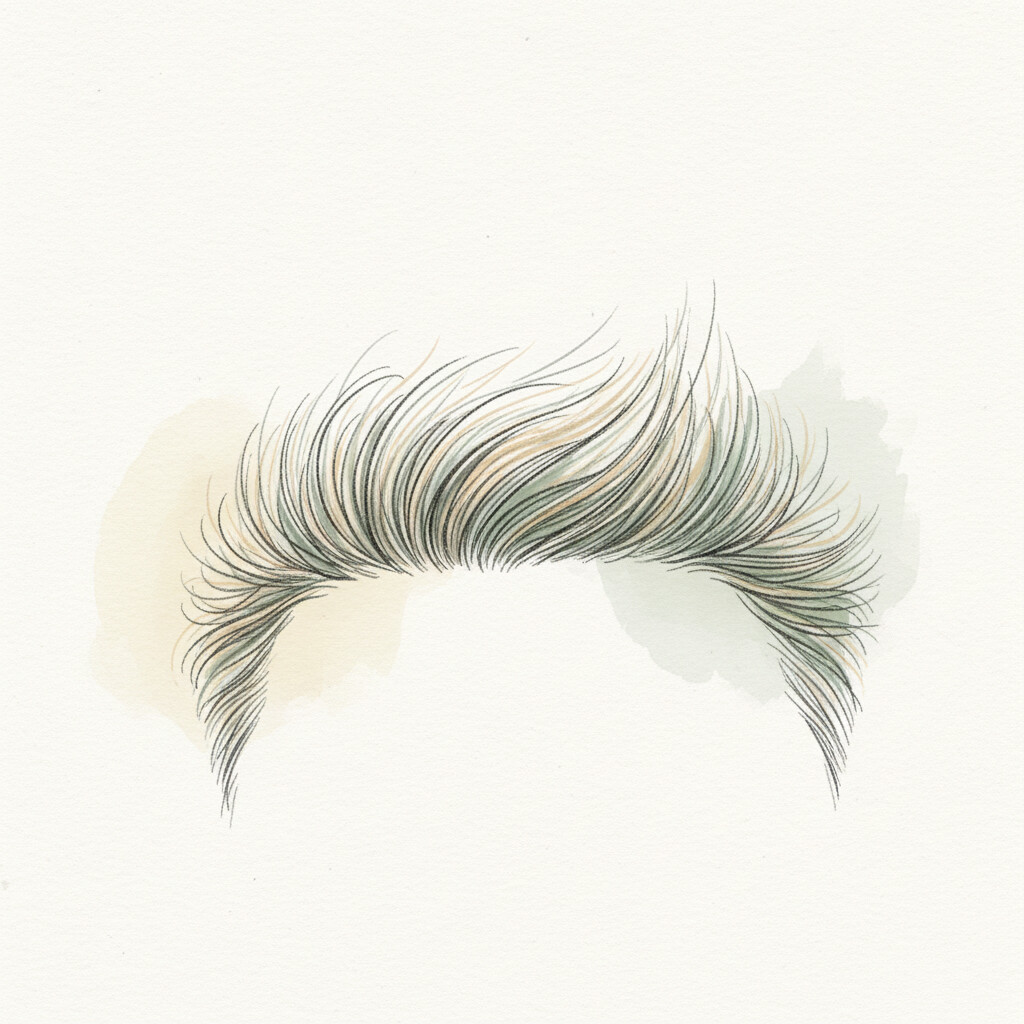
Angle and direction
Scalp hair grows at a low angle and in a set direction that changes across the head. At the hairline it usually points forward, on the sides it points down and back, and in the crown it forms a spiral. Each recipient site needs to follow this pattern. If it doesn’t, the hair will stick up, part in odd places and be hard to style, even with good growth.
Density and distribution
Your donor area can supply only a limited number of grafts over your lifetime. A natural result spreads them sensibly: slightly denser at the front where it frames the face, and blended gradually into the surrounding hair. Abrupt changes in density look unnatural, and so does a very dense front with thin hair behind it.
Your own hair characteristics
Because the grafts are your own hair, colour and texture usually match. Some hair types give a fuller look with fewer grafts:
- Coarse, wavy or curly hair covers more scalp than fine, straight hair.
- Low contrast between hair and skin colour (for example, light hair on light skin) hides thinner areas better than dark hair on pale skin.
This is one reason two people with the same graft count can get quite different-looking results.
How it looks in different situations
Even a good result can look different depending on the setting. Bright overhead light, wet hair, camera flash and very short haircuts all show more scalp than normal indoor light and dry, styled hair. This affects native hair too. See how lighting affects perception of results, and, if you like to keep your hair short, natural results with short hairstyles.
The growth phase: temporarily unnatural
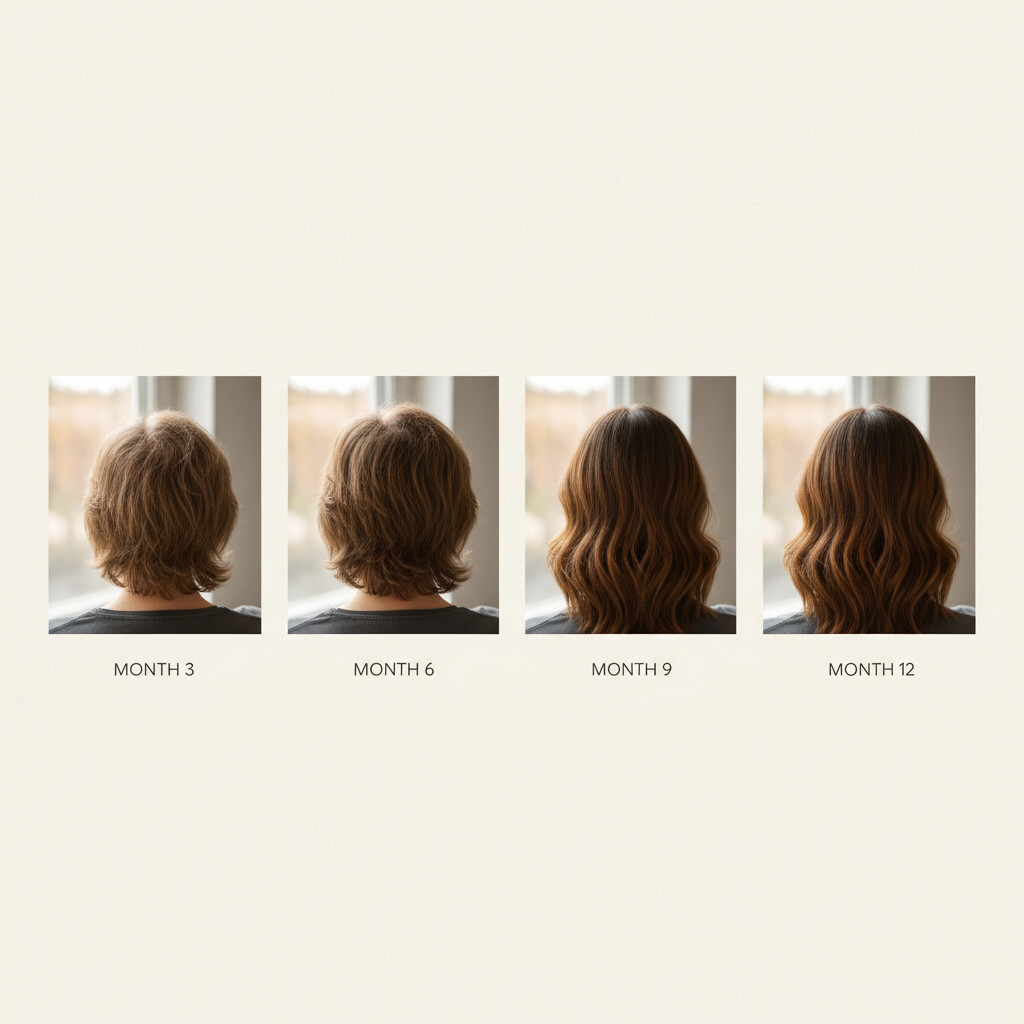
During the first year the result goes through stages that don’t look natural yet:
- Weeks 2-8: most transplanted hairs shed. This is normal.
- Months 3-4: new hairs start to appear. They are often thin, wiry and uneven.
- Months 5-12: hairs lengthen and thicken, and blend in with native hair.
- 12-18 months: the final look, with the crown often taking longest.
Many people worry around months 4-6 that the result looks “off”. Texture and density usually improve a lot after that. The month-by-month growth timeline walks through each stage.
How to improve your chances of a natural result
Ask any clinic you consult:
- Who designs the hairline, and who makes the recipient incisions? Angle and direction are set at this step.
- Can I see results at 12 months or later in patients with hair loss, hair type and skin tone similar to mine? Ask for photos with wet hair and in different lighting, not just styled “after” shots.
- How will this hairline look in 10-20 years if my native hair keeps thinning?
- How many grafts can my donor area safely provide, and how many will be left for the future?
- What density are you planning for each area, and why?
Be cautious of promises of “undetectable” results or maximum density in one session. A clinic that explains the limits clearly is usually planning more carefully.

Common questions
Can other people tell I’ve had a hair transplant?
Once fully grown, a well-done transplant is usually not noticeable in everyday life. Hairdressers and barbers sometimes spot small signs, especially in the donor area with a very short cut.
Will transplanted hair match my existing hair?
Usually, yes, because it is your own hair. It can look wiry or different in texture during the first months, but this normally settles as it matures.
Can an unnatural-looking transplant be fixed?
Often it can be improved, for example by softening the hairline or re-angling hairs with a repair procedure. Results depend on how much donor hair is left, so prevention through good planning is much easier.
Discussion
If you’re past the 12-month mark, has anyone noticed your transplant without being told? And what situations, such as bright light, wet hair or a short haircut, make it more visible for you? Your experience helps others set realistic expectations.
Related guides
- Hair Transplant First Impressions: What the Early Months Look Like
- Can Barbers Tell You Had a Hair Transplant?
- Does Transplanted Hair Look Different in Photos?
- How to Style Transplanted Hair: Tips for Natural-Looking Results
- Hair Transplant and the Aging Face: A Guide for Mature Adults
About this guide: ForumHairTransplant.com is an independent patient community. We are not affiliated with any clinic or surgeon, and we don’t accept payment for rankings, reviews or recommendations. This article is general information, not medical advice. Talk to a qualified doctor about your own situation.