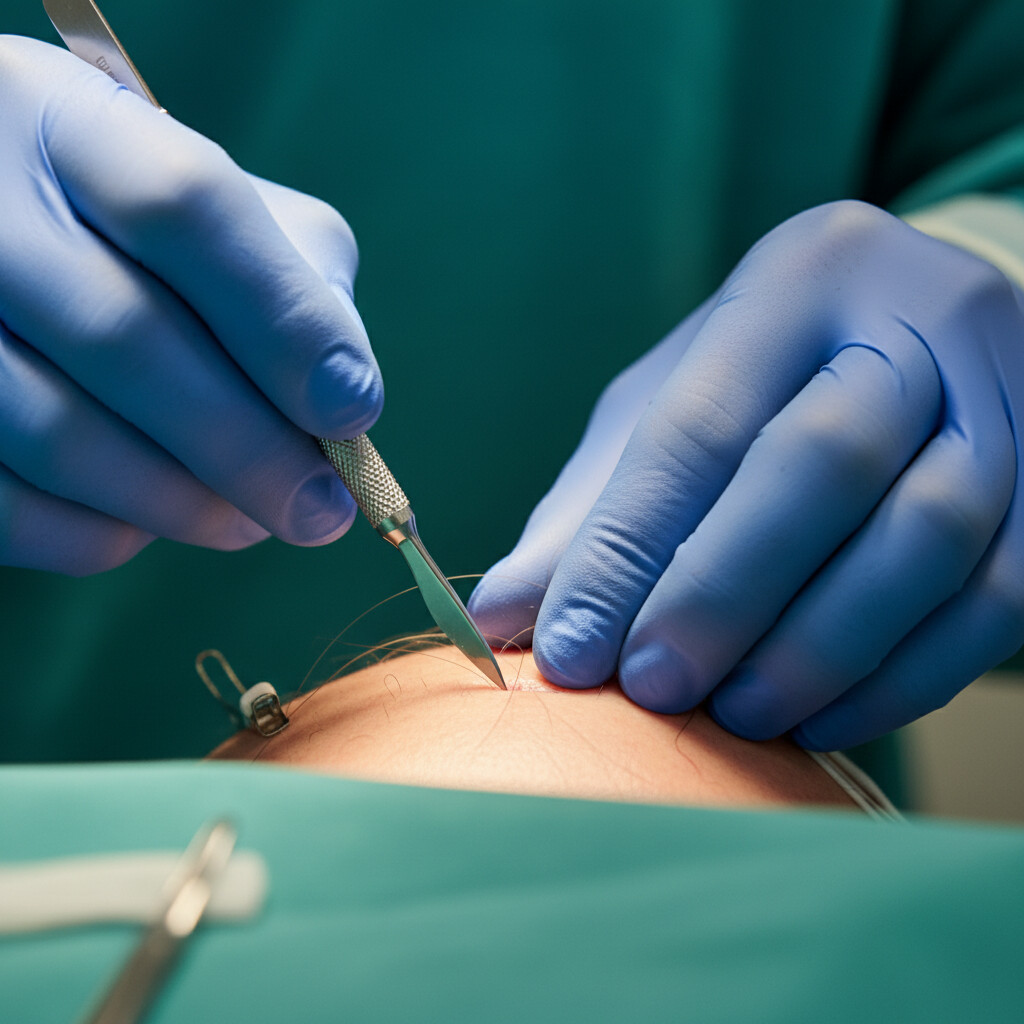
Recipient site creation is the step where tiny openings are made in the thinning area of the scalp to hold the transplanted grafts. The angle, direction, depth and spacing of these openings decide how each hair will grow, so this step shapes how natural the result looks more than almost any other. Well-made sites follow the way your native hair grows and are packed densely enough to look full without harming blood supply to the grafts.
Key takeaways
- Each site sets the exit angle and direction of a hair for life. Grafts placed at the wrong angle cannot simply be “turned” later.
- Natural hair grows at an acute angle to the scalp. It is usually lower at the front hairline and changes direction across the scalp, especially in the crown whorl.
- Density is a balance: packing sites too closely can reduce graft survival and increase shock loss of native hair nearby.
- Blades, needles and implanter pens are all used. The skill of the person making the sites matters more than the tool.
- Ask who will make your recipient sites. In most reputable practices this is done by the doctor.
What recipient sites are
After grafts are taken from the donor area, they need somewhere to go. Recipient sites are small slits or punctures made in the scalp, each sized to hold one graft. The graft sits inside the site and the surrounding skin holds it in place while it heals.
Because the hair shaft grows out of the scalp along the path the site creates, the site effectively fixes three things:
- Angle: how steeply the hair exits the skin.
- Direction: which way the hair points.
- Position and spacing: where the hair sits and how close it is to its neighbours.
Placement technique and graft handling matter too, but none of it can fix a site made at the wrong angle.
Angle: why hair should not stand straight up
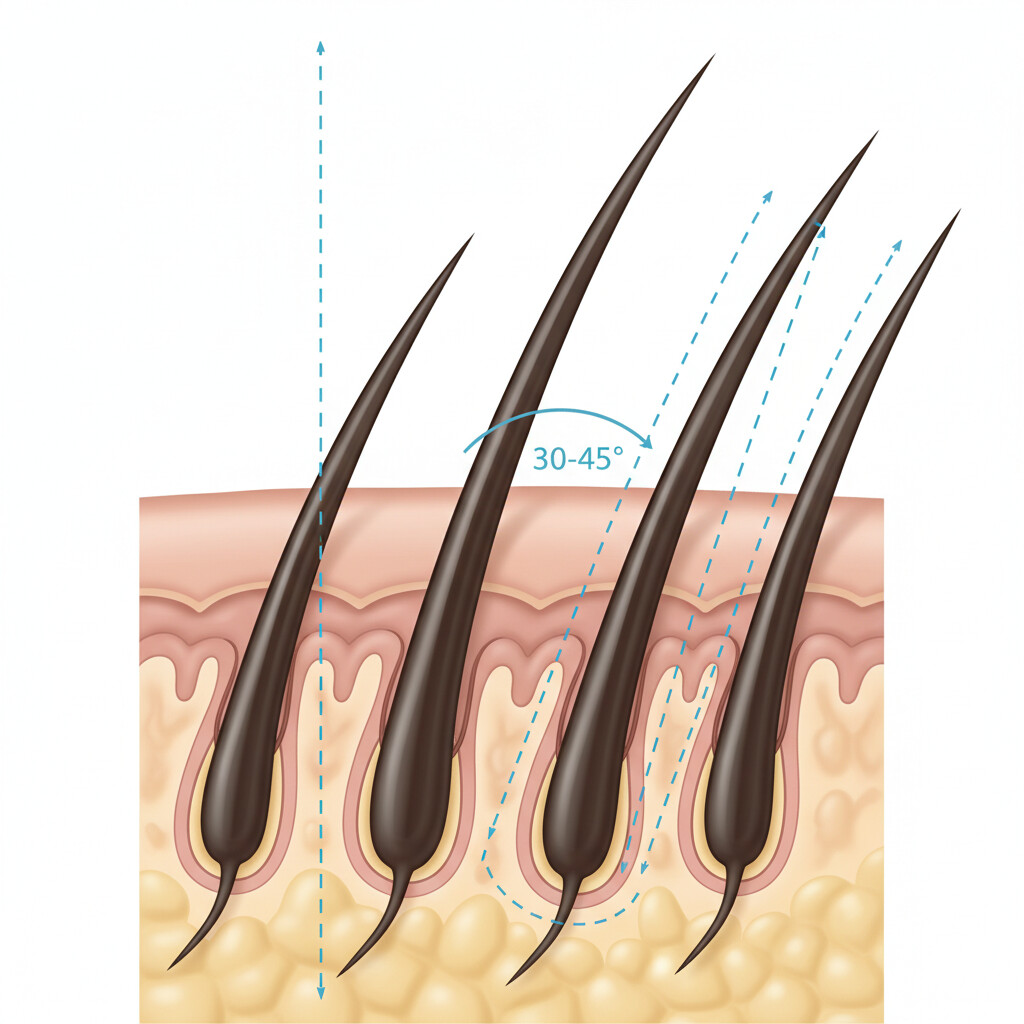
Scalp hair does not grow straight out of the skin. It exits at an acute angle, and that angle varies across the head. At the front hairline and the temples, hair usually lies quite low and flat. Further back it tends to rise a little, and in the crown it follows the whorl. The exact angles differ from person to person, which is why surgeons look at your existing hair rather than using fixed numbers.
When sites are made too steep, the hairs stick up. They are hard to style and cast more shadow at the scalp, which makes the transplant easier to spot. Too-flat sites in the wrong zone can also look odd. Matching the angle of surrounding native hair helps the transplanted hair blend in when it grows long.
Direction: following the natural flow
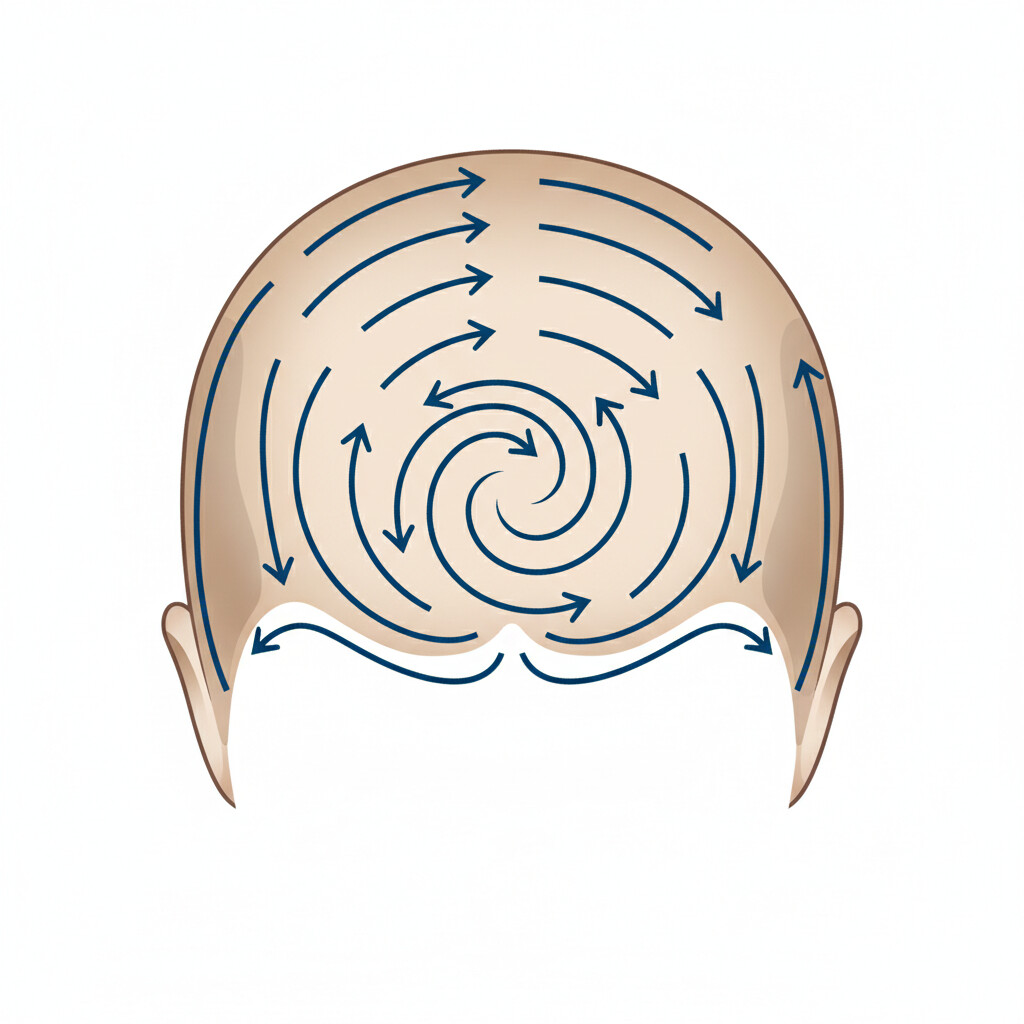
Direction is the way the hair points once it leaves the skin. Typical patterns include:
- Front hairline: mostly forward, often angling slightly to one side.
- Temples: downward and backward, towards the ears.
- Mid-scalp: forward, often fanning out from the centre.
- Crown: a spiral (whorl) that may turn clockwise or anticlockwise, sometimes with more than one centre.
Sites must follow these patterns, including gradual changes between zones. Hair pointing in random or opposing directions is hard to style and is one of the most common reasons patients seek repair. Our guide on unnatural hair direction after a transplant explains the options if this has already happened.
Density: how close is too close?
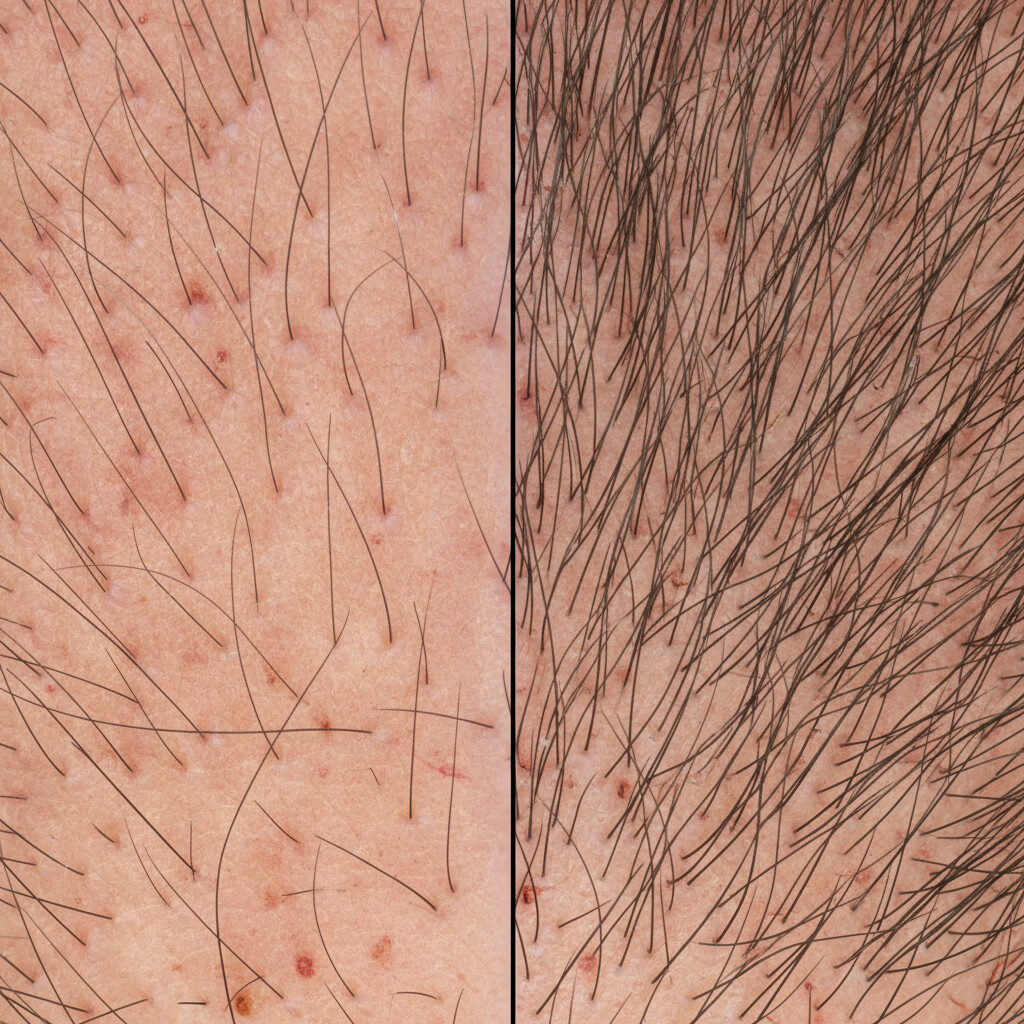
Density means how many grafts are placed per square centimetre. Patients naturally want as much as possible, but there are limits:
- Blood supply: grafts depend on the surrounding scalp for oxygen while they heal. Packing sites too tightly can reduce survival.
- Native hair: making many sites among existing hair increases the risk of shock loss, which is temporary loss of native hairs near the operated area. It usually grows back over the following months, but weak, miniaturised hairs may not.
- Donor supply: every graft used here is one fewer for other areas or a future session.
Surgeons usually vary density by zone. The very front edge of the hairline uses single-hair grafts spaced irregularly to create a soft transition. Just behind it, density is usually higher to give the front a full look. The crown often receives lower density, because it is a large area and needs many grafts to look full. Read more in how dense a hair transplant should be and in crown vs hairline prioritisation.
Site size and depth
Sites should be just large enough for the graft. Sites that are too big can let grafts sit loosely, cause more scarring or produce a pitted look. Sites that are too small can crush grafts during placement. Depth should match the length of the graft, so it sits level with the skin and is neither buried nor raised.
Tools used to make sites
Different tools are used, and practice varies:
- Steel or sapphire blades: very fine blades that make small slits. Surgeons may orient the slits parallel to the direction of growth (sagittal) or across it (coronal or lateral). Each approach has supporters.
- Needles: fine hypodermic needles used as punctures, often for single-hair grafts.
- Implanter pens: used in DHI. Either the pen’s needle creates the site and places the graft in one motion, or grafts are loaded into pens and placed into pre-made sites.
No tool guarantees a better result. Angle, direction, spacing and graft handling depend on the person using it. Marketing that presents one tool as the reason for success should be treated with caution.
How this fits into hairline design
Site creation is where the hairline plan becomes real. The shape, height and irregularity of the hairline are sketched first, then the sites turn that sketch into actual hair positions. Learn how that plan is made in how a natural hairline is designed. If your main concern is the front, our guide to hair transplants for a receding hairline covers typical plans.
Questions to ask before surgery
- Who will make my recipient sites: the doctor or a technician?
- How will you match the angle and direction of my existing hair?
- What density are you planning in each zone, and why?
- How will you protect the native hair already in the area?
- What tool will you use to make the sites, and why for my case?
After the procedure
The recipient area will have small crusts for about 10-14 days. Scabs should be allowed to come off naturally, helped by the washing routine your clinic gives you. Most transplanted hairs shed between weeks 2 and 8. This is normal shedding, not a sign of failure. New growth usually starts around months 3-4. The angle and direction of the sites only become fully visible as the hair grows longer, often from months 6-9 onward.
Common questions
Can the angle of a transplanted hair be changed later?
Not by styling alone. Badly angled grafts can sometimes be removed and re-implanted, or disguised with additional grafts. This is repair surgery and depends on your remaining donor supply.
Is higher density always better?
No. Very high density in one area can reduce survival and uses up donor hair. A natural distribution usually looks better than maximum packing in one zone.
Do sapphire blades or pens give better results?
They are tools. Some surgeons prefer them, others do not. Results depend mainly on skill and planning.
Discussion
Did your surgeon explain how they would set angle, direction and density? Now that your hair has grown, how well does it follow your natural pattern? Share your experience and photos if you’re comfortable.
Related guides
- How Is a Natural Hairline Designed for a Hair Transplant?
- Hair Transplant for a Receding Hairline: What to Know
- Crown or Hairline First? How to Prioritize a Hair Transplant
- Hair Transplant Density: How Dense Should It Be?
- Does Transplanted Hair Look Natural? Achieving Optimal Aesthetics
About this guide: ForumHairTransplant.com is an independent patient community. We are not affiliated with any clinic or surgeon, and we don’t accept payment for rankings, reviews or recommendations. This article is general information, not medical advice. Talk to a qualified doctor about your own situation.