
By ForumHairTransplant Editorial Team · Prepared with AI assistance · Sources checked: 19 October 2026
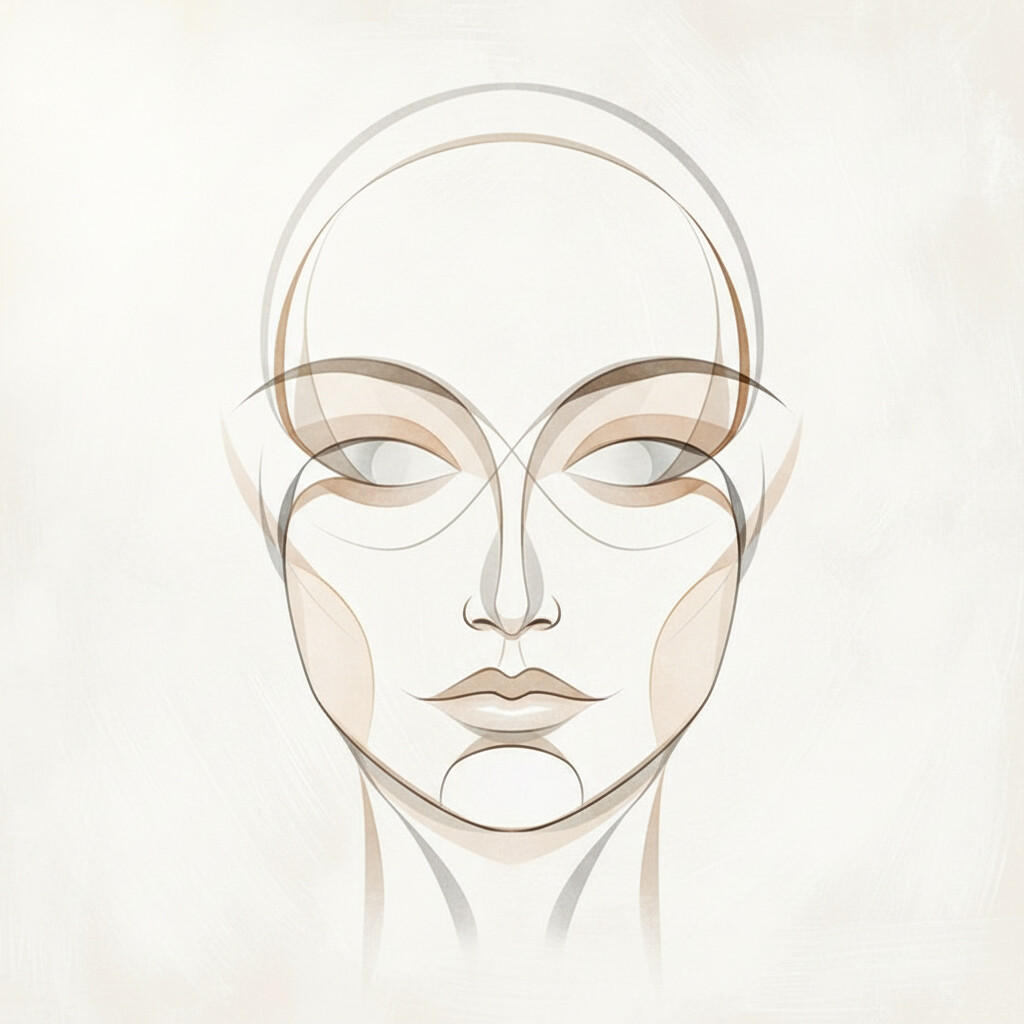
Facial proportions help a surgeon decide where a new hairline should sit and what shape it should have. Guides such as the “facial thirds”, the slope of your forehead and the position of your temples give a starting point, which is then adjusted for your age, your donor supply and how your hair loss is likely to progress. There is no single perfect measurement. A good hairline looks balanced on your face today and still looks believable in 20 years.
Key takeaways
- The facial thirds are a rough guide, not a rule. Forehead slope, face shape and existing hair often matter more.
- A lower hairline is not always better. It needs more grafts and can look out of place as you age.
- Natural hairlines are soft and slightly irregular, with fine single hairs at the front and the temples framed properly.
- Your age, donor capacity and future hair loss set limits on what is sensible.
- You should be part of the design discussion, but be cautious if you are pushing for a hairline the surgeon calls too low.
Why proportions matter
The hairline is the top border of the face. If it is too high, the forehead can look disproportionately large. If it is too low, too flat or too dense, it can look like a wig or like a young man’s hairline on an older face. Most people can’t say exactly why a hairline looks wrong, but they notice when the balance is off.
Hairline design is where a transplant is most visible, which is why it is often the biggest source of satisfaction or regret. The general approach is covered in How Is a Natural Hairline Designed? This article focuses on how your face shapes those decisions.
The main reference points
Facial thirds
A classic aesthetic guide divides the face into three roughly equal parts: hairline to eyebrows, eyebrows to the base of the nose, and nose to chin. In practice few faces are perfectly even, so surgeons use this as a check rather than a formula. In men, the upper third is often allowed to be somewhat longer than the others, which looks more mature and natural.
The forehead slope
Many surgeons look at where the forehead changes from facing forward to curving back towards the top of the head. Placing the hairline around this transition usually looks natural, because hair then “sits” on the curve rather than on the vertical part of the forehead. A hairline placed well down on the flat front of the forehead often looks artificial.
Distance from the eyebrows
As a very rough starting point, many men’s hairlines sit somewhere around 7-10 cm above the midpoint between the eyebrows. This is then adjusted for height of face, forehead shape and age. It is a guide for discussion, not a target.

Temples and the frontotemporal angle
The shape of the hairline where it meets the temples frames the face. In most adult men there is some recession at the corners, which forms a gentle “M” or rounded shape. Filling these corners completely can look unnatural on a man past his early twenties. The temple points, the small triangles of hair at the side of the forehead, also matter. When they have receded, restoring them can help frame the face, but it takes careful angle work. See Understanding Hair Transplant for Men with a Receding Hairline.
Face shape
- Long faces may benefit from a slightly lower or flatter hairline to shorten the upper third.
- Round or wide faces often suit a hairline with a little more corner recession.
- Strong brow ridges or prominent foreheads affect where the forehead slope sits.
These are tendencies, not rules. Two people with the same face shape can suit different designs.
Age and future hair loss
A hairline that suits a 22-year-old usually looks too low and straight on a 50-year-old. Most surgeons therefore design what is often called a mature or “age-appropriate” hairline: slightly higher, with some softening at the temples. This keeps the design believable over decades, and it leaves more donor hair for other areas if loss continues. See Mature Hairline vs. Youthful Hairline.
The donor supply is limited. Every centimeter the hairline is brought down adds a large area to cover. That can leave fewer grafts for the crown later, which matters if your hair loss is still progressing. The balance between front and back is covered in Crown vs. Hairline: Strategic Prioritization.
What makes a hairline look natural up close
Proportions decide where the hairline goes. Execution decides whether it looks real:
- A soft transition zone: the front few millimetres use single-hair grafts in a slightly irregular pattern, with density increasing behind them.
- Micro-irregularity: a perfectly straight, ruler-drawn edge looks artificial. Natural hairlines have small peaks and gaps.
- Correct angle and direction: hairs at the front usually grow forward and at a low angle to the skin. Grafts placed too upright look spiky. See recipient site creation.
- Overall symmetry, without mirror-image precision: the two sides should match in position, but not look copy-pasted.
Women’s hairlines
Female hairlines are usually rounder, without the corner recession typical in men, and often have a more defined shape at the temples. Women considering hairline lowering or frontal restoration should be assessed for the cause of their hair loss first. See Hair Transplant for Women.
How to judge a proposed design
At your consultation or on the day of surgery, the surgeon will usually draw the planned hairline on your forehead. Before you agree:
- Look from the front, the side and at an angle, in a mirror and in photos.
- Ask why it sits where it does. A good surgeon can explain the landmarks and trade-offs.
- Ask how it will look if you keep losing hair, especially behind the new hairline.
- Compare with old photos of your own hairline before it receded, as a guide to your natural shape.
- Don’t negotiate it down in the chair. A hairline can be lowered later if donor hair allows. Raising a hairline that is too low is much harder.
Common questions
How much input do I have in my hairline design?
A lot. The design should reflect your preferences. But a responsible surgeon will refuse a hairline they think will look unnatural or use up too much donor hair.
Should my hairline be perfectly symmetrical?
Broadly symmetrical, yes. Perfectly identical and straight, no. Small irregularities make it look natural.
Can a hairline that is too low be fixed?
Sometimes, but it is difficult. Options include removing grafts or using laser hair removal to soften the front, and results vary.
Discussion
How did your surgeon decide where to place your hairline, and did you agree with it at the time? Looking back after a year or more, would you choose the same height and shape? Photos and honest reflections help others decide.
Sources
- Recipient Area, Journal of Cutaneous and Aesthetic Surgery, 2017
- Importance of the Recipient Area in Hair Transplantation, ISHRS
- Decoding Facial Esthetics to Recreate an Esthetic Hairline, Journal of Cutaneous and Aesthetic Surgery, 2016
Related guides
- How Is a Natural Hairline Designed for a Hair Transplant?
- Mature Hairline vs. Youthful Hairline: What Is the Difference?
- Hair Transplant for a Receding Hairline: What to Know
- Crown or Hairline First? How to Prioritize a Hair Transplant
About this guide: ForumHairTransplant.com is an independent patient community. We are not affiliated with any clinic or surgeon, and we don’t accept payment for rankings, reviews or recommendations. This article is general information, not medical advice. Talk to a qualified doctor about your own situation.