
By ForumHairTransplant Editorial Team · Prepared with AI assistance · Sources checked: 19 October 2026
A hair transplant moves your own living hair follicles from the back and sides of your head to thinning areas, where they keep growing as normal hair. “Hair implant” is a looser term. Most of the time people use it to mean the same thing as a transplant, but it can also mean implanting artificial (synthetic) fibres into the scalp, which is a very different procedure with higher risks and no lasting growth. If a clinic offers you “hair implants”, the first step is to ask exactly which of these they mean.
Key takeaways
- A hair transplant uses your own hair. Transplanted follicles usually keep growing for life, although native hair around them can continue to thin.
- “Hair implant” is often just another name for a transplant, or for a transplant done with an implanter pen (DHI).
- Synthetic fibre implants are a different procedure. The fibres do not grow, they tend to break or fall out over time, and they carry a risk of infection and chronic inflammation. They are banned in the United States and not widely used elsewhere.
- A transplant is limited by your donor supply and still carries surgical risks. It is not the right choice for everyone.
What a hair transplant is
In a hair transplant, follicles are taken from the donor area at the back and sides of the scalp. Hair in this area is generally resistant to the hormone that drives pattern hair loss, and it usually keeps that resistance after it is moved. The follicles are then placed into small incisions in the thinning area. You can read the basics in what is a hair transplant.
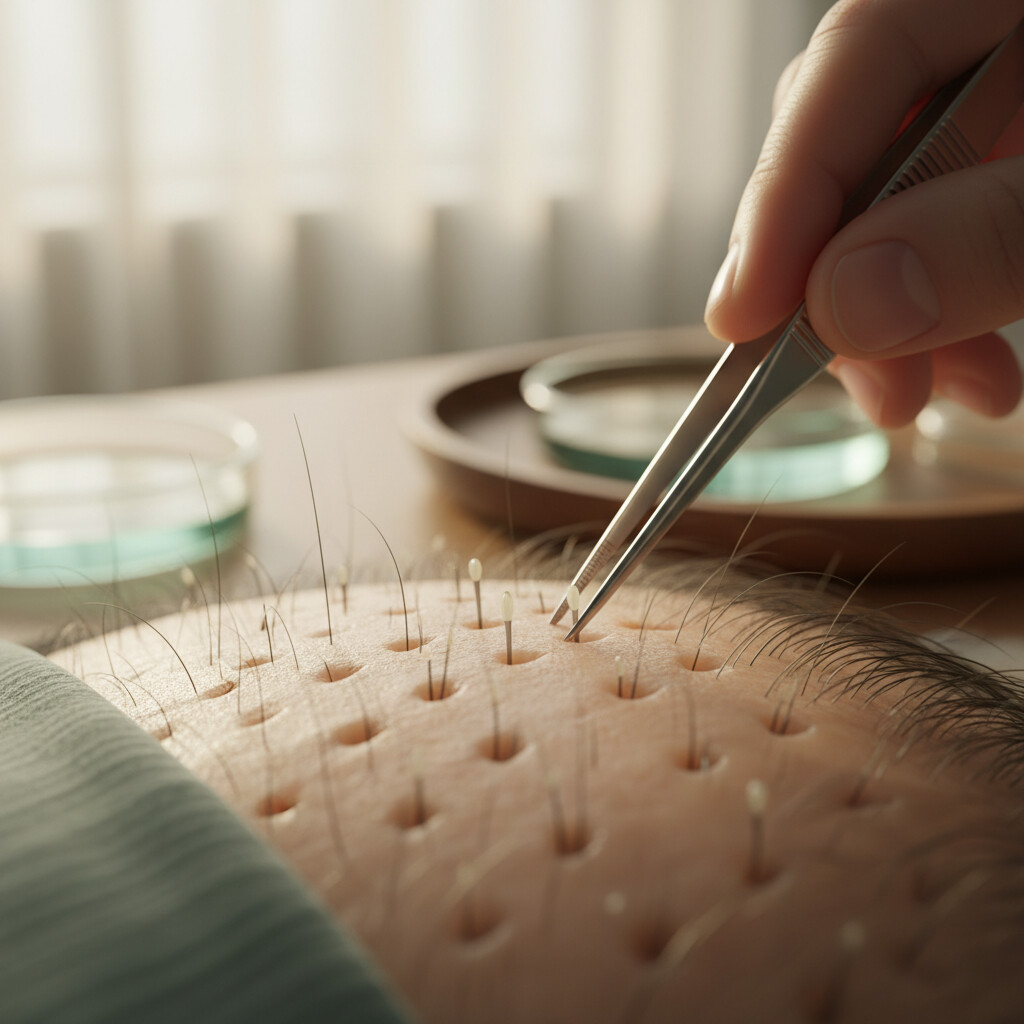
There are two main ways to harvest the grafts:
- FUE (follicular unit extraction): grafts are removed one by one with a small punch. It leaves many tiny, scattered scars that are usually hard to see unless the hair is cut very short. See how FUE works.
- FUT (strip method): a thin strip of skin is removed and divided into grafts under magnification. It leaves a linear scar at the back of the head, but can yield many grafts without thinning the surrounding donor hair.
The grafts can then be placed into pre-made incisions with forceps, or with an implanter pen that makes the incision and places the graft in one step. The pen method is often marketed as DHI, and sometimes as “hair implantation”. It is still a transplant of your own hair. See DHI explained.
What “hair implant” can mean
Your own hair, under another name
In many countries and on many clinic websites, “hair implant” simply means a hair transplant. This is harmless, but it can make it hard to compare offers. Ask whether the procedure uses your own follicles and which technique is used for extraction and placement.
Synthetic fibre implants
This is the procedure that deserves caution. Artificial fibres, designed to look like hair, are knotted or anchored into the scalp one by one. The appeal is that they give instant length and coverage, and they do not depend on a donor area.

The problems are well known:
- The body treats them as foreign material. This can cause ongoing inflammation, infection, cysts and scarring of the scalp.
- They do not grow and do not last. Fibres break and fall out over time, so regular top-up sessions are needed.
- Scarring can affect future options. Chronic inflammation can damage the scalp and make a later transplant harder.
- Regulation. Synthetic hair fibres for implantation have been banned by the US FDA for decades because of safety concerns. Some other countries allow them, but they are not part of mainstream hair restoration practice.
If you are considering synthetic implants, speak to a dermatologist or hair restoration doctor who does not sell them, and ask about the long-term risks and what happens when the fibres come out.
Transplant vs synthetic implant at a glance
| Hair transplant (your own hair) | Synthetic fibre implant | |
|---|---|---|
| Material | Your own living follicles | Artificial fibres |
| Does the hair grow? | Yes, after an initial shedding phase | No |
| When you see the result | Gradually; final result at around 12-18 months | Immediately |
| How long it lasts | Transplanted hair usually lasts for life; native hair may keep thinning | Fibres break and fall out; regular top-ups needed |
| Main risks | Surgical risks, donor scarring, poor growth if done badly | Infection, chronic inflammation, scarring |
| Limit | Donor supply | Scalp tolerance and ongoing cost |
Why transplants are the usual choice, with caveats
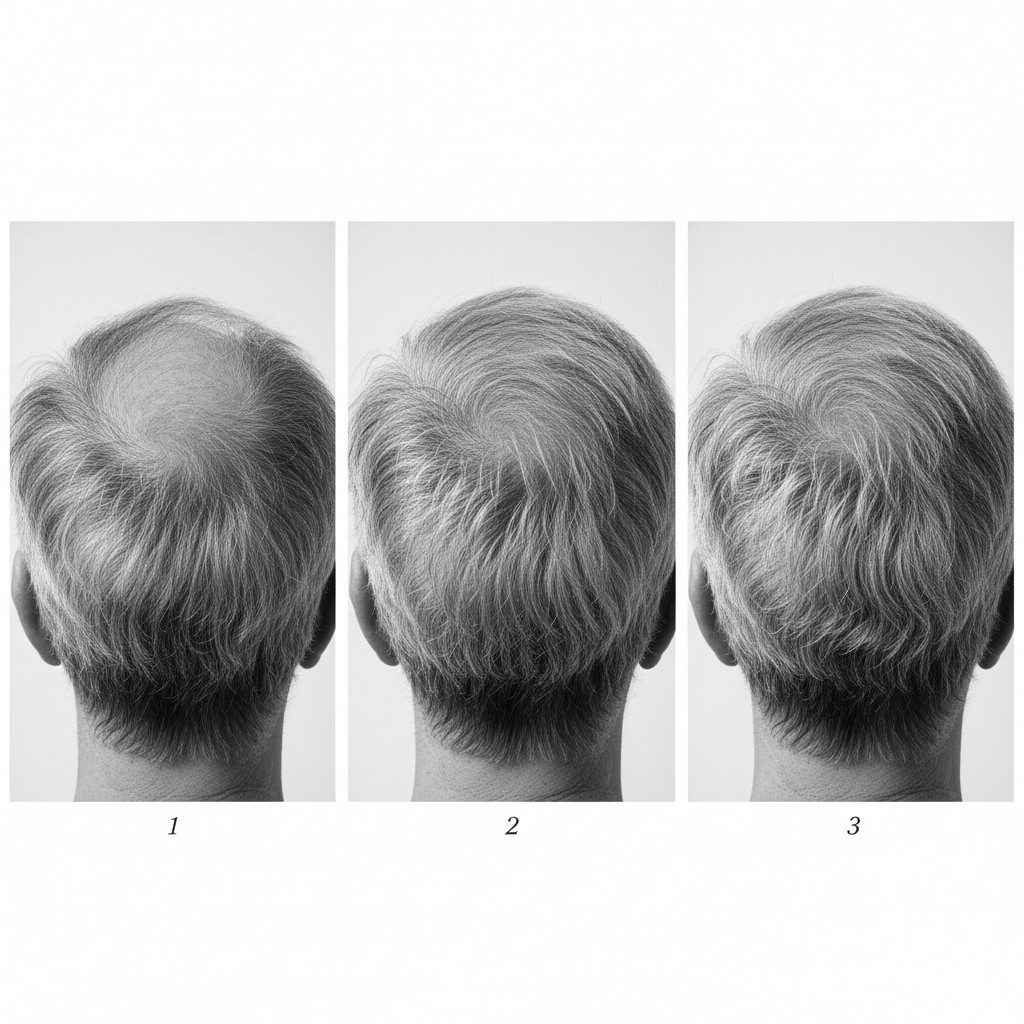
A transplant is the established surgical option because the hair is your own. It grows, can be cut and styled, and usually keeps growing for life. The guide on whether a hair transplant is permanent explains why.
It is not a perfect solution:
- It does not create new hair. It redistributes what you have. If your donor area is limited, so is the result.
- Native hair can keep thinning. Many patients need medical treatment, a second procedure, or both over time. Speak to a doctor about whether treatments such as finasteride or minoxidil are suitable for you.
- It takes time. Transplanted hairs usually shed between weeks 2 and 8, regrowth starts around months 3-4, and the final result is judged at 12-18 months.
- It carries surgical risks. Infection, poor growth, visible scarring and an unnatural hairline are possible, especially with poor planning. See hair transplant risks and complications.
- Good design matters. A natural result depends on a hairline that suits your face and age. See facial proportions and hairline planning.
Other non-surgical options
If a transplant is not right for you, there are options that involve neither surgery nor implanted fibres:
- Medical treatment to slow loss and sometimes regrow some hair.
- Scalp micropigmentation (SMP), a cosmetic tattoo that mimics short hair or adds the look of density. See our SMP guide.
- Hair systems (modern hairpieces) attached to the scalp, which need regular maintenance but do not involve surgery.
Questions to ask at a consultation

- Does this procedure use my own hair follicles or artificial fibres?
- Which technique will be used for extraction and placement, and why?
- How many grafts does my donor area allow, now and over my lifetime?
- What result is realistic for my hair loss, and what happens if it progresses?
- Who performs each step, and what follow-up is included?
If you are travelling abroad, the guides on the hair transplant journey in Turkey and returning home after a transplant abroad explain what to expect.
Common questions
Is “hair implant” the same as a hair transplant?
Often, yes. Many clinics use the words interchangeably. But the term can also mean synthetic fibres, so always ask what the procedure involves.
Is DHI an implant?
DHI is a transplant of your own hair, done with an implanter pen. The word “implant” refers to the placement tool, not to artificial hair.
Are synthetic hair implants safe?
They carry a higher risk of infection, inflammation and scarring than a transplant, need repeated top-ups, and are banned in the United States. Most hair restoration doctors do not recommend them.
Discussion
Have you been offered “hair implants” and found it unclear what the clinic meant? Or have you had synthetic fibres and later moved to a transplant? Share your experience so others know what questions to ask.
Sources
- Hair transplant, American Academy of Dermatology
- Hair replacement surgery, hair transplants, DermNet
- Hair transplant, MedlinePlus Medical Encyclopedia (NIH)
These sources describe hair transplant surgery. We did not find an authoritative source on artificial hair implants, so this guide’s comparison rests on general knowledge.
Related guides
- What Is a Hair Transplant? How It Works, Results and Limits
- DHI Hair Transplant: How It Works, Pros, Cons and Recovery
- Is a Hair Transplant Permanent? Understanding Long-Term Results
- Hair Transplant in Turkey: What to Expect Day by Day
- Returning Home After a Hair Transplant Abroad: What to Expect
About this guide: ForumHairTransplant.com is an independent patient community. We are not affiliated with any clinic or surgeon, and we don’t accept payment for rankings, reviews or recommendations. This article is general information, not medical advice. Talk to a qualified doctor about your own situation.