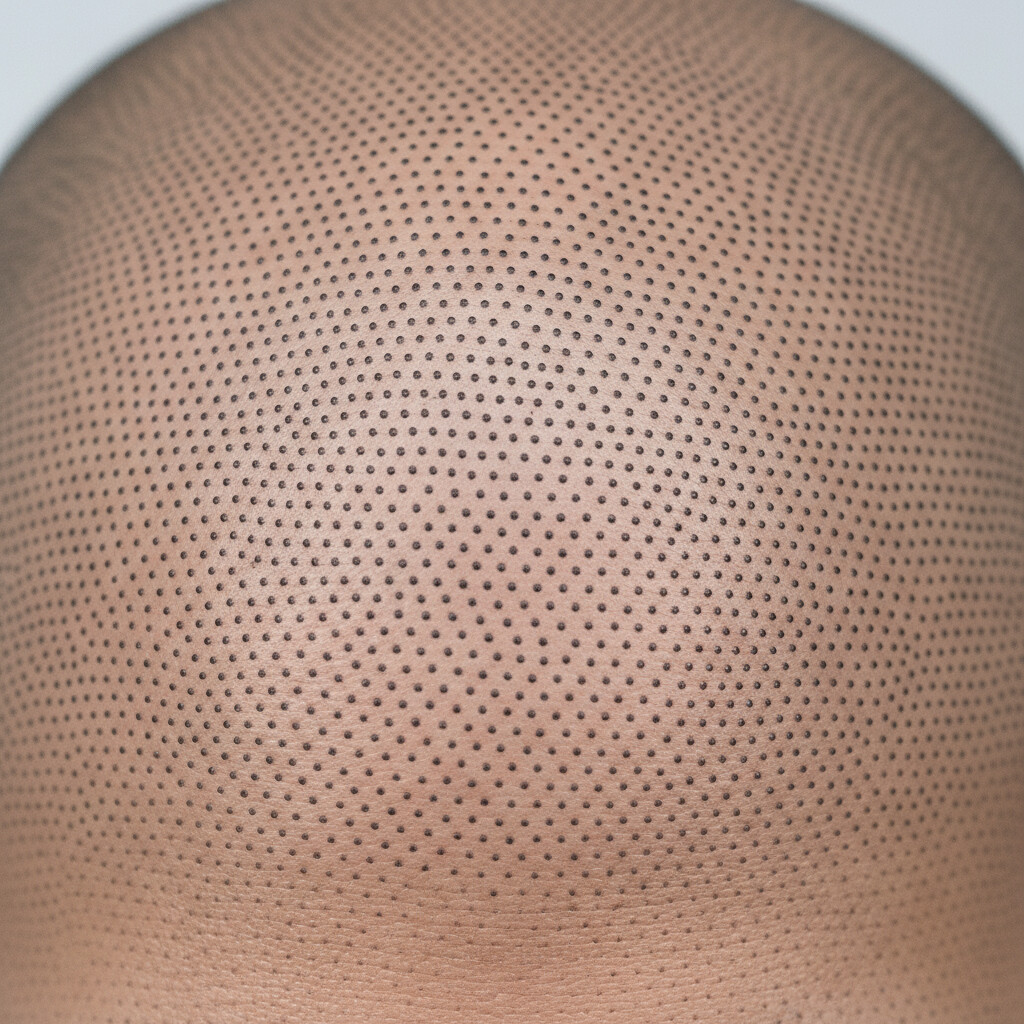
Scalp micropigmentation (SMP) is a cosmetic tattoo that places tiny dots of pigment in the scalp to look like short hair stubble or to reduce the contrast between thinning hair and skin. It can be used instead of a hair transplant, for example by men who are happy with a shaved look, or alongside one, to add the appearance of density or to camouflage scars. SMP is long-lasting but not permanent in the sense of never changing: the pigment gradually fades over the years and usually needs touch-ups. Results depend heavily on the skill of the practitioner, and poor work can be hard to correct.
Key takeaways
- SMP does not grow hair. It creates the look of stubble or of more density in thinning areas.
- It works best for people who keep their hair shaved or very short, or who want to reduce scalp show-through in thinning hair.
- Treatment usually takes 2-4 sessions, and most people need touch-ups every few years as the pigment fades.
- The main risks are an unnatural look, dots that blur or spread, and a colour shift towards blue or green. These are hard to fix.
- Choose a practitioner based on healed results, hygiene and experience, not on price alone.
What SMP is and how it works
SMP is a form of tattooing, but with a different aim from a standard tattoo. The practitioner uses a fine needle to deposit very small dots of pigment into the upper layers of the skin. Each dot should mimic the tip of a hair follicle, and the dots are varied in size, spacing and shade to look natural.
Common uses are:
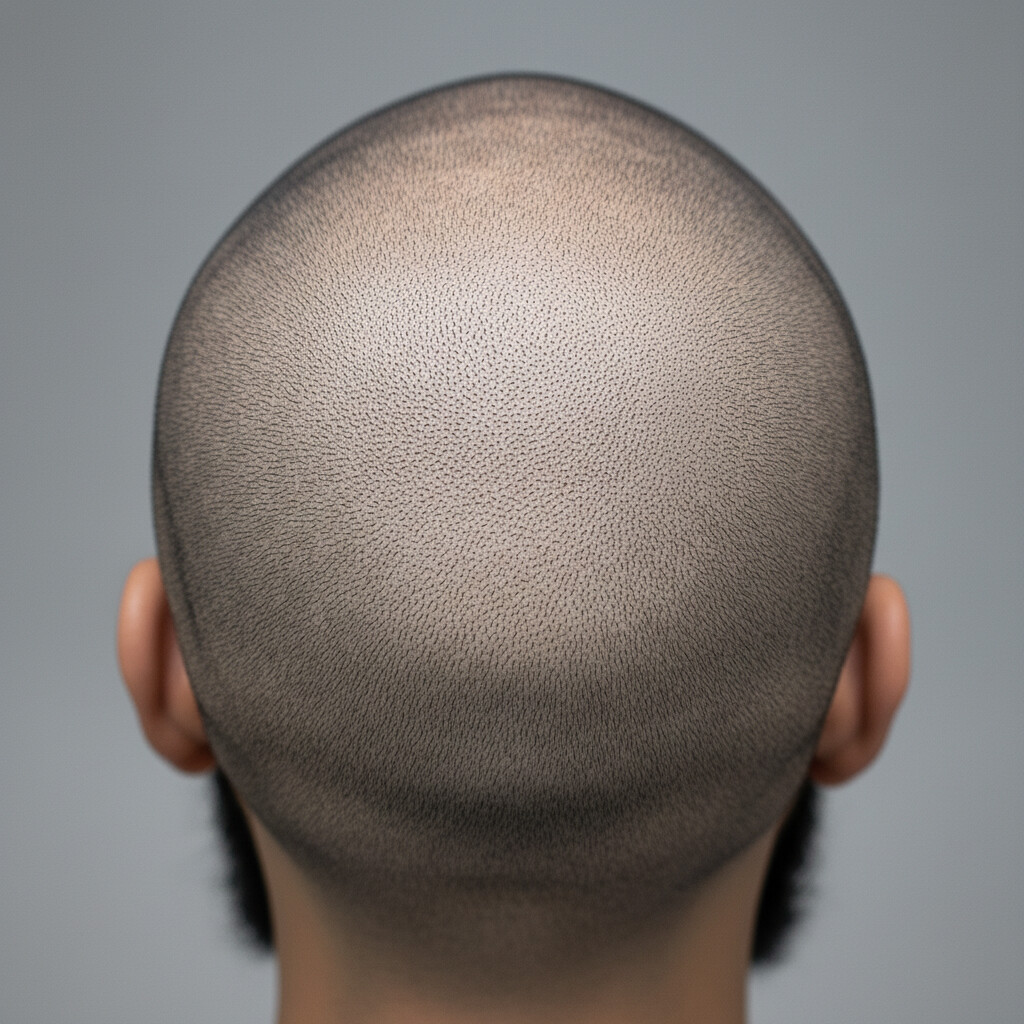
- The shaved-head look. SMP across the balding area and blended into the remaining hair to look like a closely shaved full head.
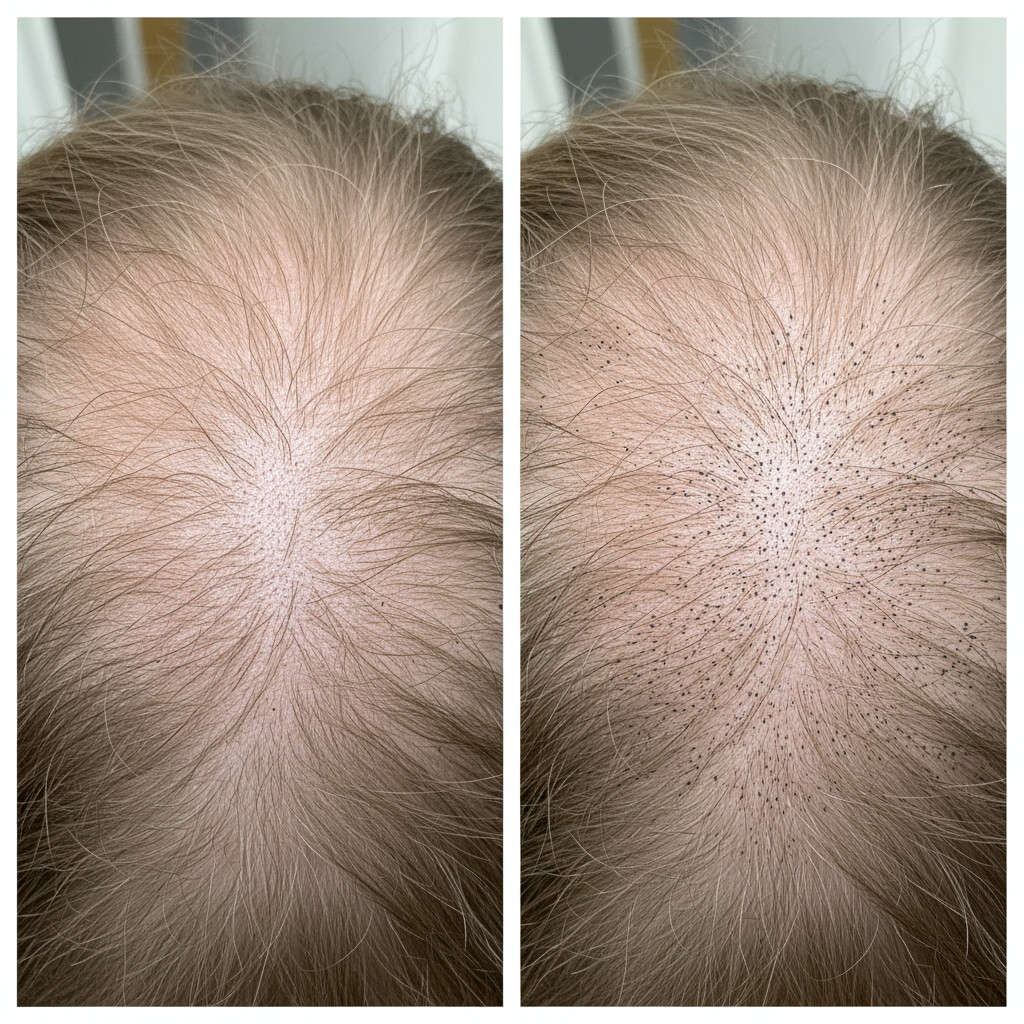
- Density for thinning hair. Dots between existing hairs make the scalp look darker, so less of it shows through.
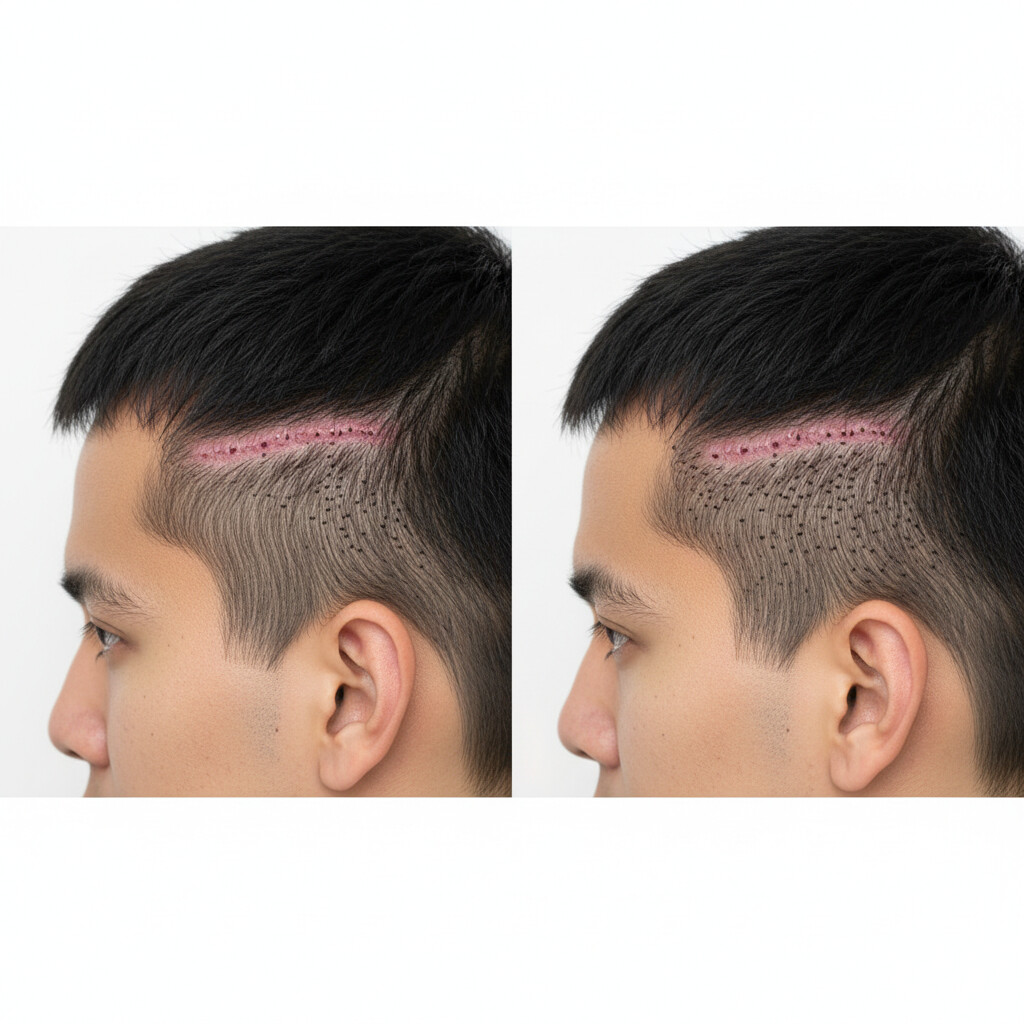
- Scar camouflage. Pigment placed over scars, such as a strip scar from FUT or dot scars from FUE, to make them less obvious.
How long SMP lasts
SMP is often advertised as “permanent”, which is misleading. It is long-lasting, but:
- The pigment gradually fades over the years, especially with sun exposure.
- Many people need a touch-up every few years to refresh the colour and definition. How often varies with skin type, sun exposure and the pigment used.
- The dots can slowly lose their sharp edges.
It is also difficult to remove. If you don’t like the result, laser removal is possible but usually needs several sessions and may not remove all of the pigment. Think of SMP as a long-term commitment.
Who SMP may suit
- Men with advanced hair loss who like a shaved look. SMP can recreate a hairline and the look of a full buzz cut without surgery or limited donor hair.
- People with thinning hair. Both men and women with diffuse thinning can use SMP to reduce contrast. Women with patterns described in our guide to female hair loss and the Ludwig scale sometimes choose this route, as the hair around the SMP stays long.
- People who are not good transplant candidates, for example because of a limited donor area.
- Some people with alopecia areata, although patches that change over time may make planning harder. Talk to a dermatologist first; see hair transplants and alopecia areata.
- Anyone with scalp scars they want to make less visible.
Who should think twice
- People who want to grow their hair longer on top in the future. SMP on bald skin shows once the surrounding hair is longer.
- People who are going grey. The dots do not go grey with your hair, so the contrast may change over time.
- People with active scalp conditions, keloid scarring or a history of reactions to tattoo pigments. Ask a doctor first.
Benefits and drawbacks
Benefits:
- No surgery and no donor hair used.
- Visible result after the first session, with little downtime.
- Can be combined with a transplant or with medical treatment.
- Usually costs less than a transplant up front.
Drawbacks:
- It is an illusion, not hair. Up close, and when you touch it, the difference is clear.
- The shaved look needs regular shaving to keep it convincing.
- Touch-ups are an ongoing cost.
- Results vary widely between practitioners.
Risks and what can go wrong
SMP is generally considered low risk when done hygienically, but these problems do occur:
- Colour shift. Pigment placed too deep or of the wrong type can turn blue, green or greyish over time.
- Blurring and spreading. Dots can spread into the surrounding skin, which makes them look like smudges rather than follicles.
- An unnatural design. A hairline that is too low, too straight or too sharp, or dots that are all the same size, can look artificial.
- Uneven fading, leaving patchy areas.
- Skin reactions, infection or allergy. Uncommon, but possible with any tattoo.
Correcting poor SMP can take laser removal and repeated sessions, so choosing carefully the first time matters.
SMP vs. hair transplant
A hair transplant moves your own follicles so real hair grows in thinning areas. SMP creates only the appearance of hair. A transplant can be styled at different lengths; SMP suits short styles best. A transplant has surgical risks, a long growth period and a limited donor supply; SMP has no surgery but needs touch-ups and depends on artistic skill. Many people use one or the other, and some use both.
Using SMP with a hair transplant
- Scar camouflage. SMP can make a linear FUT scar or widespread FUE dot scars less noticeable, although scar tissue can take pigment differently from normal skin.
- Extra density. SMP between transplanted hairs can reduce scalp show-through where there aren’t enough grafts for full density.
- Timing. Most practitioners wait until the transplant has healed and grown in, often many months after surgery, so they can see the final result. Ask your surgeon and SMP practitioner before planning this.
Choosing a practitioner
SMP is often done by tattoo or cosmetic practitioners rather than doctors, and regulation varies by country. Before booking:
- Look at healed results, ideally photos taken a year or more after treatment, in normal lighting and up close.
- Check that they hold any licence required locally, and that they use single-use needles and a clean setting.
- Ask which pigment they use and how they reduce the risk of colour shift and blurring.
- Ask how they design a hairline that will still suit you in 10 or 20 years.
- Ask about touch-up costs and what happens if you are unhappy.
Aftercare
Practitioners usually advise keeping the scalp dry and avoiding heavy sweating, swimming and saunas for a few days after each session, and not shaving the treated area for a short time. Long term, sun protection with a hat or scalp sunscreen helps slow fading. Follow your practitioner’s instructions and see a doctor if you notice signs of infection, such as spreading redness, heat, pus or fever.
Common questions
Is SMP permanent?
It is long-lasting, not permanent. It fades gradually and usually needs touch-ups every few years.
Does SMP hurt?
Most people describe it as uncomfortable rather than painful, similar to a tattoo but with a lighter needle.
Can I have a transplant after SMP?
Often yes. Tell your surgeon about the SMP, as it can affect how the scalp looks during planning.
Discussion
Have you had SMP on its own or combined with a transplant? Share how it has held up over time, how often you needed touch-ups, and what you would look for in a practitioner now.
Related guides
- Does PRP Help a Hair Transplant? Benefits, Evidence and Limits
- Who Should Not Get PRP for Hair Loss? Smokers and Blood Thinners
- Hair Mesotherapy: What It Is, Does It Work, and Is It Safe?
- Can Supplements Improve Hair Transplant Results?
- Can Poor Nutrition Affect Graft Survival in Hair Transplants?
About this guide: ForumHairTransplant.com is an independent patient community. We are not affiliated with any clinic or surgeon, and we don’t accept payment for rankings, reviews or recommendations. This article is general information, not medical advice. Talk to a qualified doctor about your own situation.