By ForumHairTransplant Editorial Team · Prepared with AI assistance · Sources checked: 19 October 2026
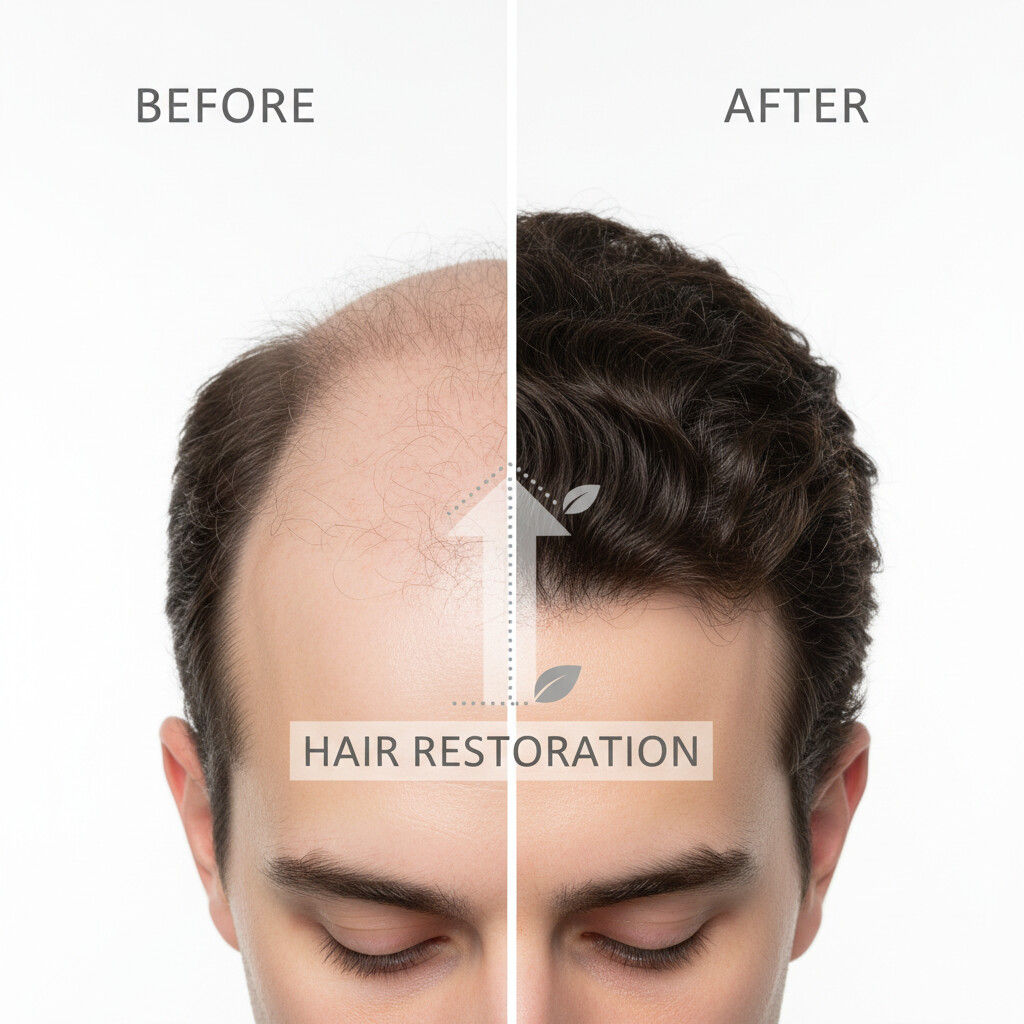
Many people only need one hair transplant session, especially if their hair loss is limited to the hairline or temples and has become stable. A second session becomes more likely if your hair loss is advanced, if you want more density than one session can safely provide, or if your native hair keeps thinning after surgery. The honest answer at a consultation is often “one now, possibly another later”, and a good plan prepares for that from the start.
Key takeaways
- Mild to moderate, stable hair loss (for example Norwood 2-3) can often be treated well in one session.
- Advanced loss (Norwood 5-7) usually needs more grafts than can be safely taken or placed at once, so a staged approach is common.
- Pattern hair loss can keep progressing after surgery. A later session is often for new thinning, not because the first one failed.
- The donor area is limited. Every session uses part of a lifetime supply, so each plan should leave a reserve.
- Most surgeons wait around 12 months, or until the first result can be judged, before a second procedure. Practice varies, so follow your own surgeon’s advice.
Why one session is not always enough
A hair transplant redistributes hair. It does not create new follicles. Three limits decide how much can be done in a single procedure:
- How many grafts the donor area can safely give at once. Taking too many from one area at one time can leave the back of the head visibly thin.
- How many grafts the recipient area can support. Packing grafts too tightly in one sitting can reduce blood supply and growth.
- Time and fatigue. Very long procedures are tiring for the patient and the surgical team, and grafts spend longer outside the body.
For a closer look at session size, see How Many Grafts Can Be Transplanted in One Session? Very large “mega sessions” are sometimes marketed as a way to avoid a second procedure, but they are not right for everyone and can overuse the donor area.
The main factors that decide the number of sessions
Extent of hair loss
This is the biggest factor. Hair loss in men is usually described with the Norwood scale, and in women with the Ludwig scale.
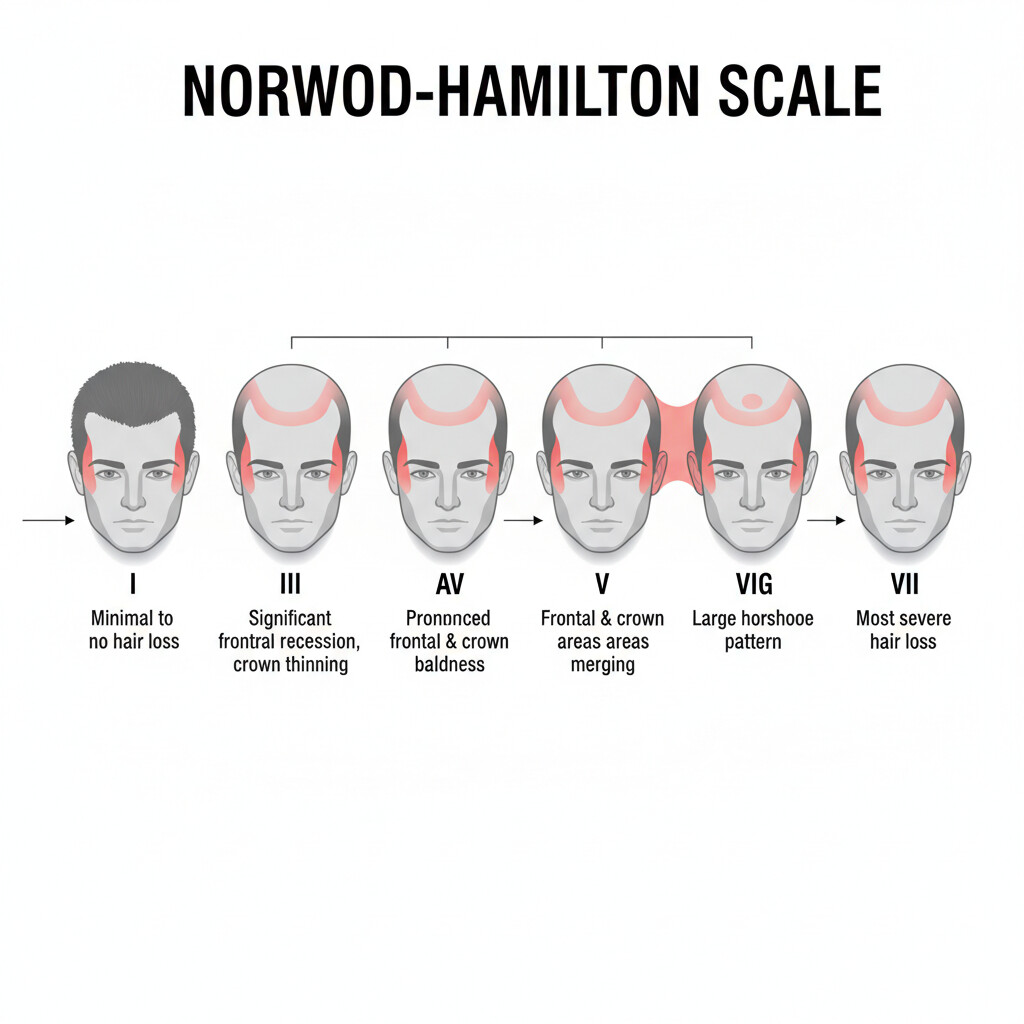
- Early to moderate loss (receding temples, a thinning front): one well-planned session is often enough.
- Moderate to advanced loss (front plus mid-scalp, or front plus crown): many surgeons prioritise the front and top in the first session and treat the crown later, if donor supply allows.
- Advanced loss (Norwood 5-7): the area to cover is usually larger than one session can fill at natural density. A phased plan is common, and full coverage may not be possible at all.
The crown is a particular challenge. It is large, it can keep expanding, and it tends to need many grafts to look full. That is one reason the front is often treated first.
Desired density
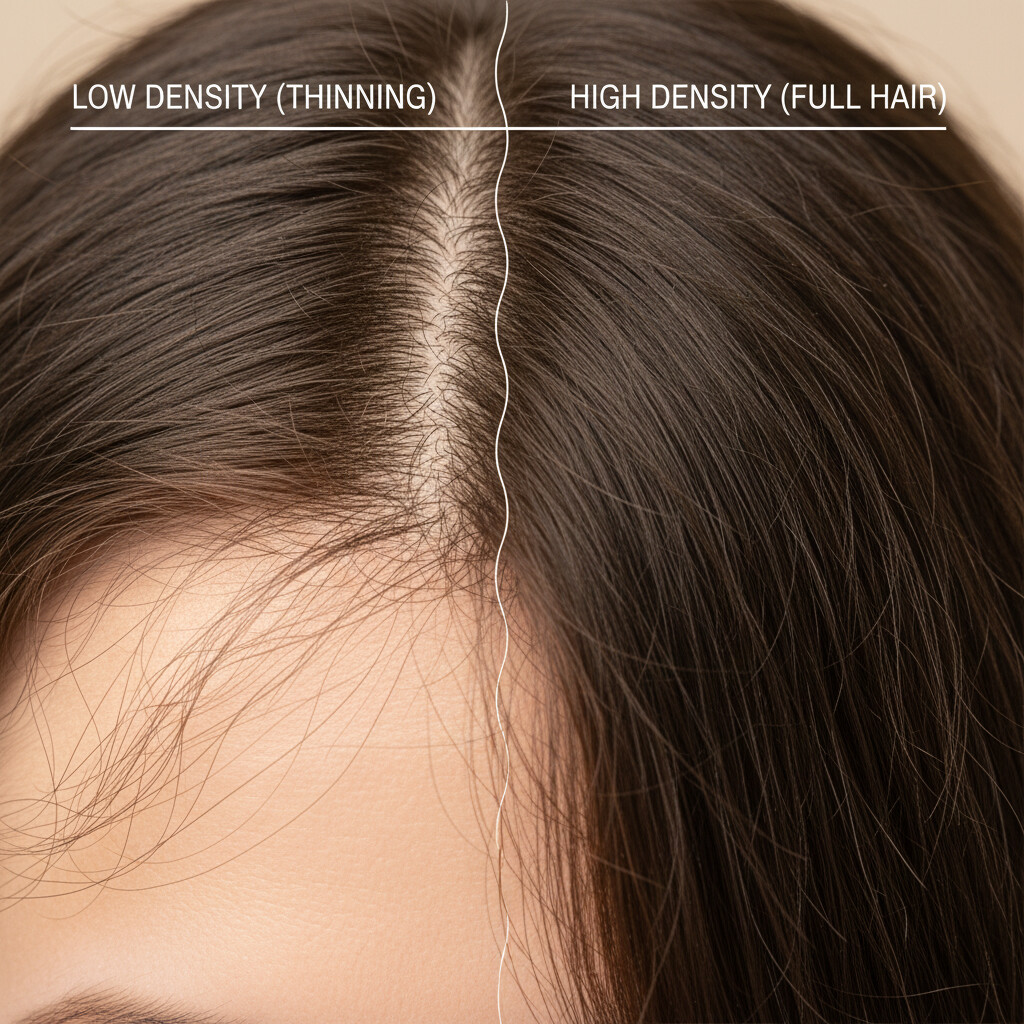
Density means how closely hairs are placed. A natural-looking result does not need the density you had at 18, because the eye reads coverage long before it reads true density. Patients who want a very full look, especially over a large area, are more likely to need a second session to add density to the first one.
Donor area supply
Hair from the back and sides of the scalp is usually resistant to the hormone that causes pattern baldness, which is why it can be moved and keeps growing. The article on donor area selection explains why.
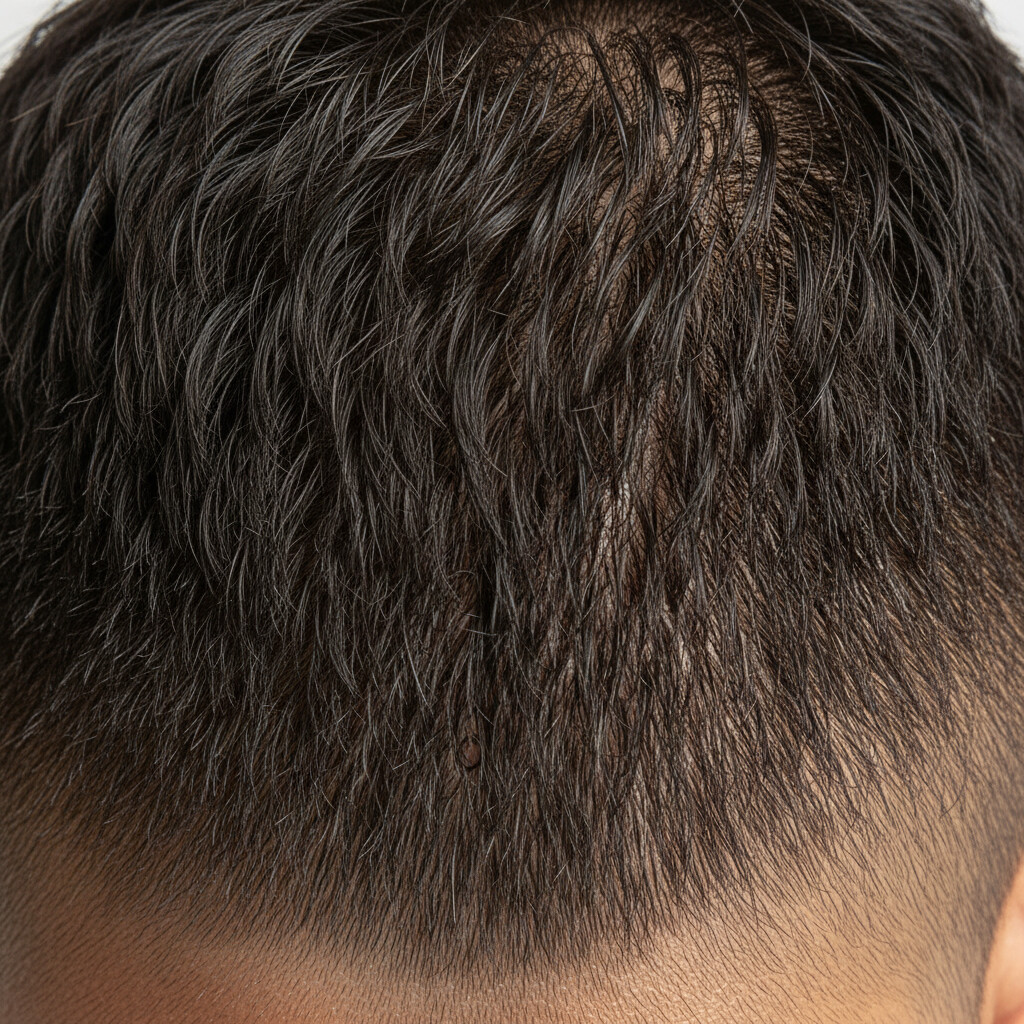
The safe donor zone holds a limited number of grafts over a lifetime. A strong donor area makes a second session possible; a weak one may mean even one session has to be modest. Whether the same area can be used again is covered in Can Donor Hair Be Reused in Future Sessions? In short, the donor area can often be harvested more than once, but each extraction reduces what remains, and the surgeon has to avoid visible thinning or scarring.
Some patients with limited scalp donor hair ask about beard or body hair. These can play a supporting role in selected cases but are generally less predictable than scalp hair.
Hair characteristics
The same number of grafts can look very different on two people:
- Contrast. Dark hair on a pale scalp shows gaps more easily. Hair and skin of similar colour tend to look fuller at the same graft count.
- Thickness. Coarse, thick hair covers more scalp than fine hair.
- Curl or wave. Curly or wavy hair usually gives more coverage per graft than straight hair.
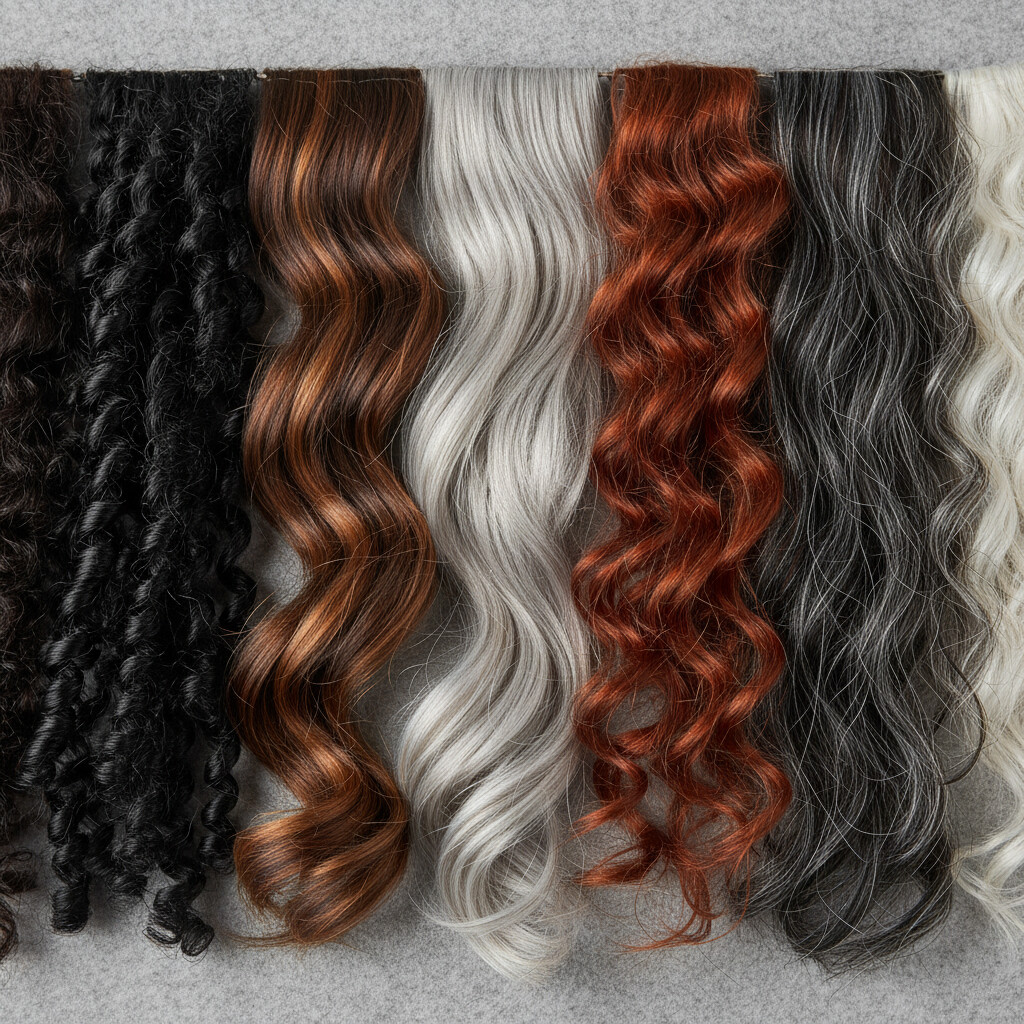
People with fine, straight, dark hair on a light scalp are more likely to want a second session for density.
Age and ongoing hair loss
Pattern hair loss is often progressive. A younger patient can have a good result at one year and then lose more native hair behind the transplanted area over the next decade. This is the most common reason for a second session years later.
This is why many surgeons recommend a conservative rather than aggressive plan for younger patients: a hairline that will still suit an older face, a moderate graft count, and grafts kept in reserve. Medical treatment to slow native hair loss (such as minoxidil, or finasteride for men) is often discussed as well. Ask a doctor whether these suit you, as both have possible side effects.
Technique
Both FUE and FUT can be used for staged procedures:
- FUE removes grafts one by one and leaves small dot scars spread across the donor area. It is the most common method today.
- FUT removes a strip of scalp and leaves a linear scar, but it can provide many grafts while leaving the surrounding donor area undisturbed.
In some patients with advanced loss, surgeons combine the two over separate sessions to make the most of the donor supply. The technique name itself matters less than careful planning and good graft handling.
Expectations and budget
Some patients deliberately split their treatment into stages for cost or time reasons. Others want the biggest possible change in one trip. Be cautious if a clinic suggests one very large session mainly to avoid a second trip: the donor area has to last you for life.
How a second session is planned
Timing between sessions
Most surgeons wait about 12 months after the first procedure, sometimes a little less, sometimes more. This gives time for:
- the scalp and donor area to heal fully,
- the transplanted hair to grow in so the real result can be judged (final results typically take 12-18 months, and the crown often takes longer),
- a clearer picture of how your native hair is behaving.
A second session too early risks placing grafts on top of hair that was still growing in. Timing does vary between surgeons and cases, so follow your own surgeon’s advice.
What a second session is used for
- Adding density to an area treated in the first session.
- Treating a new area, most often the crown or mid-scalp.
- Following ongoing loss, where native hair has thinned behind or around earlier grafts.
- Refining the hairline, such as softening it or filling small gaps.
- Correction of a result that looks unnatural or grew poorly. See Hair Transplant Correction for this separate situation.
What to expect afterwards
Recovery is similar to the first procedure. Transplanted hairs typically shed in the weeks after surgery and regrow over the following months. Some people also get shock loss, a temporary shedding of native hairs near the operated areas. It usually grows back within a few months, but it can make the early months look thinner than before surgery.

Signs you may need another session
- Your hair loss has clearly progressed behind or around the transplanted area.
- You are more than 12-18 months past surgery and want more density, and your surgeon confirms the donor area can support it.
- The crown or another area was left untreated as part of a staged plan.
If you are less than a year out, it is usually too early to judge. Compare photos in the same lighting and discuss them with your surgeon before deciding. The guide on planning a lifetime hair restoration strategy covers how to think about this over decades.
Questions to ask at your consultation
- Do you expect I will need more than one session? Why?
- How many grafts can my donor area provide over my lifetime, and how many will this session use?
- Which areas are you treating first, and why?
- How would a second session work if my hair loss continues?
- Should I consider medical treatment to protect my native hair?
Common questions
Does needing a second session mean the first one failed?
Not necessarily. Many second sessions are for new hair loss, added density or a new area. Poor growth is a different problem and should be assessed by your surgeon once enough time has passed.
Can I have both sessions in one trip to save money?
Two separate procedures back to back are generally not recommended. The scalp needs to heal and the first result needs to grow before more grafts are added. Some clinics do perform a larger procedure over two consecutive days, but that is still one session in planning terms.
Is a second session harder than the first?
It can be. The donor area has already been used, and there may be some scarring. A good surgeon will assess what remains before promising a graft number.
Discussion
Have you had more than one hair transplant session? Share how long you waited between them, what the second session was for, and whether you would plan it differently knowing what you know now.
Sources
- Hair loss: Diagnosis and treatment, Mayo Clinic
- Hair replacement surgery, hair transplants, DermNet
- Followup hair restoration procedures, ISHRS
- Top 5 Things to Know About Hair Transplantation, ISHRS, 2019
Related guides
- Planning a Lifetime Hair Restoration Strategy
- Conservative vs Aggressive Hair Transplant Planning: Which Is Right?
- Can Donor Hair Be Reused in Future Sessions?
- What Is a Hair Transplant Mega Session, and Is It Right for You?
- Crown or Hairline First? How to Prioritize a Hair Transplant
About this guide: ForumHairTransplant.com is an independent patient community. We are not affiliated with any clinic or surgeon, and we don’t accept payment for rankings, reviews or recommendations. This article is general information, not medical advice. Talk to a qualified doctor about your own situation.