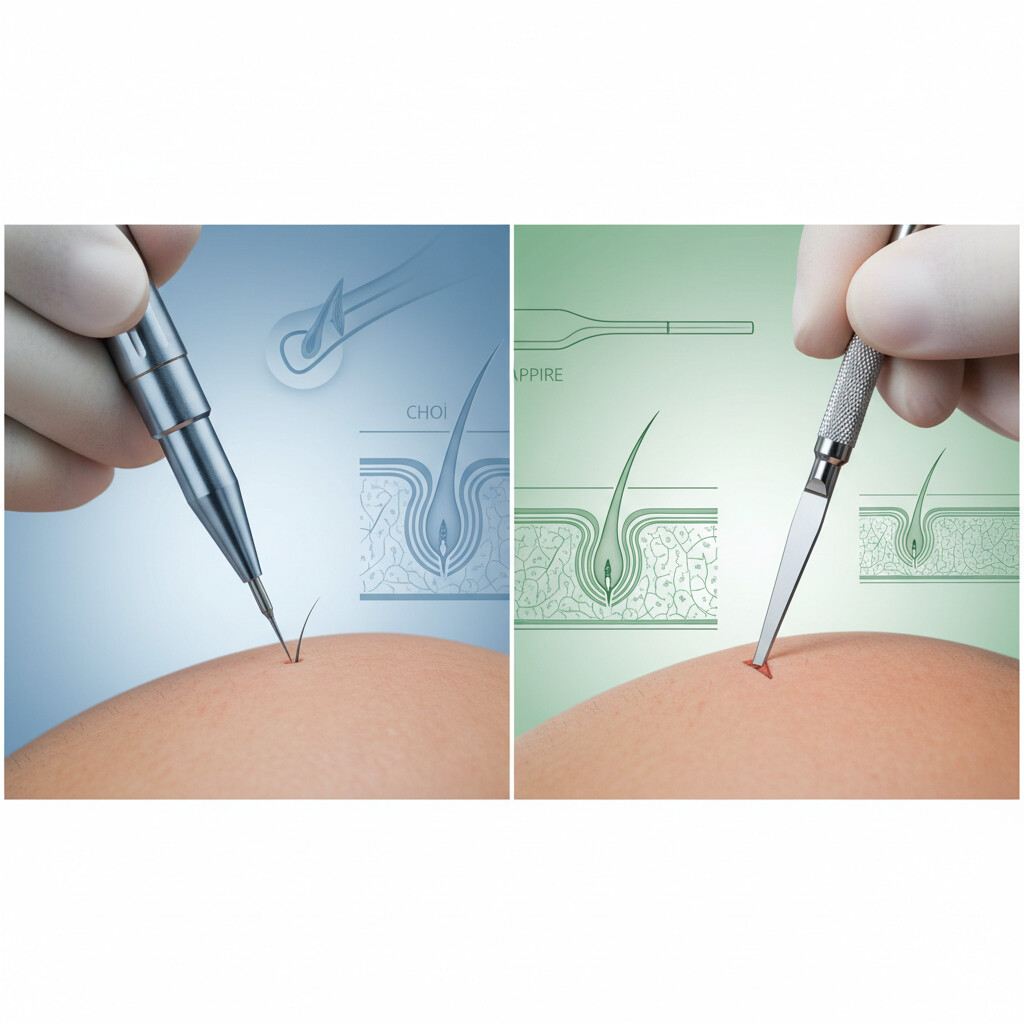
Embarking on the journey of a hair transplant can be an exciting step towards regaining a fuller head of hair and boosting your confidence. However, with various techniques available, choosing the right one can feel overwhelming. Two prominent methods that frequently come up in discussions are the Choi Pen (Direct Hair Implantation or DHI) and Sapphire FUE (Follicular Unit Extraction). While both aim to transplant hair follicles from a donor area to a thinning or bald area, they employ distinct approaches, each with its own set of advantages. This guide will delve into the intricacies of Choi Pen and Sapphire FUE, helping you understand their differences and make an informed decision.
Understanding the Core Concepts: FUE and DHI
Before dissecting the specifics of Choi Pen and Sapphire FUE, it’s crucial to grasp the fundamental principles of Follicular Unit Extraction (FUE) and Direct Hair Implantation (DHI). FUE is a hair transplant technique where individual hair follicles are extracted one by one from a donor area (typically the back or sides of the head) and then implanted into the recipient area. DHI is a more specific application of FUE, often utilizing a specialized tool called a Choi Implanter Pen. The core difference lies in how the implantation phase is conducted.
Follicular Unit Extraction (FUE) - The Foundation
FUE is the umbrella term for a method of harvesting hair follicles. In traditional FUE, after the donor hair is extracted, tiny incisions or channels are created in the recipient area using a scalpel or needle. The extracted follicular units are then manually placed into these channels by the surgical team. This process requires creating all the recipient sites before any implantation begins.
Sapphire FUE: Precision with a Gemstone Edge
Sapphire FUE is an advanced variation of the FUE technique that distinguishes itself through the use of specialized blades made from sapphire. These sapphire blades are known for their exceptional sharpness, durability, and anti-bacterial properties. The key advantage of using sapphire blades lies in their ability to create extremely fine and precise micro-incisions (channels) in the recipient area.
- Micro-Incision Excellence: The sharpness of sapphire blades allows surgeons to create smaller and more accurate openings compared to traditional steel blades. This results in less trauma to the scalp, reduced swelling, and faster healing.
- Denser Packing: The ability to create finer channels enables surgeons to implant more follicular units in a given area, leading to a denser and more natural-looking result. This is particularly beneficial for individuals seeking significant hair density restoration.
- Reduced Scarring: The minimal trauma associated with sapphire blades leads to less noticeable scarring. The small, precise incisions heal quickly, making the transplanted area appear more natural, even with short hairstyles.
- Controlled Angle and Direction: Sapphire blades offer surgeons greater control over the angle, depth, and direction of each incision. This meticulous control is vital for mimicking the natural growth pattern of hair, ensuring a seamless blend with existing hair.
Choi Pen (DHI): The Implanter Pen Advantage
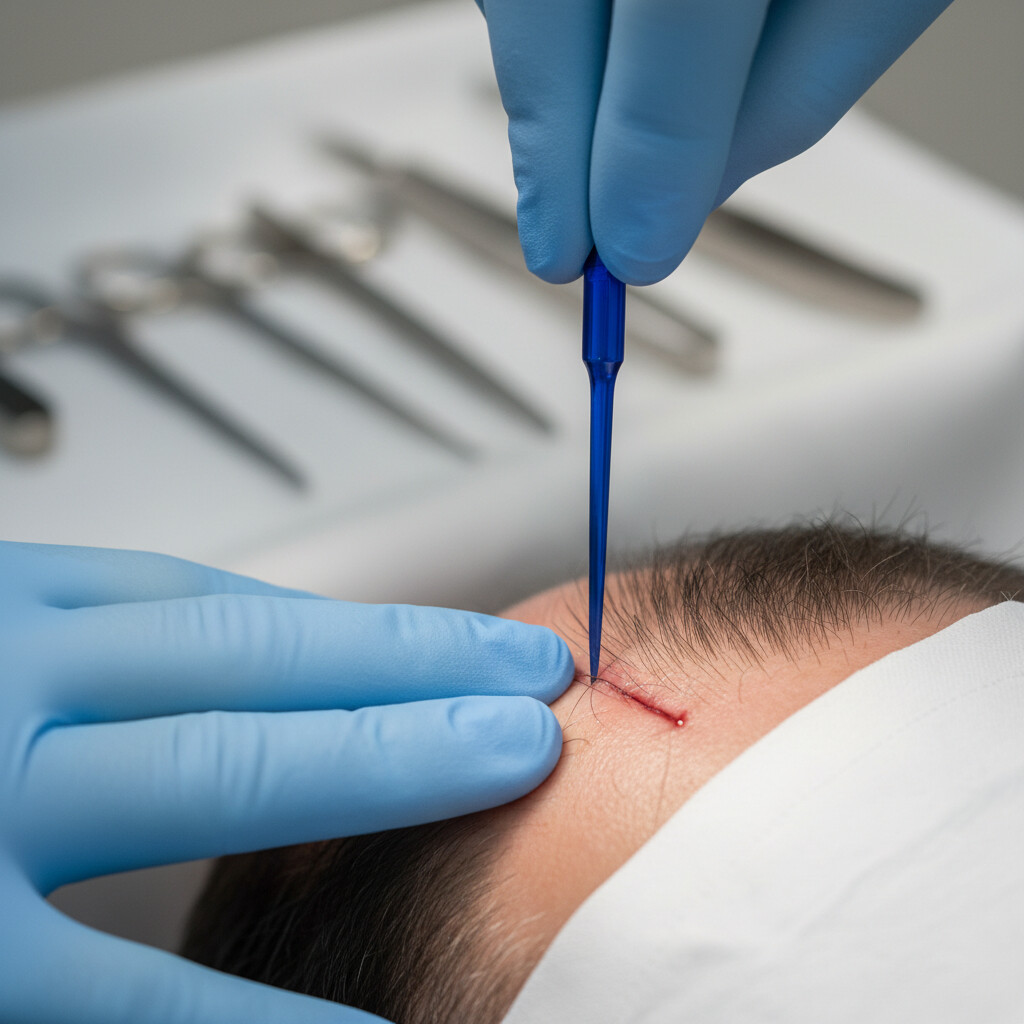
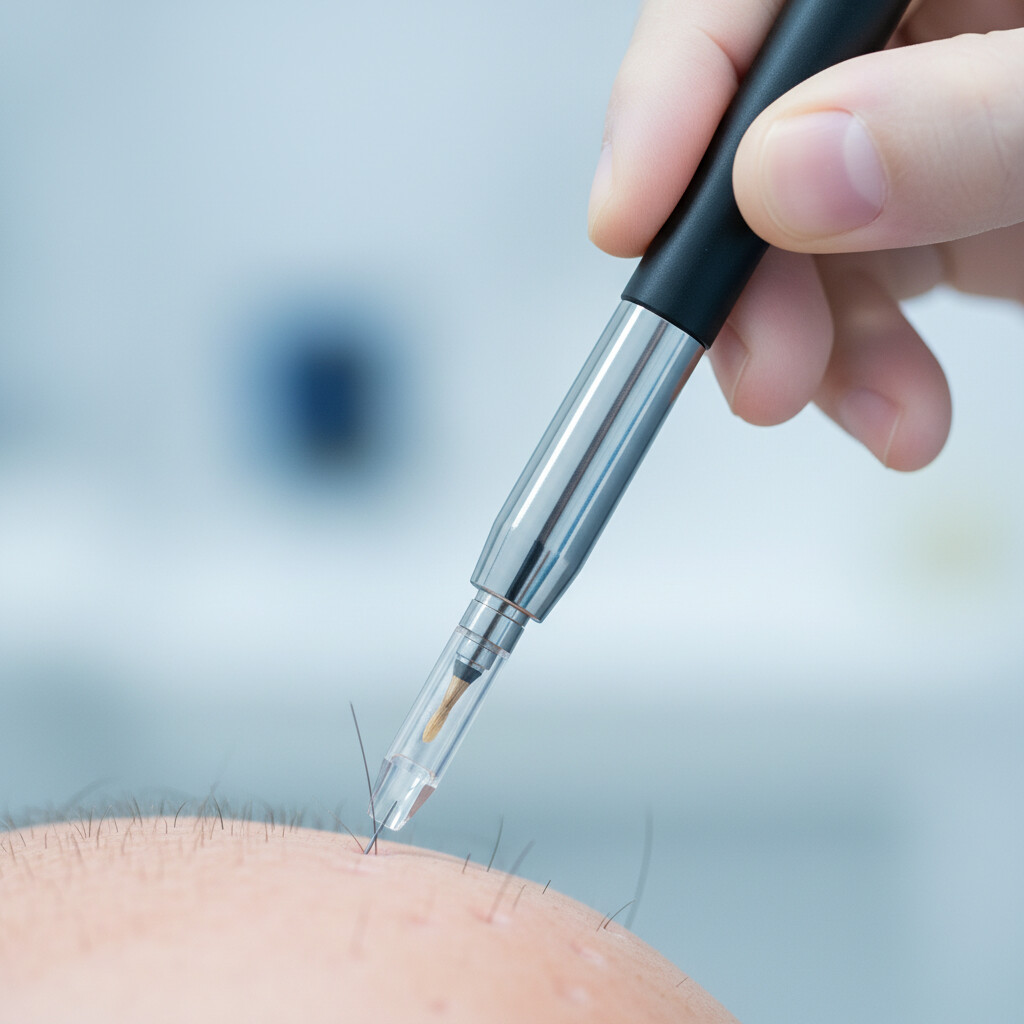
Choi Pen, or Direct Hair Implantation (DHI), is a technique that often leverages the Choi Implanter Pen, a specialized tool that combines the functions of making an incision and implanting the hair follicle in a single step. While other FUE methods involve creating all the recipient sites first and then placing the grafts, DHI allows for a more streamlined process.
- Simultaneous Implantation: The Choi Implanter Pen has a hollow needle through which a follicular unit is loaded. The pen is then used to directly implant the follicle into the scalp at a predetermined angle and depth. This eliminates the need for separate incision creation and graft placement stages.
- Minimized Extracorporeal Time: Because the follicle is implanted immediately after extraction and loading into the pen, the time the graft spends outside the body (extracorporeal time) is significantly reduced. This is crucial for maintaining the viability and health of the hair follicles, potentially leading to higher graft survival rates.
- No Pre-made Incisions: Unlike traditional FUE or Sapphire FUE where channels are created in advance, DHI does not require the creation of separate channels. This can result in less bleeding during the procedure and potentially less trauma to the scalp.
- Precision Placement: The pen allows for precise control over the depth, angle, and orientation of each implanted follicle, contributing to a natural aesthetic. Surgeons can meticulously arrange the hairs to match the original growth patterns.
Key Differences at a Glance
While both techniques are advanced forms of FUE, their primary distinctions lie in the implantation phase:
| Feature | Sapphire FUE | Choi Pen (DHI) |
|---|---|---|
| Incision Creation | Separate channels created with sapphire blades | Part of the implantation process with the pen |
| Implantation Tool | Forceps/tweezers | Choi Implanter Pen |
| Process Flow | Incision creation followed by implantation | Simultaneous incision and implantation |
| Extracorporeal Time | Potentially longer | Minimized |
| Scalp Trauma | Minimized due to sharp blades | Potentially reduced due to single-step process |
| Graft Density | High density achievable | High density achievable |
| Natural Appearance | Excellent, due to controlled angles | Excellent, due to controlled angles and density |
Who is a Good Candidate for Each?
Sapphire FUE is an excellent choice for individuals who:
- Desire high hair density and a natural-looking result.
- Are concerned about scarring and want minimal visibility.
- Are looking for a versatile technique that can address various degrees of hair loss.
- Prefer a method where the surgeon has precise control over each incision’s placement.
Choi Pen (DHI) might be more suitable for those who:
- Prioritize minimizing the time grafts are outside the body.
- Are looking for a potentially less invasive procedure with reduced bleeding.
- Seek excellent results with a high degree of precision in follicle placement.
- May have a preference for a technique that directly implants without pre-made channels.
Choosing the Right Method for You
The decision between Choi Pen and Sapphire FUE ultimately depends on your individual needs, the extent of your hair loss, your scalp condition, and your surgeon’s expertise. Both techniques offer high-quality results and are considered among the most advanced hair restoration methods available today.

It is paramount to consult with a qualified and experienced hair transplant surgeon. They will assess your specific situation, discuss the pros and cons of each method in relation to your goals, and recommend the technique that will yield the best possible outcome for you. Factors such as donor hair availability, the desired hairline, and your healing capacity will all play a role in this personalized recommendation.
Remember, a successful hair transplant is a collaboration between you and your surgical team. By understanding the differences between Choi Pen and Sapphire FUE, you are better equipped to engage in this discussion and embark on your hair restoration journey with confidence.
Related guides
- DHI Hair Transplant Technique: Everything You Need to Know (Direct Implantation)
- Choi Implanter Pen: The Specialized Tool Revolutionizing DHI Hair Transplants
About this guide: ForumHairTransplant.com is an independent patient community. We are not affiliated with any clinic or surgeon, and we don’t accept payment for rankings, reviews or recommendations. This article is general information, not medical advice. Talk to a qualified doctor about your own situation.