By ForumHairTransplant Editorial Team · Prepared with AI assistance · Sources checked: 19 October 2026
Advertised hair transplant packages in Turkey span a wide range, roughly from $1,000 at the budget end to $7,000 or more at surgeon-led clinics. Where a quote falls depends less on the number of grafts than on who actually performs the surgery, how many patients the clinic treats per day, and what the package includes. This guide explains what drives the price, what a low price usually means, and how to compare quotes fairly.
Key takeaways
- The biggest price driver is usually the level of doctor involvement, not the technique name. Surgeon-led clinics that treat one or two patients a day cost more than high-volume clinics where technicians do most of the work.
- Many Turkish clinics sell a package price rather than a per-graft price. Check the maximum graft number and what happens if you need more.
- Hotel, transfers and medication are often included, but flights, extra nights, add-ons and aftercare at home often are not.
- “Unlimited grafts” is not a benefit. Your donor area sets the safe limit, and a plan should be based on that.
- Prices change with exchange rates and demand. Treat any figure, including the range above, as a rough guide rather than a quote.
Why prices in Turkey vary so much
Two clinics in the same city can quote very different prices for what looks like the same operation. The difference usually comes from how the clinic is run:
- Doctor involvement. At some clinics a named surgeon designs the hairline, makes the recipient incisions and supervises closely. At others, a doctor may do little beyond the consultation while technicians perform extraction and implantation. The second model is cheaper to run.
- Patients per day. A clinic that treats many patients in parallel spreads its costs further. It also means less time and attention per patient.
- Team experience. Experienced, well-paid technicians and nurses cost more than a rotating team.
- Facility and safety standards. A licensed facility with proper sterilisation, monitoring and emergency arrangements has real costs.
A low price does not automatically mean a bad result, and a high price guarantees nothing. But very cheap offers usually cut costs somewhere. Our guide on large clinics vs. boutique centers looks at how clinic size and set-up affect your experience.
Graft number and extent of hair loss
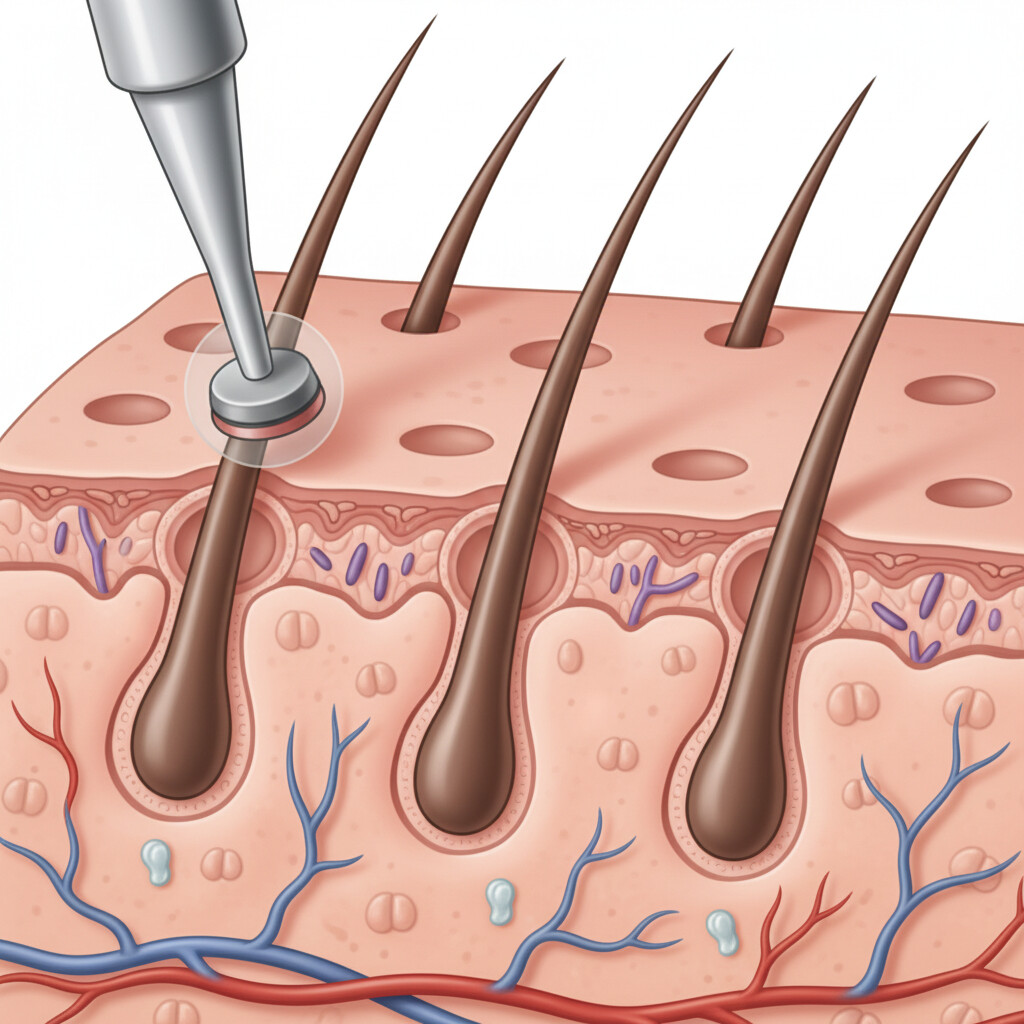
The more area you need covered, the more grafts you need, and at clinics that charge per graft the price rises with it. A graft (follicular unit) is a small group of usually one to four hairs.
Very rough ranges often discussed for a first session:
- Early recession or a small hairline job: around 1,000-2,000 grafts.
- Moderate loss (hairline plus front or mid-scalp): around 2,000-3,500 grafts.
- Advanced loss: more grafts, often split across two sessions, and limited by how much the donor area can safely give.
These are general figures, not a plan. The right number depends on your donor density, hair calibre, the area to be covered and your likely future hair loss.
Package vs. per-graft pricing
Many clinics in Turkey quote a single package price. Before comparing, ask:
- Is there a maximum number of grafts in the package?
- If the price is per graft, how are grafts counted, and will you get the final count in writing?
- Is the price the same if your plan changes on the day?
Be cautious of “unlimited grafts” or very high graft promises. Overharvesting can thin the donor area permanently and leave little for the future.
Technique and its effect on price
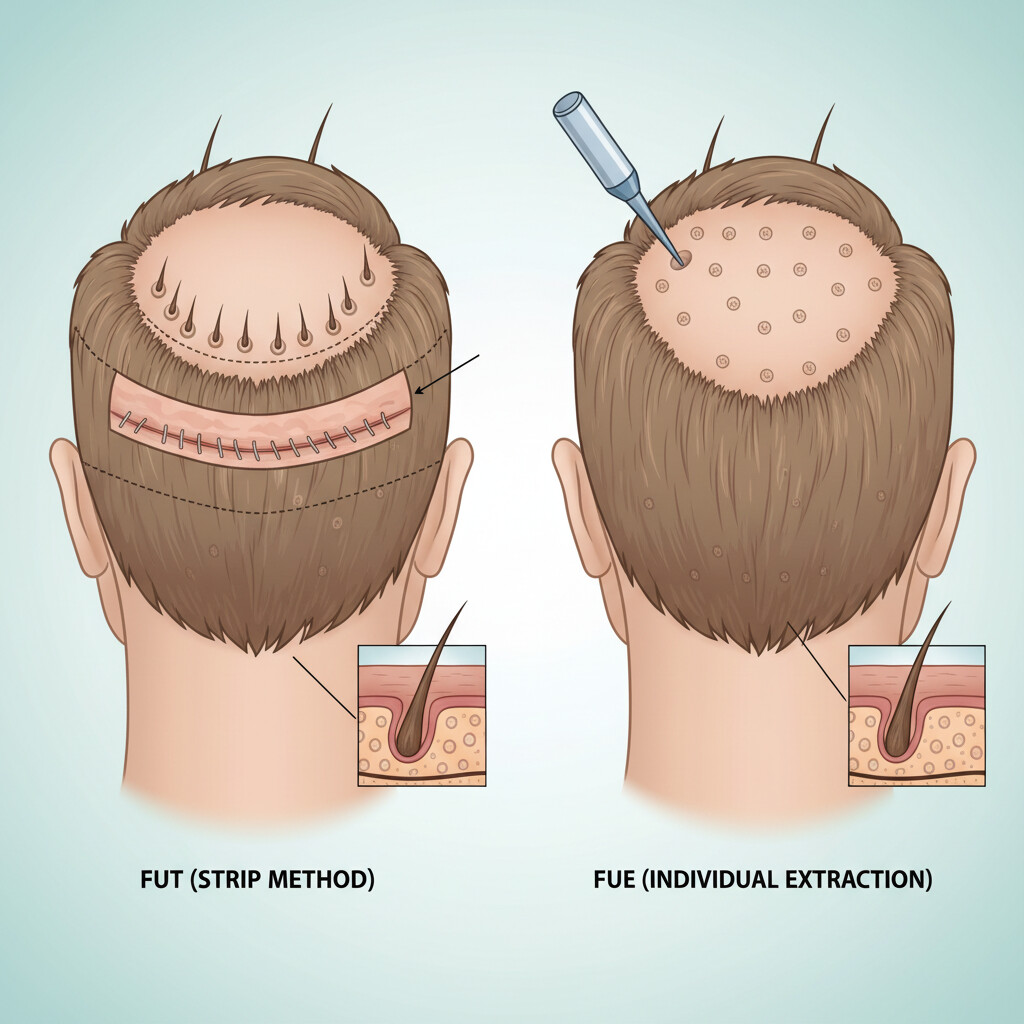
FUE is the standard technique in most Turkish clinics. Some also offer FUT (strip surgery), and many market variations such as sapphire blades, DHI implanter pens or “unshaven” procedures.
- FUE vs. FUT: where both are offered, the price difference varies between clinics. FUT leaves a linear scar but can be a reasonable choice for some patients, for example those who want to keep more donor hair for later or who will wear their hair longer.
- DHI and implanter pens: often priced higher. They are a tool for implantation, not a guarantee of better growth.
- Unshaven procedures: usually cost more because they take longer and need more careful work.
Technique names matter less than the skill and involvement of the people using them. Ask why a technique is recommended for you, not just what it is called.
What the package includes
Turkish clinics often sell an all-in-one package for international patients. Common inclusions are:
- Consultation and blood tests on the day
- The procedure, with local anaesthesia
- Post-operative medication and a first wash at the clinic
- Hotel for a few nights and transfers between airport, hotel and clinic
- An interpreter or patient coordinator (see our guide on language barriers for international patients)
Our guide on what’s included in a hair transplant package covers this in more detail.
Costs that are often not included
- Flights and any travel insurance
- Extra nights if you want more time before flying home
- Add-ons such as PRP sessions, special shampoos or “premium” upgrades
- Longer-term medication such as finasteride or minoxidil, if your doctor recommends it for your native hair
- Aftercare at home: check-ups with a local doctor, or treatment if a problem such as infection develops after you return
- Time off work and a possible second procedure later
Added up, these often narrow the gap between quotes. Our comparison of UK vs. Turkey hair transplant costs walks through the full cost of travelling abroad.
Does the city matter?
Istanbul has the largest number of clinics, and you will also find them in Ankara, Izmir, Antalya and elsewhere. Location has less effect on price than clinic model and doctor involvement. Choose a clinic on its standards and results, not its postcode.
How to compare quotes fairly
- Get a written plan from each clinic: the areas to be treated, the approximate graft number and why, the technique, and the name of the responsible doctor.
- Ask who does each step: hairline design, extraction, recipient site creation and implantation.
- Ask how many patients the doctor and team treat on the same day.
- List what is and isn’t included, in the same currency, so you compare like with like.
- Ask about aftercare once you are home, and what happens if something goes wrong.
- Look at results at 12 months or later, from patients with hair loss similar to yours.
If a quote is far below others, ask what makes it cheaper. For a wider view of prices worldwide, see How Much Does a Hair Transplant Cost in 2026?
Red flags on price
- Prices that drop sharply if you book today
- A graft number promised before anyone has seen clear photos of your donor area
- “Unlimited grafts” or guaranteed density
- No name for the responsible doctor
- A salesperson who cannot answer medical questions and cannot connect you to someone who can
Our guide on prioritizing price over quality looks at what can happen when cost is the main deciding factor.
Common questions
Why is a hair transplant cheaper in Turkey than in the UK or US?
Mostly lower running costs, such as staff, rent and general cost of living, plus a very competitive market and high patient volumes. The Turkey guide linked below covers the background.
Is a $1,000 hair transplant safe?
It may be, but at that price it is important to confirm that the procedure takes place in a licensed facility, that a doctor is responsible and involved, and that the graft number is based on your donor area. Ask what the price leaves out.
Should I pay a deposit?
Many clinics ask for one. Get the terms in writing, including what happens if you need to cancel or if the plan changes after the in-person assessment.
Discussion
What were you quoted in Turkey, and what did the price include? If you compared several clinics, share what made the biggest difference in price and what, in hindsight, was worth paying for.
Sources
- Hair loss: Diagnosis and treatment, Mayo Clinic
- Mayo Clinic Q and A: Hair transplant treatment for hair loss, Mayo Clinic News Network, 2017
- Frequently Asked Questions: Operation Restore, ISHRS
- Hair Transplantation (policy page), NHS Central East ICB
These sources confirm that hair transplants are usually not covered by insurance or the NHS. We found no reliable cost-per-graft data, and the Mayo Clinic cost figure is from 2017.
Related guides
- How Much Does a Hair Transplant Cost in 2026?
- UK vs. Turkey Hair Transplant Cost: Are the Savings Worth the Travel?
- What’s Included in a Hair Transplant Package?
- Why Is Turkey So Popular for Hair Transplants?
- How to Choose a Hair Transplant Clinic: Questions and Red Flags
- Factors Affecting Hair Transplant Prices: A Comprehensive Guide
About this guide: ForumHairTransplant.com is an independent patient community. We are not affiliated with any clinic or surgeon, and we don’t accept payment for rankings, reviews or recommendations. This article is general information, not medical advice. Talk to a qualified doctor about your own situation.