
Yes, smoking can affect your hair transplant. Nicotine narrows blood vessels and carbon monoxide lowers the amount of oxygen your blood carries, and freshly placed grafts depend on good blood flow in their first days and weeks. Smokers generally heal more slowly and have a higher risk of wound problems, and most surgeons believe fewer grafts may survive. The good news is that stopping for a period before and after surgery reduces much of this risk, even if you do not quit for good.
Key takeaways
- Most surgeons ask patients to stop smoking for a period before and after surgery. Commonly quoted ranges are 1-4 weeks before and at least 1-2 weeks after, but advice varies, so follow your own surgeon’s instructions.
- The main concerns are reduced blood flow to the grafts, slower wound healing, a higher infection risk and, rarely, tissue damage (necrosis).
- Nicotine itself is the main problem, so vaping, nicotine pouches and nicotine gum or patches are not automatically “safe” alternatives. Ask your surgeon before using them.
- Be honest with your clinic about how much you smoke. It helps them plan and can change their advice.
Why smoking matters for grafts
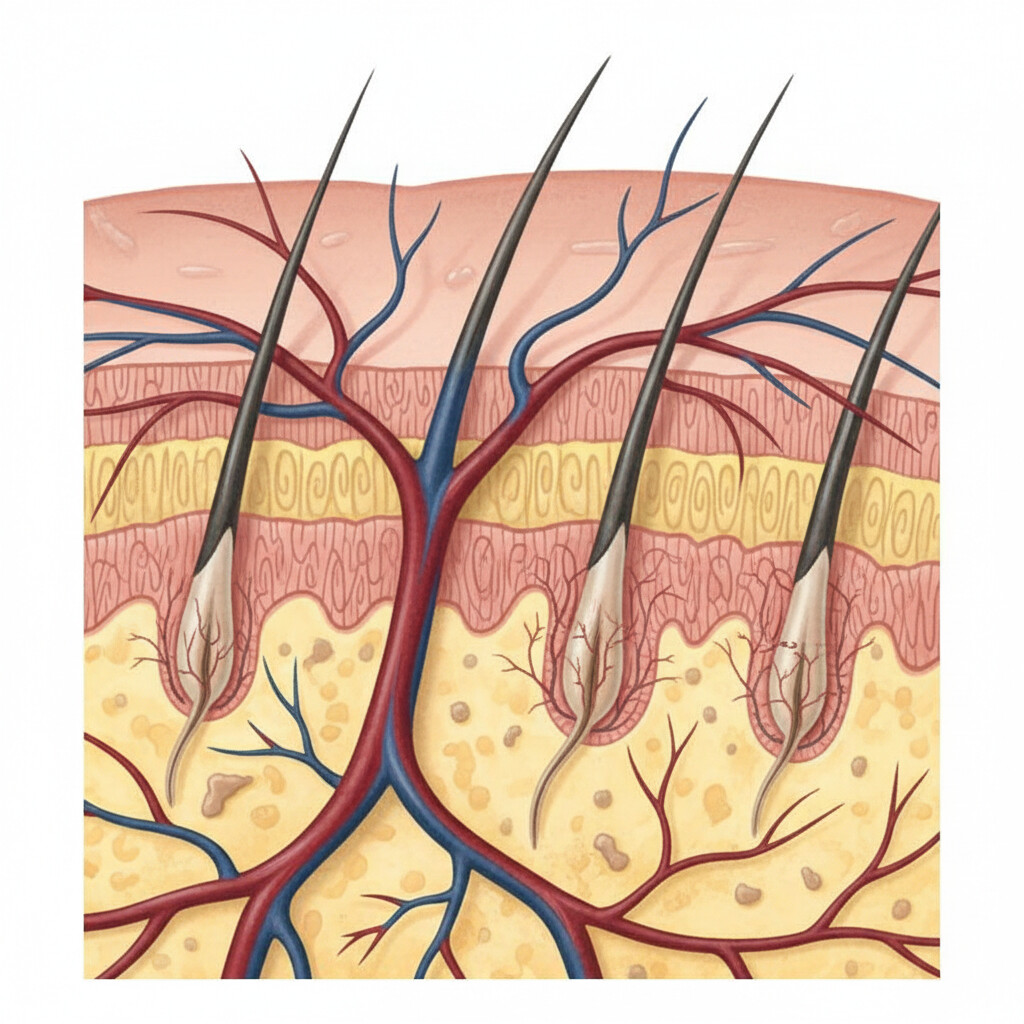
A graft is a tiny piece of living tissue. When it is placed into the scalp, it has no blood supply of its own for the first few days. It survives on oxygen and nutrients that diffuse in from the surrounding tissue until small blood vessels grow into it. Anything that reduces blood flow to the scalp in this window makes that process harder.
Smoking works against it in several ways:
- Nicotine narrows blood vessels. Nicotine is a vasoconstrictor. After each cigarette, blood flow to the skin drops for a period of time. Less blood reaching the recipient area means less oxygen for the grafts while they are settling in.
- Carbon monoxide reduces oxygen delivery. Carbon monoxide in smoke binds to haemoglobin in red blood cells far more readily than oxygen. The blood that does reach the scalp carries less oxygen.
- Wound healing slows down. Smoking is a well-known risk factor for slower healing after any surgery. It affects collagen production and the immune response, which matter for the thousands of tiny wounds in both the donor and recipient areas.
- Infection risk rises. Serious infections after a hair transplant are uncommon, but smokers are at higher risk of wound problems in general.
Poor blood supply is one of several possible reasons why some grafts fail to grow. Surgical technique and graft handling matter too, but smoking is a factor you can control.
What this can mean for your result
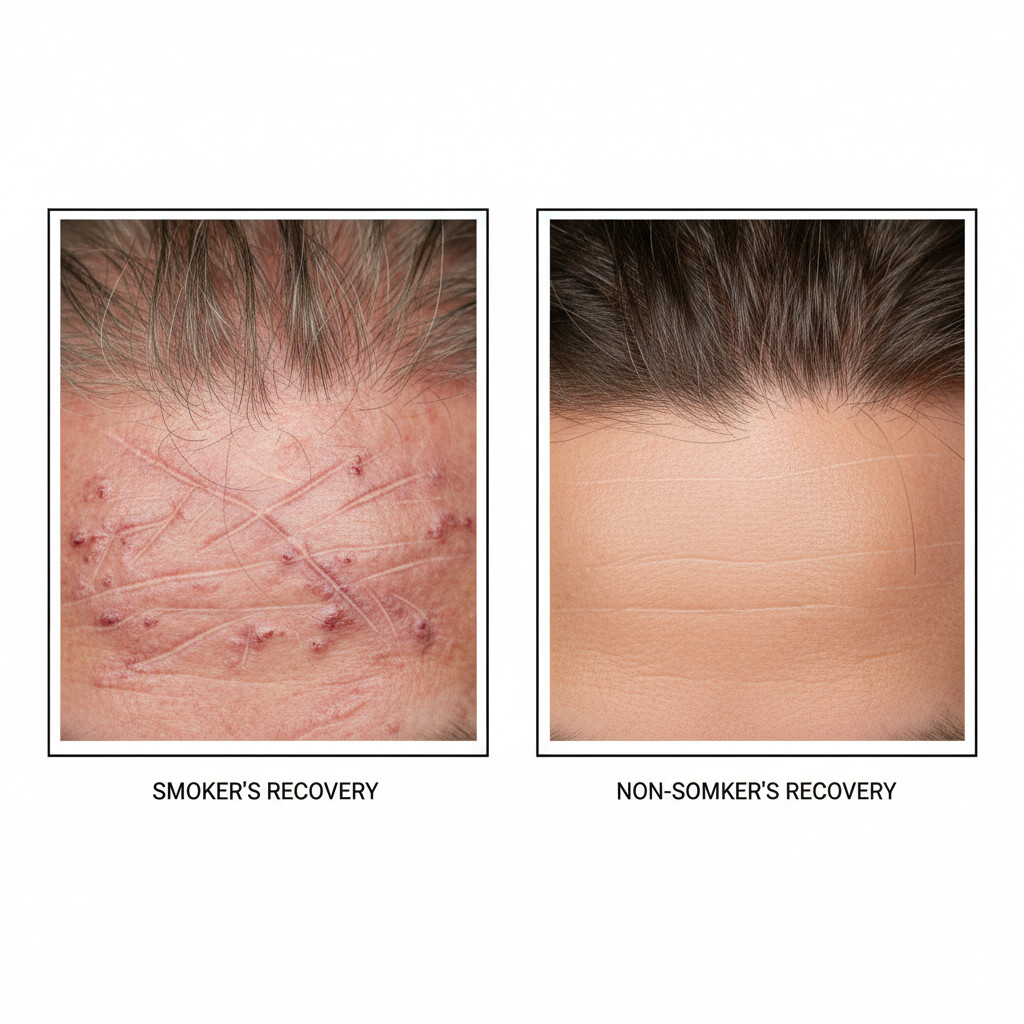
The effects of smoking are about risk, not certainty. Many smokers grow well, but the odds shift in the wrong direction:
- Lower graft survival. Surgeons widely believe that smokers may see fewer grafts grow. There is no reliable single figure for how many, and it depends on how much you smoke and when.
- Slower healing. Scabs may last longer, and redness and swelling may take more time to settle.
- Donor area healing. The donor area is also a wound. Poor healing can make extraction marks more visible or, after strip surgery, widen the scar. Our guide to hair transplant scars explains what is normal.
- Necrosis (rare). In rare cases, tissue in the recipient area can be damaged by a severe lack of blood supply. It is more likely with very dense packing, a large session and heavy smoking. It is one of the complications listed in our risks guide.
Keep in mind that shedding of the transplanted hairs between about weeks 2 and 8 is normal for smokers and non-smokers alike. It is not a sign that smoking has “killed” your grafts. You will only be able to judge growth properly from several months onwards.
When to stop, and for how long
There is no single rule that every surgeon follows. Typical advice looks like this:
- Before surgery: stop at least 1-2 weeks before, and ideally 2-4 weeks. The longer the break, the more your circulation and oxygen levels recover. Carbon monoxide levels drop within a day or two of stopping, but the benefits for healing build up over weeks.
- After surgery: stay smoke-free for at least the first 1-2 weeks, while the grafts are anchoring and the wounds are closing. Many surgeons ask for longer, often until the scabs are gone and the scalp has healed.
- Long term: stopping for good is best for your health. Smoking has also been associated with hair loss, although it is not considered a cause of pattern baldness.
If your surgeon gives you a different timeframe, follow theirs. They know your plan, the size of your session and your health history.
Stopping smoking fits into your wider preparation. Our pre-operation checklist covers other things to sort out in the weeks before surgery, and the guide on alcohol before a hair transplant covers drinking.

What about vaping, nicotine replacement and cannabis?
- Vaping and e-cigarettes usually contain nicotine, which narrows blood vessels. They avoid carbon monoxide from burning tobacco, but they are not risk-free for healing. Most surgeons treat them like smoking during the recovery window.
- Nicotine patches, gum and pouches also deliver nicotine. They can help you quit, but whether to use them around surgery is a question for your surgeon. Some are comfortable with them, others prefer no nicotine at all in the days around the procedure.
- Prescription quit-smoking medicines may be suitable for some people. Talk to your own doctor, and tell your surgeon about any medicines you take. Our guide to medications to stop before a hair transplant explains why this matters.
- Cannabis smoke also contains carbon monoxide and irritates the airways. Tell your clinic if you use it, and ask how long to avoid it.
Practical tips for stopping
Many people find a short, clearly defined goal (“no cigarettes for six weeks around my surgery”) easier than quitting forever. Some approaches that help:
- Set a date well before surgery and tell people close to you.
- Know your triggers, such as coffee, alcohol or stress, and plan what you will do instead.
- Talk to your GP or a local stop-smoking service. Many countries offer free support.
- Plan for the trip. If you are travelling abroad for surgery, airports, hotels and waiting time can be strong triggers. Decide in advance how you will handle them.
- Avoid second-hand smoke where you can during recovery.
If you slip, tell your clinic. One cigarette is unlikely to ruin a result, and it is no reason to give up for the rest of the recovery.
When to contact your surgeon
Get in touch with your surgeon or a local doctor promptly if you notice:
- Areas of the recipient zone that turn dark, grey or black, or look very pale, rather than the usual pink and scabbed appearance.
- Increasing pain, spreading redness, warmth, swelling or pus in the donor or recipient area.
- A fever or feeling generally unwell.
- Wounds that are still open or oozing well after the first week or two.
These signs are uncommon, but they need to be checked quickly, whether or not you smoke.
Common questions
Will a clinic refuse to operate if I smoke?
Most clinics will still operate, but they will strongly advise you to stop around the procedure. Some surgeons may be more cautious with heavy smokers or those with other health problems. Being honest at the consultation stage is the best approach.
Does smoking cause the post-op shedding?
No. Shedding of the transplanted hairs in the first weeks is a normal part of the process. Shock loss (temporary loss of native hairs near the operated areas) can also happen in anyone. Smoking may affect healing, but it is not what causes these normal stages.
Discussion
Did you stop smoking or vaping for your transplant? Share how long you stopped for, what your surgeon advised and what helped you get through it. Your experience could help someone planning their own procedure.
Related guides
- Pre-Operation Checklist: Essential Tips Before Your Hair Transplant
- Which Medications Should You Stop Before a Hair Transplant?
- Alcohol Before a Hair Transplant: How Long Must I Abstain?
- Who Should Not Get PRP for Hair Loss? Smokers and Blood Thinners
- Hair Transplant Risks and Complications: What Can Go Wrong?
About this guide: ForumHairTransplant.com is an independent patient community. We are not affiliated with any clinic or surgeon, and we don’t accept payment for rankings, reviews or recommendations. This article is general information, not medical advice. Talk to a qualified doctor about your own situation.