Most clinics schedule the first hair wash one to three days after a hair transplant, and many do it for you at the clinic. It is a gentle rinse, not a normal shampoo: diluted shampoo is poured or dabbed onto the grafted area, rinsed with low-pressure lukewarm water, and the scalp is patted or air dried. The exact timing and products vary between clinics, so always follow the written instructions from your own surgeon.
By ForumHairTransplant Editorial Team · Prepared with AI assistance · Sources checked: 19 October 2026
Key takeaways
- The first wash usually happens on day 1, 2 or 3 after surgery, depending on the clinic.
- In the first week, the recipient area is not rubbed. Shampoo is applied by pouring or light dabbing, and rinsed with a cup or a gentle shower stream.
- From around days 7-10, most clinics allow gentle fingertip rubbing to help crusts come away. Scabs usually clear by around days 10-14.
- Many clinics use a softening lotion or foam before washing. Use only what your clinic recommends.
- Bleeding that does not stop, signs of infection or a graft coming out with a visible bulb in the first days are reasons to contact your clinic.
Why the first wash matters
After surgery, the recipient area is covered with tiny incisions, dried blood and fluid. Washing keeps the area clean, softens crusts and lowers the risk of infection and itchy build-up. Done too roughly, though, it can dislodge grafts in the first days, before they are anchored.
The aim is simple: clean the scalp without friction or pressure on the grafts. Our wider guide to hair transplant aftercare from day 1 to month 12 explains how washing fits into the full recovery plan.
When should the first wash be?
Protocols differ. Common patterns are:
- Day 1 or 2 at the clinic. Many clinics, especially those treating international patients, do the first wash themselves and show you the technique.
- Day 2 or 3 at home. Some surgeons prefer to leave the scalp untouched for 48-72 hours before the first wash.
Whatever the timing, you will usually wash once or twice a day for the first 10-14 days, as your clinic advises. The donor area can usually be washed a little more normally than the recipient area, but still gently.
What you need
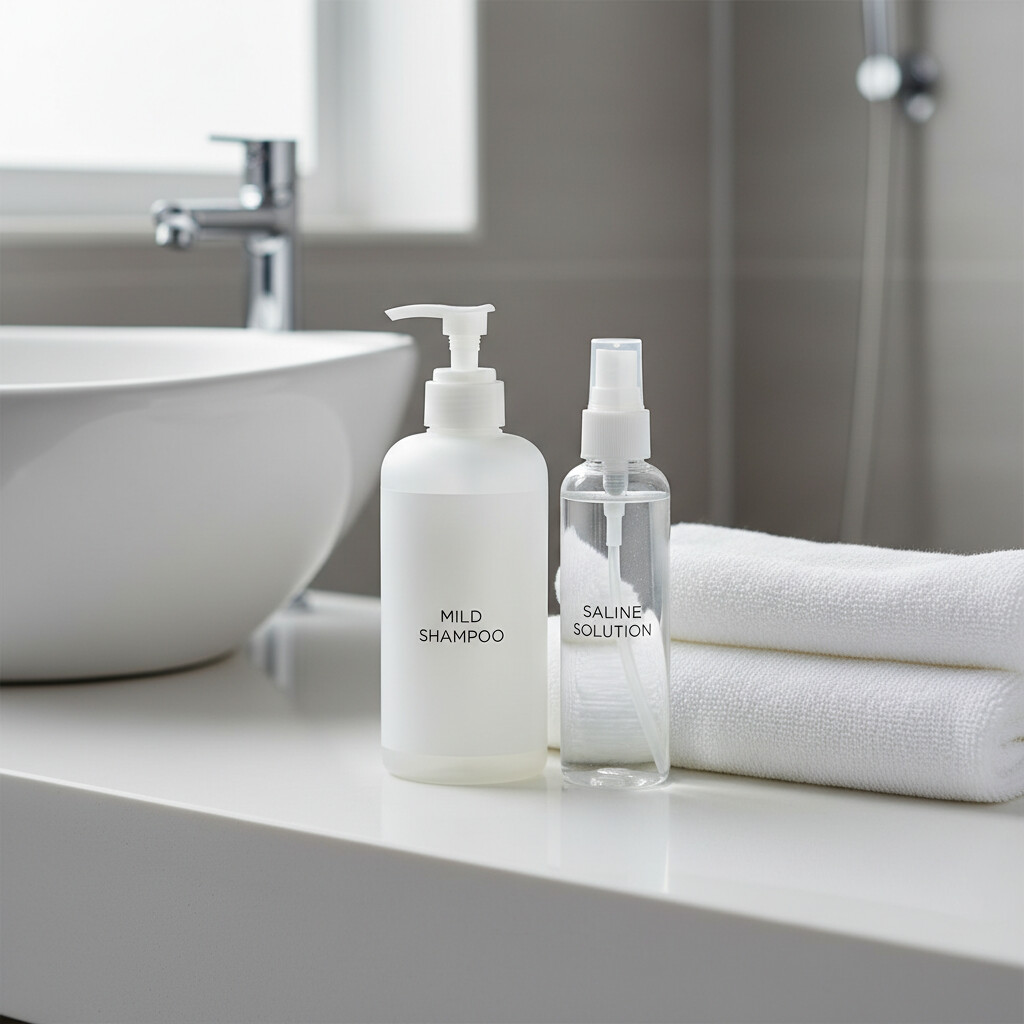
Your clinic may give you a kit. If not, check what they recommend before buying anything.
- Mild shampoo recommended by your clinic. See our guide to shampoo after a hair transplant for what to look for and what to avoid.
- Softening lotion or foam, if your clinic uses one.
- A cup, jug or bowl for pouring water.
- A clean, soft towel or paper towels for patting dry.
- Saline spray, if prescribed, for keeping the recipient area moist between washes.
A typical first-wash routine
This is a common approach. If your clinic’s instructions are different, follow theirs.
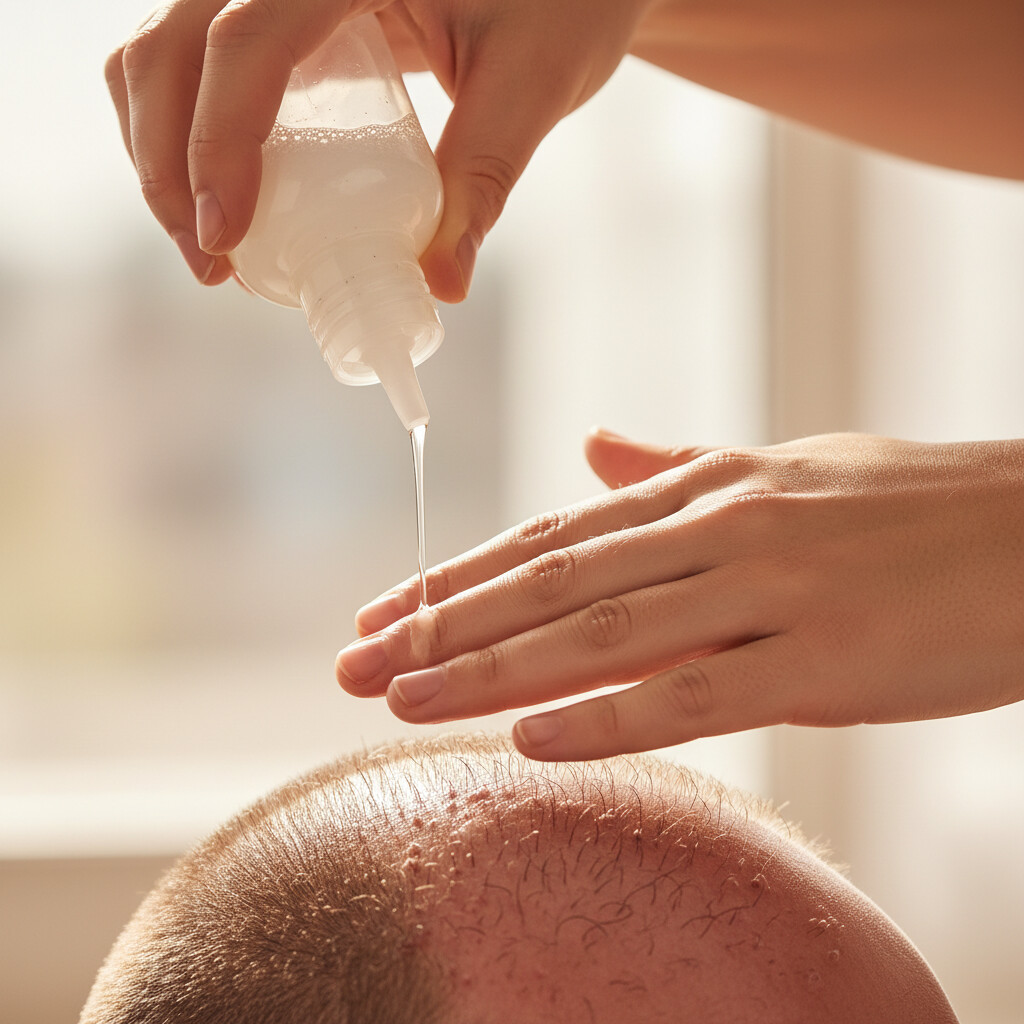
- Apply the softening lotion (if prescribed) to the recipient area by dabbing, not rubbing. Leave it for the time your clinic states, often around 20-30 minutes.
- Rinse the lotion off by pouring lukewarm water from a cup, or using a shower on a low-pressure setting that does not hit the grafts directly.
- Make a diluted shampoo mix. Lather a small amount of shampoo in your hands or in a cup of water.
- Apply it to the recipient area by gently pressing or dabbing with your fingertips, or pour it on. Do not rub, scratch or massage. The donor area can usually be cleaned with light movements.
- Rinse thoroughly with lukewarm water from a cup or low-pressure shower. Make sure no shampoo is left behind.
- Dry by patting the donor area with a soft towel. Let the recipient area air dry, or pat very lightly with a paper towel. Do not use a hair dryer on a hot setting.
Washing in the following days
- Days 1-6: repeat the same gentle routine as instructed. No rubbing of the recipient area.
- Days 7-10: most clinics allow light circular fingertip movements over the recipient area, so crusts start to loosen.
- Days 10-14: crusts are usually gone or coming away easily in the shower. By this point grafts are generally considered secure. See how long until grafts are secure.
- After two weeks: most people can return to normal washing with a mild shampoo, avoiding scratching with the nails.
In short:
| When | Washing | What to expect |
|---|---|---|
| Days 1-6 | Repeat the same gentle routine, with no rubbing of the recipient area | Many clinics do the first wash on day 1-3 |
| Days 7-10 | Light circular fingertip movements, if your clinic allows | Crusts start to loosen |
| Days 10-14 | Same gentle washing | Crusts are usually gone or coming away; grafts are generally considered secure |
| After 2 weeks | Normal washing with a mild shampoo, no scratching with nails | Ask your clinic if crusts are still firmly stuck |
Never pick scabs off early. If crusts are still firmly stuck after two weeks, ask your clinic before doing anything more. The guide to scabs after a hair transplant covers this in detail.
What is normal during washing
- Some hairs coming away. Short hairs falling out with crusts in the second week are usually just the hair shaft, and the follicle stays in the skin. This is the start of normal shedding of transplanted hairs, which typically happens between roughly weeks 2 and 8 and is expected.
- Redness, tightness and mild tenderness. These are part of healing. See pain after a hair transplant for what to expect.
- Reduced feeling in the scalp. Temporary numbness is common, which means you may not notice water that is too hot. Test the temperature on your hand first. More on this in temporary numbness after a hair transplant.
- A small spot of blood on the towel in the first days, which stops quickly.
Shedding of transplanted hairs is different from shock loss, which is temporary loss of existing native hair near the operated area. Neither is caused by washing when you follow your clinic’s routine.
What to avoid
- High-pressure shower jets directly on the recipient area.
- Hot water and hot hair dryers.
- Rubbing with a towel, or scratching with fingernails.
- Shampoos or products your clinic has not approved, including styling products.
- Swimming pools, hot tubs, saunas and the sea in the early weeks.
When to contact your surgeon
Contact your clinic if you notice:
- A graft coming out in the first week with a visible white bulb or tissue at the end, especially if the spot bleeds.
- Bleeding that does not stop after a few minutes of gentle, steady pressure with clean gauze.
- Increasing redness, warmth, pus, a bad smell or fever, which may suggest infection.
- Pain that is getting worse rather than better.
- Crusts that are still firmly stuck after about two weeks.
If you accidentally knock or rub the grafts, don’t panic. A light touch after the first few days rarely dislodges grafts. Check for bleeding, and contact your clinic if you are unsure.
Common questions
Can I shower normally with the donor area?
Usually the donor area can be washed with light movements from the first wash, but ask your clinic. Keep the stream away from the recipient area.
Can I use a baby shampoo?
Some clinics suggest a mild baby shampoo if their own product runs out. Check with your clinic first.
Can I wash my hair before going back to work?
Yes. Regular washing speeds up the loss of crusts, which helps you look presentable sooner.
Discussion
When did your clinic do your first wash, and what routine did they give you for the following two weeks? Share any tips that made washing easier, especially if you were travelling home in that period.
Sources
- Hair transplant, NHS
- Hair Transplant: How Does It Work, Success Rates, Cleveland Clinic
- Recovery (Hair Transplantation and Restoration), American Society of Plastic Surgeons
- Complications of Hair Transplant Procedures: Causes and Management (Garg and Garg), Indian Journal of Plastic Surgery, 2021
These sources give different timing for the first wash, from within two days to about day six. That is why your own surgeon’s written instructions come first.
Related guides
- Hair Transplant Aftercare: What to Do From Day 1 to Month 12
- The Best Shampoo to Use After Hair Transplant Surgery
- Scabs After Hair Transplant: When Do They Fall Off?
- What Happens If You Accidentally Touch Your Hair Grafts?
- When Can I Go Back to Work After a Hair Transplant?
About this guide: ForumHairTransplant.com is an independent patient community. We are not affiliated with any clinic or surgeon, and we don’t accept payment for rankings, reviews or recommendations. This article is general information, not medical advice. Talk to a qualified doctor about your own situation.